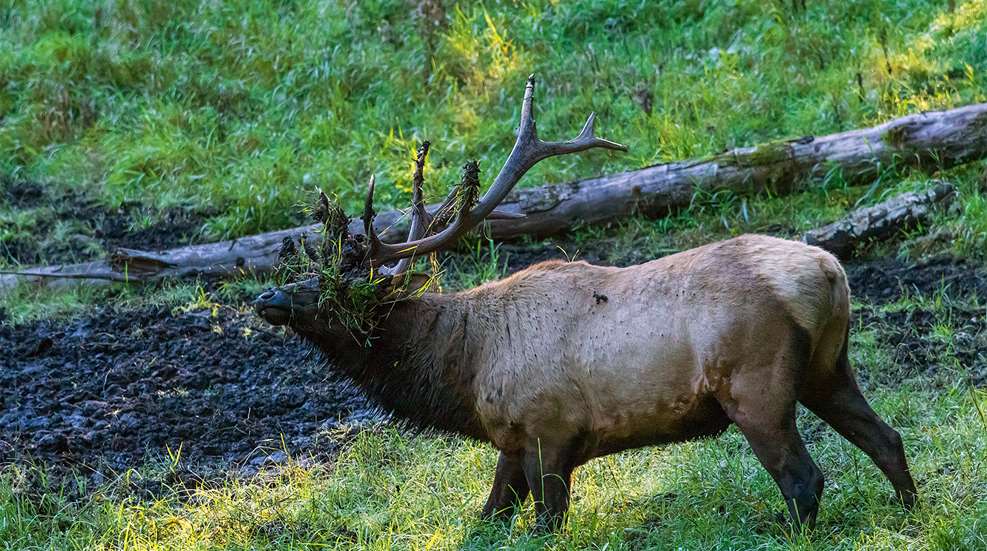
Ascending a steep mountain, I side-hilled inside big timber. A small creek cut through the open ravine below. The smell of rutting elk permeated the forest. It was early morning and thermals were falling.
Halfway up the draw, intense splashing forced a pause. A rough, half-hearted bugle confirmed what was happening.
I snuck within bow range, nocked an arrow and waited for the 7-point bull to relax and offer a shot. It rolled, kicked, spun and thrashed the wallow with its massive rack. Then, in one motion it gained its feet and exited the scene. There was never a shot opportunity.
I followed the bull for two hours, never catching up. At over 9,000 feet elevation in the Rocky Mountains, the bull never saw or smelled me. No calling I offered enticed the monarch. It was focused only on cows.
A few hours later I passed by the wallow and inspected it. It flowed crystal clear. You wouldn’t have known a bull had used it a short time ago. The closer I studied the surroundings, the more wet mud I found. Tracks leading to and from the wallow confirmed multiple bulls were using it.
Later that morning I joined up with a buddy. We called in and punched our tags on two 6-point bulls less than 400 yards from the wallow. Had I not taken the time to look closely at that wallow and read the details around it, I wouldn’t have spent time calling there.
Over the decades, closely studying wallows has taught me a lot about elk and elk hunting. Early in my hunting days I made a lot of mistakes by simply locating wallows and assuming bulls were using them, or not. I rarely approached them for fear of contaminating the scene. Today, I scrutinize every elk wallow I encounter.
When you find an elk wallow don’t just look at it, study it. Swirl it with your boot or a stick to see if there’s a current. If there is, sediment will quickly begin to flow. Watch to see how long it takes for the wallow to run clear. It might take a few minutes, but it could take hours.
The more current flow there is in a wallow, the more it can mask the sign you’re searching for. I’ve seen wallows run clear after being used by a bull less than 15 minutes prior. At the same time, a wallow with no flow can seem much fresher than it really is, making it appear as if a bull just used it when in reality, days could have passed.
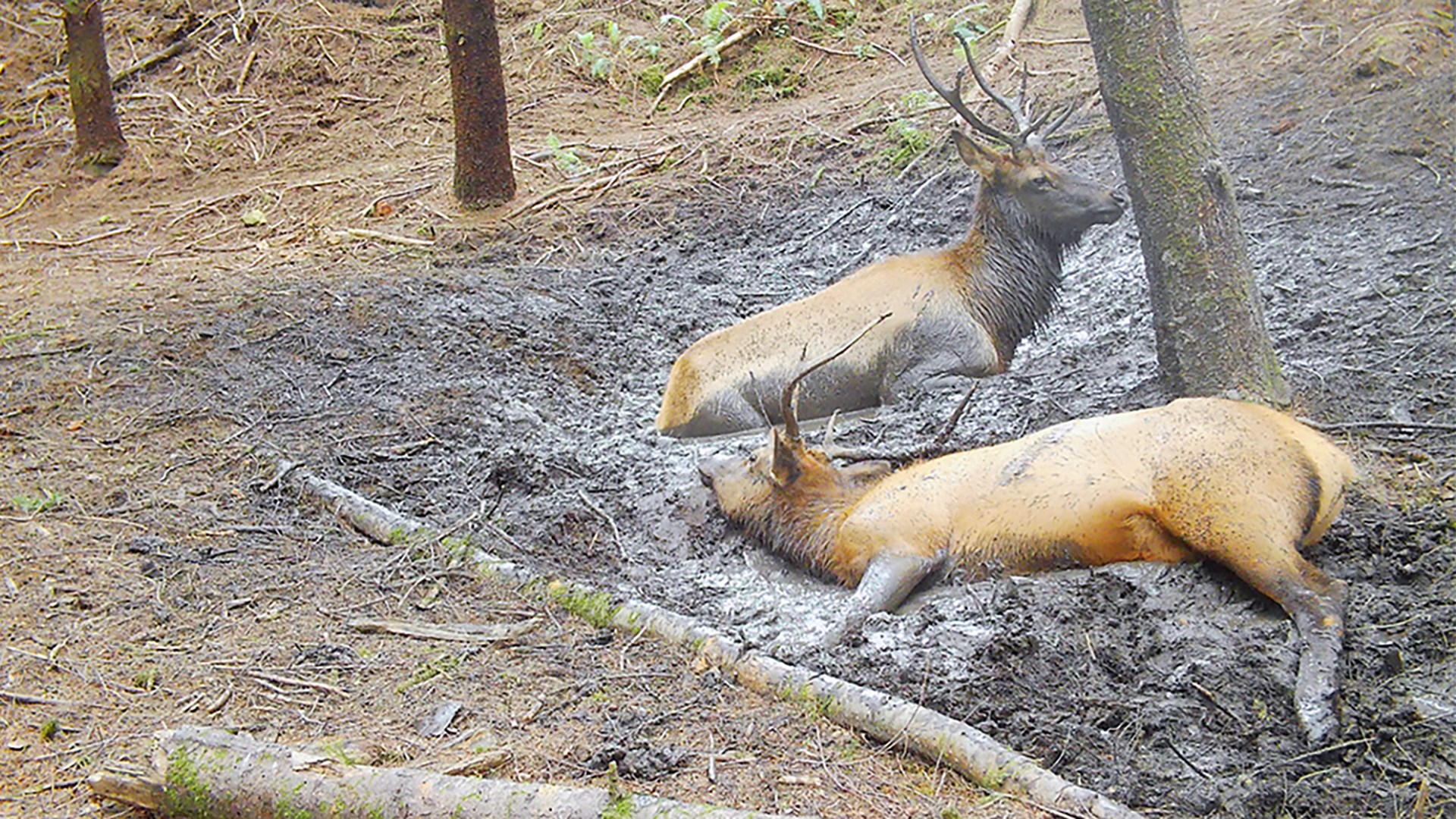 Setting trail cameras on elk wallows can reveal a lot of information you might be missing.
To unlock the truth, inspect the surroundings for tracks and scour the area for wet splash marks. Look at leaves of low-growing bushes, examine coniferous boughs, and inspect trails for wet water droplets, even mud. The darker and more moist the mud, the fresher it is. Work in circles around the wallow to identify which trails bulls are using to enter and leave the wallow.
Even deciphering the angle of water and mud splashes can offer valued insights. If water and mud droplets are concentric, the bull leisurely walked out of the wallow. This means it was likely alone and in no rush. Calling to a lone bull can boost success rates.
On hard, dry ground, elk tracks aren’t easy to read but details left from a wet, muddy bull exiting a wallow are simple to interpret. If the droplets have made impact at an angle, you can tell which way the bull was moving, even at that speed. A rushed exit means other bulls or cows were likely near, thus providing a starting point for a hunt.
Three years ago I found a tiny wallow in a forested draw. It was barely big enough to hold a bull. I hung three trail cameras around it and checked them once a month. I run Stealth Cam DS4K cameras on high-definition video mode and set them for two minutes of run time. Video clips reveal far more than still images can.
Bulls began drinking from the tiny spring upwelling in late June. In early August they were rolling in it. The wallow grew wider and deeper. A wallow soon formed above it, another below. One day in early September, seven bulls used the wallow over a six-hour period. Buddies eventually arrowed two of those bulls inside a half-mile of the wallow, on trails bulls used to access it.
Don’t think wallows are a slam dunk for killing a bull. I’ve never shot a bull in a wallow, but the information I’ve gleaned from them has accounted for many thrilling encounters and helped fill tags. I’ve captured bulls using wallows into November.
The more wallows you inspect, the more you’ll learn about elk and how they use them. Consider how daytime temperature, humidity, wind currents, sunlight and shade impact sign in and around a wallow. By piecing together all the information you discover, then hunting wisely, your level of consistently filling elk tags will rise.
*Want to learn how to skin and break down an elk? Order Scott Haugen’s comprehensive DVD, Field Dressing, Skinning & Caping Big Game, at scotthaugen.com.