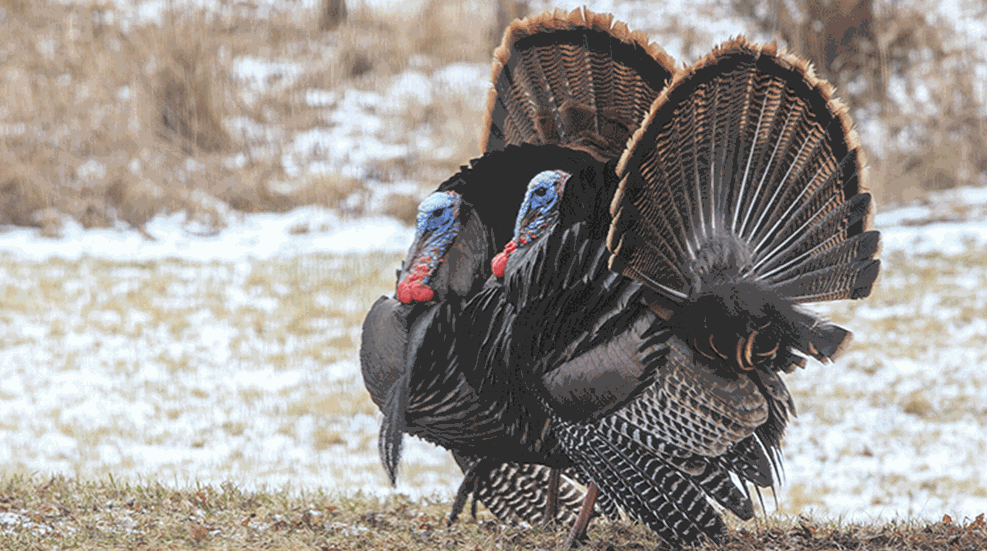
March 20 is the first official day of spring, but Ma Nature doesn’t always check her calendar. Some years winter can hang on like a bad dream, especially in central and northern states above the 35th parallel. Cold, frost, or maybe even a late snow can delay the green-up for days or weeks. When you go out for gobbling turkeys in April, the woods might still look like they did back in late deer season. That calls for a few specialized tricks.
Take Cover
The biggest problem with wide-open woods is that hens and gobblers can look up (or down from their roost trees) and see you coming for 100 to 200 yards or more. So you’d better cover your moves. Darkness is your friend. Hit your best roost spots 30 minutes earlier than normal each morning and listen. Early in the season a hot and lightly pressured rom might gobble his fool head off in the predawn. Those gobbles can easily carry a mile or more in the leafless woods. Draw a line to a bird’s tree and slip as close as you can while it’s still pitch dark.
Let’s say a turkey thunders after sunup, either on the limb or on the ground. Don’t tear off down through the thin woods after him or you might get busted. Rather, chill and analyze the terrain. Then approach a tom through a nearby hollow or draw. Circle around and move through a patch of pines or cedars. Wade and sneak in a creek or small river with steep banks. You get the idea. Use whatever terrain you can to hide your moves and closer the gap.
Normally I don’t worry too much about shuffling leaves or snapping a few sticks as I go to a gobbler. Sometimes a tom will hear those sounds, think another bird is coming, and boom more gobbles. But when the woods are stark and open, I believe it’s best to sneak along more carefully and quietly. You don’t want to draw a bird’s attention. If he hears you and looks up from feeding or strutting, you’re toast.
I have always found it curious how few turkey hunters carry and use binoculars. You need a good 8X pair all the time, and especially for the early season. Before you cross a thin ridge or creek bottom, stop and glass for feeding or strutting birds. Turkeys can see a long ways through bare woods, but then so can you. Anytime you glass a tom, slip close and set up in a good spot before you make that first call; you have an immense tactical advantage.
Long-Range Setups
You’ve probably read hundreds of times how it is best to sneak within 100 yards or so of a gobbler before you set up to call. Well, try that when the foliage is thin and you’ll spot most every gobbling turkey in the country. As I mentioned earlier, play it safe and use slopes, draws, and other terrain breaks to slip as tight to a bird as you dare. Then don’t think twice about setting up 150 or even 200 yards away from the old devil. If he’s hot and gobbling hard, he’ll come that far to your calls.
Stake a Fake (Or Two)
If a tom hears your love calls, looks your way through the naked woods, and doesn’t see a hen he’ll hang up quicker than you do on a telemarketer who calls at suppertime. So give a bird something to gawk at, like a sexy hen decoy. You might also stake a foam or blow-up jake beside or on top of a hen in a breeding posture to challenge a longbeard’s machismo. Make sure decoys are legal in your area. Don’t use them on heavily hunted public area or lease.
Calling Tips
Many 2- and 3-year-old toms gobble with gusto and travel far and wide as they gather hens in early-spring. To reach out and touch ‘em, I like to yelp and cutt in short, moderately loud bursts. Keep in mind that before the ground foliage and leaves pop out, your calls will sound clear and carry far, so you don’t have to overdo it. You’ll strike your share of birds with lively little volleys of yelping and cutting.
To close the sale in open woods, you need to keep a gobbler guessing where you are, lest he’ll stop and hang up. Call out front, and then turn and yelp off to the sides and even behind you. Casting air or friction calls helps to keep a sharp-spurred sultan drifting your way as he wonders, “Where in the heck is that hot little hen I hear?” Let the old boy cross the 35-yard line and boom, tag your first turkey of the season.