The release of the .270 Winchester in 1925 in the Winchester Model 54 rifle saw the beginning of the American love affair with velocity, as well as the laying of a solid foundation for the American bolt-action sporting rifle. At the time, the lever gun held court in the hunting fields, though through the writings of Mr. O’Connor, change was on the wind.
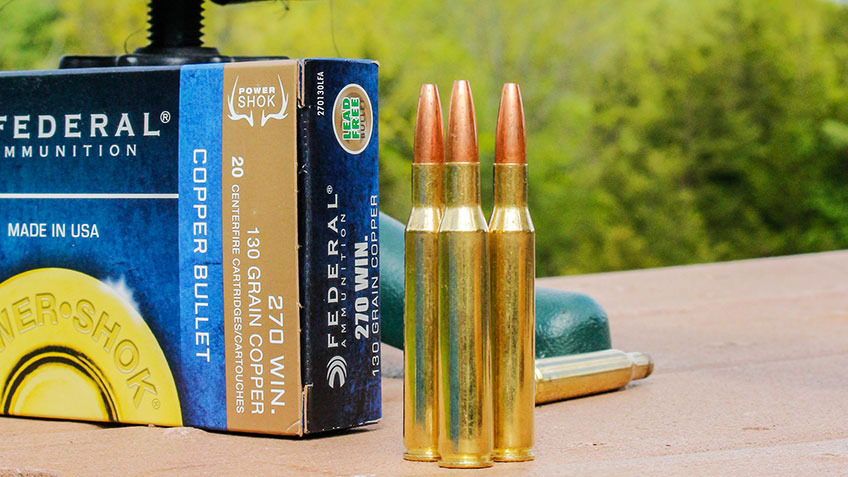
Jack O’Connor’s championing of the .270 Winchester may have been the best ringing endorsement of any cartridge if the 20th century; it became the favorite of millions of deer hunters, as well as those in pursuit of the wild sheep that Jack loved so much. It wasn’t all marketing hype though; the .270 Winchester is a flat-shooting cartridge, perfect for deer and similar-sized game. With the bullets available in the 1920s and 30s, it showed its limits on elk and the larger cervids—Elmer Keith certainly took exception to using the fast/light combination on game of this caliber—but the .270 was an undeniable deer killer.
With a range of bullet weights between 90 and 150 grains, it could easily handle woodchucks and coyotes, as well as black bear. The 130- and 150-grain slugs were the most popular for big game, and as the .270 was based on the .30-03 cartridge—the predecessor of the .30-06 Springfield—there was plenty of case capacity. Maintaining the same 17˚-30′ shoulder of its parent, it drives the 130-grain bullets to right around 3100 fps, and the 150-grainers to nearly 3000 fps (both figures depending on barrel length) giving a trajectory that became ever-more appreciated as telescopic sights came into vogue. Many hunters preferred to carry “Jack’s two-seventy” afield each season, and nearly every rifle maker offered the cartridge in their lineup, whether it was a bolt-action, semi-automatic or pump.
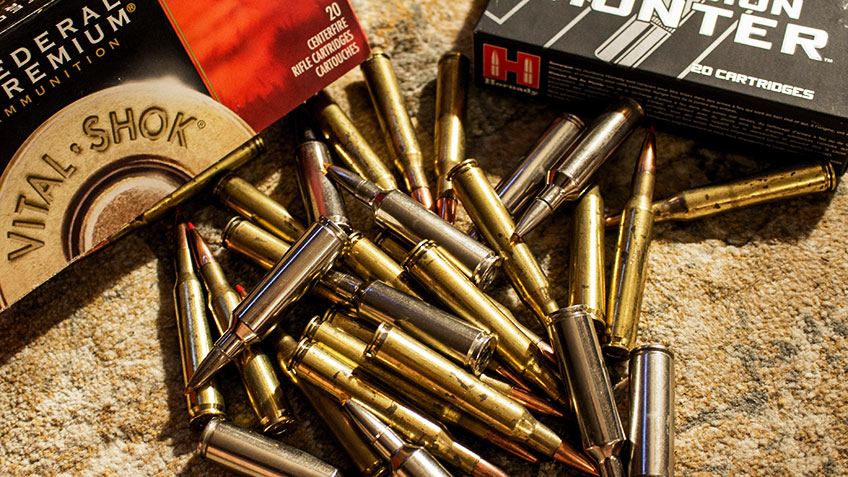
The bore diameter of the .270 Winchester—.277-inch—is not exactly a very popular one; there are very few other cartridges using this bore diameter, certainly fewer than the 6.5mm, 7mm and .30s that surround it. Perhaps it’s because the .270 Winchester does what it does so well.
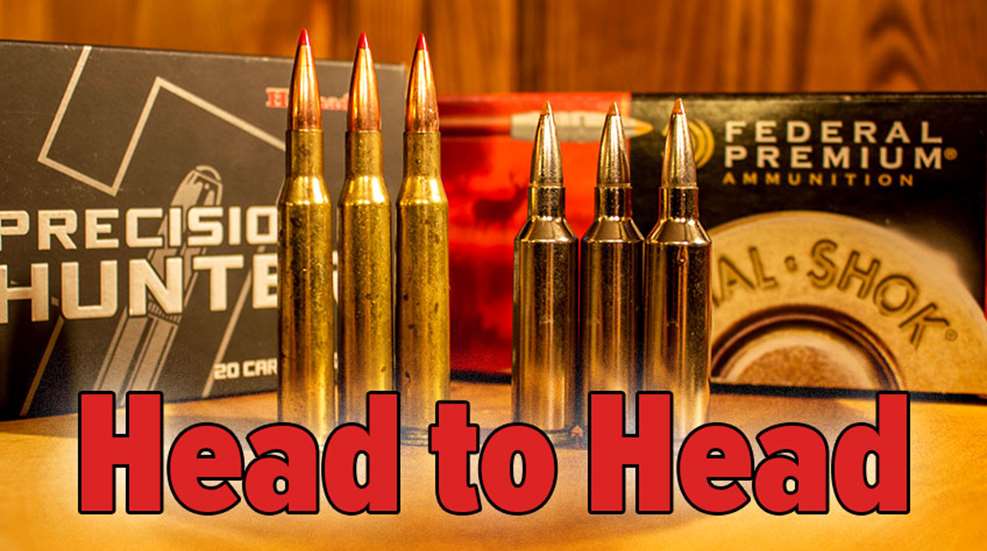
For over 75 years the .270 Winchester reigned supreme within that bore diameter, having only the .270 Weatherby Magnum as its competition. It was in 2003, as Winchester was unveiling the follow-up cartridges to their .300 Winchester Short Magnum that the second .270 came to bear the Winchester moniker. The .270 Winchester Short Magnum is part of that family of cartridges based on the .404 Jeffery, which include the Remington Ultra Magnum and Short Action Ultra Magnums; it is designed to exceed the velocities of the .270 Winchester, but in a short action rifle. With a 35˚ shoulder, and a 2.100″ case—the same as the .308 Winchester—the .270 WSM performs as advertised, giving a 200-250 fps advantage over its older sibling. Pushing a 150-grain bullet to 3250 fps, the .270 WSM certainly earns the Magnum title, but at what cost? Like the .270 Weatherby Magnum—released 60 years prior to the .270 WSM—it betters the velocity of the .270 Winchester, but I’m not certain that the increased velocity is necessarily required.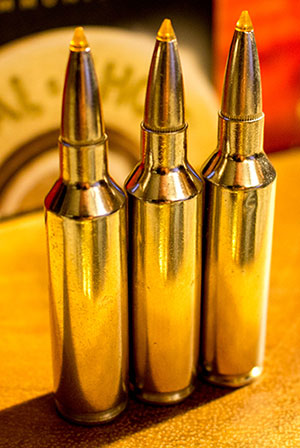
In my opinion, one of the drawbacks of all three of the .270s is their twist rate. Typically, all three are provided with a 1:10″ twist rate, which limits the bullet weight to 150 grains. Any heavier than that and you’ll lose stability, so while the .270 Winchester and WSM are both good, flat-shooting hunting cartridges, neither make a sound choice for today’s long-range shooting. Tighten that twist up to 1:8″ or 1:8.5″, and you’d certainly be able to push the 170-grain bullets, like the Berger Extreme Outer Limits line, with the truly high B.C. values.
Perhaps the additional velocity of the .270 WSM variant appeals to you, but I feel that for bullets up to 150 fps, the good old .270 Win. gives all the velocity any rifleman would need, within sane hunting ranges. It’s been putting meat on the table and trophies on the wall for nearly a century, and based on sales figures, I don’t suspect that will change any time soon. Compound that with the feeding problems that the WSM line of cartridges can exhibit—I’ve seen a few rifles that feed reliably, but most are finicky at best—and the way the short, fat case quickly eats up magazine space, and I feel the original .270 Winchester makes a better design than does the WSM.
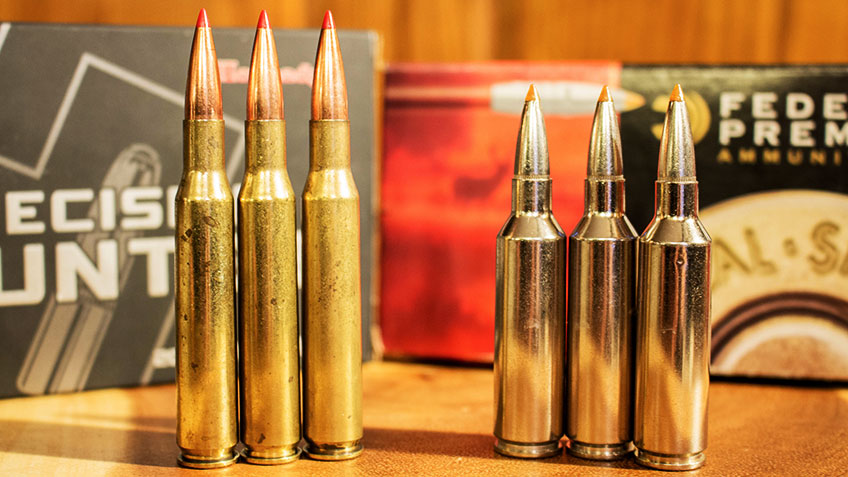
In all honesty, with the exception of the .300 WSM (and even that seems to be on the wane) the WSM line seems destined for obscurity. Had Winchester changed the twist rate, allowing the .270 to run heavy bullets, we may never have heard of the 6.5 Creedmoor, but alas, history is history. Necking down the .30-03 to hold .277″ diameter bullets may have been the best decision Winchester engineers ever made, as it remains the most popular of the .30-06/.30-03 offspring, and it’ll take quite a bit to unseat the .270 Winchester.
Looking for previous installments of our "Head to Head" series? Click here.