There are a few cartridges over time that maintain a consistent foothold in the minds, hearts and hands of passionate hunting and shooting enthusiasts. Ranked at the top of that short list is the .416 Rigby. Let’s take a look at this delightful caliber and why it is still a main choice for hunters and PHs after more than 100 years.
For the Love of the .416
There are general purpose and purpose-built cartridges. The .416 Rigby falls into the latter. Developed in 1911 by John Rigby as a big-game chambering for thick-skinned African animals, the .416 Rigby has stood the test of time. There are a few reasons for this.
First, it was designed for the Mauser 98 Magnum action. If there ever was a timeless workhorse of a platform, that would be it. The standard Mauser 98 and the Magnum versions both boast the rugged elegance for which the platform is known. With the controlled round feed design concept and non-rotating claw extractor, the M98 has changed very little since its birth.
The Magnum model has a couple of key features that differ, however. To start, it is reinforced to accommodate the larger, dangerous-game cartridges such as the .416 Rigby and .375 H&H. From there, the receiver has a double bridge design for a different scope mount interface over the standard M98. Additionally, the M98 Magnum has an extended magazine box, a slightly longer barrel and two crossbolts for added stability against the heavier recoiling cartridges.
Second, the unique combination of low pressure and longer reaching lethality, make it a favorite for African hunters and PH’s alike. The low pressures allow for longer case life as well as more friendly recoil, comparatively speaking.
Third, while historically a more bespoke offering, the introduction of the Ruger M77 in .416 Rigby brought about a resurgence in popularity due to accessibility and affordability.
Prior to the 1990s, approximately 10,000 rifles existed worldwide in the .416 Rigby. In 1992, Ruger added the caliber to their line-up via the M77 Hawkeye. In one year, they met and exceeded the existing world quantity of this distinguished caliber. It is unfortunately no longer produced by Ruger, but the value had been firmly established.

The .416 Rigby by the Numbers
We have an overview of the .416 Rigby in both platform and execution. Let’s look at the ballistics and the engineering behind this 115-year-old cartridge and why it’s even more relevant today.
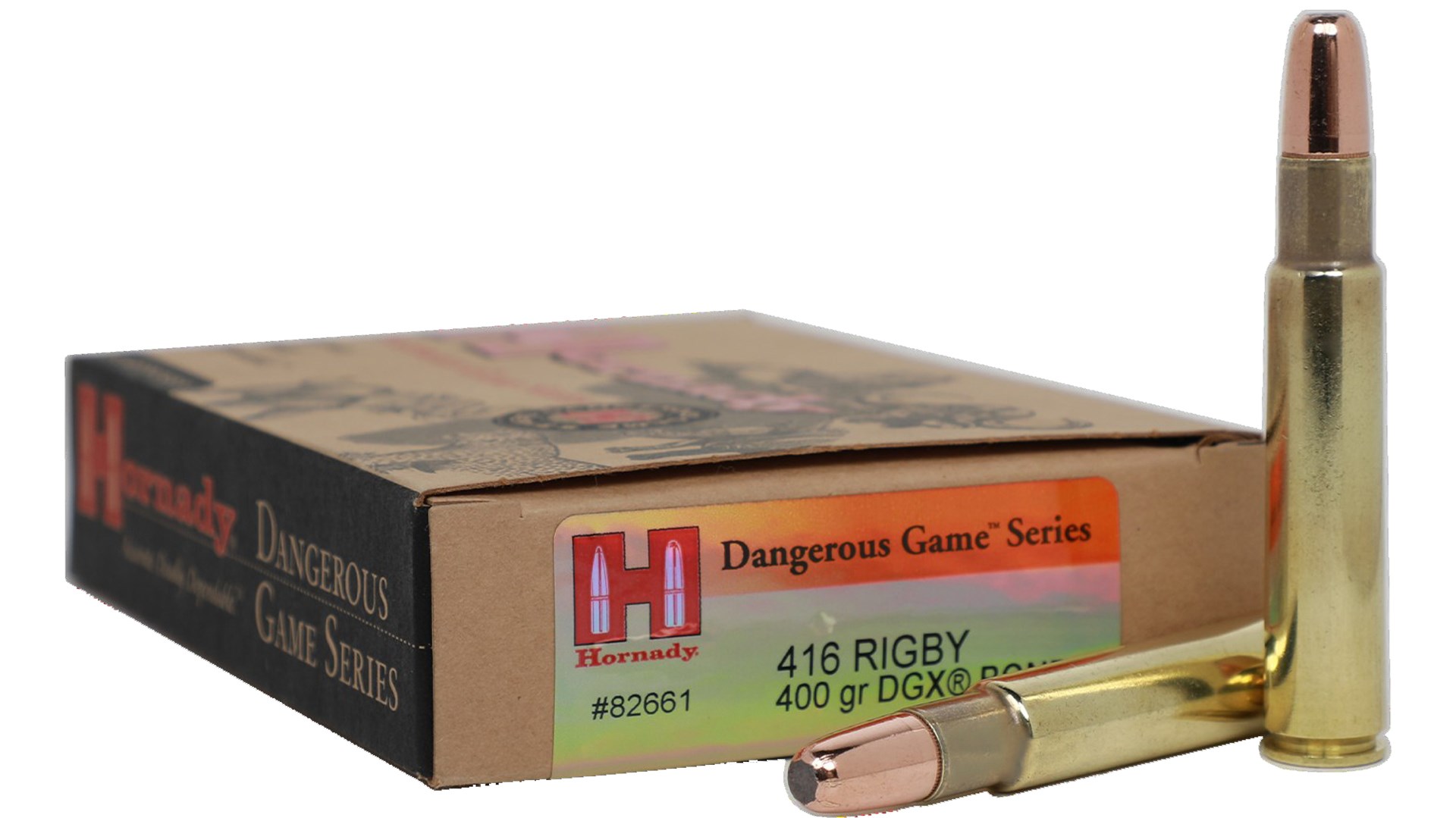
The .416 Rigby is a non-belted magnum-length cartridge that shines with a 400-grain projectile. With muzzle velocity around 2300 FPS and pressures between 32,000 and 36,000 PSI, the .416 Rigby has manageable recoil when shot from an appropriately structured rifle.
For many years, the .416 Rigby was only available in elegant double-guns or high-end custom rifles. Even with such limited offerings, the .416 Rigby was still a top choice for those seeking African game—as well as the PHs that guided them.
There are a few reasons for this, ballistically speaking.
First, reliability. The inherent consistency of a bespoke double rifle or a controlled round feed M98 Magnum action platform is undisputed. Additionally, with lower pressures comes higher reliability. When facing down tusks, teeth or trampling potential, the last thing one wants is a stubborn cycling experience due to over-pressure.

As a very African-game specific cartridge, the unique climate elements of the continent are taken into strong consideration. For this reason, pushing pressures to the higher limits (50,000 PSI) can be a risky proposition. An overly hot day on the savanna can dramatically alter pressures and make for potentially sticky cycling. While inconvenient in some situations, dangerous game hunting and sticky bolts can be a deadly mix.
Next is range. The .416 Rigby strikes a beautiful balance between energy, trajectory, pressure and velocity. This cocktail of characteristics leads to exceptional energy on target with a very acceptable experience behind the gun.
This is important for a few reasons. At the top of that list is practical comfort. A rifle that’s manageable to shoot gets shot more. More functional practice generally leads to greater consistency behind the gun resulting in better precision downrange.
Another reason is gun configuration. While the M77 is no longer produced, the .416 Rigby is available in a wide variety of rifles. With ballistics that are both practical and effective, the rifle options span from basic to opulent.
Ammunition availability merely enhances the allure of this timeless caliber. Several companies offer .416 Rigby ammunition flavors including Federal and Hornady. Today, the .416 Rigby is marketed by several gun makers including Parkwest Arms (formerly Dakota Arms), Holland & Holland and, of course, John Rigby & Co.

The Gentleman’s Bolt Gun or the Gentleman of Bolt Guns?
The advent of the .416 Rigby in 1911 by John Rigby brought a new standard to the big bore realm. Marked by class, elegance and consistency, the .416 Rigby demonstrated ballistic superiority downrange and offered a well-mannered shooter experience. This caliber took the social strata typically reserved for double rifles and imbued it into the structural stubbornness of the M98 Magnum action.
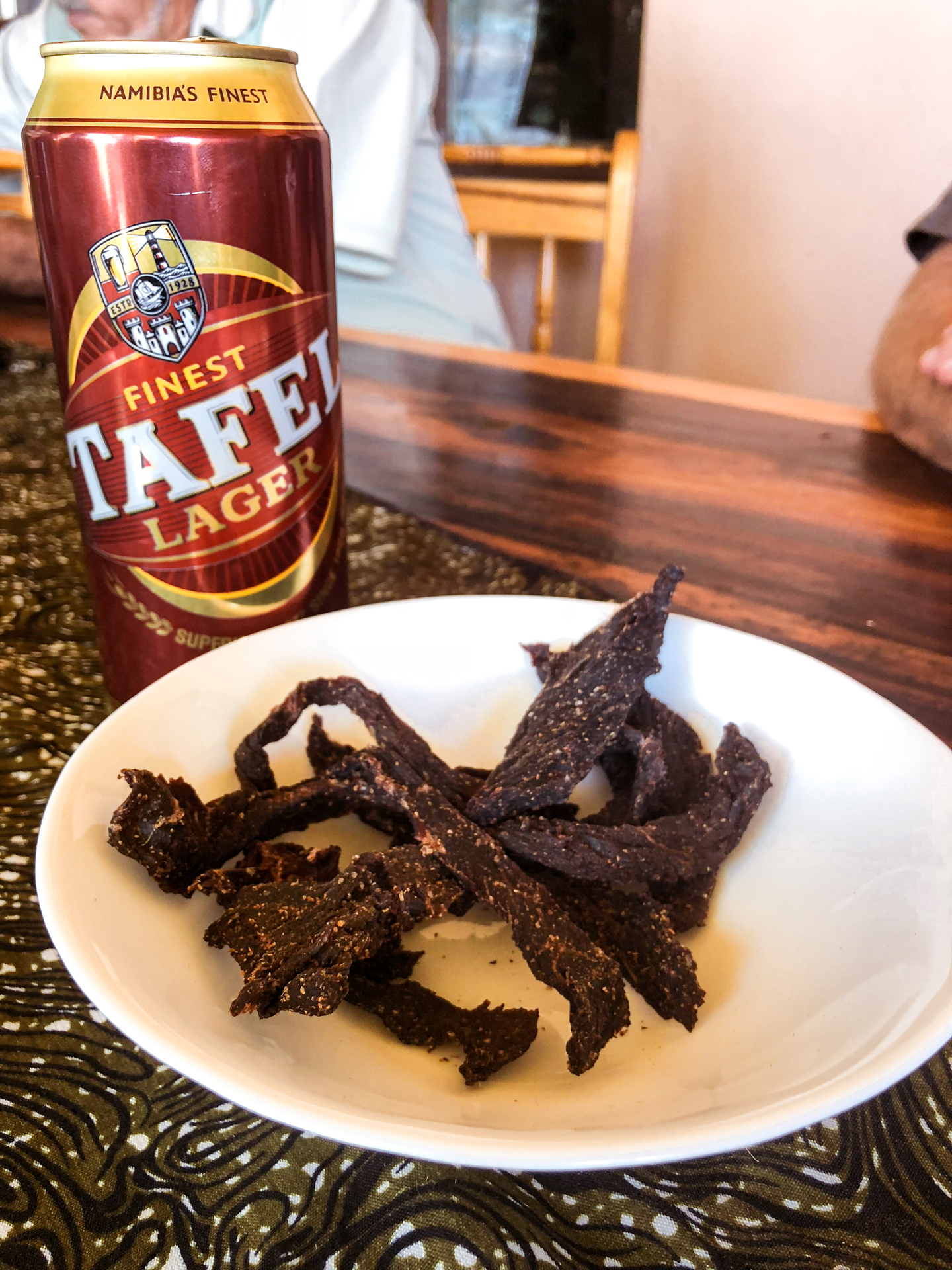
Today, the .416 Rigby is a favorite African big game choice for both hunters and PH’s. It’s energy, effectiveness, reliability and consistency have kept this cartridge as a top pick for over 100 years. With timeless traits and readily available ammunition, the .416 Rigby is as much a part of the African hunting experience as biltong.
Happy Hunting!
Andi