** When you buy products through the links on our site, we may earn a commission that supports NRA's mission to protect, preserve and defend the Second Amendment. **
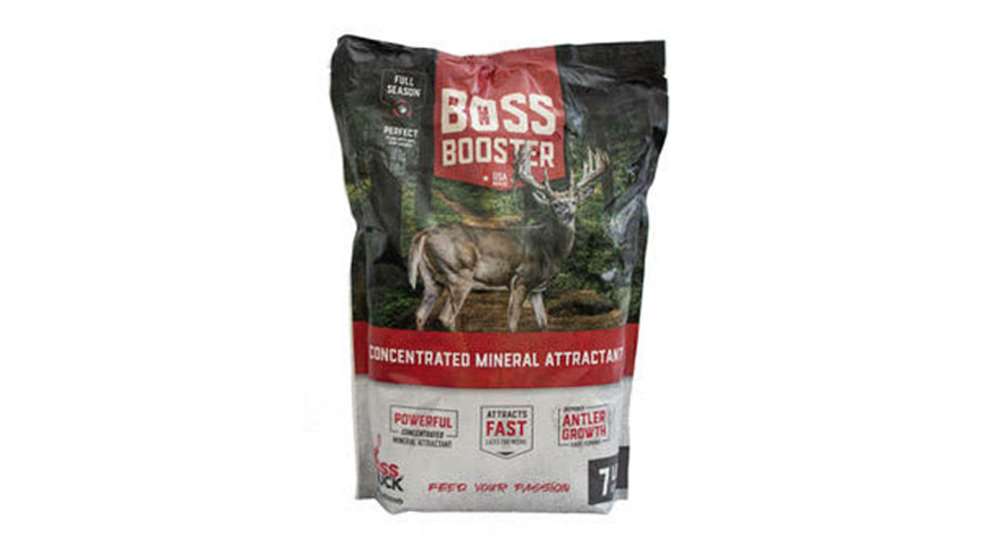
Boss Buck has released a new way to reinvigorate old and new mineral sites: the Boss Booster Concentrated Mineral Attractant. This attractant creates an irresistible, long-lasting mineral site that lasts for weeks, and helps create a pattern deer will follow all season long. Simply open the 7-lb. bag, rake a 3- to 4-foot-diameter circle, and mix the Boss Booster attractant with the soil.
Ideal for use in the pre-season, Boss Booster Concentrated Mineral Attractant is highly digestible by big game animals, promotes antler growth and is made right here in the USA. For more information, please visit bossbuck.com. MSRP: $9.99
When the grizzly bear in the Lower 48 was given Endangered Species Act (ESA) protection as a threatened species in 1975, it was supposed to be a temporary protection that would be lifted once populations met or exceeded specific goals. Now more than a half century later and with grizzly populations that have spread and met or far surpassed the goals set in 1975.
Leupold & Stevens, Inc. has launched its LCO Pro F2 red-dot sight, combining optical clarity, reliability and purpose-built features in a full-sized red dot.
I am heartened by this year’s entries. In addition to fabulous photographs, almost all of you delivered exceptional narratives of your hunts. We used your very words wherever possible because it’s an honor to see you all rise to such an occasion as sharing a special moment with your fellow hunters. You now know a little bit about what drives an outdoor writer. —J. Scott Olmsted, Editor in Chief
On July 17 the U.S. Fish and Wildlife Service (USFWS) published a proposed rulemaking change on the Federal Register that, if approved, would allow western states to better manage their grizzly bear population. Despite their burgeoning population the big bruins remain on the “endangered” list under the Endangered Species Act (ESA), a fact that has paralyzed regional conservation efforts, impacted other wildlife populations and dramatically increased human/bear conflicts.