Everyone has his or her favorite season; spring, fall, Christmas, the Fourth of July. Mine is rut, especially the whitetail rut.
As seasons go, this one combines the brilliant spectacle of autumn with the urgency of early winter mixed with the anticipation and surprises of Christmas—who knows what gift could be under your tree! There’s fighting, calling, racing and chasing, and shocking surprises like a giant buck standing in the middle of a bare pasture at noon. This is the most exciting season in all of hunting. But do your research or you might miss it.
An annual tradition in hunting camps around the country is trying to determine when the rut will hit, whether it’s already underway, or if it has already past. Is it too hot for the rut? Too dry? Is the moon so bright that they’re rutting all night?
As if all those puzzles aren’t enough, you also have to figure out the subtexts. Is it the pre-rut, sparring phase, seek phase, chase phase or lock-down? Is it a delayed rut, post rut or second rut? Don’t bother checking your calendar because there are no fixed dates for this stuff. Depending on what part of the country you’re hunting, the rut could fall anywhere from October through January. But if you live anywhere but the extreme southeast (and Coues deer country), bet on November—mid-November. November 10, to be precise.
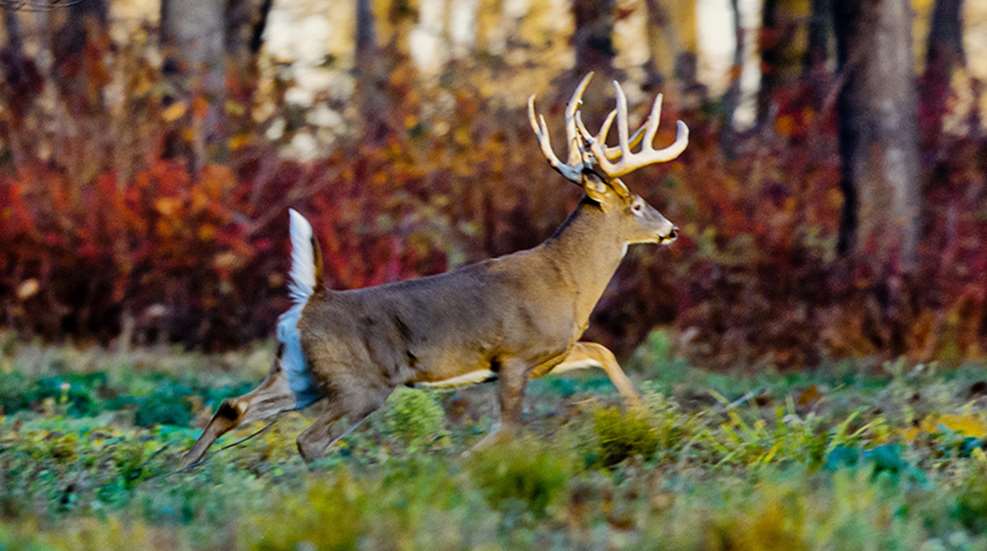
I’m half joking—but only half. If I had just five days to hunt whitetails each year, they’d be November 8-12. During my decades in the whitetail world from central Alberta to Kentucky, November 10 has usually been bonanza day with bucks popping out of the woodwork and walking, scent trailing, snorting, clashing and chasing. Does streak through leading two, four and six bucks like a row of hungry puppies. It’s the chase phase because the first few does have come into estrus and bucks have thrown caution to the wind. And that’s why we must break out of our own ruts and learn some new lessons on how to hunt the whitetail rut. Here are some suggestions:
First: Don’t expect the same old, same old. The big buck you’ve patterned all summer can and likely will disappear in November because—he’s looking for love! And that can take him miles from home. Frost kills foliage. Crops ripen. Cover changes. Whitetails can abandon bedding sites, foraging fields and even core areas overnight. Secure as many optional hunting grounds as you can and be prepared to move.
Second: Expect lots of action, and rise—or climb down—to meet it. While you’re sitting in your stand or blind, your buck and all of his friends could be partying in that woodlot 200 yards away. Go over and join them! Still-hunting and stalking worked for hundreds of years. Why stop now? Rutting whitetails are preoccupied and active. They expect to see large animals moving all day and they often come to investigate. I’ve had many bucks walk within bow range while I was stalking another buck. “Any chance you’re a lonely doe?” they seem to ask. Don’t be afraid to move.
Third: Look in all the wrong places. The buck is bedded in that open pasture because he’s not supposed to be there. He’s “fooling” his competition by hiding out in plain sight with his doe. While the other bucks are sniffing and searching in the usual coverts, Mr. Big is enjoying a quiet honeymoon. This is the basis of what many call “lock down.” The chasing has slowed because most bucks have picked out a doe and will stick with her for one or two days. When finished, they’ll likely sniff out another in short order, and then they’re hiding again. Trail watching sucks during this breeding stage, but still-hunting and glassing odd places can really pay off. Cover ground.
Peak breeding is usually finished in a week, two weeks at most. Now is when exhausted bucks begin sneaking back to familiar haunts and routines. Some “hole up” for several days, minimizing movement, but if a fresh, estrus doe suddenly scents up the woods, they’re back in business. This suggests mid-December as the time for the second rut. It won’t match the intensity of the first, but it beats another football game.
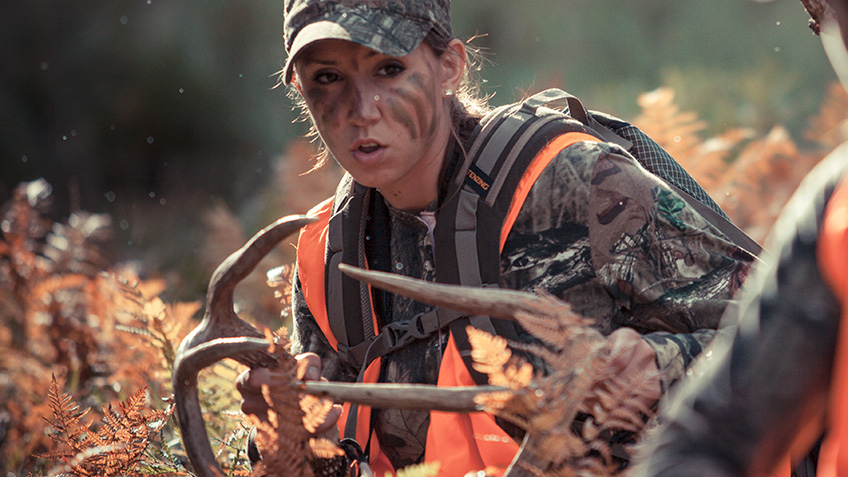
Fourth: Rattle early and often. Rattling doesn’t always work, but it’s a natural sound and it rarely spooks deer. Most often you’ll rattle in youngsters, but if you can rattle in the right place in the week or so before the first doe is ready to party, hang onto your gun. I rattled a woods on November 11 a few years ago and four bucks charged in. Two brought with them about 150 inches of antler each. Two days later I rattled up a 175, and this wasn’t in Texas.
Fifth: Camouflage your sound. Camo clothing is great, but if you can sound like a squirrel, turkey or other harmless associate of whitetails, you can stalk and still-hunt successfully. Step erratically. Pause often. When you stop, scratch the leaves like a foraging armadillo. Yelp like a turkey. Chatter like a squirrel. Grunt or even snort-wheeze like a whitetail, but be ready to shoot when you do. Rutting bucks can come in hot and fast.
Sixth: Glass, glass and glass some more. A binocular can and will reveal more whitetails in all habitats, especially woods. You’ll be amazed at how much farther you can identify details in woods at 6X to 8X. Glass first, move later. I regularly spot bucks bedded in woods and brush, sometimes as close as bow range. And if you ever saw me shoot an arrow, you’d gasp at how close that is.
Seventh: Don’t just sit there; do something. The rut is a whitetail’s most active time of year. It should be a hunter’s too. Get out there and hunt. You won’t be disappointed.