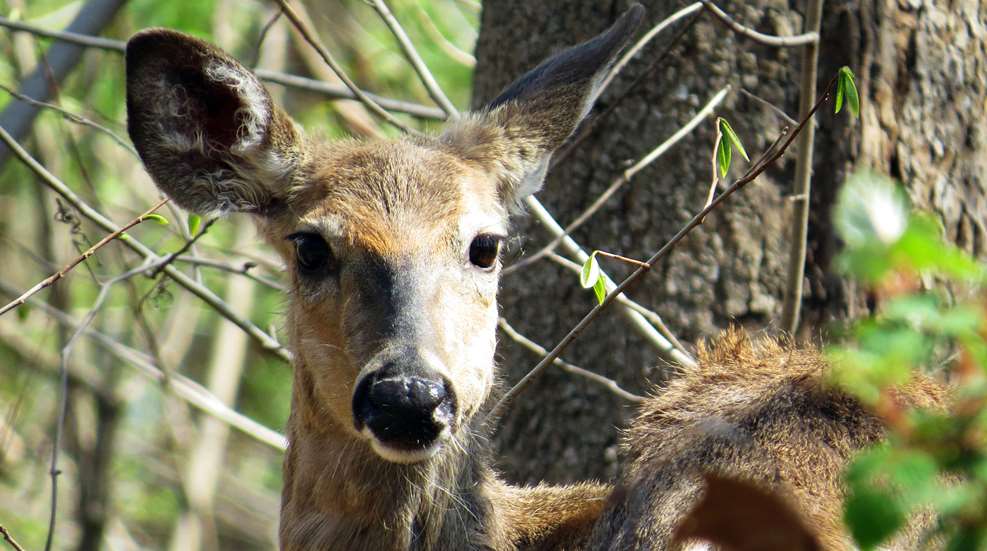
The North Carolina Wildlife Resources Commission confirmed a rare case of rabies in a deceased whitetail deer in Cherokee County. Following multiple reports of dead deer near water sources, and dying deer having trouble standing, showing no fear of humans and lacking coordination, the Commission sent tissue of several of the affected animals for testing by the Southeastern Cooperative Wildlife Disease Study (SCWDS).
With more than 90 percent of wildlife rabies cases found in bats, raccoons, skunks and foxes, most don’t suspect deer to carry the disease. “Deer can get rabies but we believe it’s very rare,” Jonathan Shawn, Wildlife Commission deer biologist, told the Times Free Press. “We’ve had seven positives over the past 20 years.”
While the symptoms of rabies are similar to both hemorrhagic disease (HD) and chronic wasting disease (CWD), the two deer tested for rabies displayed what is known as alopecia, or loss of hair on the head. “We rarely test deer for rabies because we generally don’t have any reason to suspect they are infected,” Wildlife Commission Veterinarian Dr. Maria Palamar said in a press release. “In this case, the hairless head led us to believe rabies could be the reason for the animal’s symptoms.”
Rabies can affect all mammals, causing swelling of the brain with symptoms that can include lethargy, loss of balance, aggressiveness and eye or nose discharge. HD symptoms can include fever, swelling in the head, neck, tongue or eyelids, difficulty breathing, loss of appetite and no fear of humans. CWD is a progressive neurological disease found in deer, elk and moose resulting in severe weight loss, abnormal behavior, loss of bodily functions and ultimately death.
With hunting season upon us, officials recommend the following precautions to prevent disease transmission:- Do not handle or consume any animal that is acting abnormally or appears to be sick. Contact your state game and fish department if you see an animal that appears to be sick.
- Wear latex gloves when field-dressing.
- Minimize the handling of brain and spinal tissues.
- Bone out meat from your animal and remove all fat and connective tissue. This will also remove lymph nodes.
- Wash hands and instruments thoroughly after field-dressing is completed.
- Avoid consuming brain, spinal cord, eyes, spleen, tonsils and lymph nodes of harvested animals.
- Clean knives and equipment of residue, and disinfect by soaking them for an hour in a 50/50 solution of household chlorine bleach and water.
- If you have your meat commercially processed, request that your animal is processed individually and without meat from other animals.
Before heading out this fall, be sure to check your state’s fish and game website for any rules and regulations regarding disease transmission prevention.