Running Single Actions

by
posted on April 23, 2010
** When you buy products through the links on our site, we may earn a commission that supports NRA's mission to protect, preserve and defend the Second Amendment. **
lessons_ah2015_fs.jpg (2)

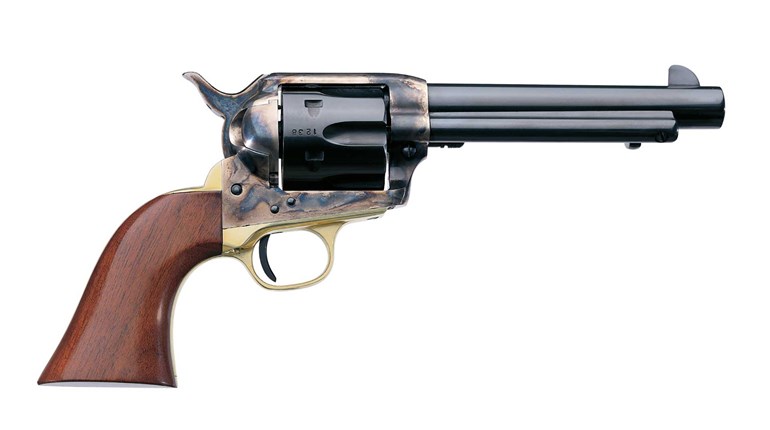
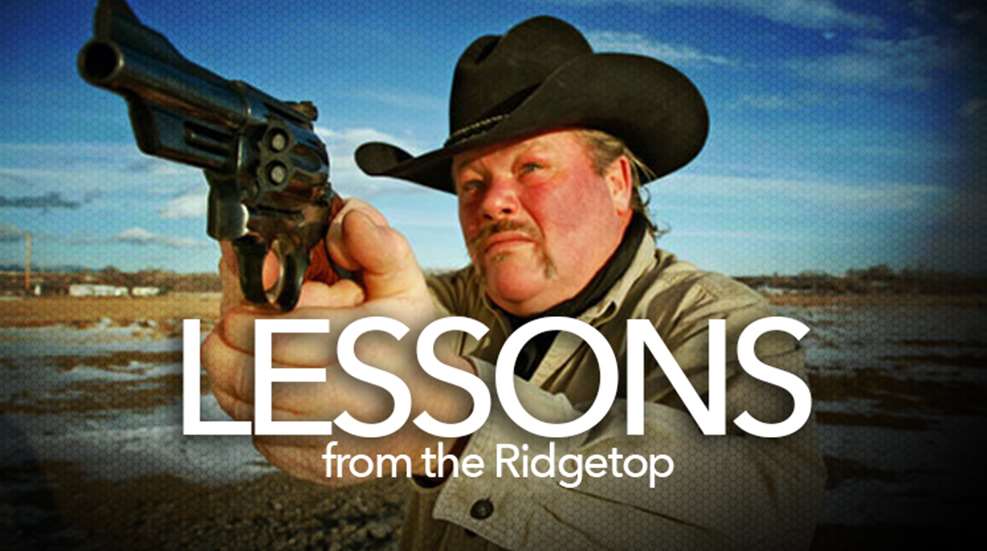
I’ve been shooting single-action revolvers for a long time. Fact is, the first handgun I bought was a Colt New Frontier .22 LR/WMR. Since then there has been quite a few thumb-busters that have gone through my hands. So I kinda figured I knew my way around single actions. And I do, provided it’s for hunting. Recently, however, I’ve taken up cowboy action shooting, and it has been—and continues to be—an interesting experience learning how to really run a single-action revolver.


Cowboy action shooting is a speed game. Accuracy is also a factor, but since the targets are relatively large and close, the ability to hit them isn’t too difficult—until the pressure of the clock is introduced. Shooting two-handed using a modern technique, it isn’t too difficult to dump five rounds onto as many steel targets in about 4 to 5 seconds. But I have decided to shoot “Duelist,” which means one-handed. That’s a different matter.

Take a single-action revolver—ensuring that it is empty, of course—and go through a dry-firing exercise slowly. You should see a fair amount of extraneous movement and manipulating of the pistol in order to position it for cocking, cocking it and repositioning the pistol to shoot accurately. Add recoil recovery, and there’s a whole lot going on in your shooting hand. Now do it faster, and make dang sure you don’t drop the pistol in the process.

Hurry too much and you’ll miss, even at 3 to 5 yards. I’ve done it. Thankfully, I haven’t dropped a gun during a match—a transgression that will get you DQ’ed—but I have when trying to run the gun faster than my hand is capable of while practicing by myself. If you really want an education in gun handling, try one-handed point-shooting—no sights.

True, cowboy action shooting has little that directly applies to hunting. However, gun handling does have direct applications to hunting, and I would argue the better one’s gun handling abilities, especially with a variety of firearms, the better his performance will be in the field. Too, the speed games require us to sharpen our target acquisition skills. Anyway, it’s all fun, and it’s all good, even with my shooting ego bruised.

Latest

LEDENRA YES Logo
LEDENRA YES Logo

NRA Announces 2026 Y.E.S. Grand Scholarship Recipients

The National Rifle Association has awarded $15,000 in college scholarships to attendees of the 2025 NRA Youth Education Summit (Y.E.S.) through the Y.E.S. Grand Scholarship program.

Recipe: Venison Empanadas

When Brad Fenson makes venison empanadas, the goal is simple. Keep the meat front and center, add enough flavor to complement it, and make a filling that stays juicy without overpowering the wild proteins. The filling is rich, balanced, and built to highlight venison, whether baked or fried.

Proof Research Unveils Shorter Barrels for Elevation 2.0 and MTR 2.0

Proof Research has announced shorter-barrel configurations for the Proof Elevation 2.0 and Elevation MTR 2.0. Both the Proof Elevation 2.0 and Elevation MTR 2.0 in shorter barrel configurations are available in Tactical Flat Dark Earth (TFDE) and the all-new Midnight color, offering shooters greater customization options alongside Proof Research's carbon fiber technology.

Range Review: Midwest Industries Bounty Hunter Revolver Brace

Thanks to Midwest Industries new Revolver Brace, you can easily mount a stabilizing brace to your favorite hunting revolvers. Check out B. Gil Horman's review of this game-changing product.

First Look: Marlin Mad Pig Customs Model 1894

Marlin has introduced its Mad Pig Customs Model 1894, a rifle developed—as its name implies—in collaboration with Mad Pig Customs. Built on Marlin's iconic lever‑action rifle platform, this model delivers modern, factory‑installed features previously found only on custom builds.

Funding Authorized to Conserve Critical Wetland Habitat

The Department of the Interior has announced that $44.79 million in North American Wetlands Conservation Act (NAWCA) funds have been approved by the Migratory Bird Conservation Commission. They will provide the U.S. Fish and Wildlife Service—and its partners—the ability to conserve, restore or enhance 185,203 acres of critical wetland and associated upland habitat for migratory birds across the United States.

Interests


Get the best of American Hunter delivered to your inbox.