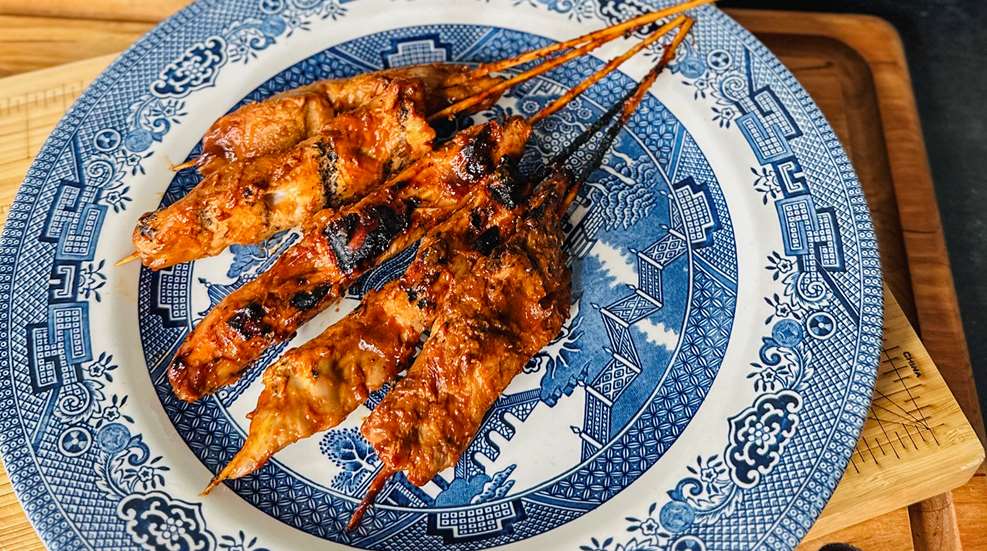
There’s nothing quite like standing around a tailgate after a successful hunt, birds laid out and admired, beers being passed around. It’s one of the best moments in hunting—that pause between the field and the next step—and for many of us, it’s quickly followed by something to eat. Nothing fancy. Just a fire coming together and a few bites to hold you over while the stories start rolling.
For me, that usually meant an old charcoal grill and something simple like boudin or Zummo-brand sausage. No recipe. No plan. Just smoke, heat and food passed around while boots were still muddy. Looking back, that kind of casual, fire-driven cooking isn’t all that different from a Japanese grilling method called yakitori.
Yakitori translates simply to “grilled bird.” At its core, it’s a method built around skewered meat cooked quickly over charcoal. It developed as everyday food—meant to be efficient, practical and cooked with attention rather than excess. Yakitori isn’t about heavy seasoning or long marinades. It’s about cutting meat intentionally, managing fire and knowing when to pull it off the grill.
That approach makes a lot of sense when you’re working with pheasant — or even a spring wild turkey breast fresh from the freezer.
Pheasant is one of the leanest game birds we hunt, and it doesn’t leave much room for error. The most common mistake I see is overcooking, especially when the breast is left whole and treated like a roasted chicken. The same can be said for wild turkey breast. While cooking either bird whole is possible, it can be a challenge, particularly if you’re trying to do it over live fire.
For this recipe, breaking down the bird into its components is key. Yakitori rewards that kind of thinking. Using just the breast meat and cutting it into uniform pieces gives you far more control over doneness. The meat cooks quickly, stays tender and benefits from constant movement over the fire. This is exactly what lean birds like pheasant and wild turkey need.
If using wild turkey, treat it the same way you would pheasant: trim away any silverskin then slice the breast across the grain into half-inch strips before threading onto skewers. Keeping the pieces consistent in size ensures even cooking and prevents the edges from drying out before the centers are done.
Another advantage of this method is how forgiving it can be. The Japanese-style barbecue sauce adds sweetness and depth, enhancing the mild flavor of pheasant without overpowering it. It works equally well with wild turkey as the clean, lean profile benefits from quick cooking and a light glaze. That said, both birds do best when they go onto the grill clean. While many recipes call for marinating, I prefer to baste the meat as it cooks. This allows the sauce to glaze gradually while preserving the proper texture of the meat.
Pheasant—and wild turkey—yakitori also lends itself well to life outside the kitchen. It’s a great post-hunt snack and works especially well on the tailgate of a truck. If you’re cooking in the field, make your sauce ahead of time or opt for a quality store-bought option like Bachan’s Japanese Barbecue Sauce. Either way, the setup is simple and the payoff is immediate.
Yakitori isn’t meant to be complicated or precious. It’s practical food, cooked over real fire and meant to be eaten together. When applied to pheasant or wild turkey, it offers a straightforward way to respect the bird’s lean nature while keeping the cooking approachable and repeatable.
Sometimes the best techniques are the ones that feel familiar the moment you use them. Yakitori just happens to give a name to something hunters have been doing around a fire for a long time.
*To keep up with all of Chef Holly’s hunting, fishing and cooking adventures, be sure to follow @gamegirlgourmet on social media and sign up for her monthly newsletter at gamegirlgourmet.com.
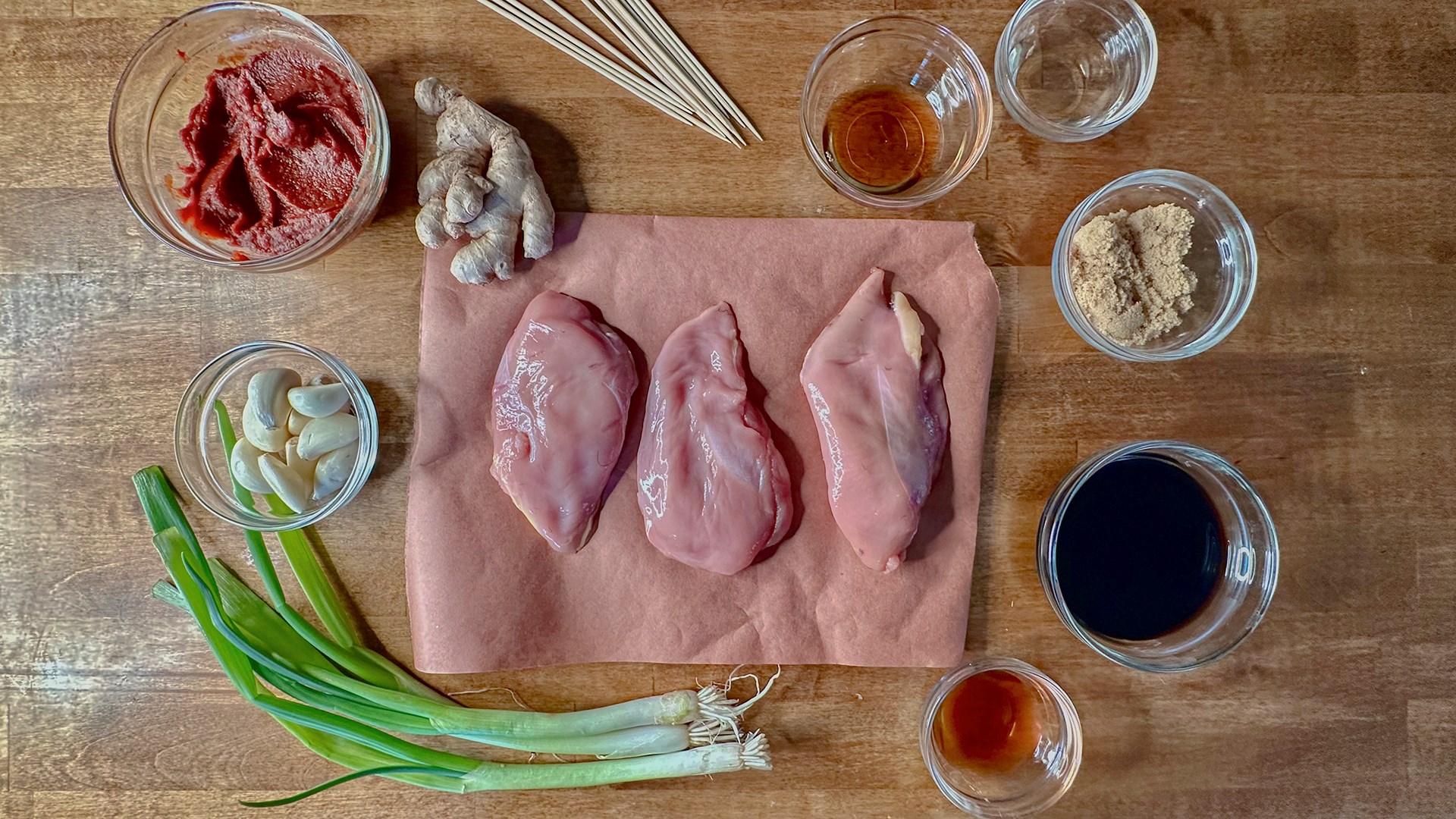
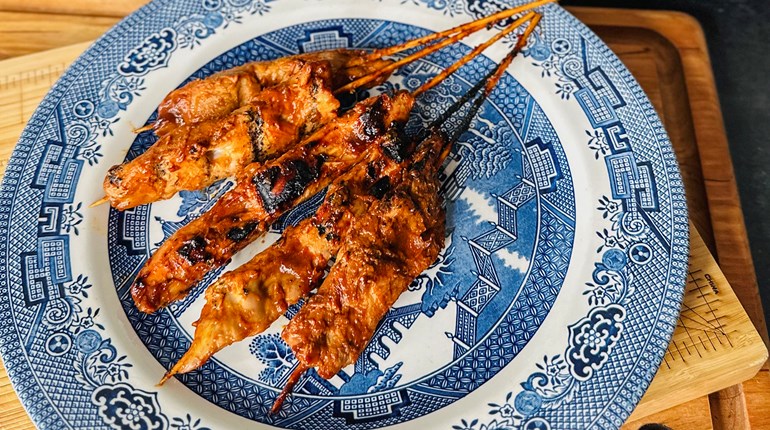
Pheasant (or Wild Turkey) Yakitori with Japanese-Style Barbecue Sauce
Ingredients:
- 6 pheasant breasts—or 1 large wild turkey breast
- Bamboo skewers, soaked in water for 30 minutes
- 6 tbsp. low-sodium soy sauce
- 2 tbsp. brown sugar or white cane sugar
- 6 ozs. tomato paste (1 small can)
- 1 tbsp. mirin
- 3 tbsp. green onion, finely sliced
- 1 tbsp. rice vinegar
- 3 cloves garlic, finely minced
- 3 tsp. freshly grated ginger
- 3 tsp. toasted sesame oil
- 1 cup water
- Salt, to taste
Instructions:
- Slice the pheasant breasts or wild turkey breast into uniform half-inch strips, cutting across the grain for tenderness. Thread the strips onto soaked bamboo skewers and set aside.
- In a medium saucepan, whisk together the soy sauce, sugar, tomato paste, mirin and water until smooth.
- Stir in the garlic, ginger, green onion and rice vinegar. Place the saucepan over medium heat and cook, stirring frequently, until the sauce just begins to simmer. Simmer gently for 5 minutes.
- Reduce the heat so the sauce remains very hot but no longer simmers. Continue cooking for another 7-10 minutes, stirring often, allowing the flavors to meld and the sauce to thicken slightly.
- Taste and season lightly with salt if needed. Remove from the heat and stir in the toasted sesame oil. Let the sauce cool slightly then strain through a fine-mesh strainer into a bowl.
- Grill the skewers over medium-high charcoal for 2-3 minutes per side, basting with sauce as they cook, until just cooked through and lightly caramelized. Serve immediately.