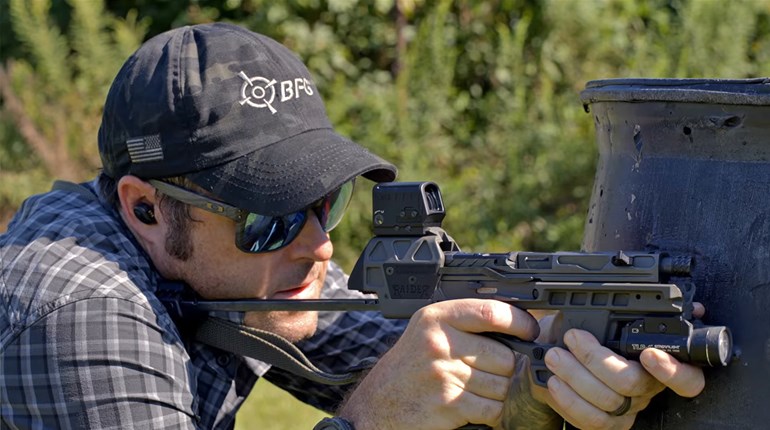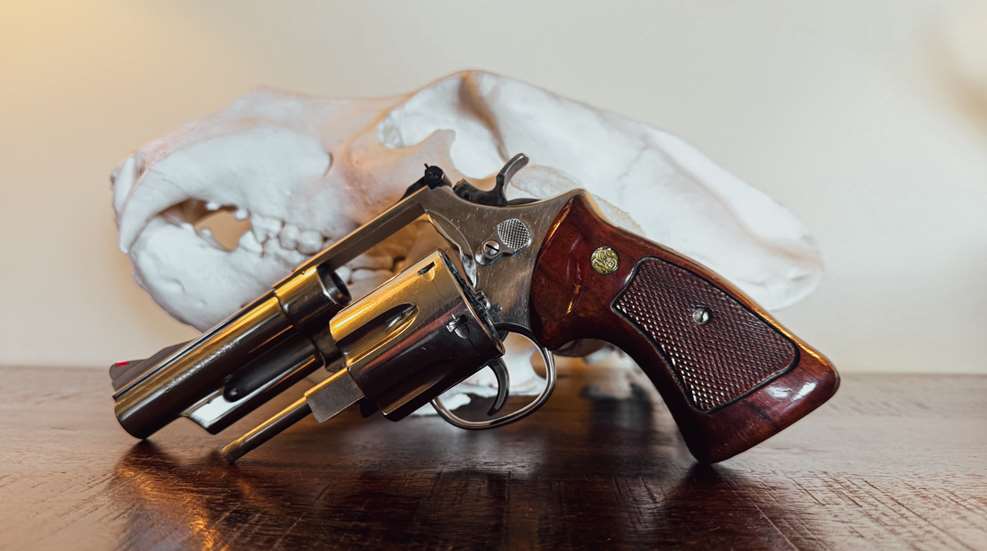
The end of spring is approaching. There are a few turkeys still gobbling, the morels are popping, mosquitos are multiplying and, around the forest, black bears have grudgingly rolled out of their sporadic winter snooze. Spring bear hunting is a grand adventure, and there’s still some time left to chase them. But, as with pursuing any predator, there is (or should be) an extra layer preparedness. Come with me as we look at some fun and effective sidearm options for your spring bear forays and summer scouting expeditions.
First off, the scope of this little exercise is limited to black bear. Grizzly/brown bear regions require different levels of stopping power due to size, strength, etc., and not all of these selections hit that metric. We are going to look at caliber, platform, bullet and carry method options for the odyssey known as spring black bear hunting.
The four calibers we are going to focus on are 9mm, .357 Magnum, 10mm and .44 Magnum with a nod of respect to a few others.
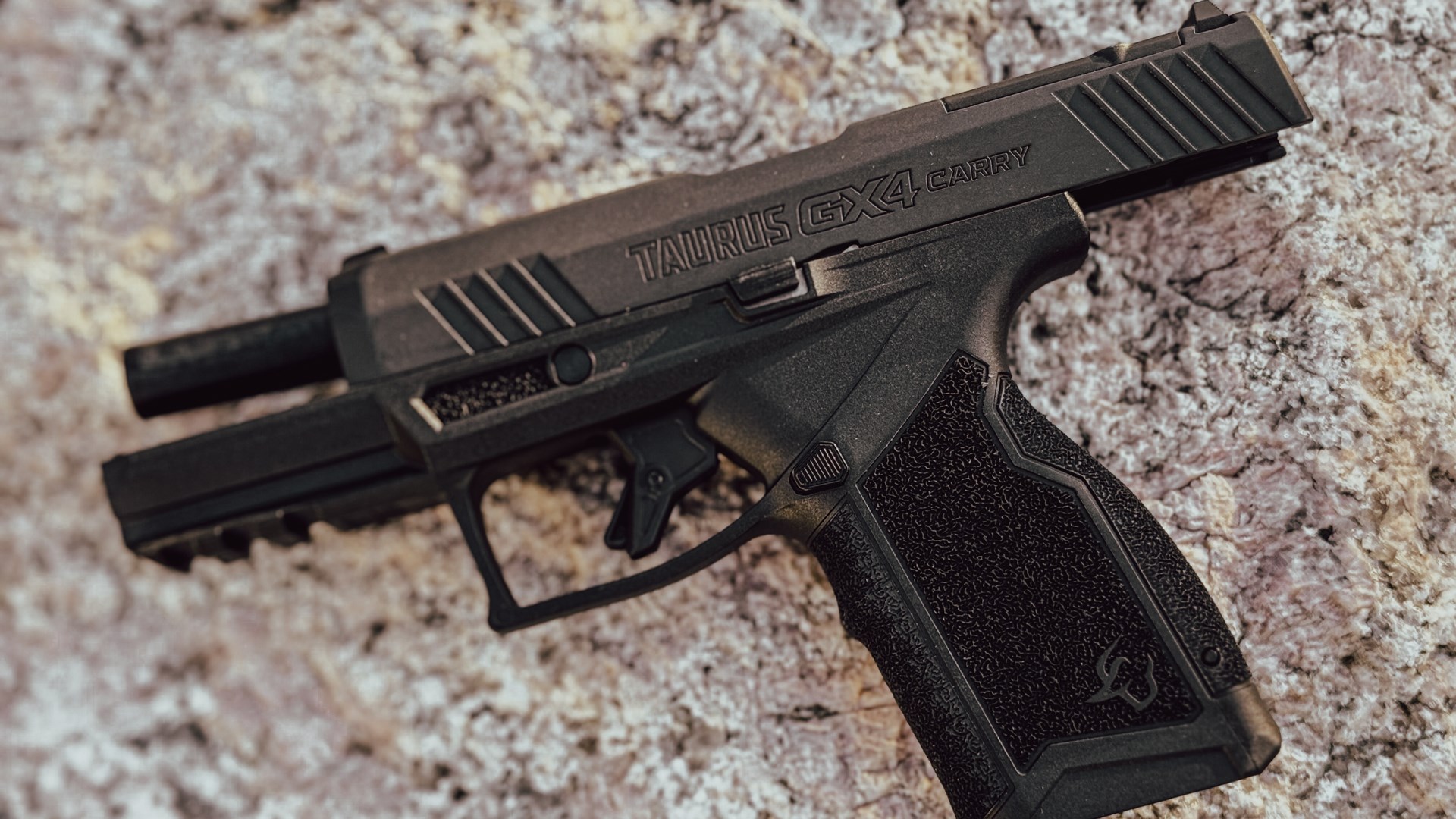
The 9mm—An Unexpected Companion
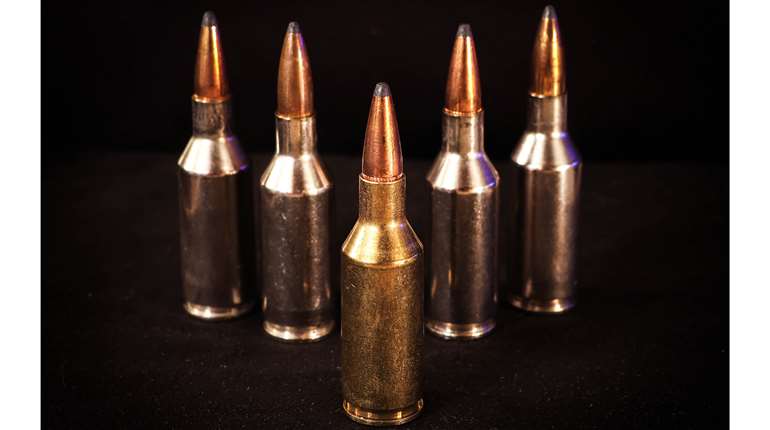
For many, the thought of carrying a 9mm as a potential black bear backup mitigator would be cause to clutch pearls and gasp in disbelief. And, they wouldn’t be entirely wrong, historically speaking. In years past, the 9mm hasn’t been offered with a bullet that would perform in that capacity. Thanks to several ammo manufactures, there are currently some great “bear-stopping” options on the market.
The 9mm Luger—also known as the 9mm Parabellum or 9x19—is an immensely popular and (thanks to modern ammunition innovations) versatile chambering. Bullets range from lightweight 90-115-grain target offerings to 150-grain critter stoppers—two or four legged.
In their Backcountry Defense line, Hornady offers a 138-grain DGH 9mm +P round with a protected point projectile for maximum penetration and energy delivery. In a 4-inch test barrel, this particular round delivers a muzzle velocity of 1150 fps and 405 ft.-lbs. of energy. At 50 yards, velocity drops to 1068 fps and energy to 350 ft.-lbs.. As most self-defense encounters happen much closer to the muzzle than 50 yards, the 9mm with appropriate ammunition is still a viable option for black bears.
Petite Power—The .357 Magnum
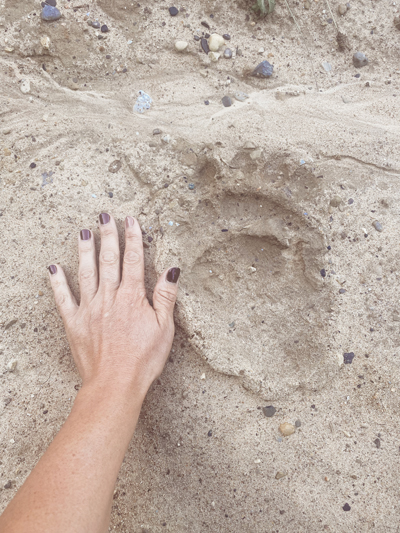
The .357 Magnum is another one that might spark some debate as a bear option. But, for the small or recoil sensitive, the .357 is a great revolver-based choice. Remember, it doesn’t make any difference how much stopping power you have in hand if you can’t hit what you’re aiming at …
Like the 9mm, bullet selection has broadened significantly. There are lots of bear (un)friendly options from which to choose. Hornady currently makes a 165-grain DGH (Dangerous Game Handgun) load in the Backcountry Defense series. With a muzzle velocity of 1510 fps and 835 ft.-lbs. of energy, it is a great middle-ground option.
10mm—A Modern Monster
Next up is the 10mm. This is a delightful little powerhouse that is chambered in a semi-auto platform. The 10mm is a bit of a niche and enjoys a small but dedicated following as a cartridge.
The 10mm is available in bullet weights from 135-220 grains. With muzzle velocities from the low 1000s fps to 1400 fps, it can deliver great energy to the target. There are currently some good “defense” loads on the market for this chambering. A few worth mentioning are made by Buffalo Bore and Underwood. Ideal bullet construction is flat nosed or protected end to deliver maximum penetration and deposit energy.
Additionally, Hornady has a great DGH 10mm 200-grain load. Muzzle velocity is 1160 fps with 598 ft.-lbs. of energy. At 50 yards, this 200-grain projectile is traveling at 1077 fps and is still delivering 515 ft.-lbs. of energy. All Hornady data is from a 5-inch test barrel.
Size, Weight and Recoil—The .44 Magnum
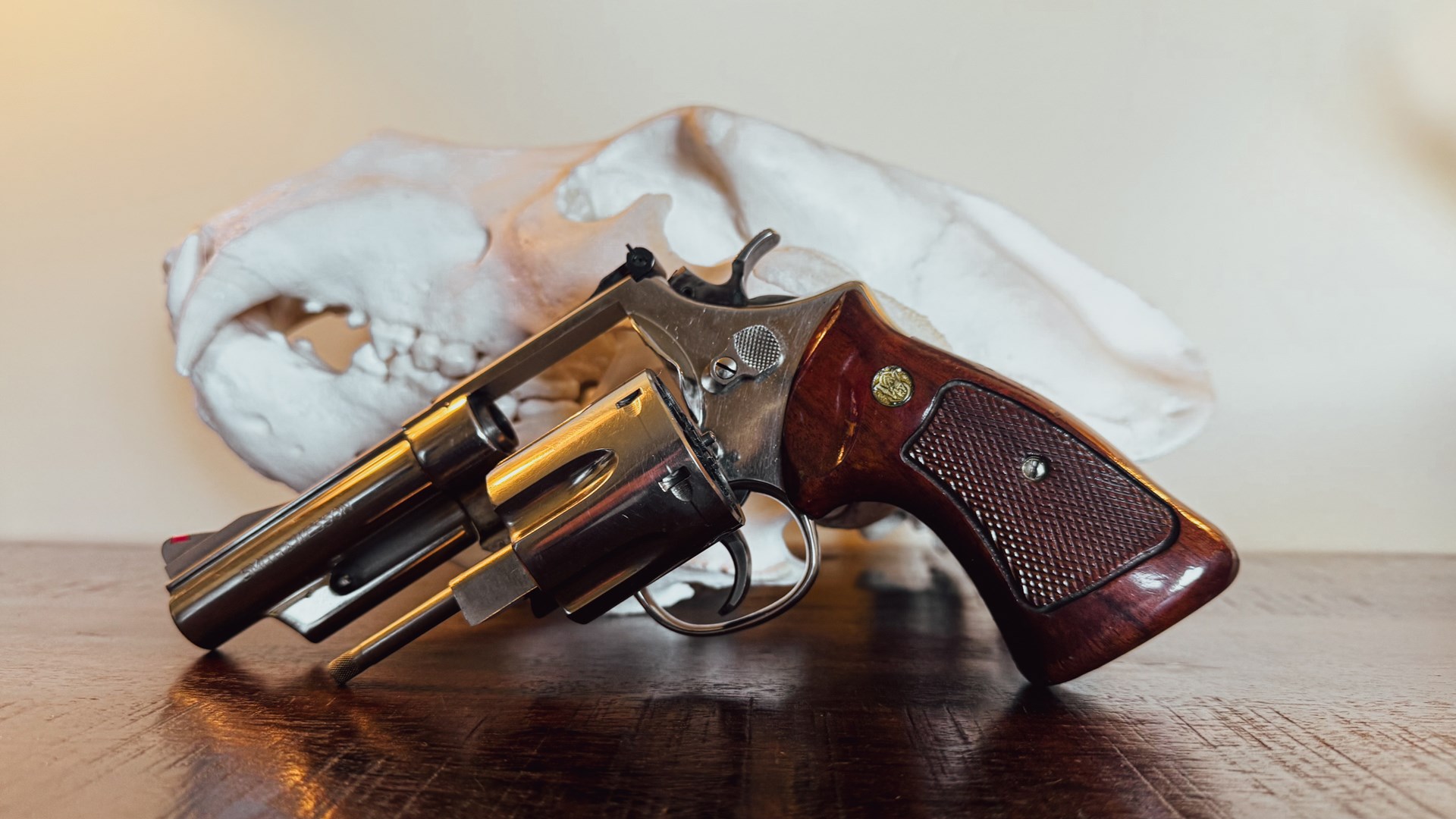
Switching gears a bit, the pearl clutchers can relax as we dig more into familiar bear sidearm territory—the eminent .44 Remington Magnum. The .44 Magnum, once revered as the most powerful handgun caliber, has enjoyed immense popularity and recognition as “the choice” for a bear sidearm. And they’re not wrong. Ballistically, the .44 Mag is both exceptional and effective. But there’s a downside.
Most .44 Mag. revolvers are chunky, girthy and a handful. From snub-nose hand cannons to long-barreled behemoths, the .44 Mag. delivers a lot of energy effectively in many forms. This is a positive when facing down a large, toothy critter. However, they do so with a lot of recoil and muzzle blast.
The basic ballistic profile of the .44 Mag. involves a projectile from 180-300 grains with velocities from 1000 to over 1600 fps. There are tons of options for .44 Mag. ammunition with many geared toward dangerous-game critters and defense.
Continuing with Hornady products, there is a 240-grain DGH (Dangerous Game Handgun) load with muzzle velocity of 1620 fps. The energy at the muzzle is 1398 fps and drops to 1147 fps at 50 yards (as tested with an 8-inch barrel). The capability of this round as a bear-stopper is vast.
Platforms, etc.
Calibers aside, platform and carry method are a symbiotic relationship all their own. From petite CC options to longer slide, full-frame concepts, there are lots of platforms from which to choose. Picking the one that fits your needs involves an evaluation of desired carry method.
Chest holster? Leg holster? Belt carry? Picking the carry method that’s comfortable (and effective) for you is critical. If it’s not comfy, you most likely won’t carry it consistently. In the same vein, if you don’t shoot it confidently, it won’t be overly effective under stressful circumstances.
A few things to consider when evaluating holsters:
Will you be carrying a pack with a hip belt? If yes, belt carry might be a little uncomfortable. Second, do you carry a bino chest harness? If yes, then make sure that if you’re interested in chest carry, the harness is compatible. Accessibility is important. Third, if hauling bait buckets, make sure that your carry method doesn’t impact range of motion with lifting/carrying.
Finding the right holster is key. It not only needs to be comfortable to wear and seamlessly integrated into your hunting gear/activities, it needs to keep your gun firmly retained and secure. Trigger protection is paramount—especially in some of the non-revolver options.
Honorable Mentions
The .45 ACP—A Timeless Staple
My first center firehandgun was a 1911 in .45 ACP. As a result, I’m a bit partial to it. While many prefer other options, I know what I’m comfortable shooting and have confidence in. When I chased black bears a few years back in my home state of Michigan, my 1911 was firmly strapped to my chest throughout my time in the woods.
.327 Federal—An Unexpected Alternative
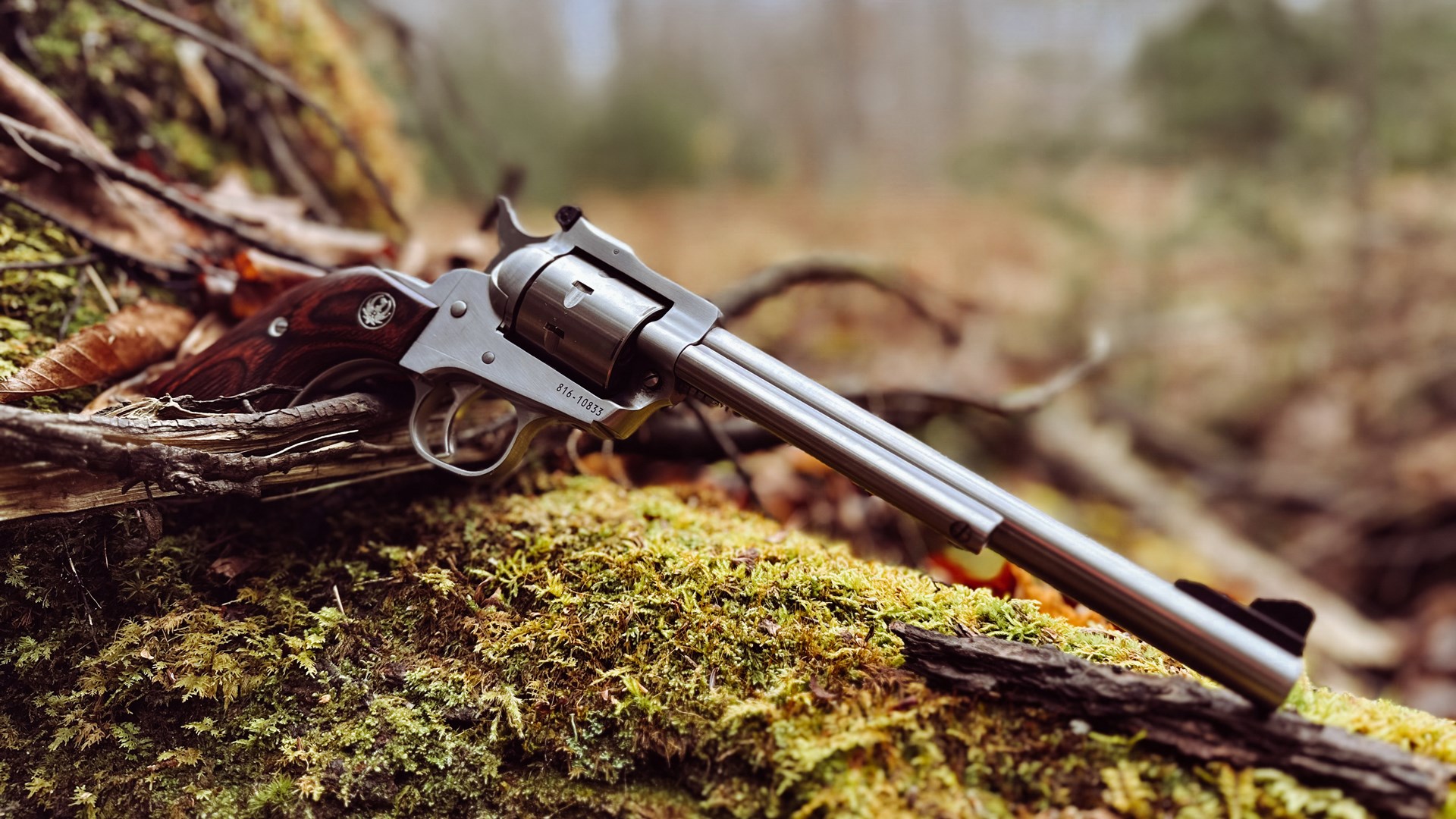
The .327 Federal Magnum is typically not the first to spring to mind when it comes to black-bear defense. Ballistically, it has lots of interesting characteristics—akin to a .357 Magnum, but not as spicy. Practically, there is typically one more in the cylinder, which can be a benefit in a defensive situation.
.41 Remington Magnum—For Those That Go Against the Grain …
The .41 Remington Mag is a very strong bear-defense option, ballistically speaking. While the .44 Magnum is the popular go-to for many (with good reason), the .41 Mag has a devout and niche fan base. Ammo availability is a lot less than the heavily popularized .44 Mag., but it’s a very effective option nonetheless.
With spring bear hunting in full swing, it’s time to get out there. From holster selection and carry method to caliber and bullet design, there are decisions aplenty. However, buying a gun is always a good idea. Whether duplicating an existing caliber in a new format, dabbling in something new, or checking out some new bullets, there’s no time like the present to get bear(ly) armed.
Happy Hunting!
Andi
Most Popular