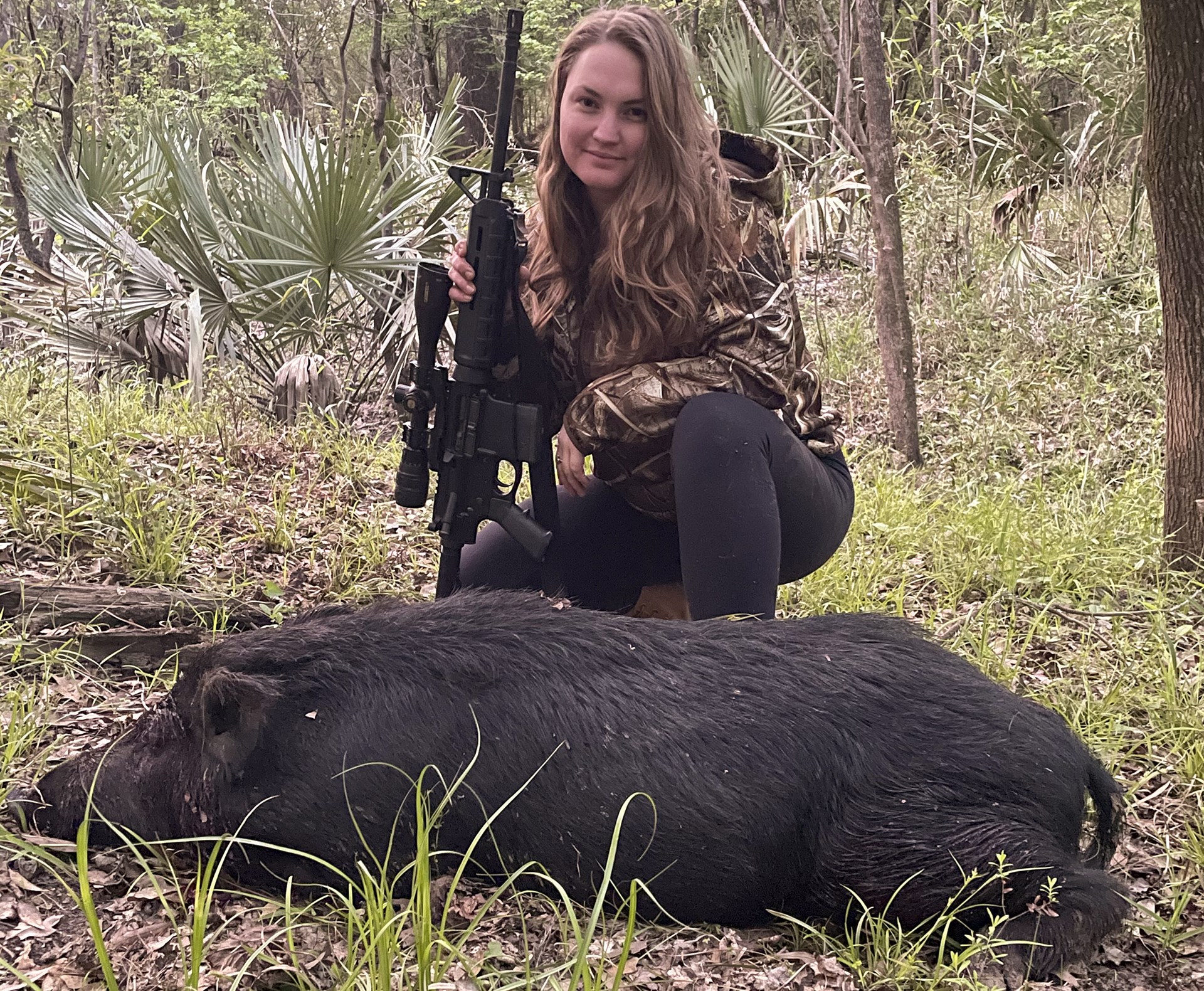
Hogs and I have a long history together. Long before there was Game Girl Gourmet, jokes circulated among my friends and family that if you wanted to know what I was up to during the summer of 2020 all you had to do was check Facebook to see the latest “Hog Hunting with Holly” scoreboard.
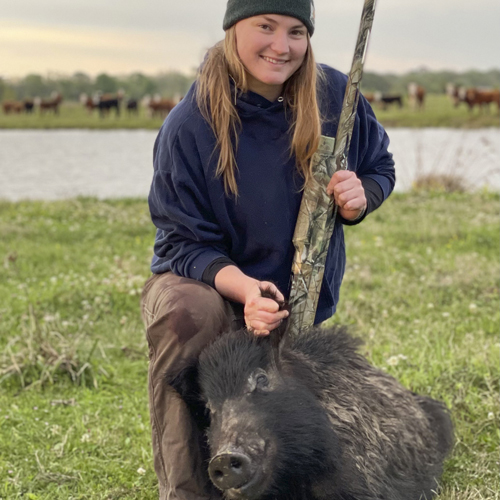
That summer, I had just graduated from engineering school—yes, engineering—in May of 2020. In hindsight, without that season, there would be no Game Girl Gourmet. But that’s a different story for a different article. What matters here is this: Like many people that year, I suddenly had an abundance of time on my hands. And for reasons that still make me laugh, we also had an abundance of pigs.
I grew up in Southeast Texas near Beaumont, where most of my family still lives. My dad has a small farm that I affectionately refer to as “the funny farm,” and that year, the hog numbers were unlike anything we’d seen before. Rooted pastures, torn-up fence lines and fresh tracks appearing almost overnight became the norm. Anyone who’s dealt with wild pigs knows the pattern—they’re never really gone, and when conditions are right they multiply faster than logic allows.
That summer was stressful in ways that are hard to explain. Graduating into uncertainty will do that. But it also became one of the most formative seasons of my life. I made a decision early on that I wasn’t going to let that year take more from me than it already had. I committed to a few non-negotiables: I cooked. I worked out. I drank Lone Star Light. And I hunted pigs.
More importantly, I made a promise to myself that would change the trajectory of my career. Every hog I killed would be fully utilized. Nose to tail. No exceptions.
Since then, I’ve been fortunate enough to hunt wild pigs across the country and abroad. Different terrain, different animals, different outcomes—but the same lessons apply every time.
Why Wild Hogs Matter
Wild hogs occupy a strange place in American hunting culture. They’re among the most accessible animals to hunt in many parts of the country, yet they’re often treated as disposable. That mindset didn’t come out of nowhere.
Feral hogs in the United States descend from domestic pigs brought over by early European settlers, along with Eurasian wild boar introduced later for sport hunting. Over time, those populations interbred and spread aggressively. Today, wild hogs are found in more than 35 states, causing billions of dollars in agricultural damage each year and placing immense pressure on native ecosystems.
Wild hogs reproduce quickly, adapt easily and lack natural predators in many regions. Eradication isn’t realistic. Management is the only option—and management requires consistent, responsible pressure from hunters.
What often gets lost in that conversation is food. Somewhere along the way, hogs became synonymous with pest control rather than protein. While I understand the frustration they cause, I’ve never believed that killing an animal and wasting it should be the default response—especially one that can feed you exceptionally well when handled correctly.
The Season That Built Game Girl Gourmet
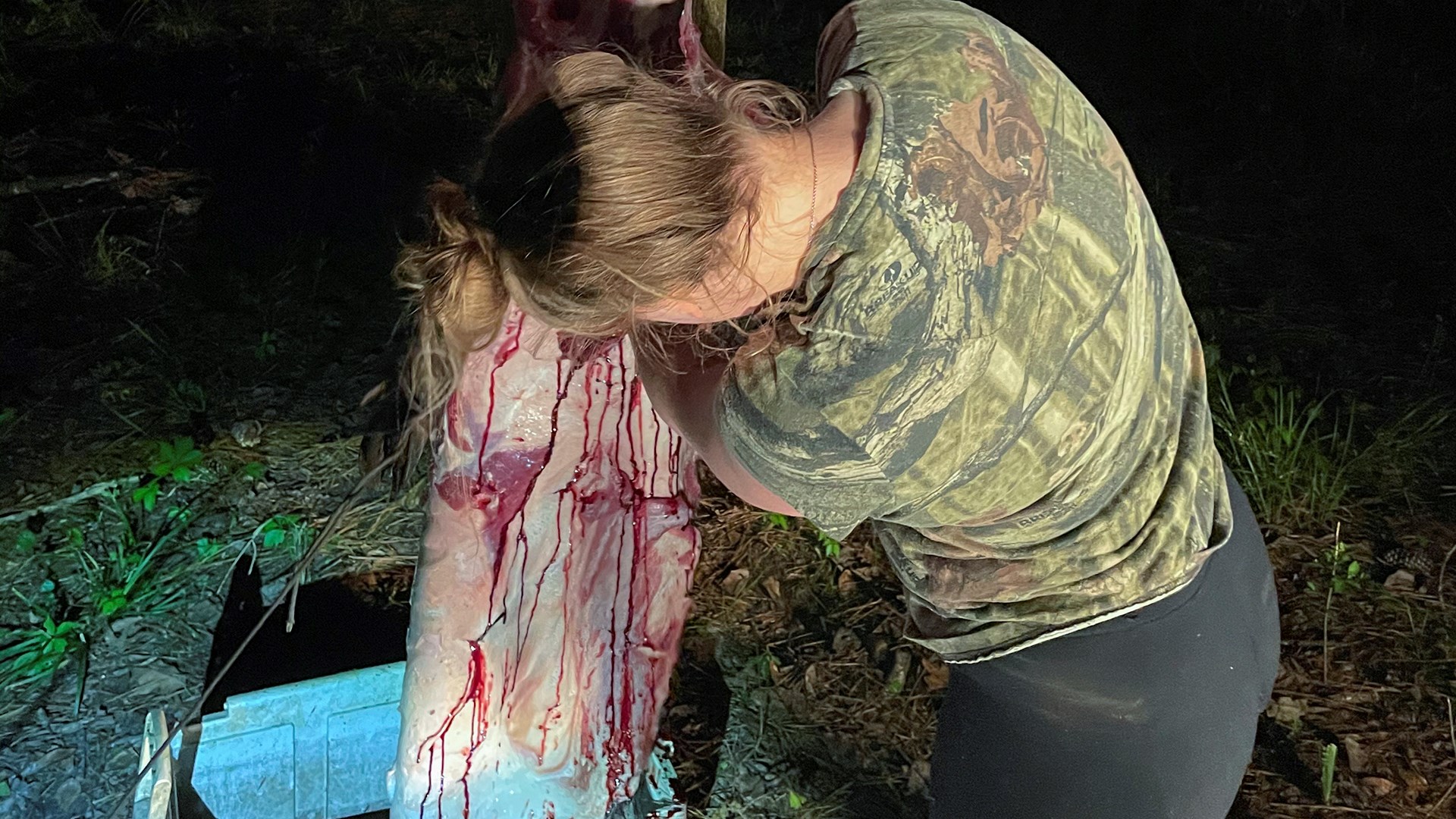
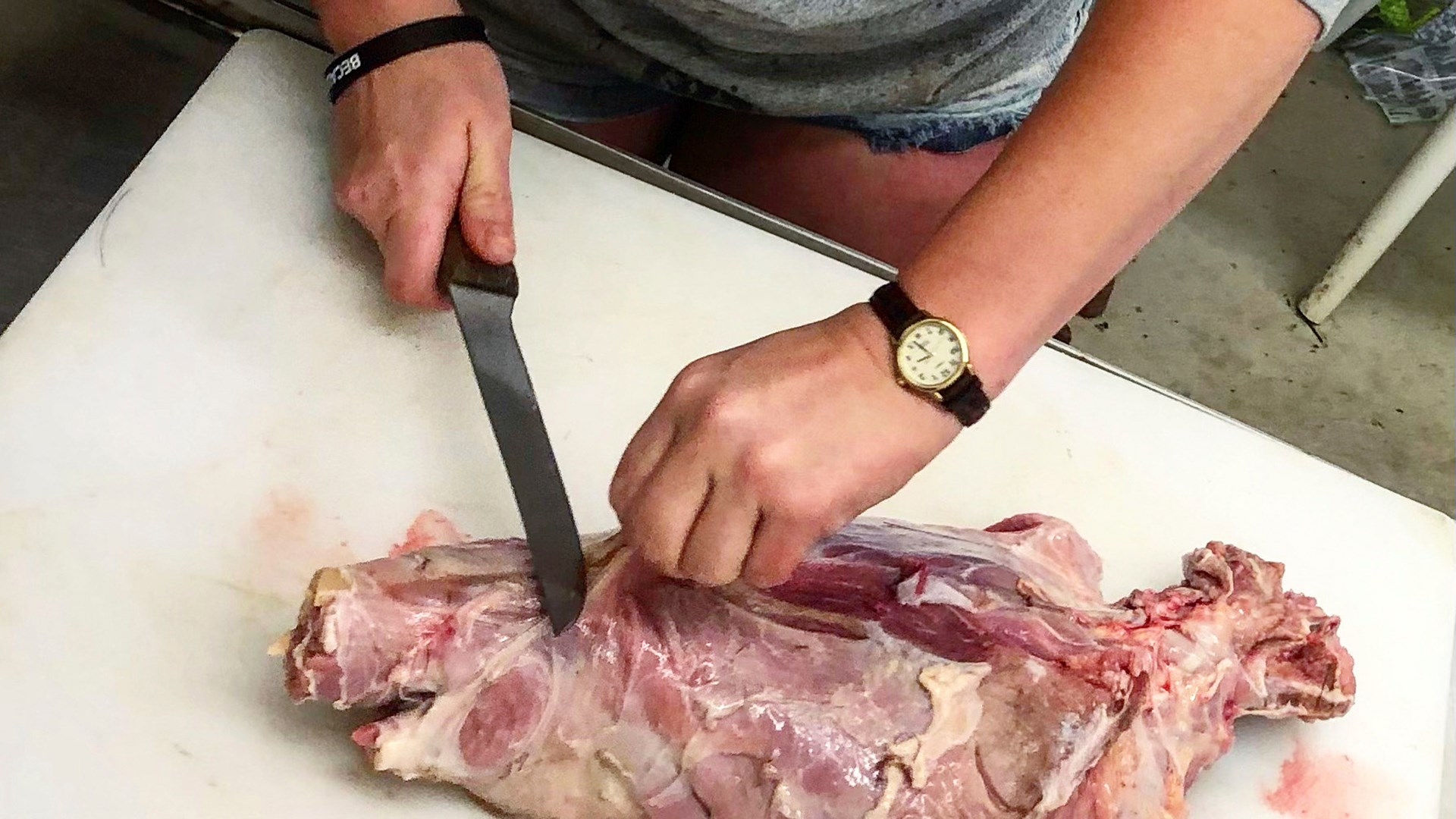
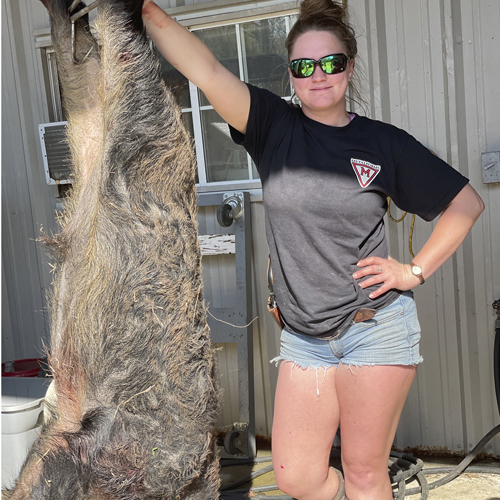
That summer, I butchered roughly 30 pigs. Not in a commercial facility. Not with a professional butcher standing over my shoulder. I learned by doing—breaking down animals, making mistakes and figuring out how to fix them the next time.
Each hog taught me something different: how fat distribution changes based on habitat, how muscle structure differs from domestic pork and how skin thickness alone can dictate your entire processing approach.
The work was repetitive and demanding. But repetition is where skill is built. By the end of that season I wasn’t just more confident, I was competent. That foundation is what I credit for my butchering skills today.
If you’ve ever wondered how someone gets “good” at breaking down animals, the answer isn’t glamorous. You do it over and over again, and you respect the process enough to keep learning.
Learning to Butcher Wild Hogs
If you’ve processed hogs in different parts of Texas—or anywhere else—you already know that not all pigs are created equal. The hogs I encountered in East Texas were noticeably different from those I’ve handled in Central Texas. Skin thickness varied dramatically. Some lacked the heavy, armor-like shield associated with mature boars, while others had well-developed protective layers that required patience, sharp steel and a willingness to slow down.
From a butchery standpoint, wild hogs demand flexibility. Age, size, sex and habitat all influence how you should approach the animal. Younger pigs are generally more forgiving, with finer muscle fibers and milder flavor. Larger, older animals require more intention, both in how they’re broken down and how the meat is ultimately used.
This is where many hunters decide wild hogs “aren’t worth eating,” particularly when it comes to older boars. I’ve heard it countless times. And while I won’t pretend every animal is perfect I can say this with confidence: I’ve never personally encountered a pig I couldn’t find a use for.
That doesn’t mean every cut is treated the same. It means understanding the animal well enough to match the cut to the correct application.
Toughness is real, especially in older hogs that have lived hard, active lives. Expecting those animals to perform like a domestic pork loin is where frustration sets in. That’s not a failure of the meat, it’s a mismatch of expectations.
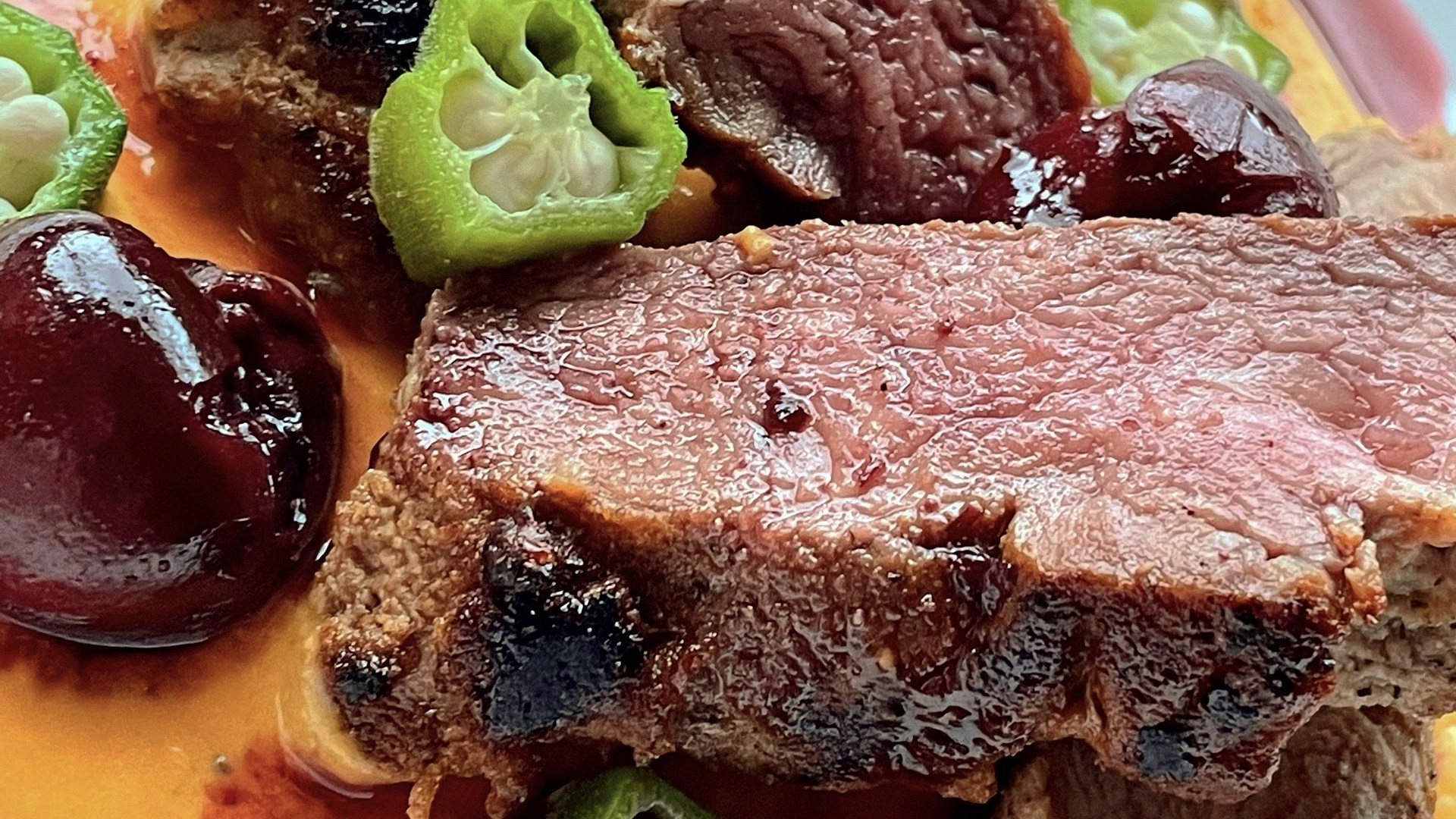
One of my favorite approaches with older pigs is to grind the entire animal—yes, including the backstraps. There are hogs where cooking the loins like a traditional pork chop is an uphill battle you don’t need to fight. Ground wild pork is exceptionally versatile and produces some of the most usable meat you can put in your freezer.
Sausages, dumplings, meat sauces, patties—ground pork shines where seasoning, fat balance and cooking method can be controlled.
Grinding isn’t a downgrade. In fact it’s a strategy.
The Big Boar Myth
Let’s talk about the elephant—or rather, the boar—in the room.
Yes, boar taint exists. No, it’s not as common as people think. And no, size alone isn’t the determining factor. Hormones, diet, stress, age, and—most importantly—field care all play a role. In my experience, poor handling does far more damage to flavor than an animal’s sex or size ever could.
That said, this isn’t a blanket rule. There are occasional animals that are simply beyond saving, even when everything is done right. Sometimes you know the moment the hide comes off—an odor that doesn’t dissipate, meat that signals trouble before it ever hits a cutting board. Walking away in those moments isn’t failure. It’s good judgment.
Wild hogs are, culinarily speaking, some of the cleanest-eating wild game available when handled correctly. The exception doesn’t negate the rule—it reinforces the importance of experience and discernment.
Knowing when to cook an animal—and when not to—is part of being a responsible hunter.
Wild Pork vs. Domestic Pork
Domestic pigs are bred for fat content, consistency and efficiency. Wild hogs are not. Wild hogs live hard lives, travel constantly and build dense muscle along the way. Their fat is leaner and more variable, and their flavor reflects what they eat and where they live.
Because of this, many cooking methods that work for domestic pork fail when applied to wild hogs. Long, dry cooks without added fat result in toughness. Overcooking lean cuts only compounds the problem.
Wild pork shines when treated like wild game, not livestock. Grinding, marinating, braising and thoughtful seasoning are where it excels.
Field Care: Where Flavor Is Won or Lost
If there’s one place where wild hogs earn an unfair reputation, it’s here. Flavor is built—or destroyed—long before the meat ever reaches your kitchen.
Shot placement matters. Quick recovery matters. Cooling the animal promptly matters. Cleanliness from the field to the cutting table matters. Pigs tend to amplify mistakes, especially in warm climates where hog hunting often takes place.
The clock starts the moment the animal hits the ground. Stress, retained heat and poor handling all affect how the meat behaves later. Field care doesn’t have to be complicated, but it does have to be intentional.
Hunters who claim wild hogs “always taste bad” are often unknowingly describing poor field care rather than a flaw in the animal itself.
What Wild Pork Is—and Isn’t
Wild pork will never taste like domestic pork—and I’ve never wanted it to. What I want is honesty—meat that reflects how the animal lived and how well it was handled.
That honesty shaped me long before I had the language to explain it. Long days breaking down hogs in the Southeast Texas heat taught me patience, discipline and humility—lessons that followed me into the kitchen and eventually became the backbone of Game Girl Gourmet.
I’ve been fortunate to chase wild hogs in many places since then. The landscapes change, but the fundamentals don’t. Handle the animal well. Let the meat tell you what it needs. Accept the outcome.
That’s why hogs still matter to me. When treated with care they give you some pretty incredible table fare.
Why Siu Mai?
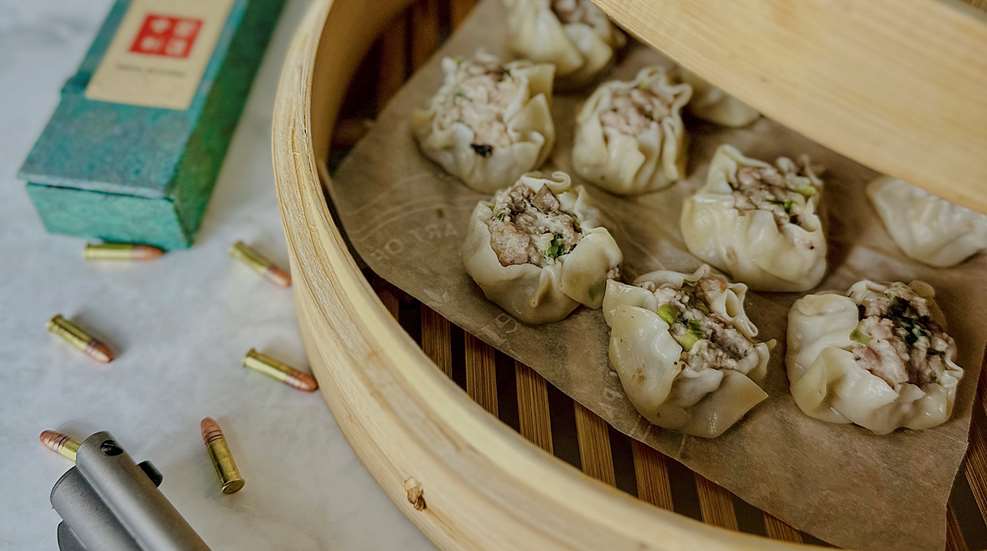
Siu mai originated in northern China as food for travelers—simple dumplings built around ground pork, designed to be efficient, filling and reliable. It was never meant to showcase perfect cuts or excess fat. It was meant to work.
That’s exactly why it makes sense here. Wild hogs don’t always give you ideal loins or forgiving texture, especially as animals get older. But when handled correctly ground wild pork is one of the most useful products you can put in your freezer. Siu mai leans into that strength instead of fighting it.
This preparation rewards good grinding, proper seasoning and controlled moisture—things that matter when working with lean, hard-working animals. It’s adaptable, it freezes well and it scales easily, which makes it just as practical for a stack of hogs in the cooler as it is for a single animal.
I could write so much on just this dish alone, but this is why it closes the story. It’s a straightforward way to turn wild pork into something useful, repeatable and worth doing again the next time you bring a hog home.
*As always, if you want to keep up with all of Holly’s hunting, fishing and wild game cooking adventures head over to gamegirlgourmet.com and sign up for her newsletter and give @gamegirlgourmet a follow on Instagram!
Wild Pork Siu Mai
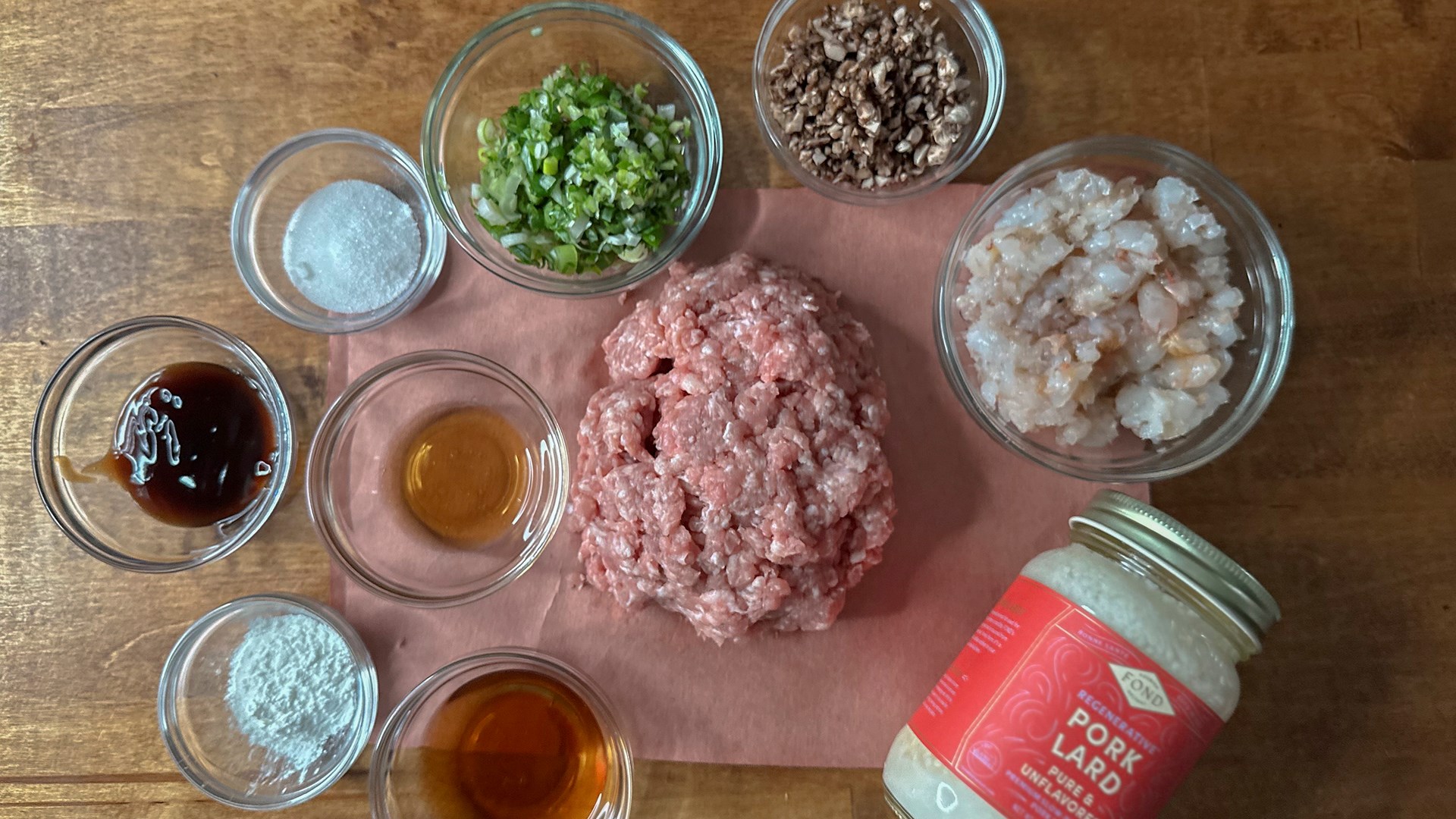
Ingredients
- 1 pound ground wild pork
- ½ pound shrimp, minced (optional)
- 3 fresh shiitake mushrooms, very finely chopped
- 1 teaspoon salt
- 4 teaspoons sugar, divided
- 1 teaspoon baking soda
- 1 tablespoon cornstarch
- 1½ tablespoons Shaoxing wine
- (Chinese cooking wine)
- 2 green onions, finely chopped
- 1 tablespoon oyster sauce
- 2 tablespoons pork lard (optional)
- 2 tablespoons hot water
- 1 package wonton wrappers
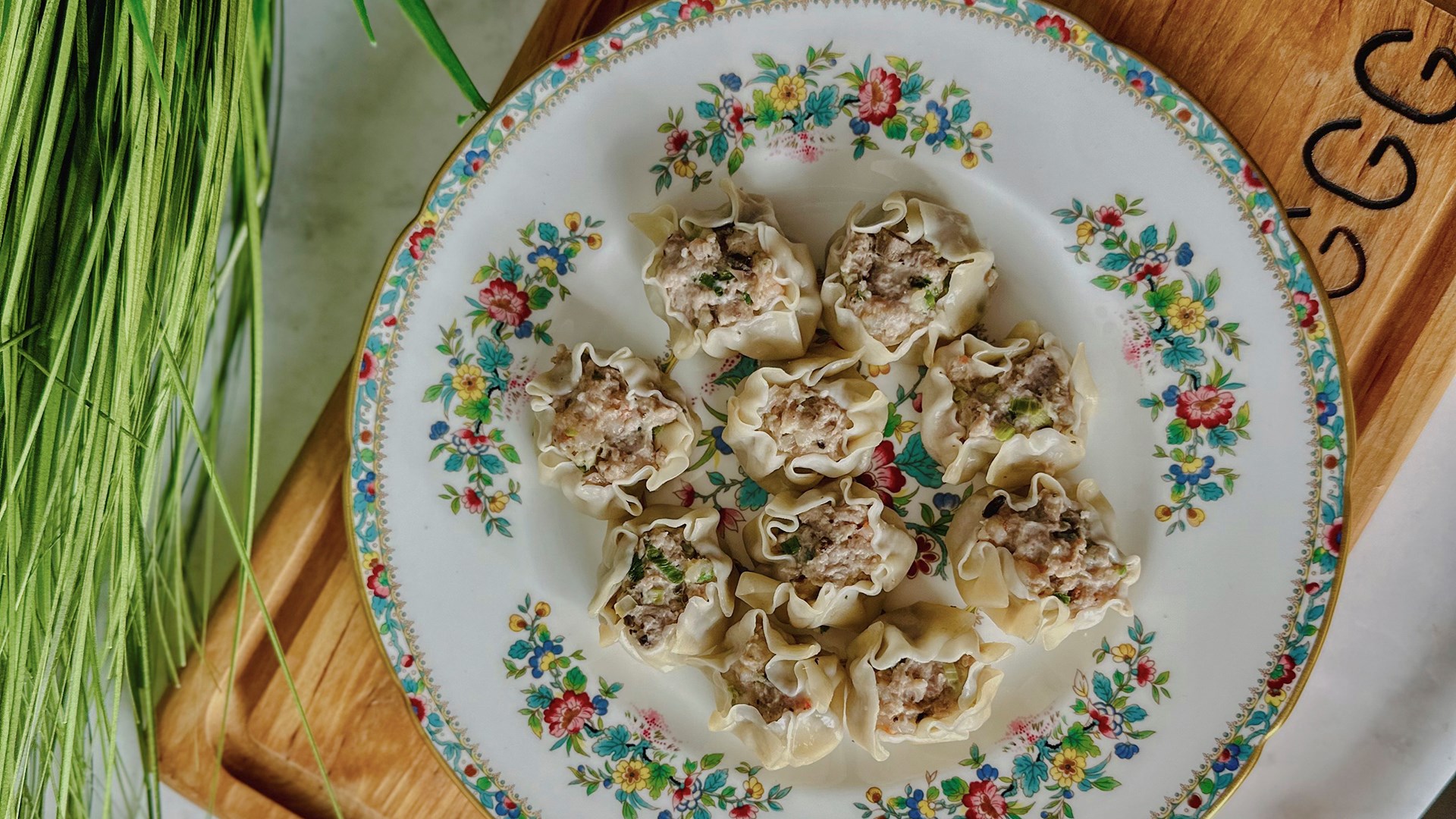 Siu mai orginiated in northern China as food for travelers. It’s a dumpling dish built around ground pork, and it’s an excellent choice for wild hog meat.
Instructions
- Place the minced shrimp in a small bowl and toss with 1 teaspoon of the sugar, the baking soda and the hot water. Let sit for 15 minutes. Rinse the shrimp under cold running water, drain well and set aside. If omitting shrimp, skip this step.
- In a large bowl, combine the ground wild pork, remaining sugar, cornstarch, Shaoxing wine, salt and oyster sauce. Mix until sticky and slightly paste-like.
- Add the shrimp (if using), shiitake mushrooms, green onions and pork lard. Mix until evenly distributed. The pork lard adds moisture and richness, which is especially important when working with lean wild pork.
- The finished mixture should be cohesive and slightly glossy, not dry or crumbly.
- Hold a wonton wrapper in your palm and place about 1 tablespoon of filling in the center. Gently gather the wrapper up around the filling, leaving the top open. Press the bottom flat so the dumpling stands upright.
- Line a steamer basket with parchment paper. Arrange the siu mai with space between each. Steam over a steady simmer for 9–10 minutes, or until the pork is fully cooked and firm.
- Serve hot with soy sauce, chili crisp or hoisin on the side.
Most Popular