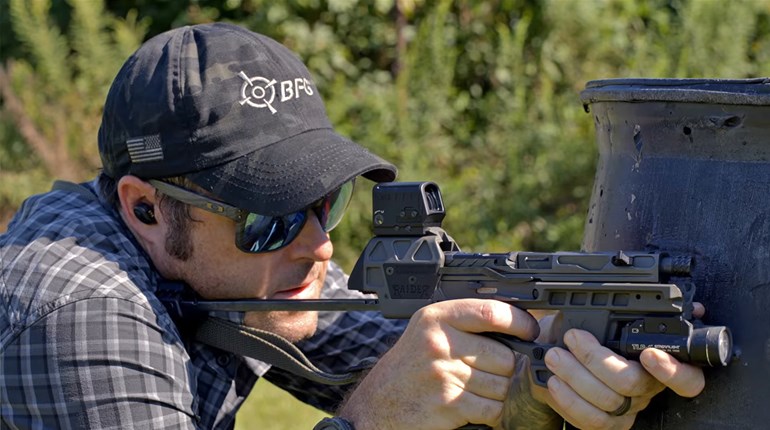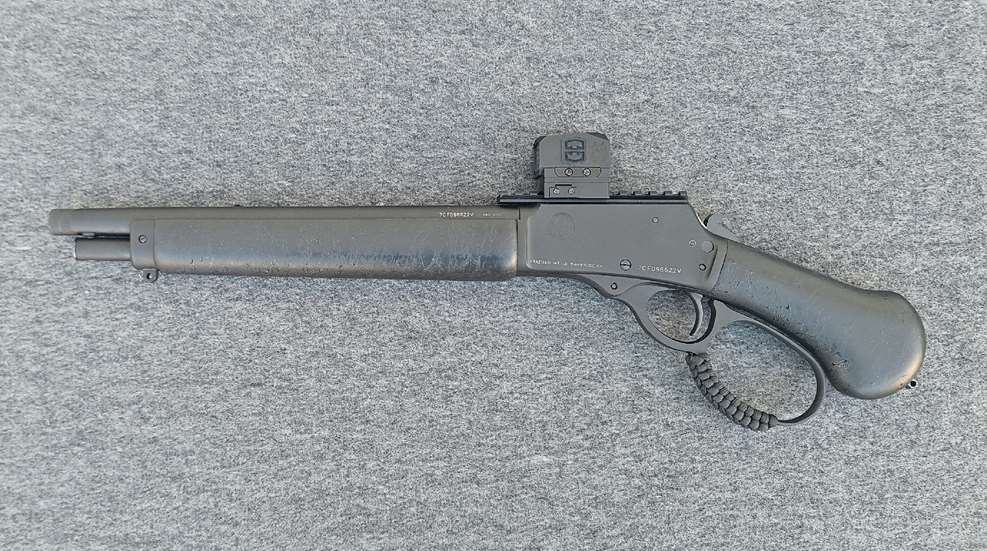
Back in 1958, the producers of the TV series, “Wanted: Dead or Alive,” were looking for a unique firearm for the lead character, a bounty hunter played by Steve McQueen. They opted for a Winchester Model 1892 lever-action carbine chambered in .44 WCF, which was trimmed down and customized into a handgun. And thus, the Mare's Leg pistol was born. In the years since, several manufacturers have offered Mare's Leg pistols in a variety of calibers, including Henry Repeating Arms and Heritage Manufacturing. They have been sold to scratch a nostalgic itch, for enjoyment at the range and for those looking for exceptionally compact backpacking and camp guns.
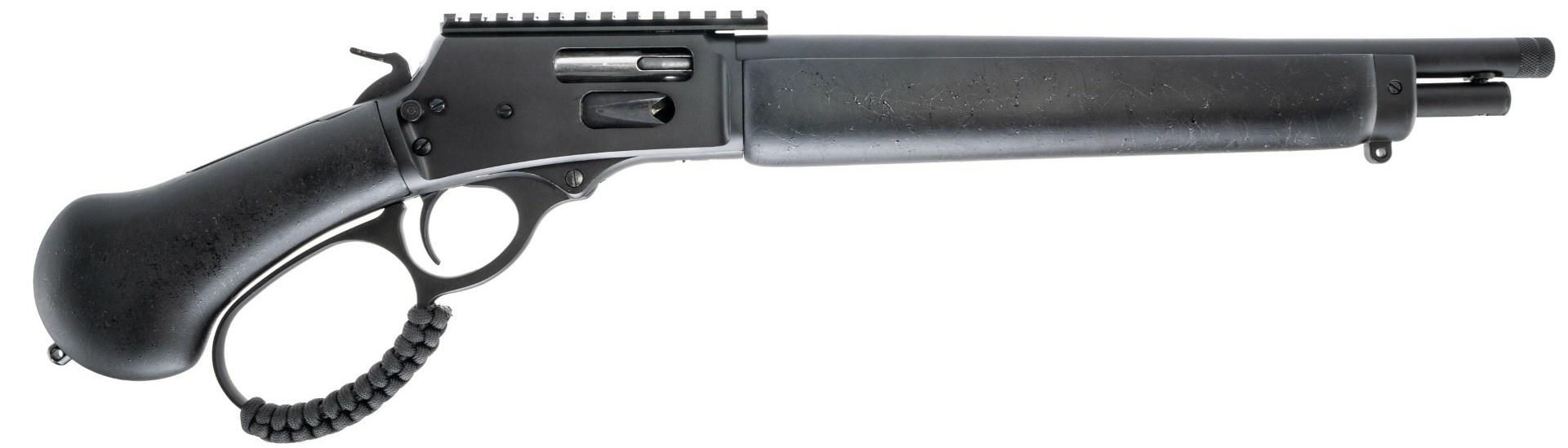 The R95 Triple Black pistol is simply a trimmed down version of the lever-action carbine.
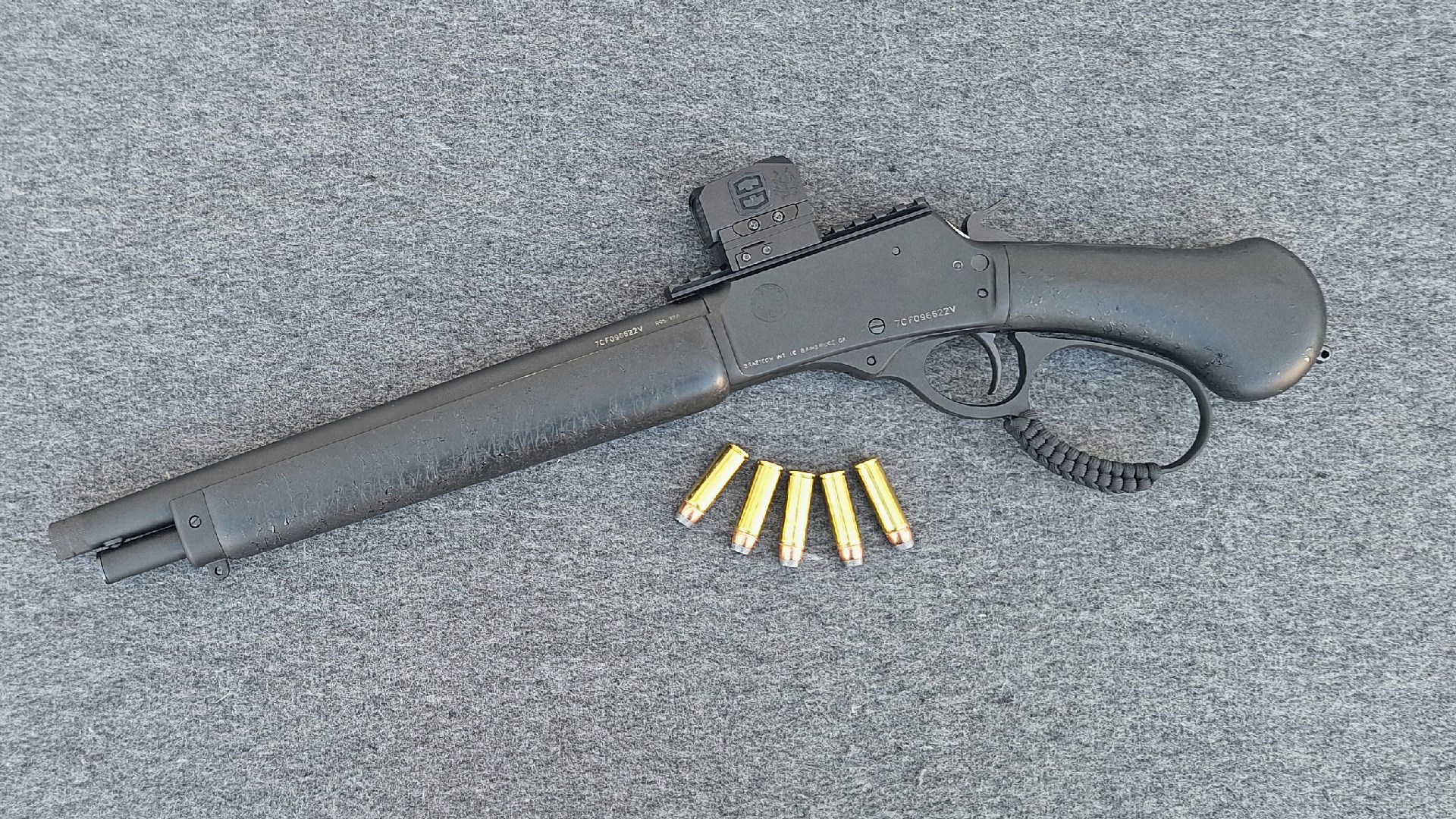
In April of 2025, Rossi USA introduced a new series of centerfire Mare's Leg pistols based on their tactically styled Triple Black carbine. The iron sights have been removed and the optics rail is only about 5 inches long. A 13.25-inch barrel has been installed at the factory in place of the 16.5 inch carbine barrel with the tubular magazine shortened to match. Last, but not least, the shoulder stock has been replaced with a rounded off birdshead-type grip. The rest of the gun is taken directly from the Triple Black playbook.
The R95 series is based on the Marlin 336 configuration. As a result, it has a closed-top receiver with a right-side ejection port. In keeping with its more tactical design, it has non-reflective, matte-black finishes throughout including the anodized aluminum, Cerakote-treated steel and painted hardwood components. The one exception is the silver bolt assembly. The drizzled paint of the stocks yields a subtle, random texturing to provide added purchase.
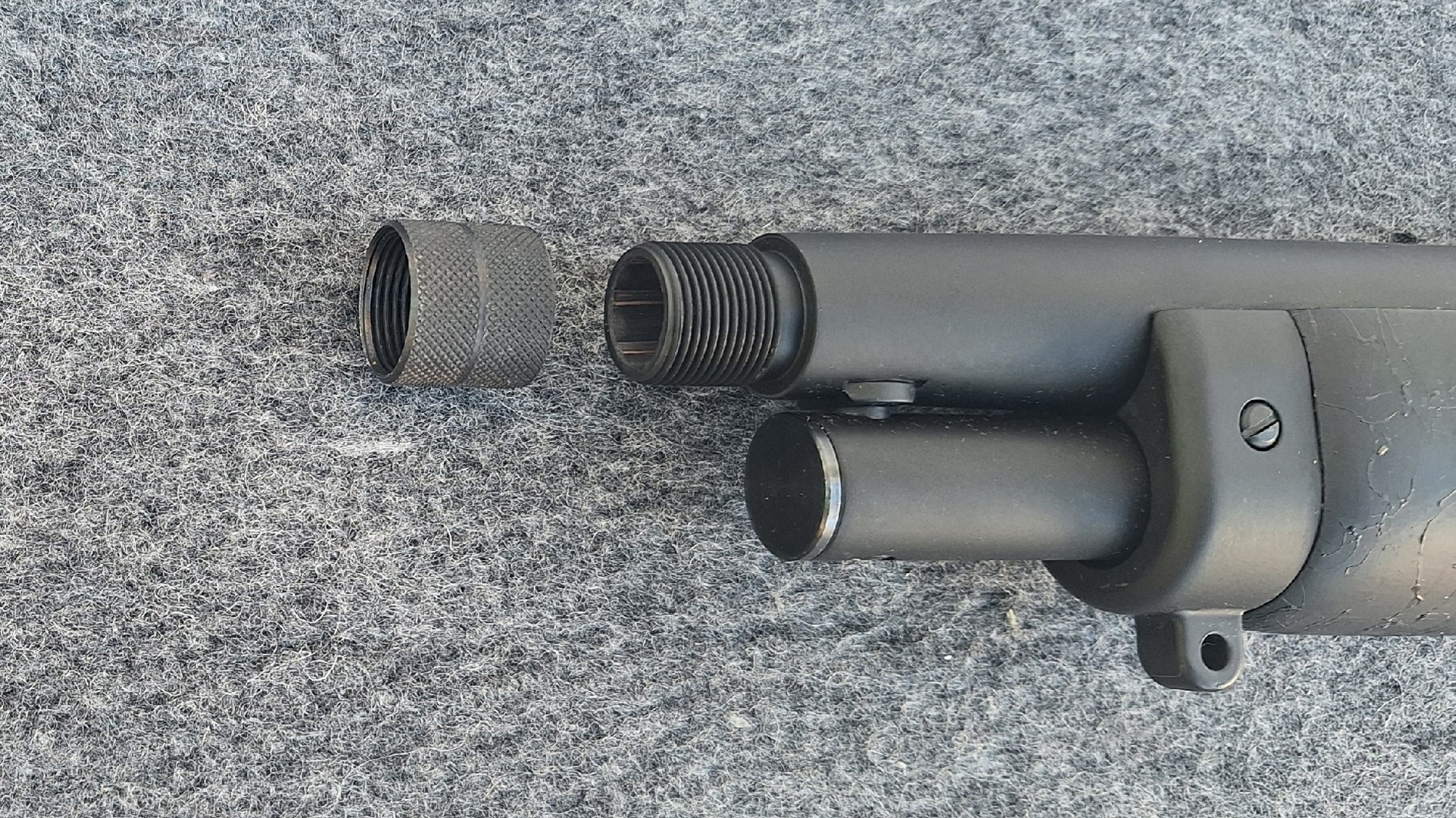 The muzzle is threaded for sound suppressors and other accessories.
The shortened, round-profile barrel is stamped "Made in Brazil by CBC Cal. .454 Casull." CBC stands for Companhia Brasileira de Cartuchos which is located in Ribeirão Pires, São Paulo. The muzzle is threaded for accessories, including sound suppressors, with a knurled thread protector provided. The bore's six-groove rifling is cut at a 1:12-twist rate. Below the barrel is an enclosed magazine tube that stops just short of the muzzle threading.
The rounded fore-end is fitted with a steel cap that has an integral sling swivel. A second swivel is set into the pistol grip. The loading gate is located on the right side of the carbon steel receiver. A push-button cross bolt safety is set into the receiver just below the spurred, 3-position hammer. The steel single-stage trigger cycled smoothly with a clean 3-pound 3-ounce trigger pull. The pistol's finishing touch is a braid of paracord wrapped around the nicely rounded lever loop.
 This model can safely fire .454 Casull, .45 Colt +P and .45 Colt loads.
Two of the caliber options in this series are standard fare for the Mare's Leg market. The .357 Mag. and .44 Mag. are both popular revolver cartridges that are a hoot to shoot from a gun like this one. But the other two caught my attention: .45-70 Government. and .454 Casull. Not only are these uncommon options for this pistol class, they are dedicated hunting rounds. Due to ammunition costs and stout levels of felt recoil, folks don't generally use either .45-70 Government. or .454 Casull as casual plinking rounds. They are almost always reserved for harvesting medium to large game.
By offering these calibers, Rossi is essentially saying that their R95 Triple Black pistols are intended for use by serious handgun hunters. And that, my friends, was a challenge I was willing to try on for size. Could a big-bore Mare's leg be more than a range toy or back-up gun? Here's what I found out.
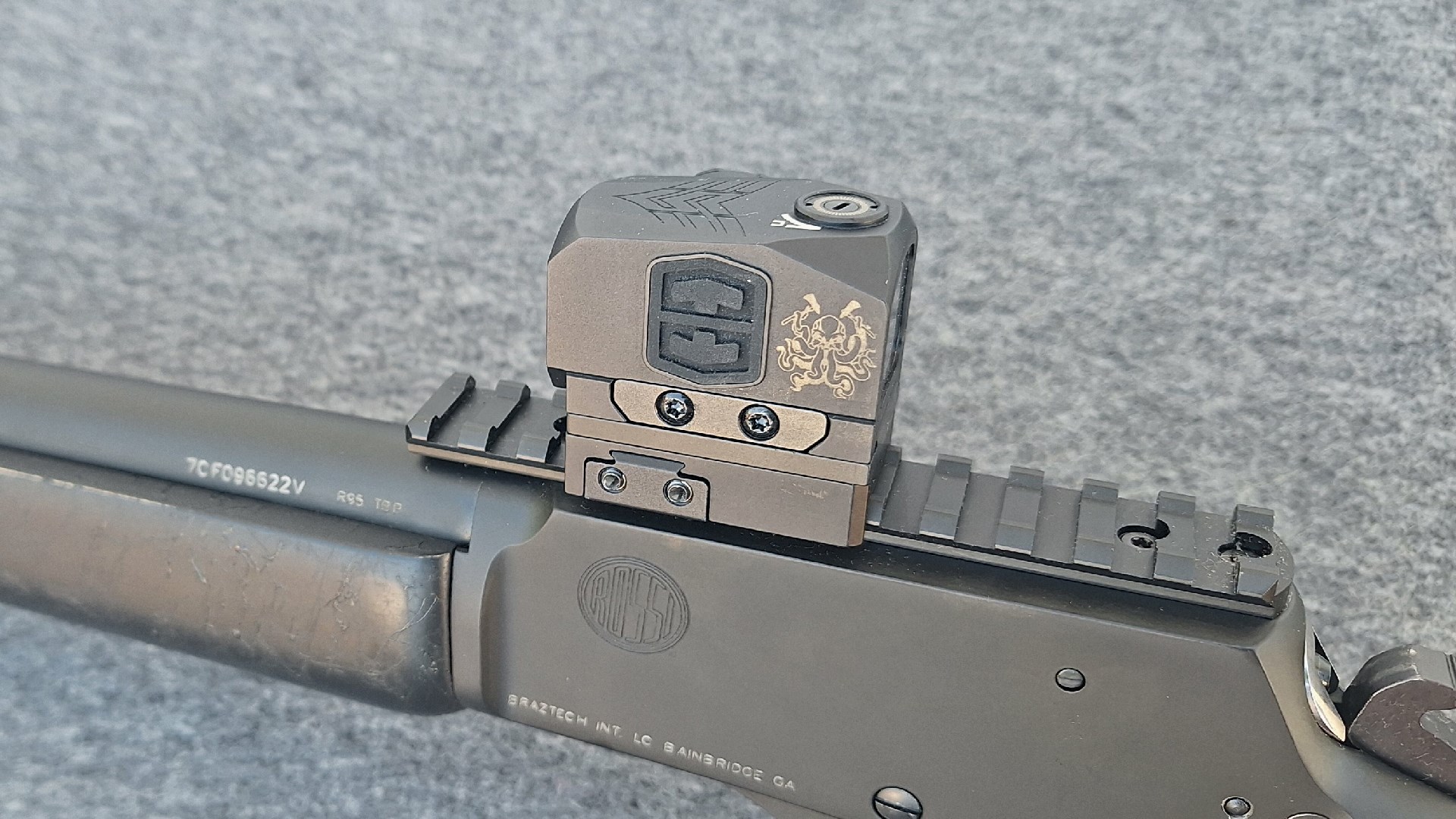 The Swampfox Kraken optic is tough enough for hard kicking guns like this one.
I considered the two calibers in question carefully. It was tempting to go with the .45-70 Government. version because it's one of my favorites to shoot. However, I've already got a set of test data that demonstrates that modern .45-70 Government loads provide plenty of performance potential when fired from handguns, including short-barrel revolvers.
The more attractive option for this particular range test was the .454 Casull cartridge for a few reasons. Ever since SAAMI published its official industry standards in 1997, this high-pressure cartridge has kept the crown as the performance king of large-frame single and double-action revolvers. It has been used to ethically harvest almost every land animal on earth from the medium-sized up to the largest dangerous game.
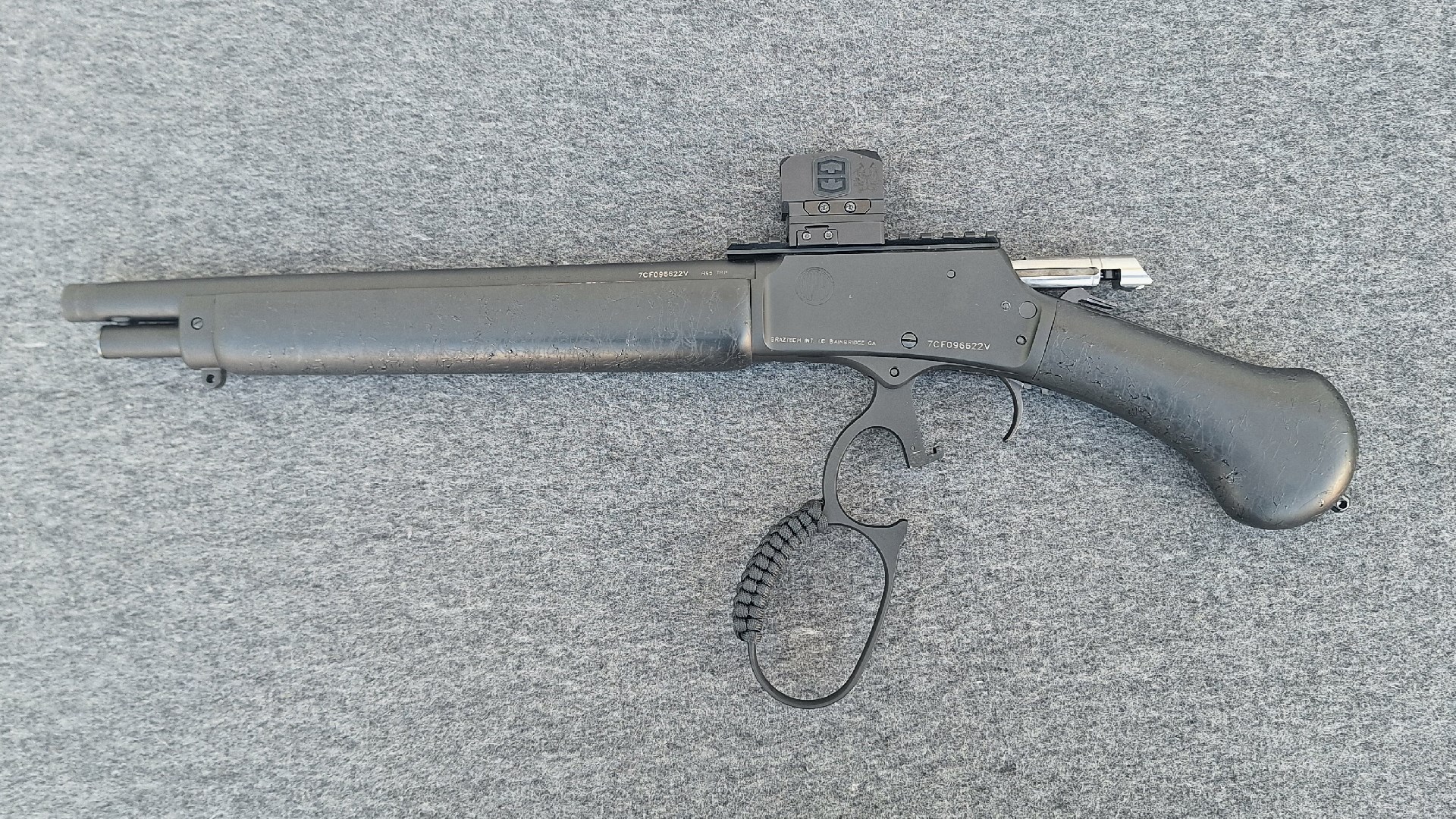 The paracord braided around the lever loop cushion the knuckles when cycling the action.
Along with being 'enough gun' for just about any situation, revolvers and lever actions chambered in .454 Casull have the advantage of being able to safely chamber and fire standard-pressure .45 Colt ammunition and the often misunderstood .45 Colt +P cartridge. This gives the .454 Casull version of the R95 pistol an exceptionally flexible range of performance potential.
Although evaluating accuracy potential is a top priority for reviews like this one, I set out to the range with two additional goals in mind. First, I wanted to see just how much the levels of felt recoil could be adjusted depending on the ammunition used. Also, I wanted to see if swapping between .45 Colt and .454 Casull would cause extraction issues, and it did.
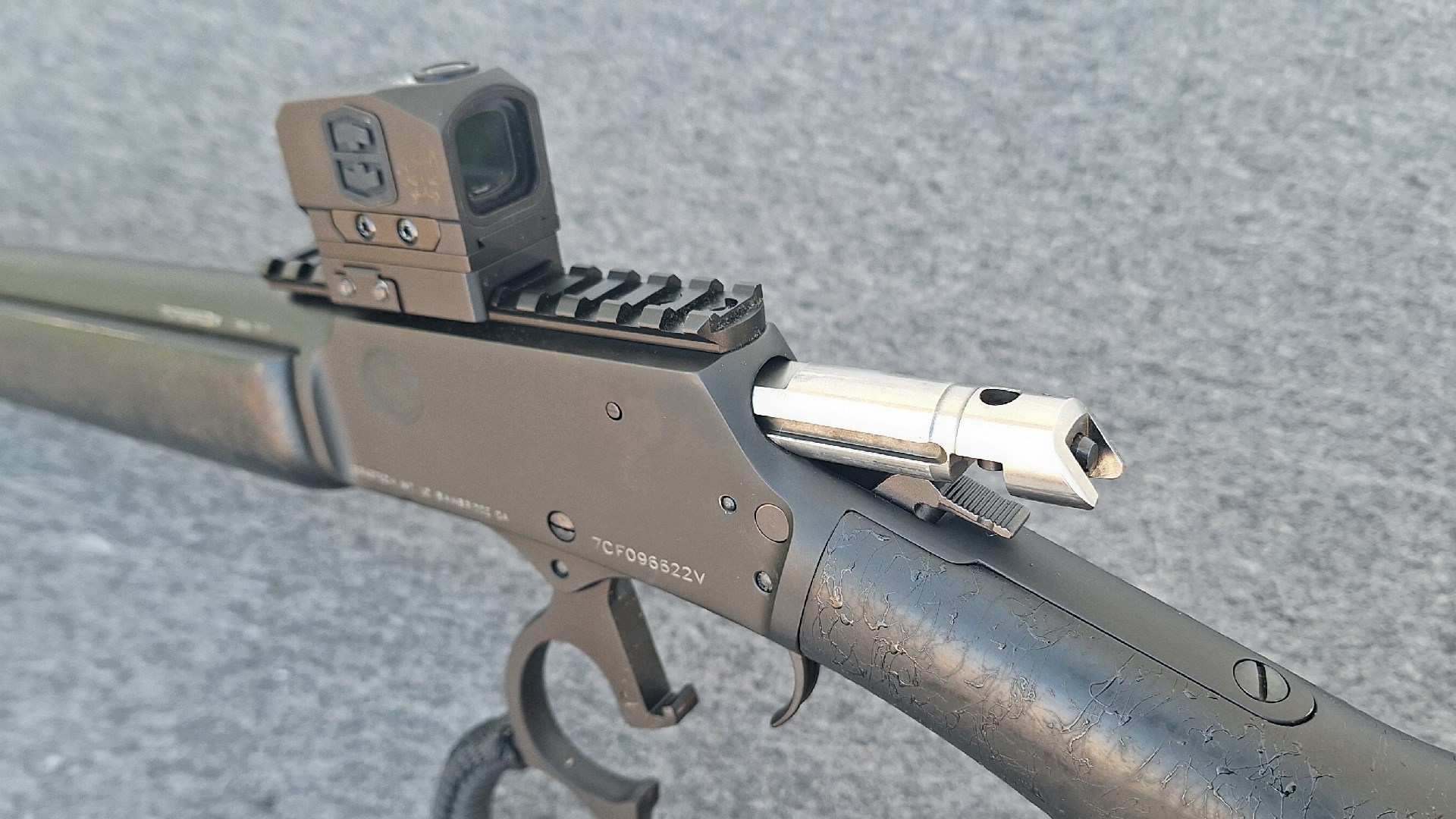 The bolt is the only part of the gun that isn’t black.
But before that, let’s take a look at the performance numbers. DoubleTap Ammunition provided a one-stop shopping selection for this version of the R95 pistol. This company's catalog currently lists seven modern .45 Colt loads, six .45 Colt +P and eight .454 Casull options. I picked one of each for the formal, bench-rested accuracy testing conducted at 25-yards. Three 3-shot groups were measured for accuracy while a Garmin Xero C1 Pro chronograph was used to measure the average bullet velocity for 10-shot strings.
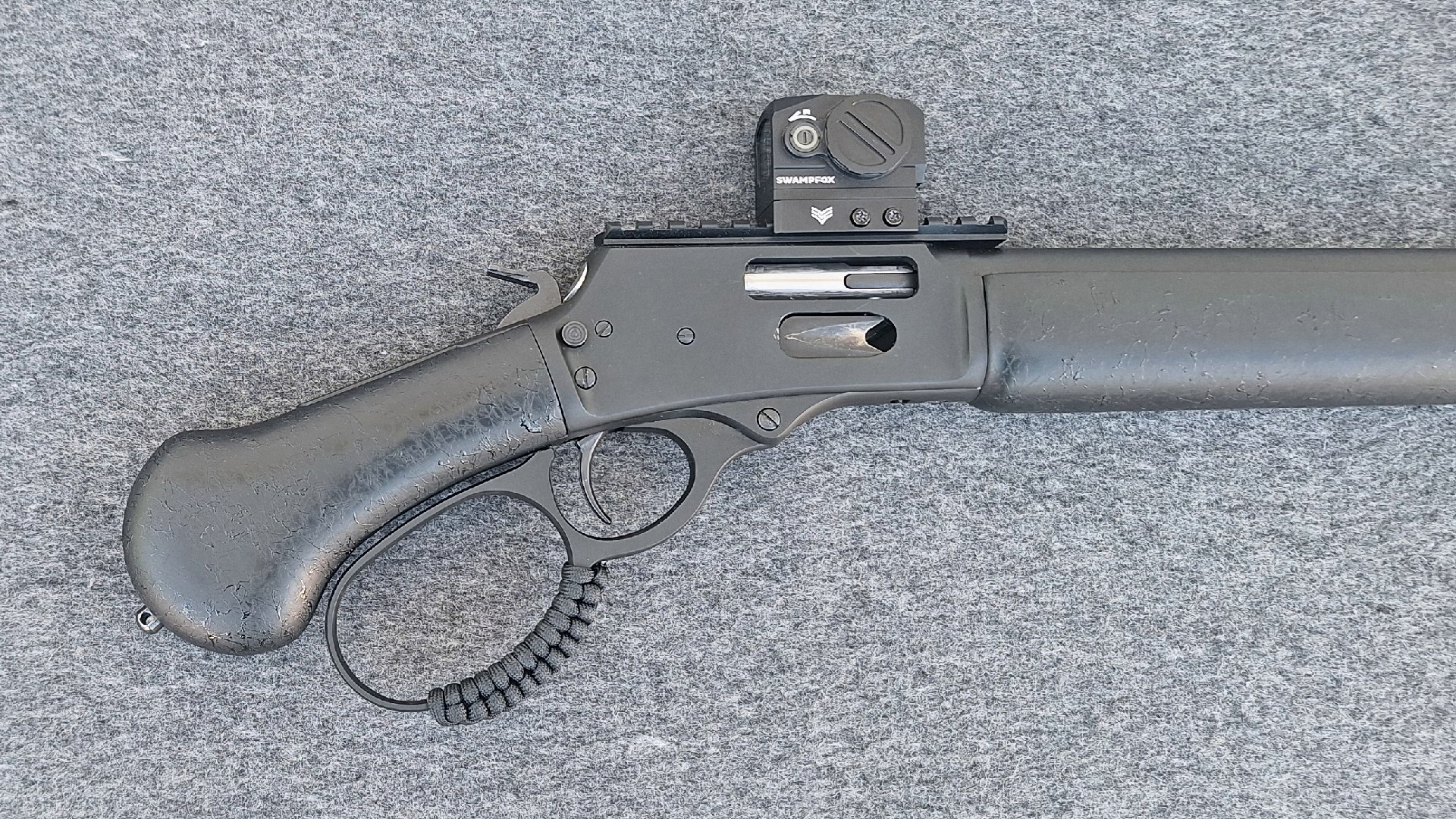 The rounded off birdshead grip is fitted with a sling swivel stud.
It should be noted that the manufacturer states that the listed velocity for all three of the loads used were produced using a 7.5-inch barrel. The pistol was topped off with a rugged and reliable top-notch Swampfox closed emitter Kraken optic with a 3 MOA red dot (KRK00116-3R). Here are the results:
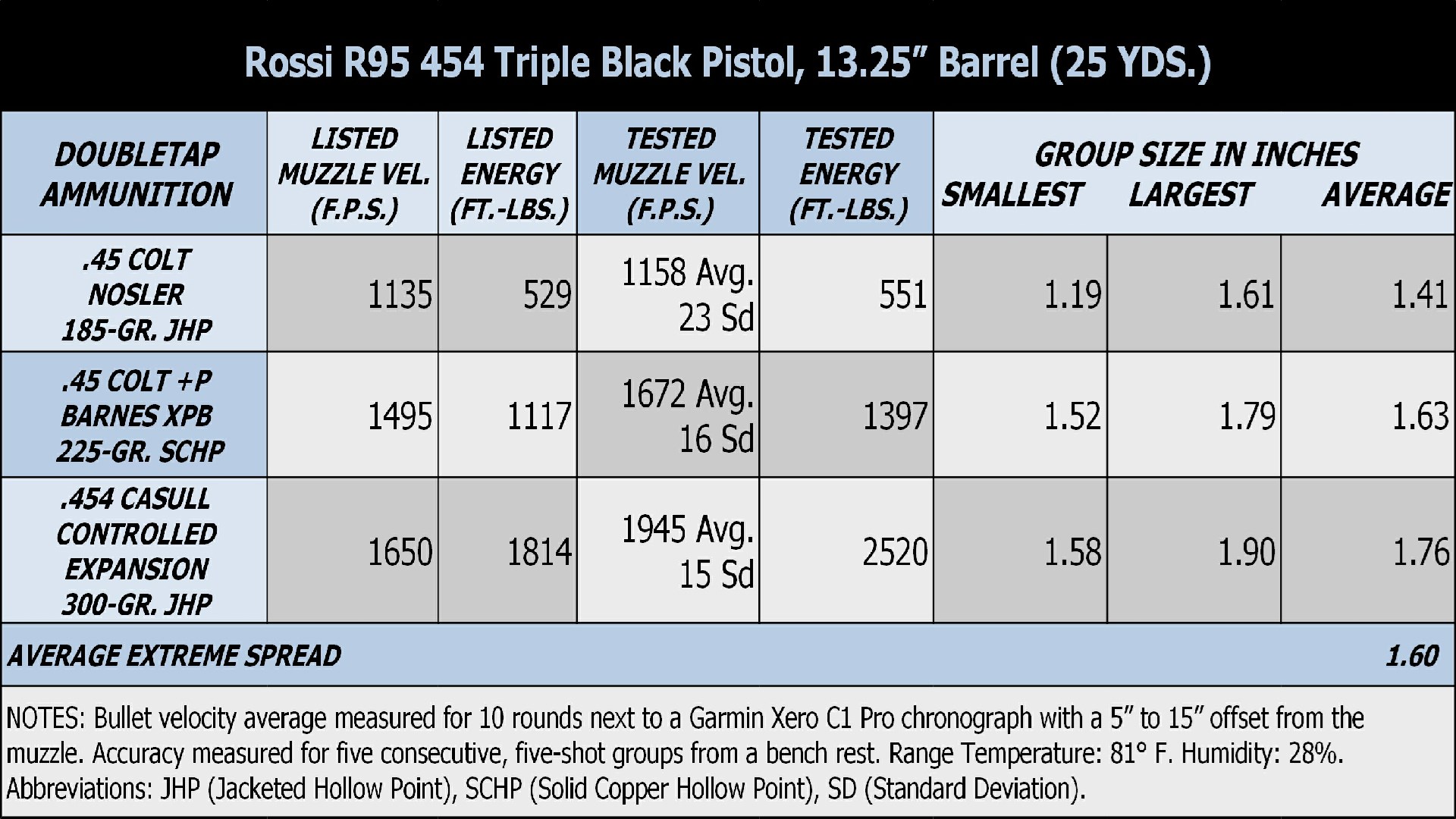
As you can see from the table, the 185-grain .45 Colt exhibited only a modest gain of 23-fps when fired from the sealed breach, 13.25 inch barrel of the R95 pistol. While still a potent load with 551 ft.-lbs. of muzzle energy, the recoil was moderate, verging on modest. When loaded with .45 Colt, this five-pound pistol could be passed to shooting sports enthusiasts with a variety of skill levels without concern for too much kick.
The .45 Colt +P load gained 177-fps of muzzle velocity for a muzzle energy of 1397 ft.-lbs. This level of energy fits neatly in between the top end of .44 Mag. performance potential when fired from a revolver and the bottom end of shooting the same loads from a carbine. The recoil stepped up into the stout range. It was a good solid shove, the kind that makes a range session more exciting, but not particularly punishing … yet.
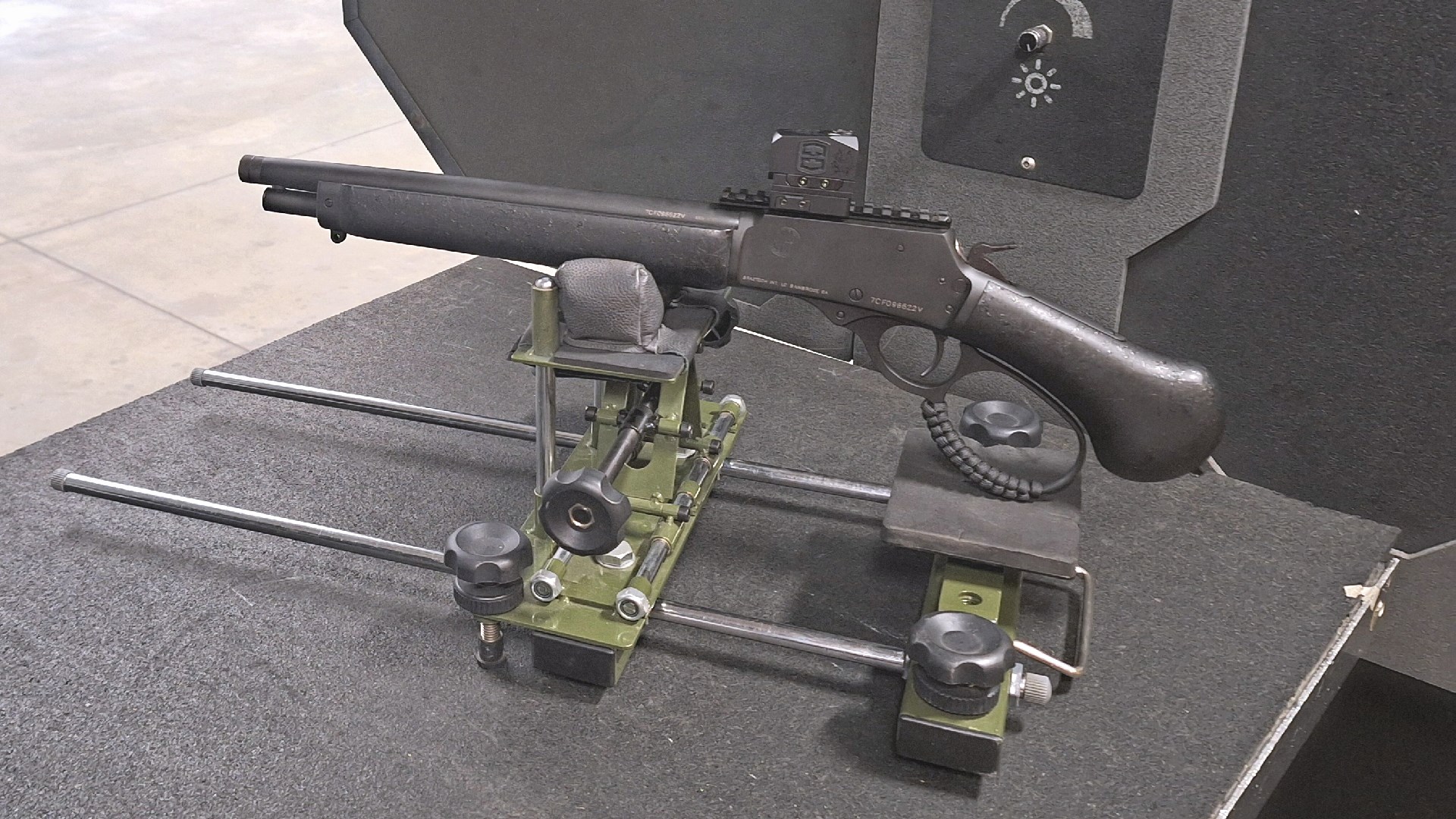 Levels of felt recoil generated by the R95 varied significantly depending on the ammunition used.
The 300-grain bullet of the .454 Casull benefited the most from the longer barrel with a velocity gain of 295-fps. This pushed the muzzle energy up to 2,520 ft.-lbs. How much recoil is that? Well, depending on your personal preferences, it fits somewhere in between Hunter S. Thompson’s famous line, "Faster, faster, until the thrill of speed overcomes the fear of death!" and deciding it’s a good time to evaluate your life choices ...
But seriously, for comparison, the 14-inch barrel of the 12-gauge Mossberg 590 Shockwave can generate around 800 to 2,500 ft.-lbs. of muzzle energy, depending on the ammunition used. If you've fired heavy slugs or magnum loads out of a Shockwave, then you've already got the feel for setting off .454 Casull in this particular gun.
In regards to performance, the R95 has got it in spades if you want it. But what about ammunition feeding and ejection? I learned a few things worth passing along. The R95 sent for this evaluation could hold up to 5+1-rounds of .454 Casull or 6+1-rounds of .45 Colt. However, with some bullet styles and weights, the first round levered out of the tubular magazine into the chamber could be sticky or rough to cycle. In these cases, reducing the round counts to 4+1 and 5+1, respectively, solved the first-round feeding problem.
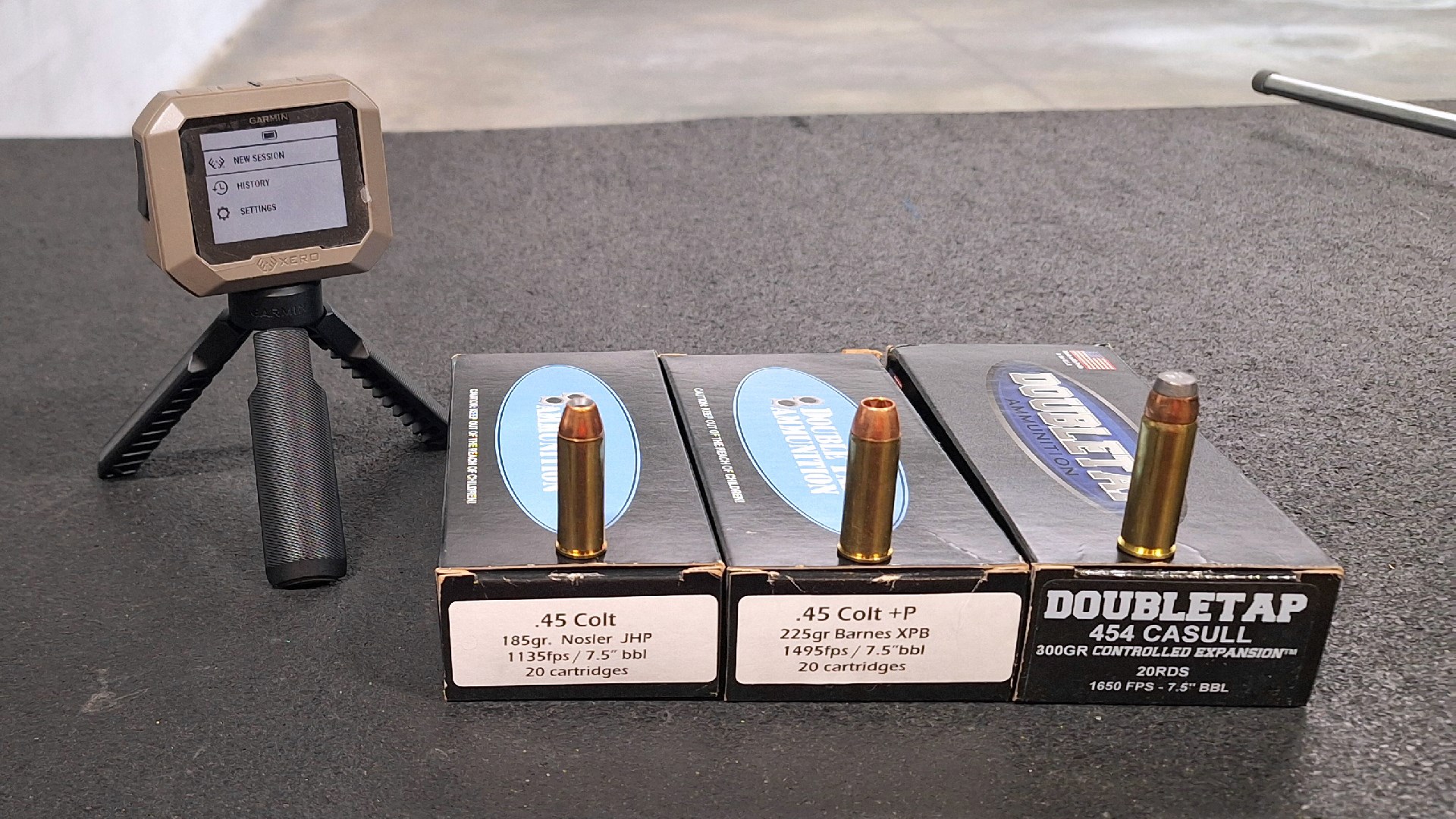 The formal accuracy testing was conducted using rounds made by DoubleTap ammunition.
Magnum-caliber revolver fans are familiar with the next ‘gotcha’ that showed up during this test. During the informal testing and sighting in of the R95 pistol, I used .45 Colt loads only. They fed, fired and ejected without a hitch. When it was time for the more formal testing, I lead with the .45 Colt and .45 Colt +P loads. Once again, the action cycled smoothly throughout the testing.
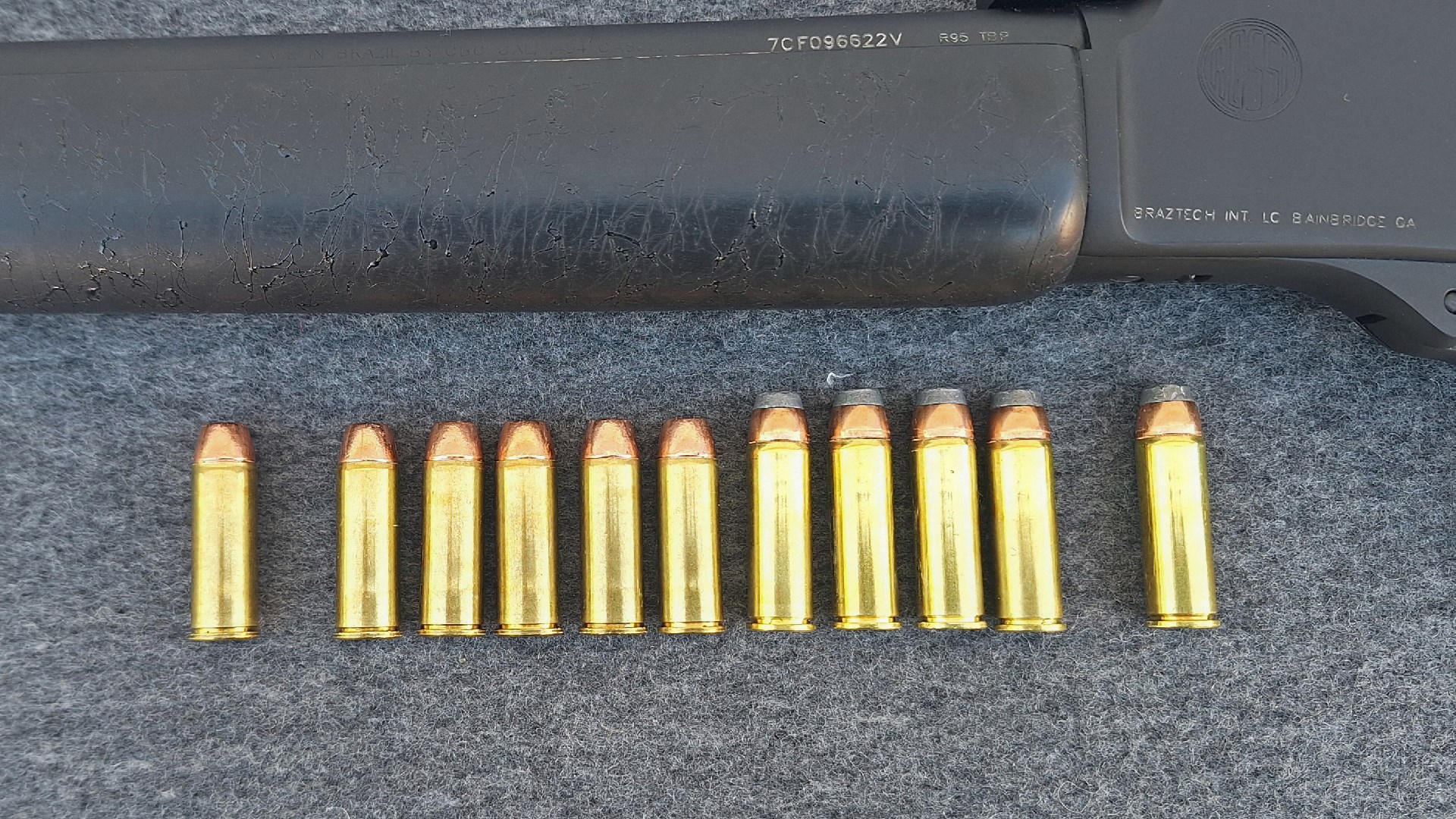
Then I moved up to the impressively hot .454 Casull loads. Not only did they kick like a mule, I had to lean into the lever with a good deal of force to kick the spent cases out. However, it got easier to cycle out the spent .454 brass as more shots were fired. Take a look at the following photo. On the left are the nickel-plated .45 Colt cartridge cases and on the right you see the spent .454 Casull cases.
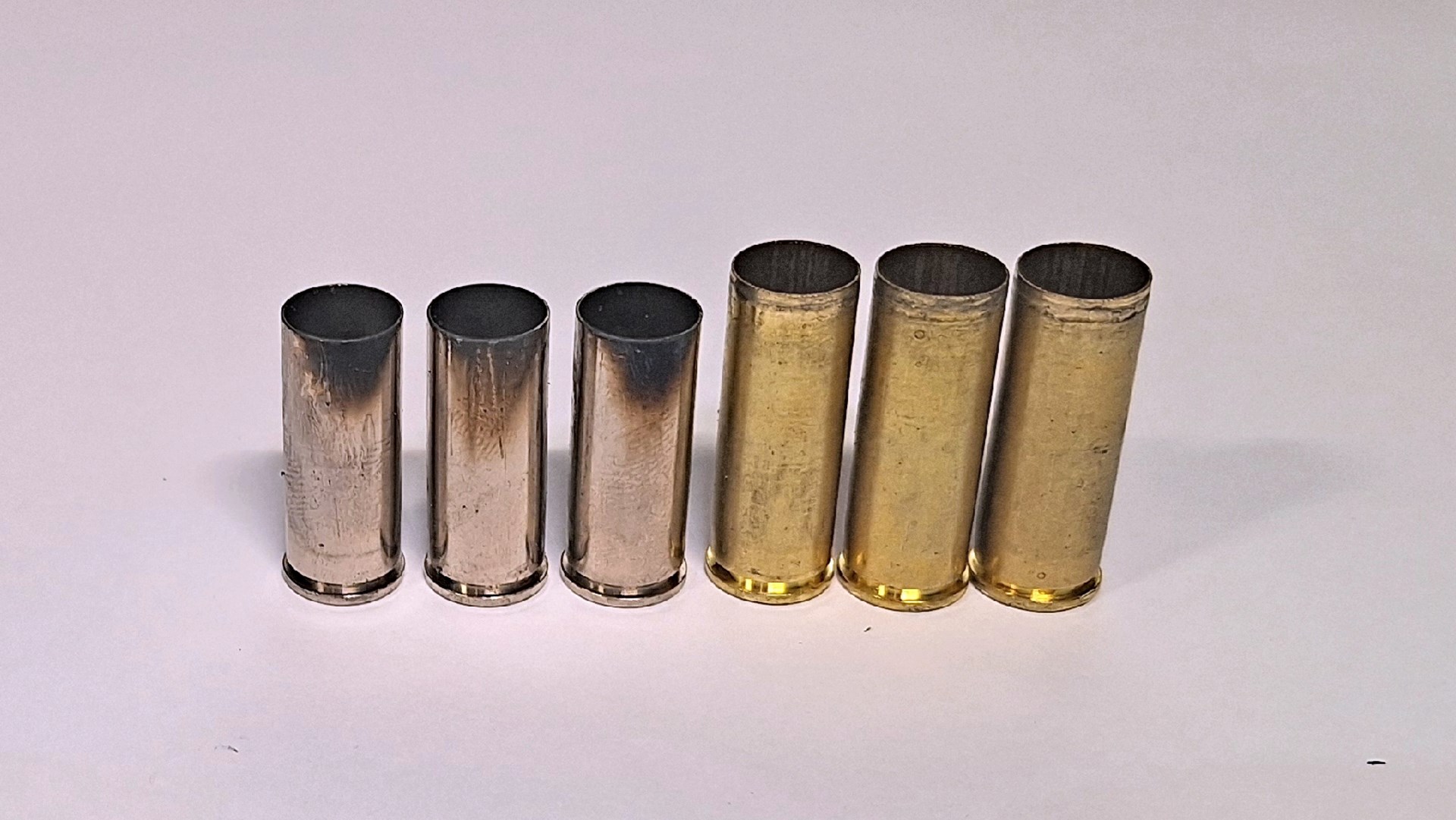 The .454 Casull cases (Right) showed evidence of sticking in the chamber due to residue rings caused by the .45 Colt loads (Left).
The .45 Colt cases show some blackening around the mouth. This indicates a less than perfect seal between the cartridge case and the pistol's chamber. This in turn could contribute to a more pronounced residue ring forming as these loads are fired. Now look at the mouths of the .454 Casull cases. There we can see dirt rings that are roughly as wide as the case height difference between the two cartridges. In short, the debris rings from the .45 Colt loads made the .454 Casull rounds tough to eject. But cycling got easier as the longer cases wore the rings down.
The ejection issue caused by switching calibers technically qualifies as a malfunction that should be reported here. Nevertheless, it is a wholly user-induced malfunction and not a flaw in the gun. I expected to run into this snag by choosing to mix ammunition in the course of the same range test.
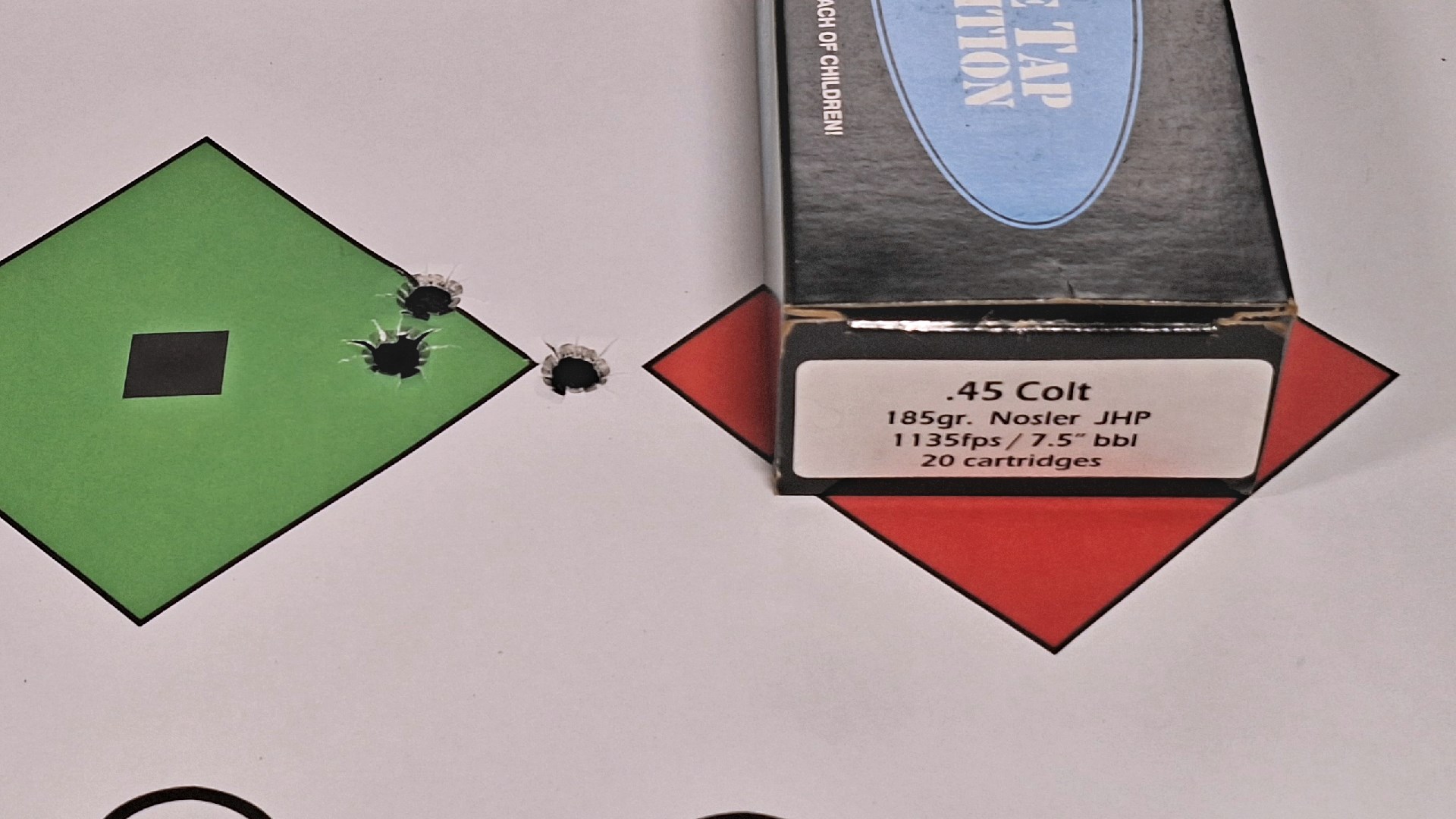 The best individual group of 1.19 inches was fired using the .45 Colt load.
The solution is a fairly simple one. Scrub the chamber clean after shooting. Then, in the field, pick a load and stick with it. If you are going to mix and match, start with the longer .454s and then shoot the shorter .45s to keep the gun cycling smoothly. I wouldn't be surprised if the .44 Mag. and the .357 Mag. models require a similar approach to using .44 Special and .38 Special loads.
Rossi's R95 Triple black series successfully balances modern shooting sports proclivities with classic lever gun sensibility. Offering this version of the R95 in a Mare's Leg pistol configuration certainly spices things up nicely! For those who want a truly 'adventurous' shooting experience, loading up this pistol with full power .454 Casull will certainly do the trick. But I for one will not cast any aspersions on those who choose to enjoy this pistol using .45 Colt and .45 Colt +P loads. For more information, visit the company website.
Specifications:
- Importer: Rossi USA
- Model: R95 454 Triple Black Pistol (#95P454131)
- Action: lever-action, repeating, centerfire rifle
- Caliber: .454 Casull/.45 Colt +P/.45 Colt
- Barrel: 13.25 inches, black oxide finished alloy steel, round profile
- Muzzle Threading: 5/8x24 TPI, thread protector provided
- Receiver: black-oxide-finished alloy steel
- Magazine: tubular, fixed
- Sights: none, receiver mounted optics rail
- Overall Length: 23.15 inches
- Height: 6.20 inches
- Width: 1.65 inches
- Trigger Pull: single-action, 2 pounds 5 ounces (As Tested)
- Weight: 5 pounds 2.9 ounces
- Capacity: 4+1 .454 Casull, 5+1 .45 Colt
- Accessories: Owner's Manual
- MSRP: $1369.99