An NRA member and American Hunter magazine reader called me the other day to complain about the elephant hunt I described in the March print edition. I won’t name her; I didn’t inform her that our conversation could end up as fodder to make a point, and so I don’t think it’s fair to identify her here. However, I should point out she is from Colorado and has, besides numerous other heads of big game, killed 30 elk in her 73 years. She describes herself as a biologist, ecologist, conservationist and preservationist.
Now, that’s a lot of “ists,” but regardless, the overriding fact is this woman is a died-in-the-wool hunter with a resume to prove it. Yet she didn’t like the idea of elephant hunting at all. “We’ve got anti-hunters climbing all over us,” she said. Why would I want to kill an elephant? What did such a creature ever do to me? Why would I run such a story? What happened to the meat?
I wasn’t surprised by her reaction. I’ve heard similar refrains, even from hunters. To answer her, I asked some questions of my own.
“Do you know how many elk there are in North America?” I asked. The caller admitted she did not. “There are about a million elk,” I said. “That’s about all our continent can hold,” I added, “because increasing development eats up habitat needed by elk.”
Next I asked, “Do you know how many elephants there are in Africa? According to some estimates, there might be as many as a million of them. Figures differ; some estimates are as low as 700,000. Regardless, increasing development presents a problem for so many animals.
“About 30,000 elephants a year are poached,” I continued. “Only about 3,000 a year are taken by licensed hunters." And those license fees go toward conservation. "Yet folks everywhere—even hunters—hear about the devastation wreaked on elephants at the hands of humans and blame hunters. Hunting’s not the problem for elephants. Human encroachment on their habitat and poaching—they’re problems.”
The caller admitted she learned a thing or two from my response, which was exactly what I sought.
The thing is, every hunter has a threshold he or she will not cross, and that’s fine. Running deer with dogs is a traditional hunting method across the American South. I’ve never done it, and I don’t think I’d particularly enjoy it. But I ought to try it before I condemn it. Likewise, if you don’t like the idea of hunting bears with dogs or over bait, don’t do it. If you don’t like shooting doves because they never did anything to you, then don’t do it. If you don’t like the idea of hunting an elephant then don’t do it. But don’t tell me I should not do it.
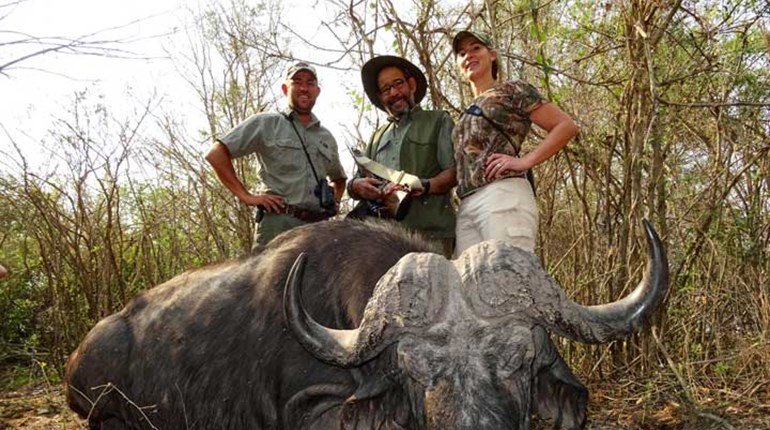
I killed an own/use elephant bull in Namibia. It was owned and used by the people of the village in the conservancy where I hunted. Within 24 hours, it was reduced to a grease spot—every scrap of it cut up, butchered and carried off for use by indigenous folks. The tusks went to a Namibian government warehouse. I got nothing but an experience (a helluva one, I might add), and some photos. And I fed a village.
Hunters not only pull triggers but are the stewards of wildlife and wild places. I wouldn’t have it any other way, particularly as it concerns the North American model of conservation. Problems ensue when we insist others adhere to our sensibilities. We should not define the species we hunt and the adventure we curry as above-board but look down upon others who choose to do something we will not. Until somebody explains to me why we should go to Africa and tell them how to manage their resources, I’ll hunt elephants.
As for anti-hunters, here’s a news flash: The very existence of American Hunter is offensive to them. Everything we publish makes them cringe. It should not make hunters cringe, regardless of topic.