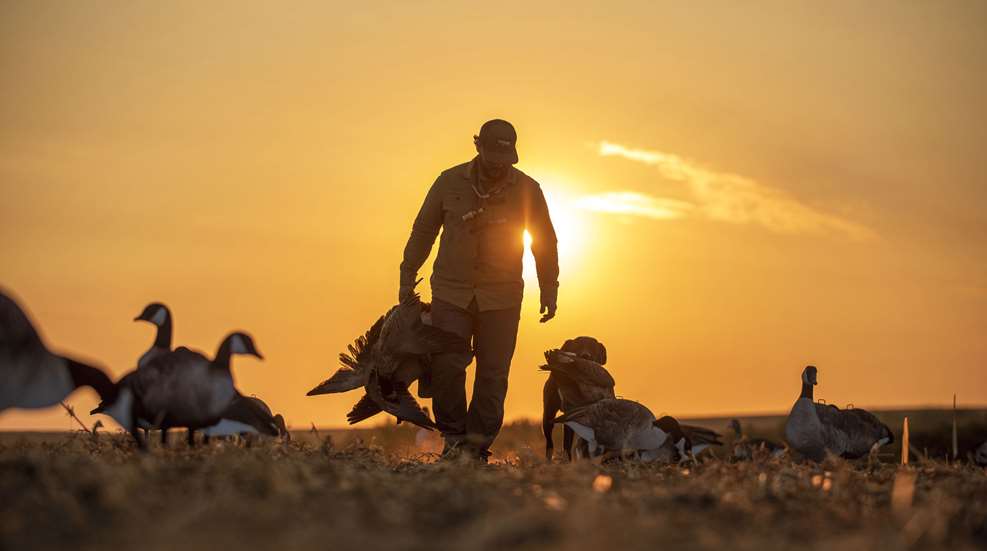
As anticipated, the first family flock of Canada geese lifted off their nearby river roost, nearly skimmed the big-leafed cottonwoods and set their wings. I called once, letting the half-dozen full-body decoys do the rest. Five birds came in, three left.
Minutes later another flock approached. The shots were simple. In less than 30 minutes I’d gathered the decoys, layout blind and birds then headed home. The best part: I’d seen less than 20 of the more than 150 honkers that’d been using that field.
The following morning I scouted the field, and again it was packed with geese. The next morning a buddy and I were back in the same spot, this time with three dozen silhouettes added to the spread. In less than two hours we killed our birds.
For many waterfowl hunters across the country, the early Canada goose season is eagerly anticipated. Not only have we waited a long time for this but the weather is mild and the geese, gullible. It’s a fun time to hunt but it’s not a slam dunk. Miss the “X” by 100 yards and it can be frustrating; that happened to me twice last season.
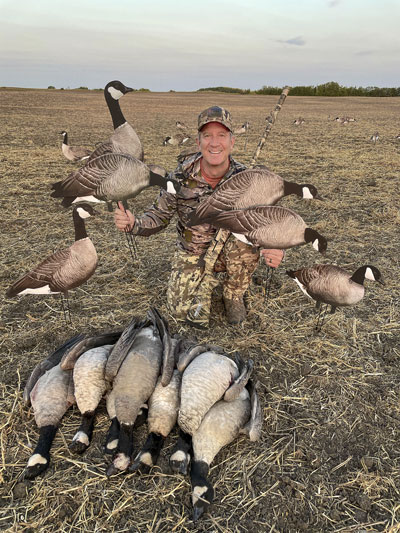
September Canada goose hunting is a three-part process. Most important is the scouting. These are largely depredation-type hunts where hunters step in to alleviate the pressure of local Canada geese on agricultural lands. Before and after crops are harvested and fields are plowed, geese pile into croplands. Scouting to not only find precisely where geese are landing in a field, but also to figure out where they’re coming from off their nighttime roost, is important. Note what time geese are arriving and how long they’re sticking around in order to optimize hunting efforts.
Next comes the blind. Picking a spot where a blind can be situated where geese are landing is key. So is determining what style of blind to hunt from. In many situations, if you don’t have a way to hide you won’t fool these geese. Because they’ve been living the summer in the area and regularly hitting the same fields, sometimes for weeks, these geese are smart. A green leafy blind in a barren brown field might work in Canada where migratory birds don’t seem to care, but south of the border I’ve experienced more failures than successes.
Enter layout and panel blinds. Layout blinds are low profile and easier to brush-in than A-frame blinds. And you don’t need tall brush to hide them; stubble will do. This means you can often situate them in the middle of the most barren field. I’ve even had great results with a MoMarsh InvisiMan blind. Simply retract the legs and you get a downscaled layout with a smaller footprint that’s simple to hide.
For cheap you can make your own panel blind from half of a 4-gauge galvanized 4-by-8-foot wire panel from a local farm supply store. Using bolt cutters, split the 8-foot-long panel in half, snip off the bottom horizontal wire to create legs then zip-tie some brush to it. When hunting fencelines, ditches or brush rows, it takes only a few minutes to finish covering the little blind. This blind has accounted for a lot of great hunts over the years, and it’s big enough for my dog to fit behind with me.
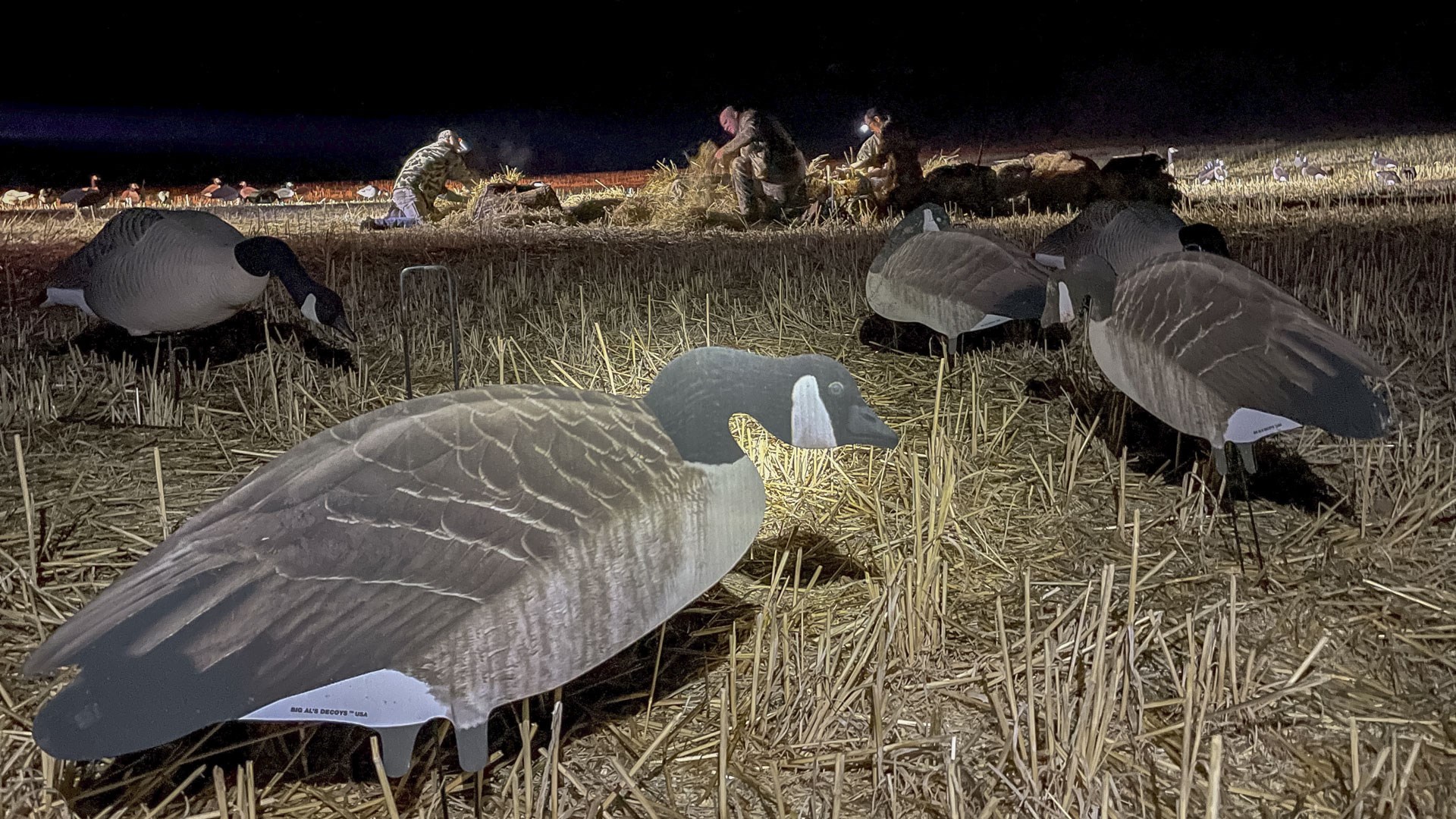
Last but not least are the decoys. September goose hunts don’t require a lot of decoys, especially when compared to late-season hunts. In many cases, simple silhouettes will get the job done.
I’ve hunted with goose silhouettes for 48 years, dating back to when I was a kid and helped Dad and Grandpa make them from plywood in our shop. We cut and painted them ourselves. They worked and still do, but today’s photo-finish flat decoys are hard to beat. From honkers to lessers to cacklers, I’ve had excellent success with Big Al’s silhouettes on many hunts over the last few seasons. There’s no glare on these decoys and they retain their color and shape for years.
Personally, I’m not a big fan of flocked silhouettes where I hunt as I’ve had them collect frost and moisture and look like mirrors, flaring geese. Late in the season they’re hard for me to keep clean in muddy fields.
When September geese are using a field where they don’t gain much altitude off the roost, silhouettes are perfect. Spread out a dozen or two silhouettes in a line perpendicular to the approaching geese and it looks like a string of grazing birds. Because approaching geese come in low, the flat decoys appear as full-body imposters.
In fields where geese drop in from high in the sky, or quickly have to lose altitude after passing over towering trees, full-body decoys help. We’ve shot a lot of early-season honkers over no more than six life-size honker decoys. Set on the “X,” the small spread resembles the first family unit that’s reached the field. If hunting solo or with one person, that’s often the only decoys I’ll use. If three or more hunters are along, I’ll add one to three dozen silhouette decoys to create the safety-in-numbers scenario.
I call sparingly in September. “Call just enough to turn their heads, then let the decoys do the work,” says my buddy Austin Crowson, who’s a way better caller than me. “These birds already know where they want to go, and calling too much can alert them.”
As with most waterfowl hunting, scouting is a prerequisite to September Canada goose success. Once you find where birds are working and you’re ready to roll with a simple blind and some decoys, you’ll realize that scouting is time well spent.
* Scott Haugen is a full-time freelance outdoor writer of over 25 years. Check out his many books at scotthaugen.com and follow his adventures on Instagram.