The AR-15 is simply one of the most flexible semi-automatic platforms available. No doubt this has contributed to its widespread popularity here in the United States. Just over a decade ago, I approached my first at-home AR build with some trepidation since managing all of the small parts felt a bit intimidating. Looking back, I'm glad that I took it on and found out it was easier than I initially expected. That first project has since led to other rifle, carbine and pistol projects that have been enjoyable to build and to shoot.
AR projects usually begin with a particular goal in mind. Enthusiasts often build a rifle or a pistol around a particular caliber in order to accomplish a given endeavor, like hunting or target shooting. In this case, rimfire pistol components that I either had on hand, or had been researching for other projects, came together to form this slick, folding .22 LR pistol. The goal was to make a rimfire that would be both portable and enjoyable to shoot. Let’s take a look at the components and then see how the finished pistol performed.
Sharps Bros. Gen 2 Hellbreaker Lower Receiver
Many members of the community participate in shooting sports because of the enjoyment it provides. Others prioritize durability and reliability over the fun factor. Thankfully, Sharps Bros. offers a series of AR-15 lowers that provide a rugged, high-end design paired with distinctive styling. In other words, you'll get a solid, reliable lower while having some fun with the build.
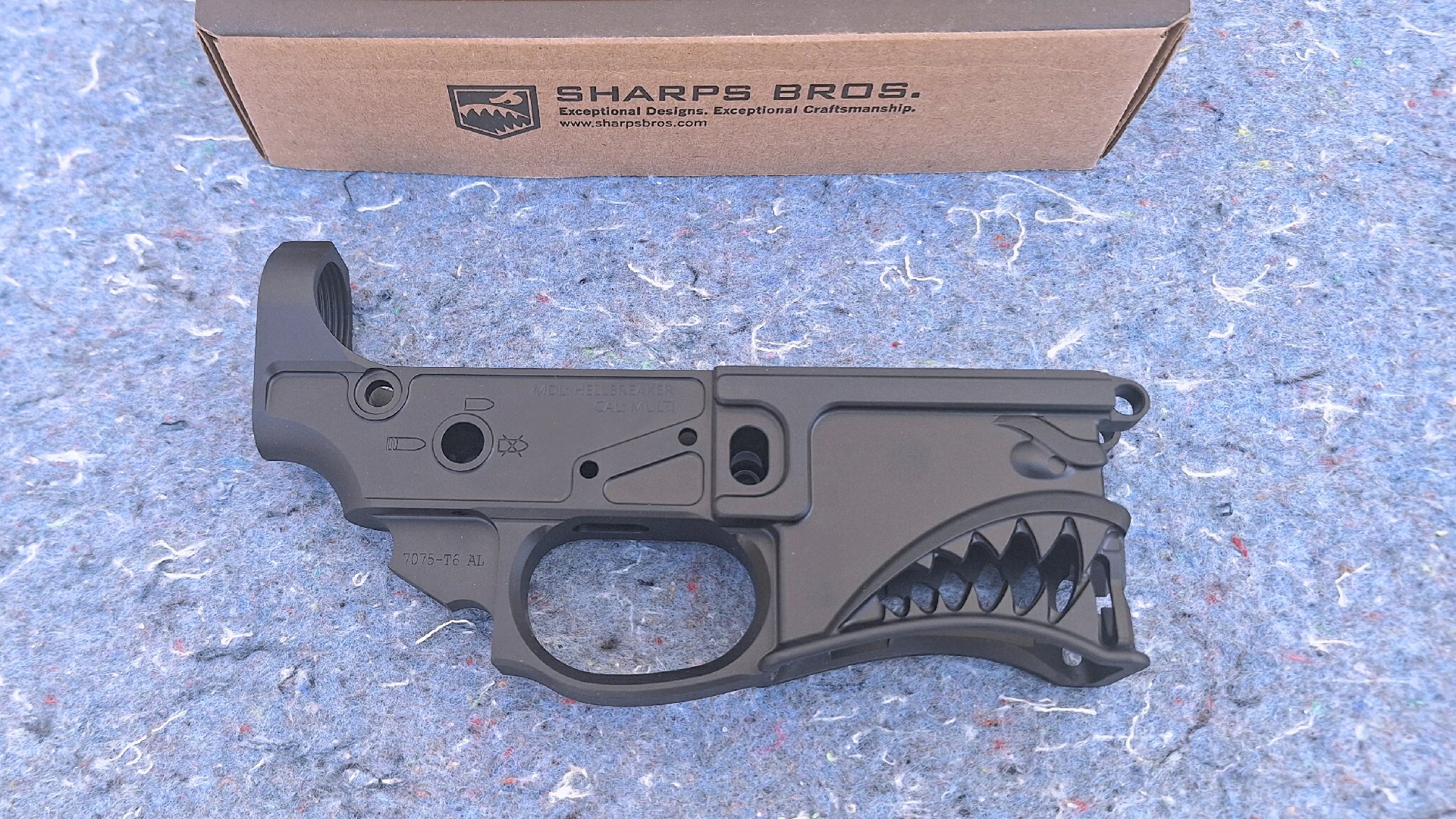 The Sharps Bros. Hellbreaker lower is Mil-Spec compatible.
I've been eyeing the Sharps Bros. exotic lowers for some time now, waiting for the right project to come along. Recently I had the opportunity to participate in a factory tour to learn more about how they are made. Impressed by the manufacturing team, along with the efficiency of production and quality of the end product, I had to give one a try.
The lower used for this build is the Gen. 2 Hellbreaker. The distinctive shark-toothed magazine-well design is borrowed from the nose art of the P-40 Warhawk fighter plane flown by the United States Air Force during World War II. This lower is not a casting. Instead, it is carefully machined from a billet of 7075-T6 aluminum and treated with a matte black MIL-A-8625 hard coat anodized finish. It is fully compatible with Mil-Spec uppers and internal components. The unique magazine well is flared and sized to accept metallic USGI and popular polymer AR-15 magazines. The integral trigger guard is oversized for use with gloves. The Gen 2 model's upgrades include a reduced weight of 8.9 ounces, improved styling, a threaded bolt catch pin and a more affordable suggested retail price of $289.95.
Tippmann Arms M4-22 Brace Options
Tippmann Arms offers their rimfire M4-22 rifles, carbines and pistols in a variety of configurations. Recently we posted this review of the M4-22 RCR-26 .22 LR Rifle. What stood out the most about this .22 LR semi-automatic is just how ridiculously light it is. It tips the scales at just 3 pounds 12.7 ounces before installing a magazine and an optic. The familiar AR-pattern controls, reliability and accuracy certainly contribute to the case for making this a backpacking rifle as well. Although this gun is perfectly usable for just about any .22 LR rifle purpose as-is, its modular AR design may inspire one to tinker. In particular, I wanted to take a closer look at a folding stock or stabilizing brace.
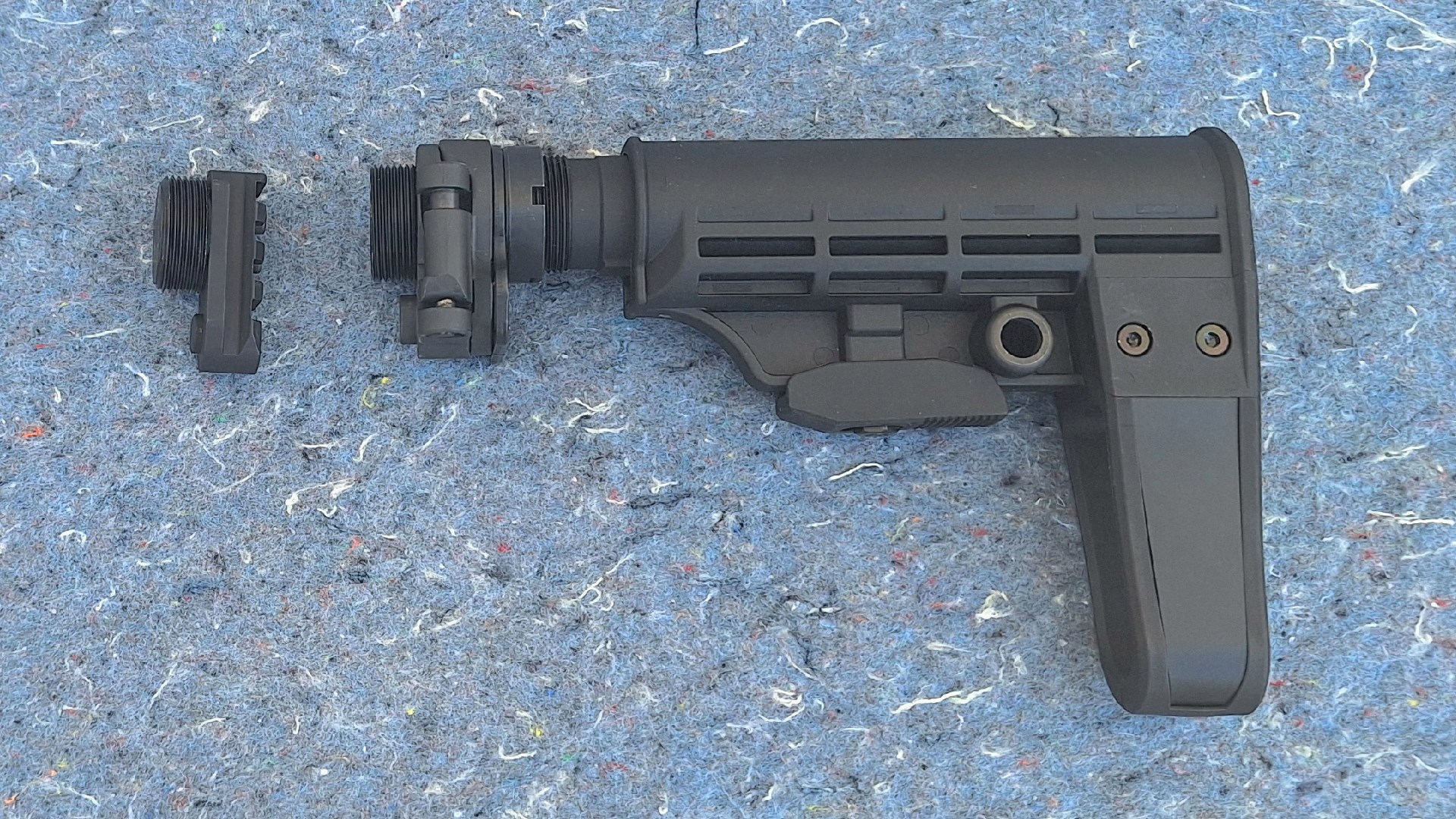 Tippmann’s rimfire stabilizing brace options include a railed ‘plug’ (Left) or the parts to assemble a complete T5 buffer tube brace assembly (Right).
Because this version of the M4-22 bolt assembly is fully encapsulated, with the recoil assembly inside of the upper receiver, Tippmann offers two options for installing a folding stock or brace. One of them is an aluminum receiver plug that supports a rear-facing Picatinny (M1913) rail via a pair of mounting screws. A small detent and support spring are also needed, that work to prevent the plug from rotating once installed. This is a handy option for folks who already have a hinged pistol brace on hand or a particular brace in mind.
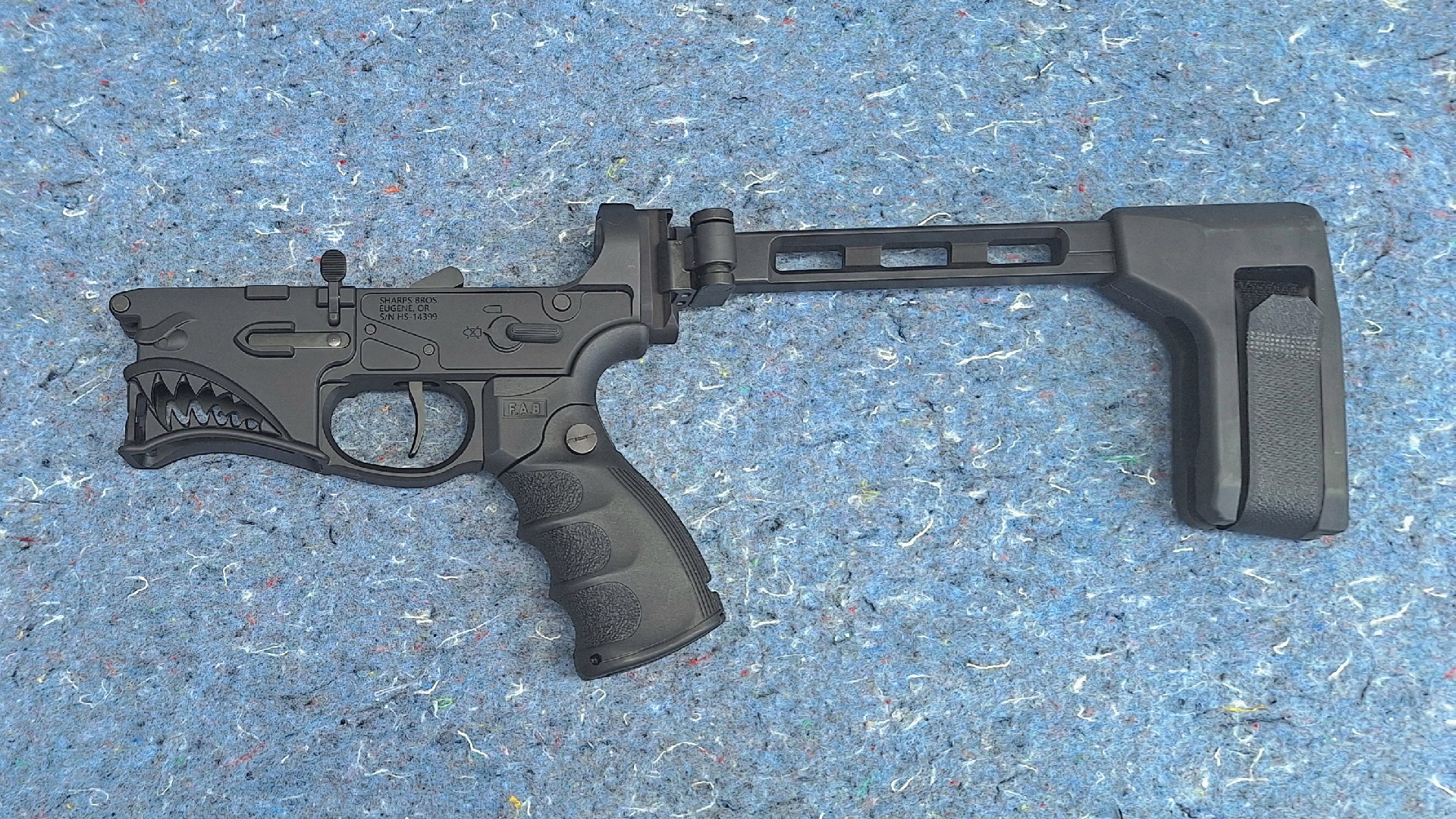 The Sharps receiver is shown here with the Tippmann rail, SD Tactical Brace and the FAB Defense grip installed.
In this case, the rail was tested using the latest version of the SB Tactical FS1913A stabilizing brace (FS1913A-01-SB; $249.99). This model has a strong, lightweight 6061 aluminum strut with a steel folding hinge, a rubberized arm cuff and an adjustable hook-and-loop strap. This assembly is also available with a polymer strut that is a bit lighter and costs about $50 less. I went with the aluminum version since I plan to use it on a variety of pistols.
The other option that Tippmann offers for pistols is a set of components that can be assembled into a complete folding buffer tube and T5 stabilizing brace assembly. It was originally designed for the Bug-Out platforms. It proved to be a solid fit for this .22 LR pistol. It should be noted here that although some of the parts in this assembly are Mil-Spec, the hinge is not designed to withstand the levels of recoil generated by centerfire platforms. Therefore, this assembly should be used with rimfire carbines and pistols only.
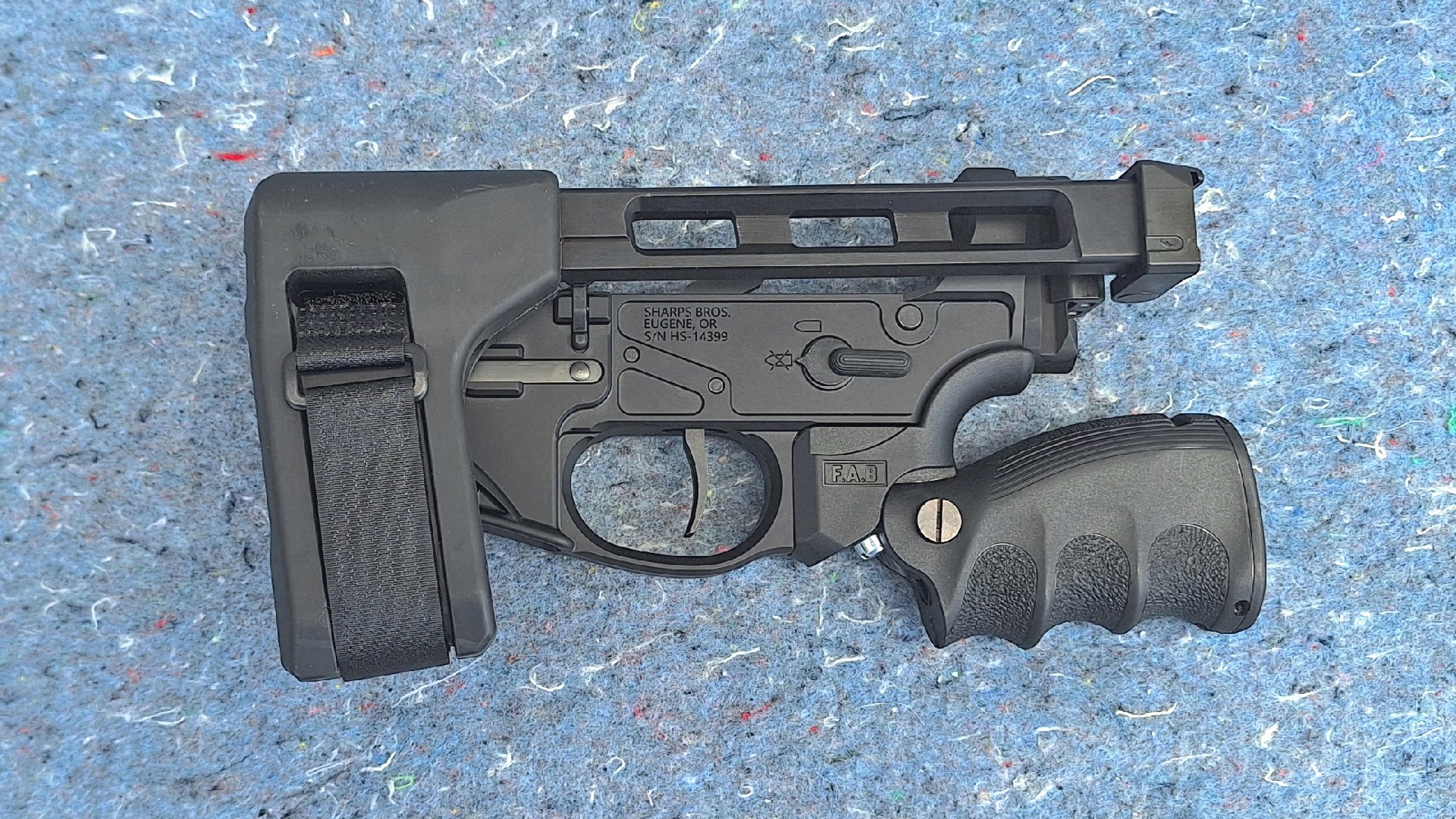 This rail configuration folds up easily and is a great fit for those who already have a stabilizing brace they would prefer to use.
For reasons that are not clear to me, these two mounting options are not sold as kits. Instead, one has to scroll through Tippmann's online catalog and pull together each of the components individually. Here is what you'll need to order:
Compact Rear Picatinny Rail:
2 Bolts AF01075
1 Picatinny AF01074
1 Plug AF01073
1 Pin AF01029
1 Spring AF01128
Stabilizing Brace and Tube Parts:
T5 Brace AF01437
Mil-Spec Buffer Tube AF01119
Castle Nut AF01114
Sling Spacer AF01113
Bug-Out Hinge AF01453
Spring AF01128
Pin AF01551
As of this writing, the parts for the railed plug assembly cost around $63, before taxes and shipping, with the buffer tube brace parts totaling about $305. For the formal range test, the pistol was outfitted with the folding buffer tube brace.
Luth-AR's Lower Parts & FAB Defense AGF-43S Grip
I was lucky enough to discover Luth-AR's stocks and components early in my AR-assembling endeavors. I've turned to them for high-quality lower parts kits in the past and plan to again in the future. In this case, I went with the standard complete lower parts kit ($59.49) which includes a complete Mil-Spec trigger assembly and an A2 polymer pistol grip. If you have another trigger and grip in mind, the AR15 Builder kit excludes those components for a listed price of $37.99. This company also offers their in-house series of Chubby target shooting grips (seen in the photos). Available in right-handed and ambidextrous configurations, I have found them to be comfortable to use with pistols like this one.
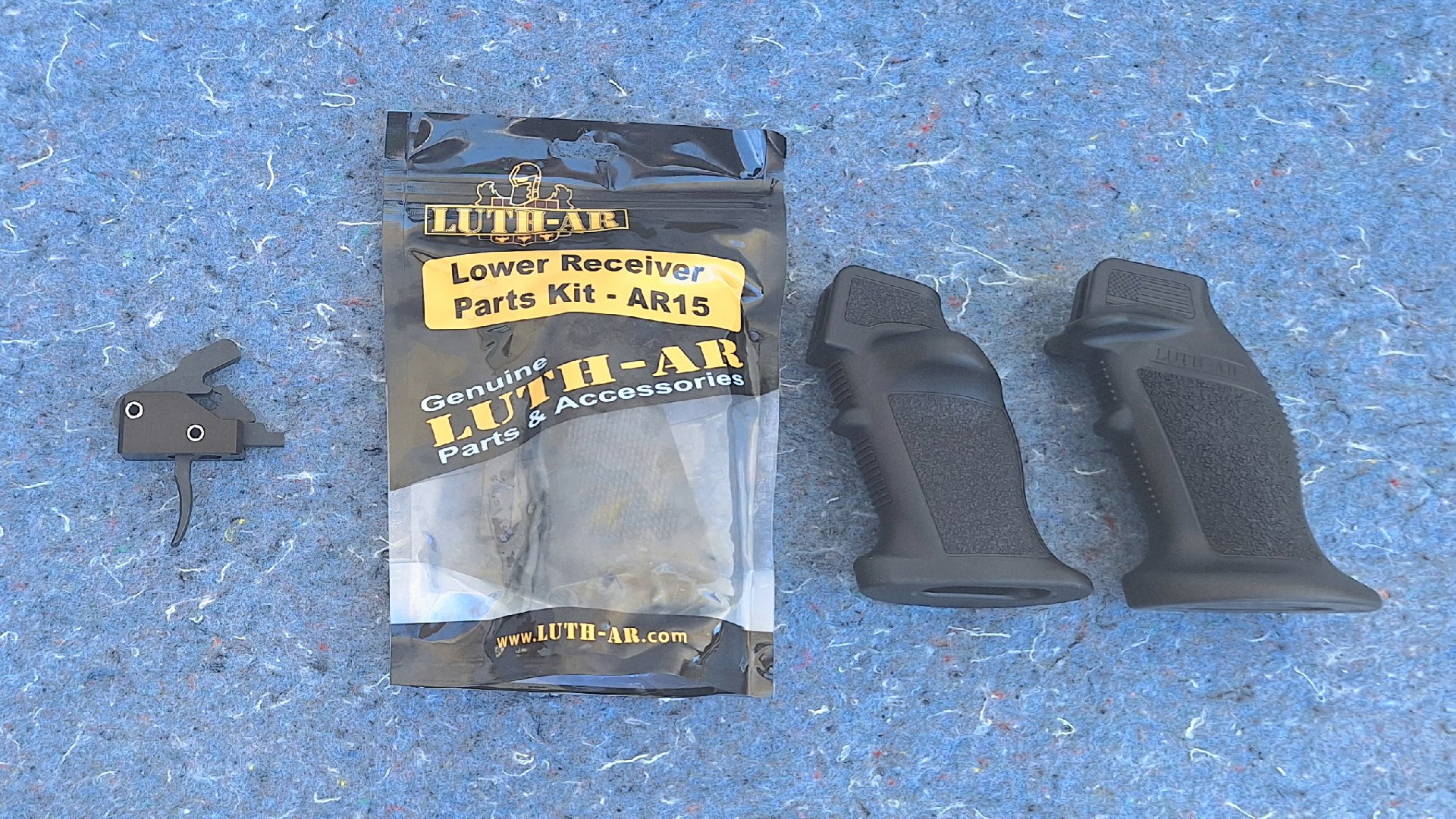 Luth-AR offers top-notch lower parts kits and target shooting grips.
As for the trigger, a Mil-Spec unit will usually strike firmly enough to fire .22 LR cartridges reliably. But who wants the heavy, gritty feel of a Mil-Spec trigger when better options are available? Finding a compatible upgrade is another case of taking the time to read the fine print. Some units have a light, clean trigger pull, but do not fall with enough vigor to ignite rimfire primers reliably.
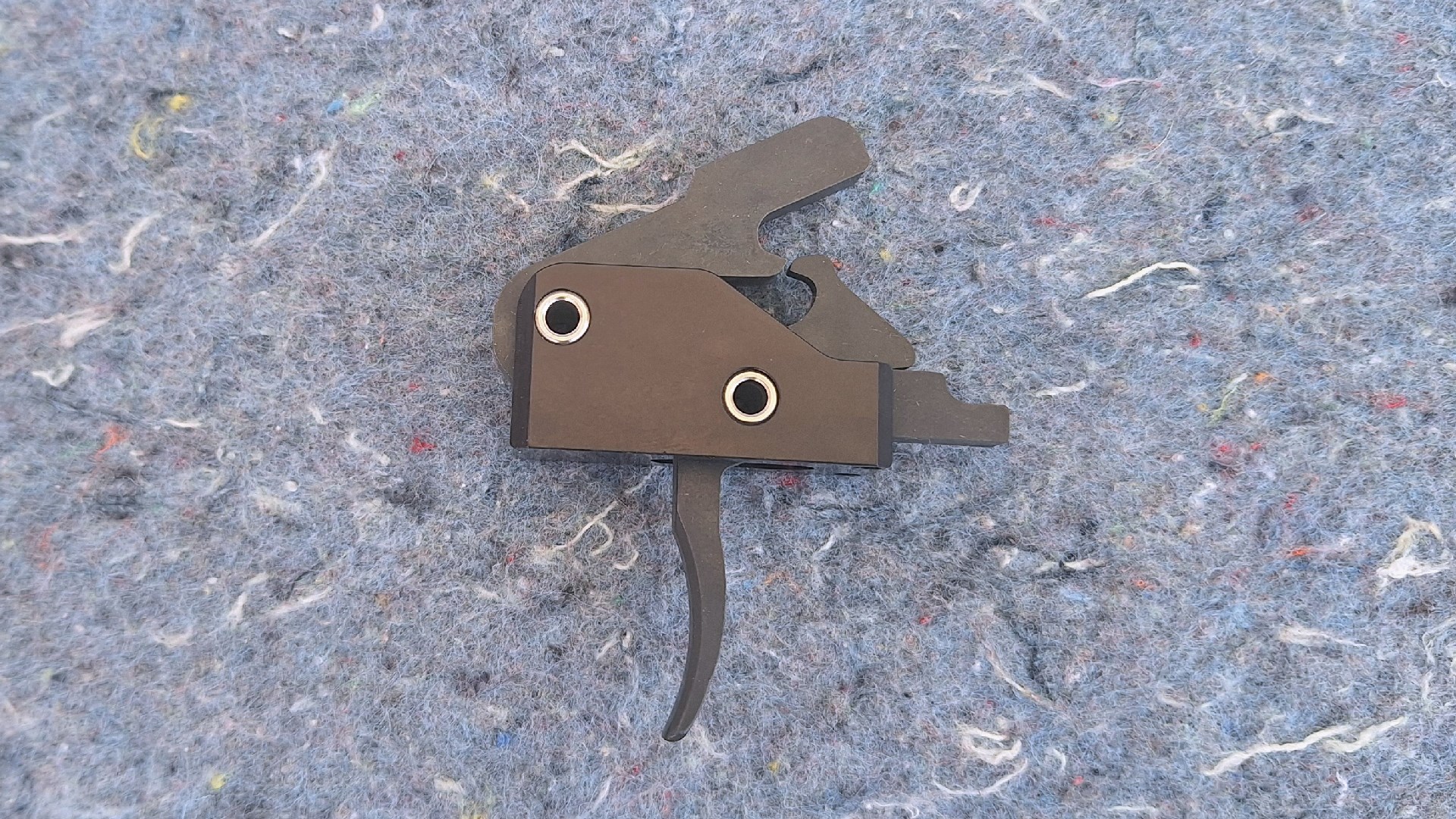 The drop-in MTA trigger is rated for use with .22, .223/5.56mm and .30 caliber cartridges.
Luth-AR's Modular Trigger Assembly (MTA; $149.95) was just what I had in mind. This single-stage, drop-in trigger unit features a 6061 aluminum housing with a hard coat anodized finish. The internal components are made from EDM processed, hardened A2 tool steel. The SST bushings and springs contributed to a crisp, clean 3 pounds 14 ounces trigger pull for the unit sent out for this evaluation. Best of all, this unit is listed as compatible with .22, .223/5.56mm and .30 caliber cartridges.
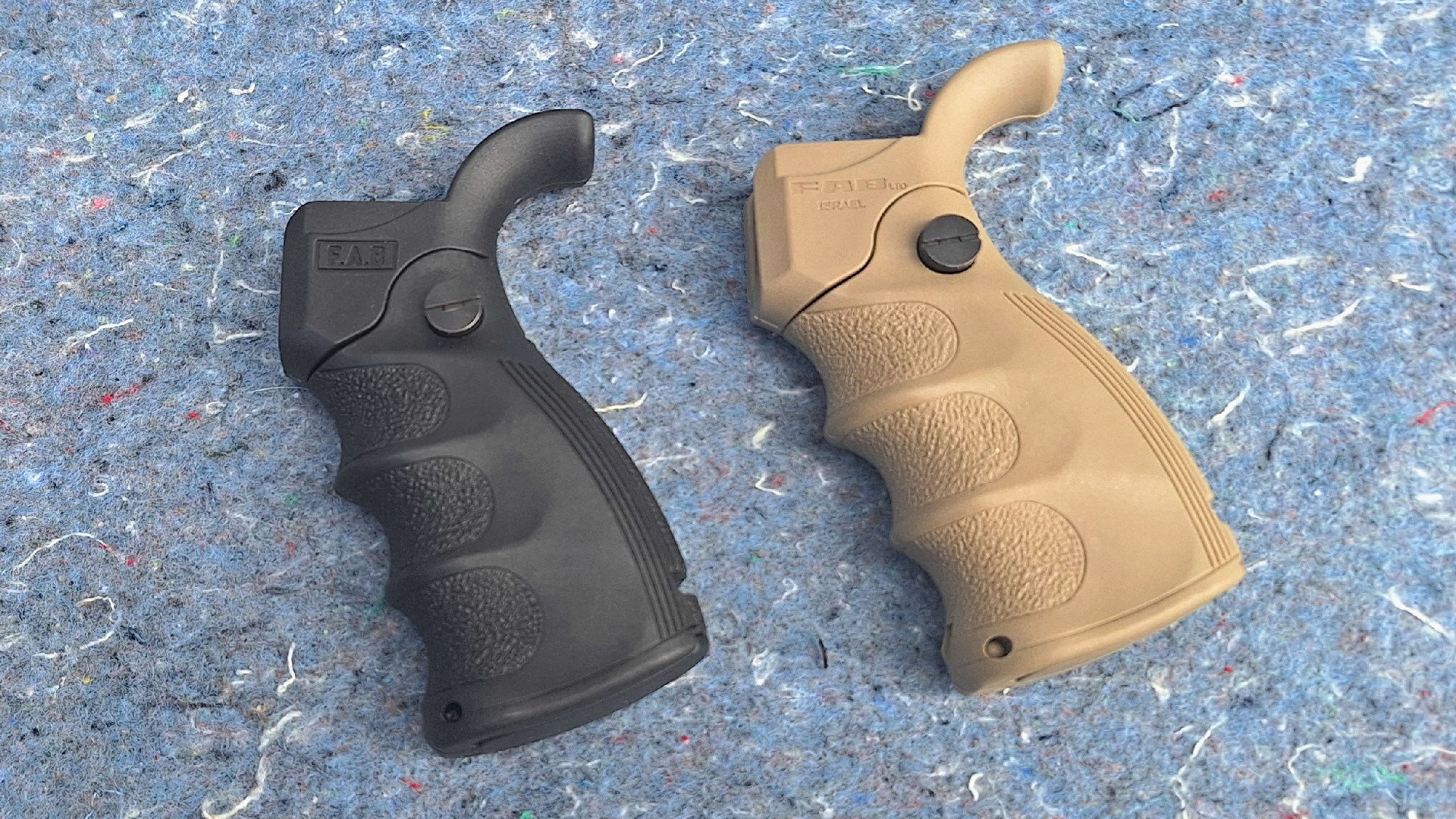 Folding the FAB Defense pistol grip shaves 2 inches off of this pistol’s overall height making it easier to store.
Since this is a fairly compact pistol build outfitted with a folding stabilizing brace, I set aside the Chubby grip in favor of the FAB Defense AGF-43S folding pistol grip. When striving to fit a rifle-action pistol like this into a pack or a bag, a fixed grip often sticks out like a sore thumb. This FAB grip is hinged with a push-button release on the left side. When folded, it shaves two inches off of the pistol's overall height. It also has a hinged plate that allows the grip's hollow to be used as a small storage space. However, the beavertail extension was about 0.15 inches too long to be compatible with the folding brace's hinge. The simple solution was to use a hand sander to shorten the extension. These finger grooved grips are available molded from black, OD green or tan polymer for a suggested retail price of $52.50.
CMMG Banshee Upper and Magazines
I had a different .22 LR pistol upper lined up for this build. However, it turns out it was not a Mil-Spec compatible component. The ports for the upper receiver extensions were off by a quarter of an inch, which prevented the takedown and pivot pins from being inserted. It was a good reminder that even long-time AR builders need to take a minute to read the fine print before placing an order.
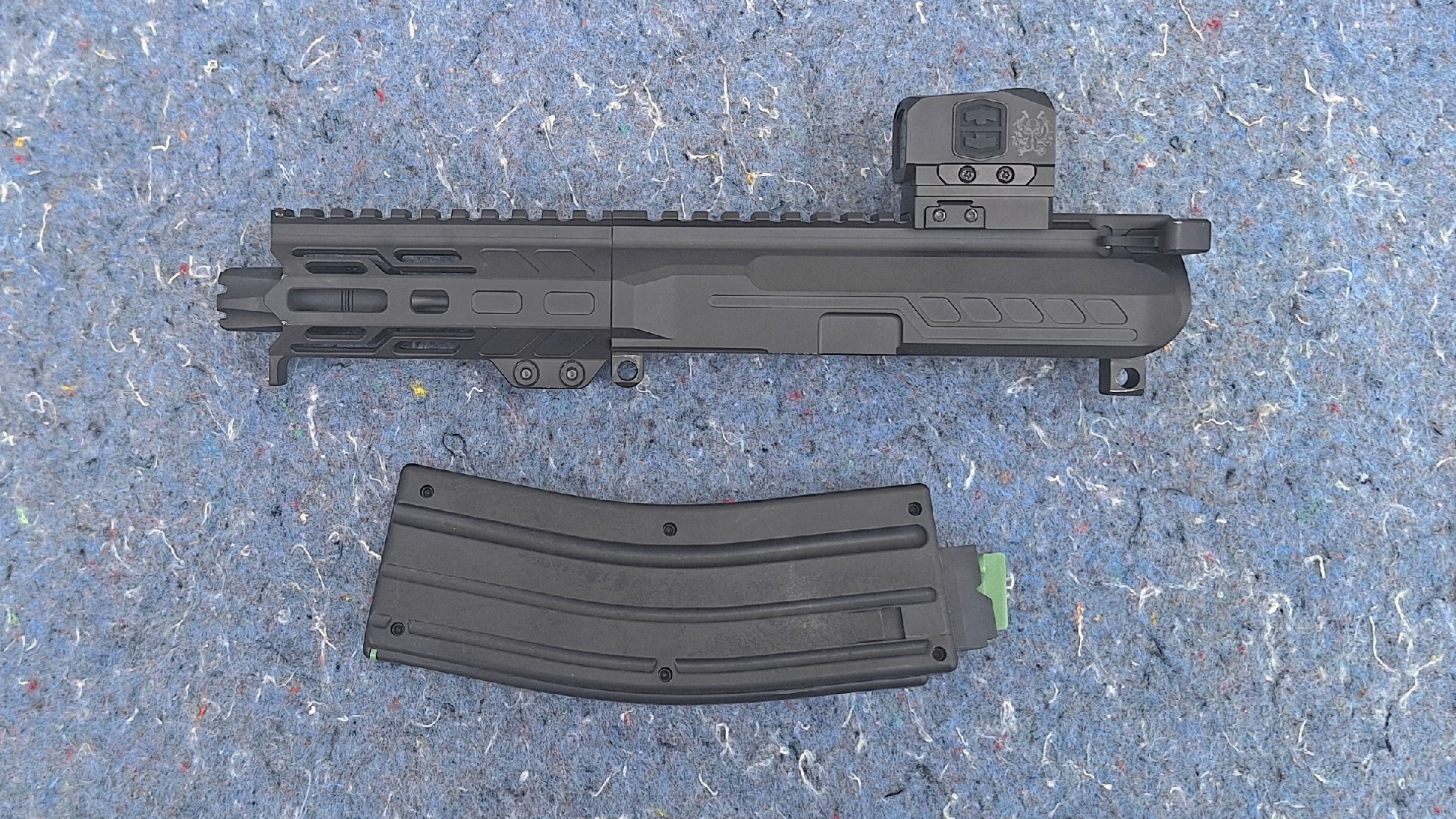 The CMMG Banshee upper is paired with proprietary 25-round magazines.
Since this .22 LR pistol's complete lower assembly was far too cool to languish, I did some digging and pulled out this top-notch CMMG Banshee rimfire upper that I worked with a few years ago (see the full review here). Those who want to squeeze as much performance potential as possible out of their .22 LR AR pistols will probably want to go with a 7.5 or 9 inch barrel. However, this upper's 4.5 inch barrel is a valid option for outdoor adventures for two reasons. First, it makes the pistol notably shorter for easier storage and transport. The other is that this barrel length is ideal for use with a sound suppressor. Overall, the Banshee upper's styling was a great match for the uncommon Hellbreaker lower receiver.
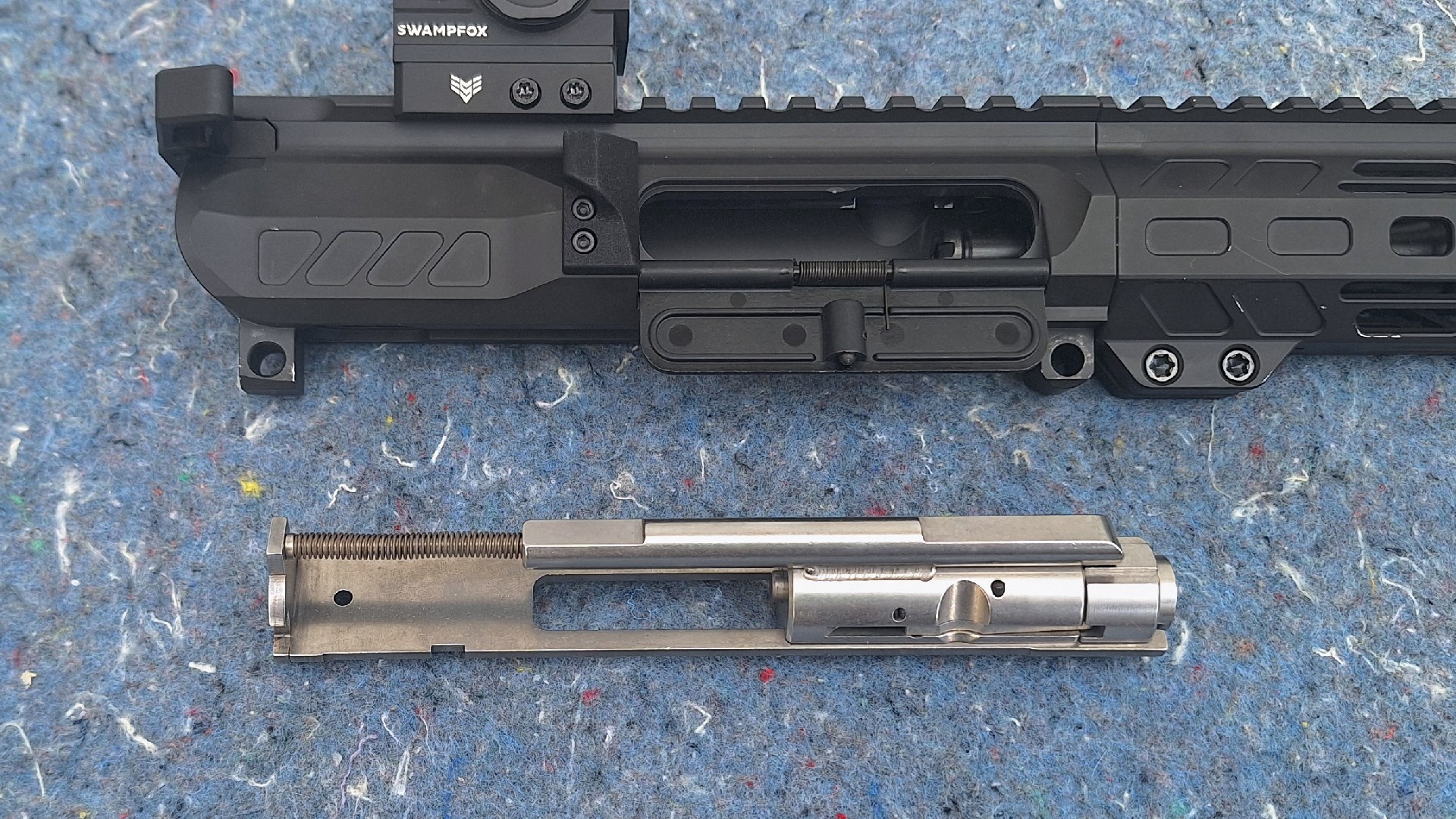 The CMMG .22 LR bolt assembly encapsulates the recoil spring and guide rod.
Range Time
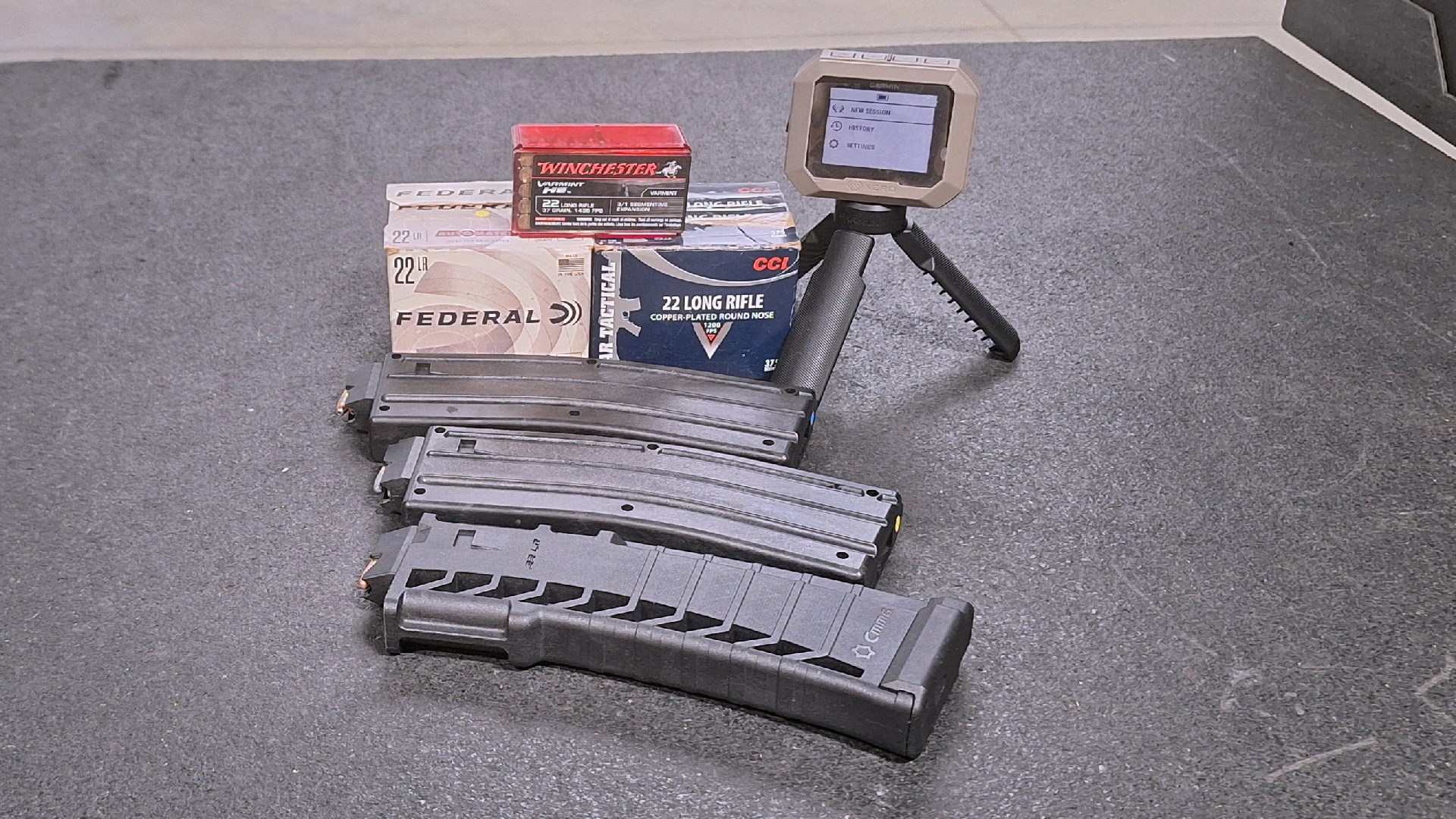
For the shooting evaluation, this folding .22 LR pistol was topped off with a Swampfox Kraken enclosed-emitter 3-MOA red-dot ($349) which has proven to be a handy and reliable option for a variety of handguns and carbines. The CMMG upper requires the use of proprietary 25-round magazines. A pair of Gen 1 magazines, along with one Gen 2 magazine, was used to feed the ammunition.
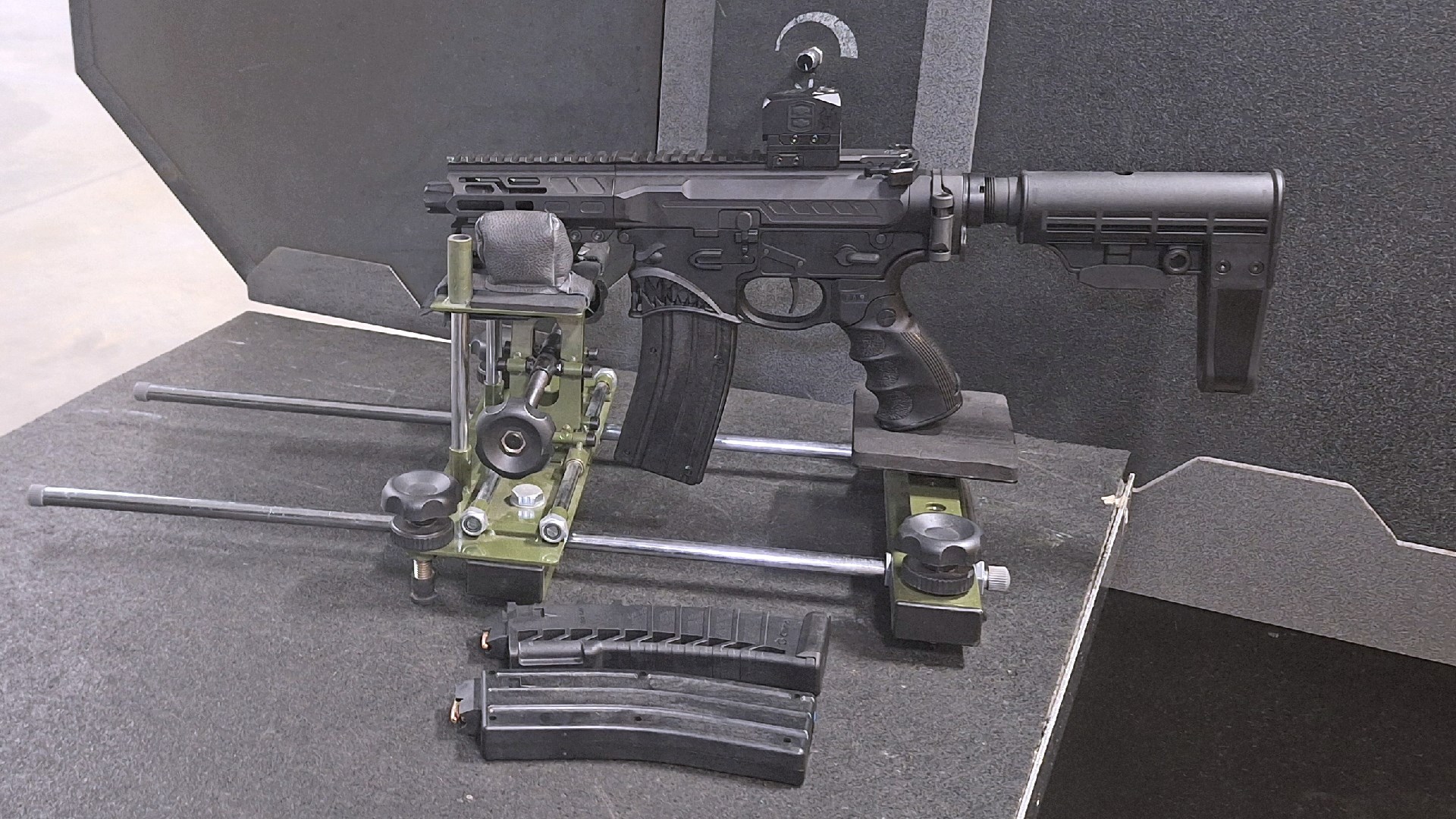 All of the components came together to form a sleek, reliable and enjoyable large-format pistol with the Tippmann T5 folding brace assembly installed.
All of the components and controls functioned reliably throughout the course of testing. The only .22 LR ammunition-related malfunctions were two faulty primers and another pair of rounds that fired when loaded a second time. All four rounds came out of the same box. The rest of the ammunition fed, fired and ejected without a hitch.
 The only malfunctions experienced at the shooting range were caused by a few faulty primers which is not uncommon with .22 LR ammunition.
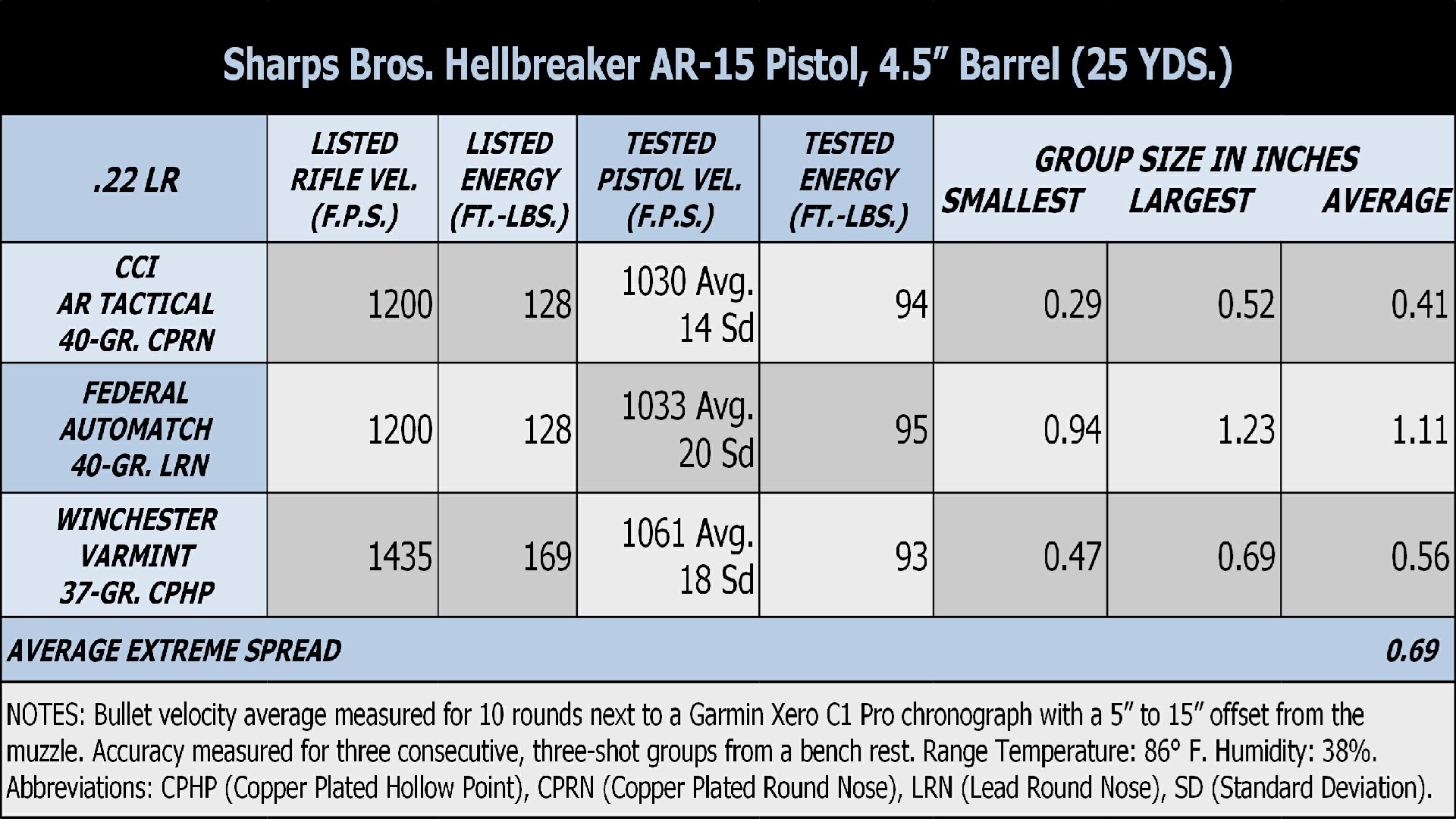
With the optic and an empty magazine installed, the finished pistol tipped the scales at 5 pounds 2.4 ounces. A pistol this size and weight generated all but imperceptible levels of felt recoil with all loads tested. Since it has a 4.5-inch barrel, the formal bench-rested, three-shot group accuracy testing was conducted at 15-yards. But as the results showed, the accuracy potential with this semi-automatic should allow for solid shot placement well past this relatively short distance.
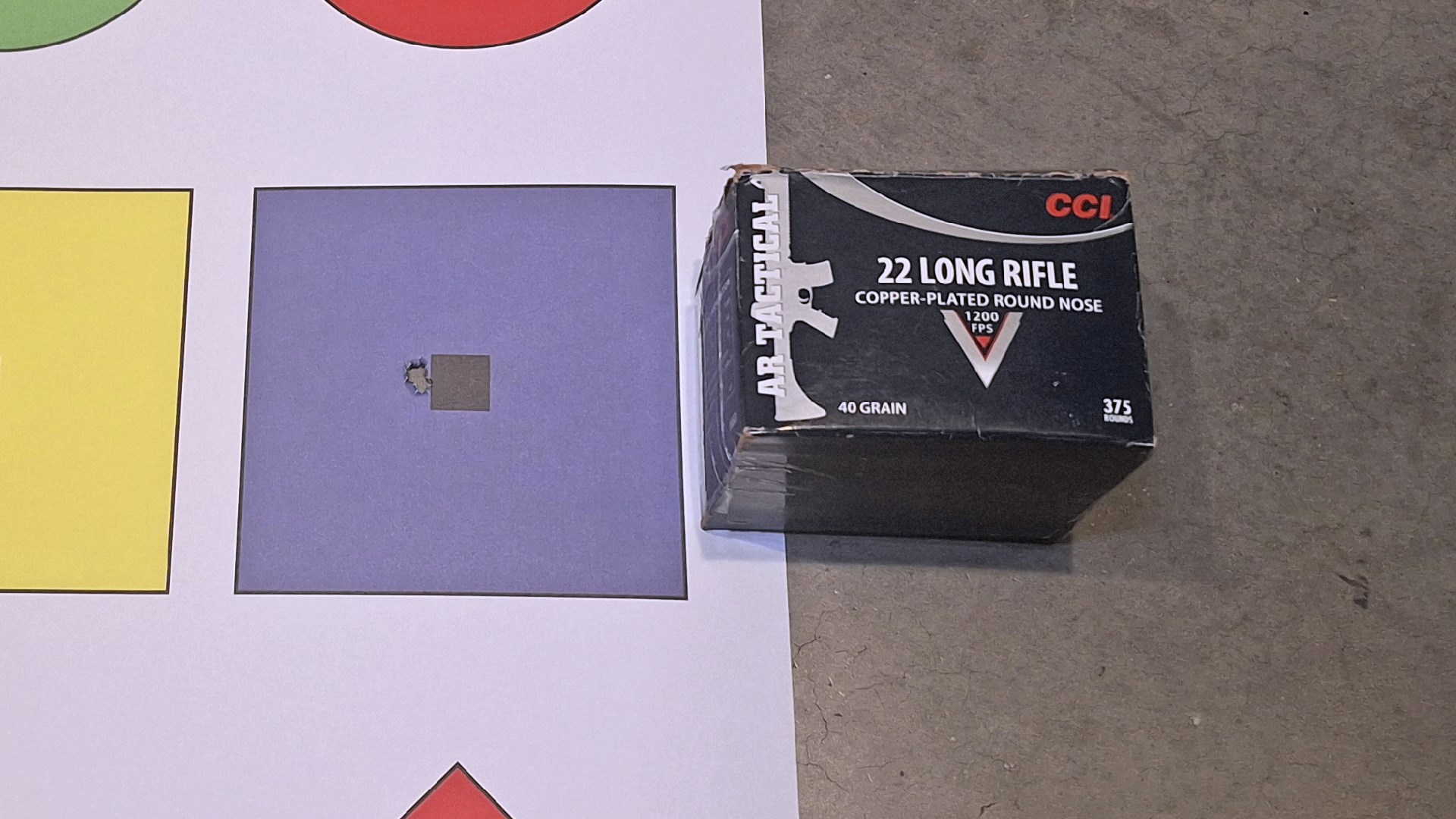 The best individual 3-shot group was a 0.29 inch ragged hole punched out by the CCI AR Tactical load.
The .22 LR ammunition used for this portion of the test included CCI AR Tactical, Federal Automatch and Winchester Varmint loads. A Garmin Xero C1 Pro chronograph was used to measure bullet velocities for 10-shot strings. Although it was not quite this accurate with all of the ammunition tested, two of the groups punched out using the CCI load were ragged holes that had to be measured from side to side. Here are the results:
Parting Shots
Some folks may be asking why I would go for a niche pistol build like this one. On the one hand, it was an enjoyable way to evaluate a set of individual, and fairly specialized, rimfire components to see where they might fit in this and future builds. If that was the primary goal, then this project was a clear-cut success. The quality, reliability and fun factor requirements I had in mind for each of the parts were definitely met.
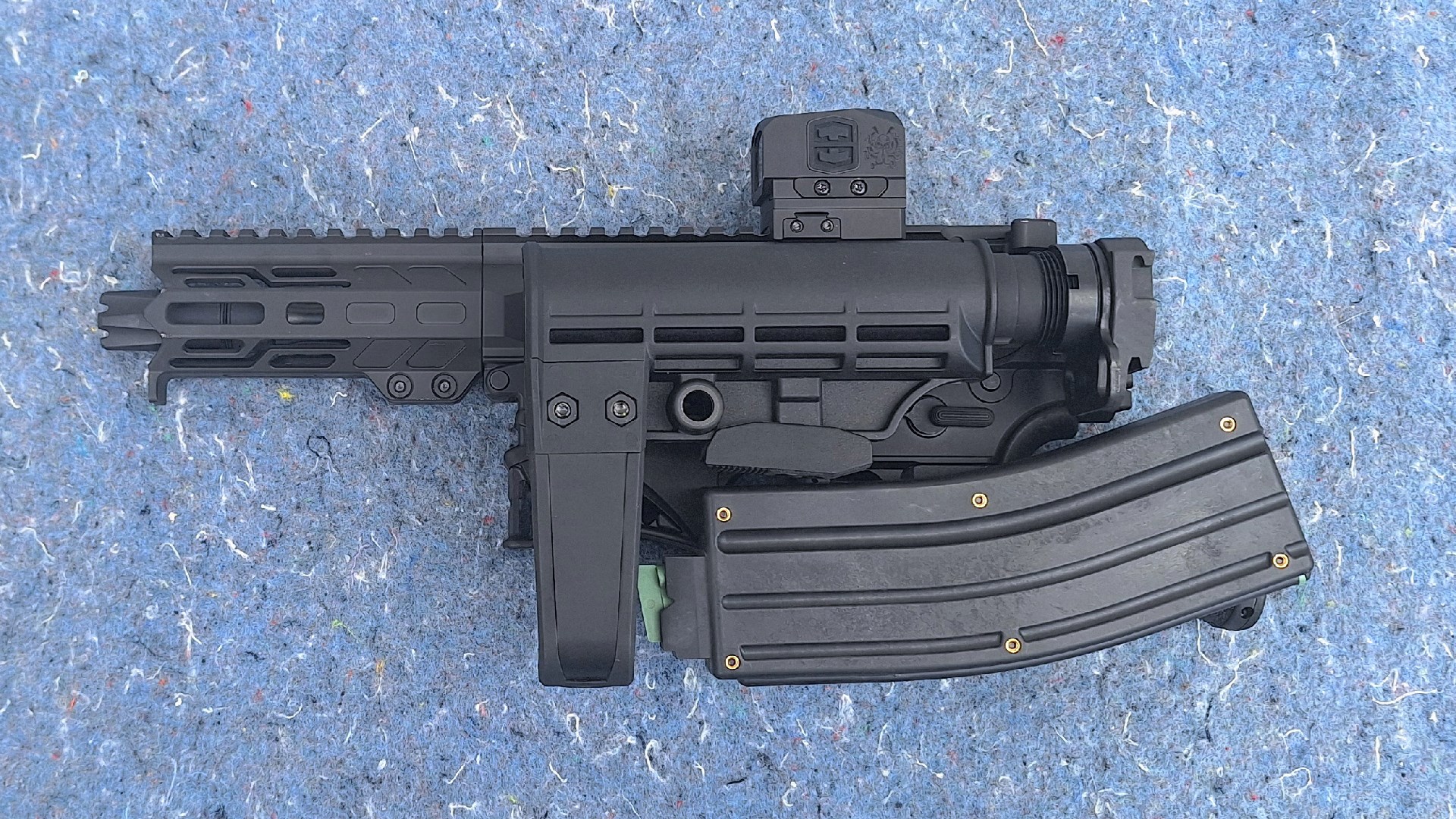 The finished pistol’s grip and brace fold up neatly for easy storage or transport.
But from a big picture perspective, I keep finding my way back to folding braced AR pistols for use as outdoor adventuring arms because they so neatly balance shootability, accuracy and portability in a way that other semi-automatic pistols and carbines cannot quite duplicate. In this case, the .22 LR chambering makes this pistol a soft-shooting target and small-game option that is an ideal sound suppressor host. But if this pistol is not quite your cup of tea, then use the lower to build it out as a .22 LR or .22 WMR carbine instead. Or remove the rimfire specific components and convert the Sharps lower into a centerfire pistol. It is an AR after all, so you are free to trick it out just the way you want.
Component Providers:
CMMG, Inc.
FAB Defense
Luth-AR
Sharps Bros.
Swampfox Optics
Tippmann Arms