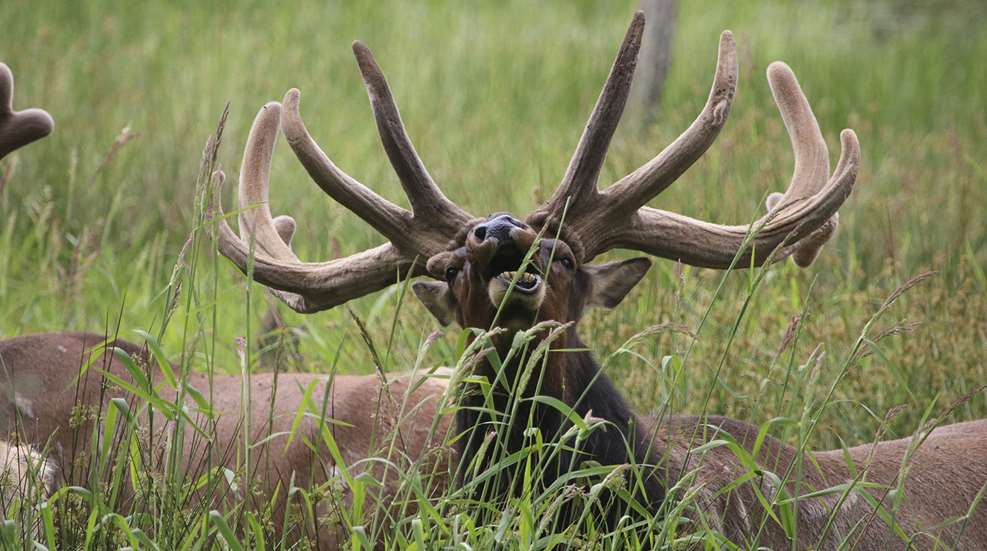
Biologically speaking, summer is a taxing time for bucks and bull elk. Velvet-covered antlers are some of the fastest growing tissues on the planet and their development requires a lot of energy. Antler growth is accentuated by minerals being robbed from other bones in the body which can compromise an animal’s overall health.
The velvet covers and protects underlying tissues containing nerves and blood vessels that aid in bone formation of the antlers. Velvet racks are sensitive to touch, and because bucks and bulls don’t want to damage their prized headgear, they spend much time in the open. Their movements can also be restricted in late July and early August, so if you want to locate animals for the upcoming hunting season, now is the time to scout.
When physically scouting for bucks and bulls in velvet, begin searching at daylight and continue into the heat of the day. Animals will often still be feeding at first light, then bed down early. As the morning warms up and thermals begin to rise, animals will get up, briefly feed and bed down in the shade. As the sun continues to shift, animals will re-bed, often several times a day. Sometimes they’ll move higher in elevation to seek relief from faster moving winds and stabilized, rising air. Other times they’ll crawl deeper into shaded creek beds, river bottoms and ravines, seeking cooler shade. Extra hot days can actually increase these brief movements which boosts the odds of locating animals. I once watched a big buck bed down seven times one morning before settling down in tall grass and shade atop a knoll, just before noon.
Scouting from a distance with a spotting scope is ideal. The goal is to locate bucks and bulls without them seeing you. Once animals are found set trail cameras (when and where it’s allowed) to size them up, learn how many animals are around and pattern their movements. Bucks and bulls are most predictable when in velvet. This approach will give you a confident starting point for the season opener.
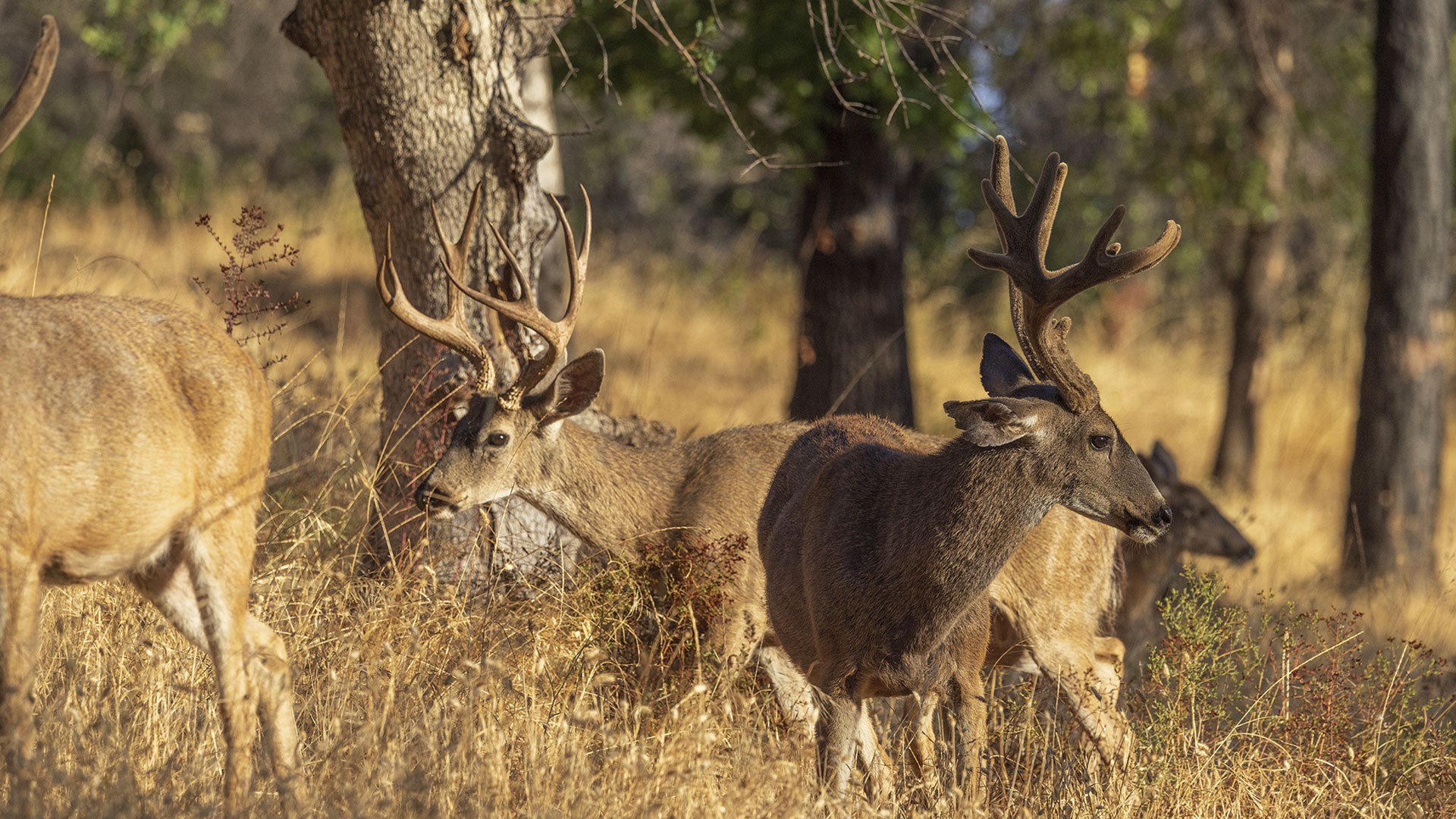
As testosterone levels increase due to shortening photo periods, the velvet begins to dry and strip off the hardened antlers. For elk, early to mid-August is when the velvet begins to be stripped. For deer, late August into the first week of September–even later for some whitetails–marks the peak shedding of velvet. I’ve watched bucks completely strip their velvet in a matter of minutes by thrashing brush, but the process can take a few days to complete for both deer and elk.
Some bucks–often the oldest, wisest ones–turn nocturnal within a day of stripping their velvet. The increased testosterone levels actually mark the start of the pre-rut, governing specific behaviors. Bucks concentrate on putting on weight and will begin sizing-up other bucks in their area, along with monitoring does. Bulls will start to disassociate from summer bachelor herds, often segregating by age class.
Soon after stripping their velvet, the biggest bulls often turn solitary and start covering ground in search of cow herds. For archery hunters, locating as many cow herds as possible during summer scouting is key to finding big bulls when they move in for breeding opportunities. One summer I caught a big bull on trail camera multiple times a week. It had a unique rack and was easy to identify. Three days after stripping its velvet the bull appeared on a trail camera 9 miles away. The following day it was back in its original spot. It bounced back and forth multiple times over the next two weeks before settling down with the biggest herd of cows. A buddy killed that bull during the October general rifle season. It was alone, halfway between the two cow herds and had not been seen on camera for nearly a month.
When setting trail cameras, concentrate on linking bedding and feeding areas. In dry climates, water is an obvious target. The earlier in the fall your hunt, the greater the likelihood of tagging a buck or bull you’ve located and patterned in the summer.
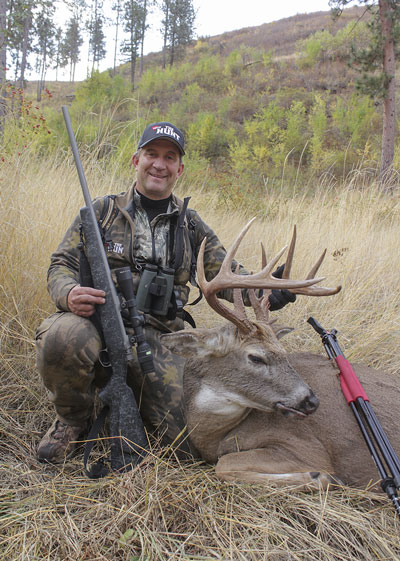
September archery season and early rifle hunts yield the best odds of securing animals you’ve discovered while scouting. This is because they’re still utilizing familiar trails and feeding and bedding areas. Hunting from ground blinds and treestands, along with covering ground on foot, are effective ways to locate a target animal. I once found a big Columbia blacktail in June and caught it all summer on multiple trail cameras. Two days before the Sept. 1 opener it stripped its velvet and instantly went nocturnal. I had to move my blind much closer to its bedding area in order to get a shot before darkness fell. It worked, and I arrowed it with less than five minutes of shooting light left on opening day.
As the rut commences, bulls and bucks will cover more ground, sometimes being seen miles from where they were in August. These animals can be tough to kill as they’ll cover ground, utilizing multiple trails each time they come and go.
If hunting migratory animals before they leave their summer grounds, a scouting trip into the high country, followed by setting trail cameras, can reveal a lot. Arrive at the hunting grounds a couple days before the season to scout and study trail camera footage. Setting cameras on video mode will capture much more than still images.
A few seasons ago I killed a good buck on opening weekend. While my actual hunting season was short lived, the countless hours and miles traveled through scouting paid off. By putting in the work now your hunting season might come to a quick close, but it will be a happy ending.
* Visit scotthaugen.com to purchase a signed copy of Scott Haugen’s best-selling book, Trophy Blacktails: The Science of the Hunt. You can follow Scott on Instagram and Facebook.
Most Popular