Anymore, when I receive an over/under shotgun for testing I ignore all the marketing hype about how this time the Turkish gunmaker de jour got it right and built a $1,000 gun that shoots, handles and holds up “just as good” as a $2,200 Beretta or Browning. I’ve been fooled a bunch. Rather, I pull it out of the box, grab four boxes of shells, wheel my skeet thrower to the pasture and start shooting. A couple days later, I shoot it again.
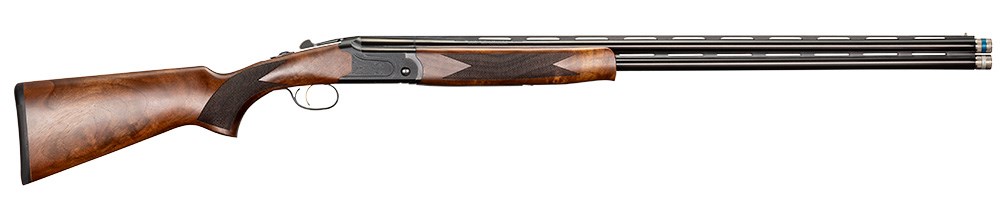
In the last five or so years there have only been two $1,000 over/under shotguns (surely there are a few others I haven’t tested) that I thought performed well enough to recommend. Those were Yildez’s steel receiver HPS model and possibly CZ’s Redhead. Today I’m tentatively adding Mossberg’s International Gold Reserve to my shortlist. I say tentatively because I haven’t put thousands of rounds through it yet, but so far, so good.
The gun came from the factory in a classy-as-plastic-cases-can-be case, disassembled into three parts, as over/unders should come. I noticed the choke tube case, opened it, and saw that two chokes were missing, so I looked at the barrels and found that the cylinder and IC chokes were installed. (These extended chokes are color-coded so that’s the last time I’ll have to read the fine print on them.) The barrel was stamped “Made in Turkey by Khan.” (Khan Arms has been in business since 1985; based on my impression of this gun, it has learned a few things during its run.)
I assembled the shotgun by removing the Schnabel-style fore-end from the barrel, then hooked the latch of the monobloc onto the receiver’s trunnions and closed the action snappily. This is my first test. Does it close smoothly and solidly as if it wants to close, or must it be muscled? Worse is if a new action is loosey goosey, because if it’s loose prior to shooting, you can bet it will wobble like a drunken Jenga tower after a thousand rounds. But it was smooth. So I opened and closed it two dozen times, all the while noticing the copious jewelling on the chrome finish of the steel monobloc. The receiver is made of aluminum, which allows this 20-gauge’s lithe 6¼-pound weight.
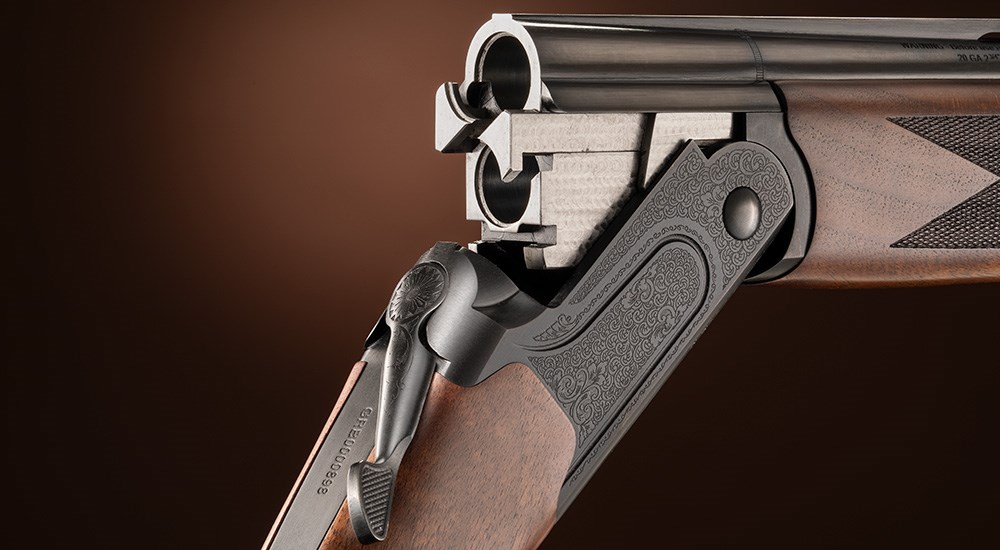
I slid the tang safety forward then tried the trigger. I was surprised when nothing happened. That’s when I learned that the barrel selector within the safety must be pushed to the right or left; the middle position prevents the gun from firing. The hammers are mechanical, meaning they fire independently without requiring recoil from the first shot to set the second one. The trigger averaged 7-pounds pull weight, which is on the stiff side.
I used my finger to balance the gun, and found that it balances 1 inch ahead of the hinge. I consider this to be very well balanced, especially for a lightweight gun with 30-inch barrels. I prefer this “weight between the hands” feel for instinctive shooting, although some guys are sustained lead types that prefer a little more weight toward the barrel.
Finally, and the most important test for me personally, I shut my eyes and shouldered it as if I were swinging on a target. Then I opened my eyes and was pleased that my line of sight was naturally looking straight down the length of the barrel’s vented rib. This indicates that the gun’s drop at comb (1½ inches) and length of pull (14 inches) fits me well, mainly because this is what I am used to after shooting a Beretta all my life. Typically, if the barrels then prove they are regulated correctly, I find I can usually hit flying targets without too much thinking—and that’s the key to wingshooting.
Satisfied, I walked outside, loaded the chambers with No. 8 target loads, called for a bird and smashed it. The very first shell I fired did not fully eject via the automatic ejector. I was certainly a little worried, but this proved to be the first and only failure to eject that I experienced, so I chalked it up to packing grease sitting dormant in the closed action too long, which happens. From there, I hit 10 in a row before missing one with the first barrel but cleaning it up with the second.
After shooting just one box, I knew this was a gun that I could immediately shoot a round of skeet with or take dove hunting and expect not to embarrass myself too badly. I then aimed and fired at stationary targets; it printed its patterns dead-on at 40 yards. This is standard regulation.
After shooting and handling it on several occasions, here are a few more observations: First, I love it. For around $1,000, I doubt a better over/under for hunting exists. At 6¼ pounds it’s not a dedicated gun for the skeet range; for that I prefer a heavier steel receiver over/under that mitigates more recoil and can take generations of punishment. But for upland hunting, the Gold Reserve Black Label is perfect, save for one detail: I wish it were available with 26- or even 28-inch barrels.
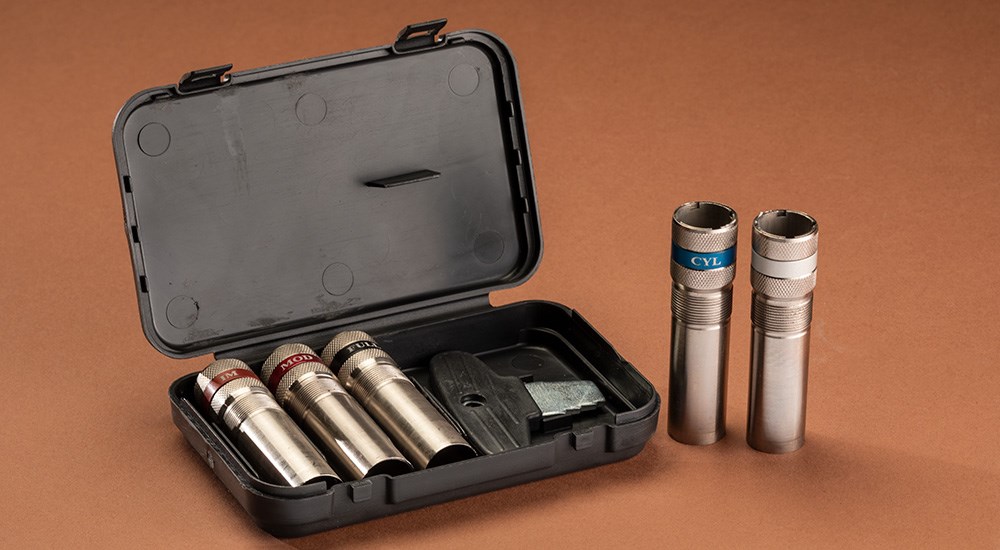
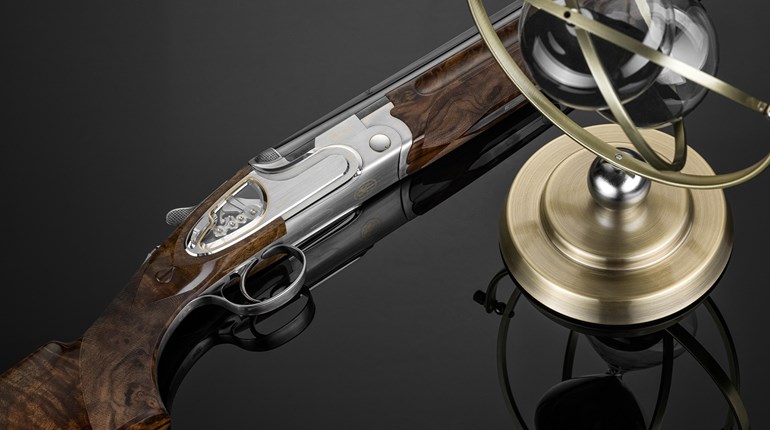
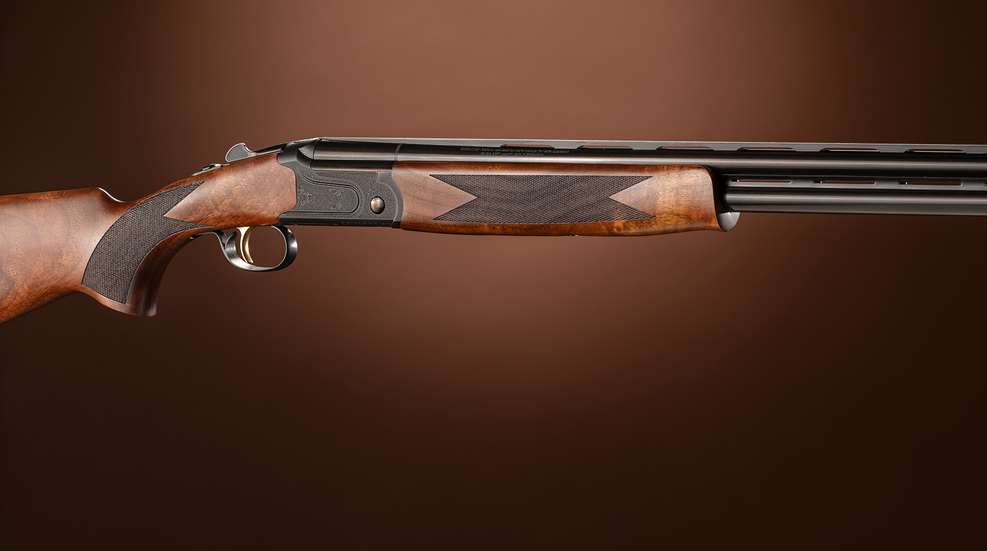
To me it looks good with its black anodized receiver that spared us the typically gaudy laser engraving and instead is scroll engraved with a fleur de lis pattern. The rubber buttpad is both effective yet slick with a rounded edge so it won’t snag on the mount. The grade A black walnut stock is admirable for a $1,000 gun, and I love the thinness of the fore-end. Wood to metal fit is decent. It is very cool that it comes with a useful improved modified choke tube. Overall, this gun just fit me, handled admirably and shot really well. However, only time will tell if it holds up to thousands of punishing explosions within its action. But based on what I’ve seen and felt so far, my $1,000 bet is that it will.
Technical Specifications
• Type: over/under shotgun
• Gauge/Chamber: 20/3" (tested); 12/3"
• Barrel: 30", vent rib
• Receiver: aluminum
• Trigger: single-stage; 7-lb. pull weight
• Sights: front bead
• Safety: manual, tang-mounted, selective
• Stock: grade A black walnut; LOP 14"
• Metal Finish: polished black w/scroll inlay on receiver; blued barrels
• Overall Length: 47" (20-ga.)
• Weight: 6 lbs., 4 ozs. (20-ga.)
• Accessories: extended choke tubes (SK, IC, M, IM, F); molded plastic case
• MSRP: $1,135; mossberg.com