I’d spent my first two days seeing only does and small bucks. But early on day three, I caught movement in the early morning gloom, got my binoculars on target and saw a large brown body moving among the south Texas mesquite.
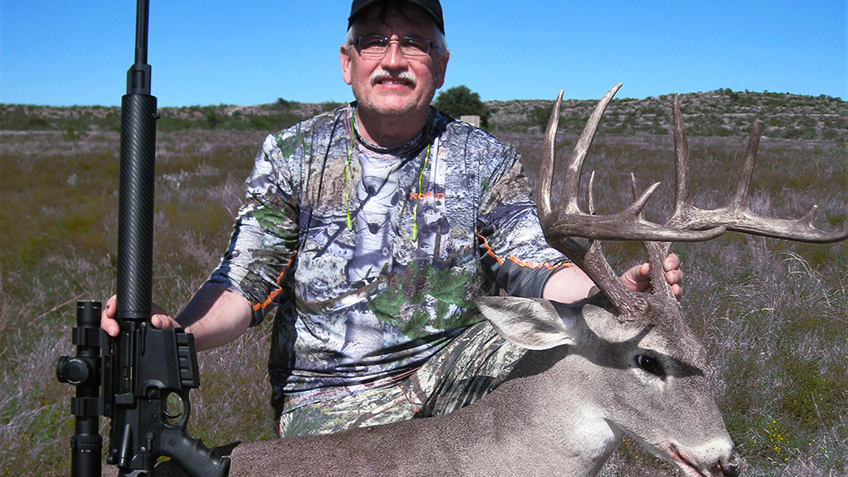
A good-sized white-tailed buck, I was sure, and he had all my attention—for two seconds, until he ducked back into the brush and vanished. A half-hour later, which seemed like two days, the buck reappeared. Now, the bright Texas sun washed over his body and highlighted his antlers. I guessed he was 4½ years or a bit older, and looked to have nine or 10 points.
The buck trotted forward, then stopped and took a half minute to scan up and down the length of a dry ranch road. I’d ranged the various landmarks outside my shooting blind as soon as the light was strong enough, so I knew it was standing at around 130 yards. I placed the reticle on my Trijicon AccuPower 1-8x28 scope on his heart-lung area and squeezed the trigger on my rifle. He ran about 40 yards before toppling into the knee-high brush.
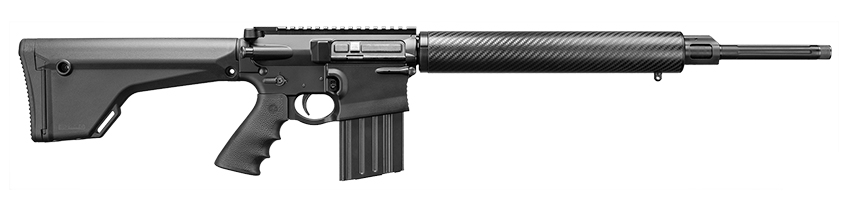
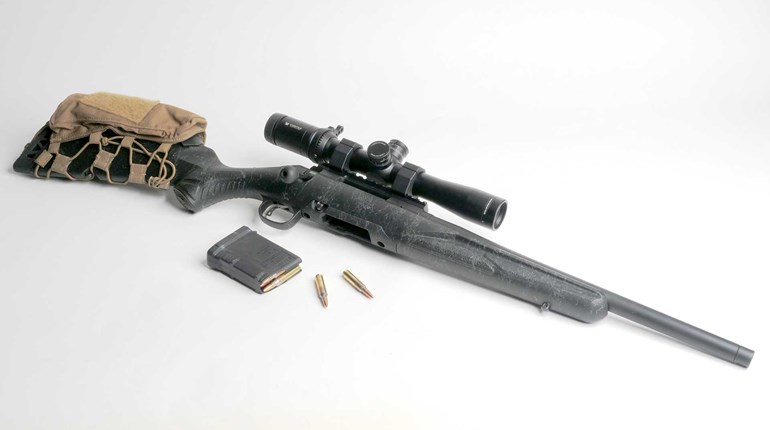
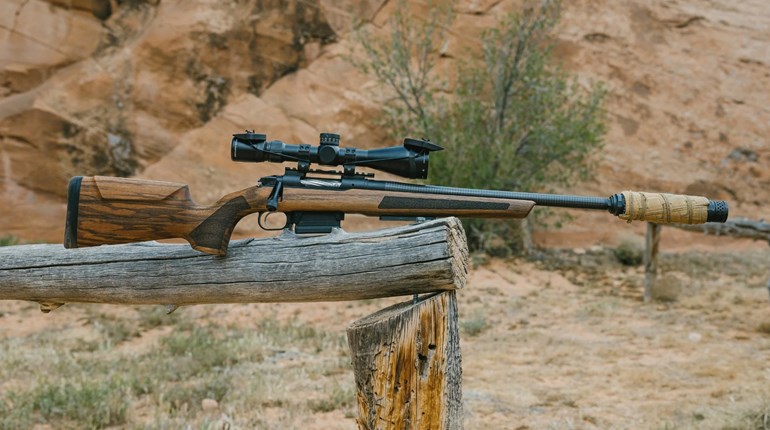
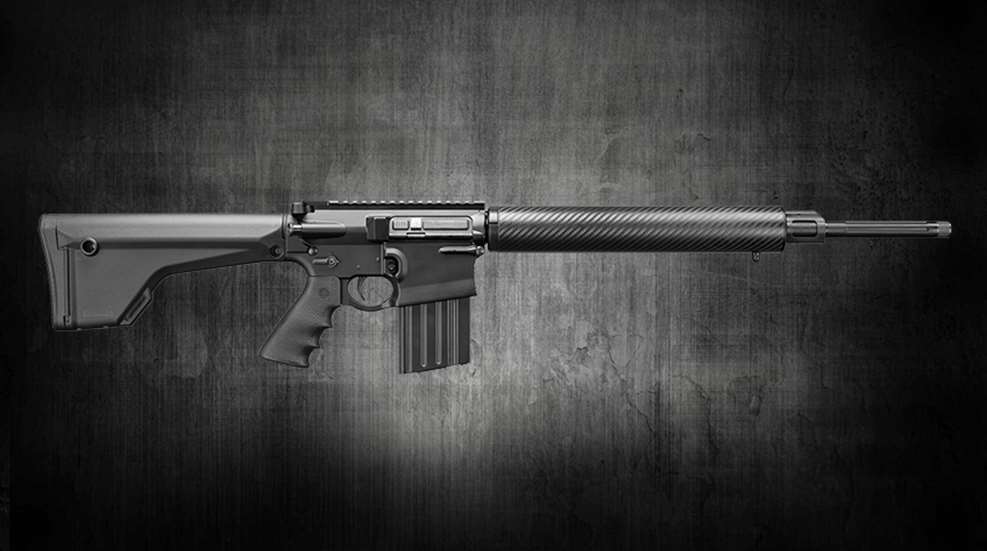
I was using the new DPMS GII Hunter chambered in .260 Remington, and I was becoming more impressed with both the rifle and the cartridge. The day before, I’d taken two wild hogs—one of them a 175-pound boar at 150 yards—and both dropped where they stood from the 120-grain solid copper bullet from my Barnes VOR-TX ammunition. Later the next day, I would take down a doe, again with a single shot. The more I used the rifle, on this hunt and later hunts, the more I wondered: Why don’t more hunters use the DPMS rifle and this round? Both are extremely impressive.
Let’s start with accuracy. Before my Texas hunt, I set up the GII Hunter with the Trijicon Accu-Power and hit the range. I used the Barnes VOR-TX .260 Rem. ammo, and within ten shots was hitting the bullseye at 100 yards. I recorded two five-shot groups in the 1.25-inch range and figured I was ready.
A couple days later, I packed up the rifle and headed to Texas, soon to take the two deer and pair of hogs. Upon returning home, I did more five-shot group testing at the range on paper at 100 yards using Remington Core-Lokt with a 140-grain bullet; the aforementioned Barnes with a 120-grian TSX bullet; and Nosler Trophy Grade firing a 130-grain AccuBond bullet.
The Barnes VOR-TX did the best, averaging five-shot groups right at 1-inch at 100 yards—my best group was 0.9-inch, with two pairs of shots side by side, followed by the Nosler at a 1.24-inch average. Core-Lokt brought up the rear averaging right at 1.5 inches. One inch and slightly under is pretty good for any hunting rifle, but I’m sure the DPMS and its 20-inch stainless barrel can do better if I put in more practice time.
The DPMS GII Hunter is a Remington product (DPMS having been brought under the Remington Outdoor Company umbrella many years ago) that hasn’t gotten a lot of attention. Unfortunately. The GII line was debuted in 2015, a gas-operated AR-10-style rifle that was a full pound lighter than the original DPMS Hunter line. DPMS also redesigned the bolt carrier to reduce recoil. The rifle line was first launched in .308 Win, then in .243 Win. and .260 Rem., and most recently in 6.5 Creedmoor.
At 7.6 pounds, the DPMS GII Hunter in .260 Rem. isn’t exactly a mountain rifle, but it’s a good couple pounds lighter than the nine and 10 pound AR-10 style hunting rifles on the market today. The 20-inch barrel is made of stainless steel and features threading on the end for a suppressor or muzzle brake. Overall length is 39 inches, making it easy to use and maneuver in the hunting blind.
The DPMS two-stage trigger snapped off nicely and had a pull weight right at five pounds. The magazine release forcefully ejects the magazine. The Magpul MOE stock is comfortable on the shoulder and features a compartment under the butt pad for a cleaning kit or other small gear, while the Hogue pistol grip provides a solid anchor point.
Given the caliber, the gas-operating system and the new bolt carrier, recoil is very manageable—certainly less than most AR-10s chambered in .308 Win. I’ve used. Follow-up shots are fast, and I got back on target quickly, thanks to minimal recoil. Brass is consistently ejected about eight feet away—and into a nice pile if you’re set up on a bench—and the now-used brass was not chewed up by the extractor.
If there’s one thing I would change about the DPMS GII Hunter it would be the carbon fiber handguard tube. It functions well enough, and even with rapid firing the handguard stays cool to the touch, but the rounded bottom of the handguard isn’t optimum. A handguard with a flat bottom would provide a more solid rest for shooting off the ledge of a hunting blind, top of a fence post, over a rock or fallen tree, etc., the kind of shooting set-ups a hunter in the field finds.
Remington introduced the .260 Remington in 1997. People who knew rifles and ballistics well gave the round a thumbs up, but hunters and shooters? Not so much. Of course, 1997 was well before the current long-range boom, which has made the 6.5 Creedmoor a superstar, and in the late 1990s, hunters were still focused on bigger bullets making bigger holes, and here was the smallish .260 Remington. Remington, despite being among the biggest companies in the shooting sports industry, has an unfortunate habit of introducing very good products that just don’t get noticed. (Whether that’s on Remington, the markets and/or some third factor is up for debate.)
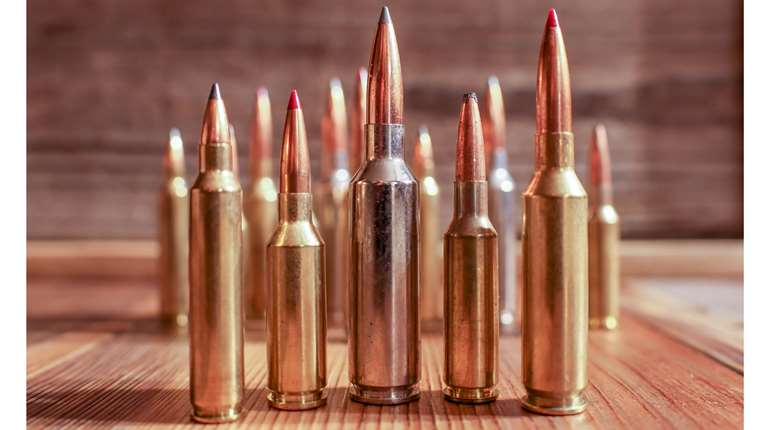
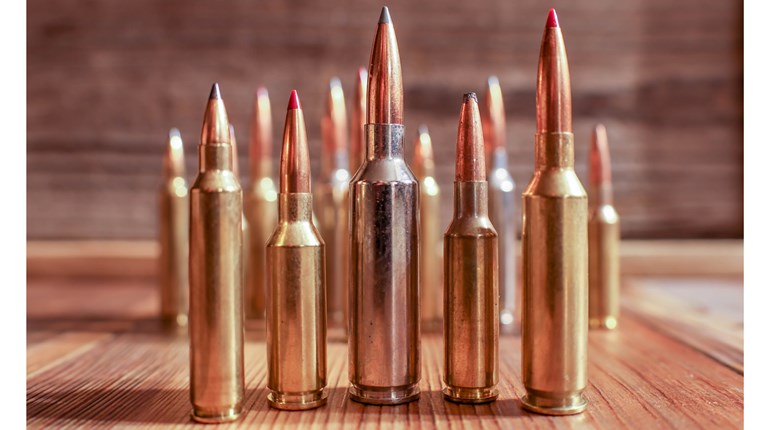
When hunters began becoming more interested in longer-range, precision shooting, the 6.5 Creedmoor jumped to the head of the line, as long-range competitive shooters were already using it to great success. But if you look at the specs, the .260 Remington and 6.5 Creedmoor show very little difference ballistically.
In loaded rounds of both calibers, for example, Barnes uses their 120-grain TSX bullet, with a ballistic coefficient of .412. The .260 Rem. load leaves the barrel at 2950 fps and a muzzle energy of 2,329 ft.-lbs. At 300 yards, the bullet is traveling at 2300 fps with 1,410 ft.-lbs. of energy and a drop of just 7.21 inches (when zeroed at 200 yards). By comparison, the Barnes 6.5 Creedmoor exits the barrel at 2910 fps with 2,257 ft.-lbs. of energy. At 300 yards, it’s moving at 2266 fps with 1,368 ft.-lbs. with a drop of 7.4 inches (when zeroed at 200 yards).
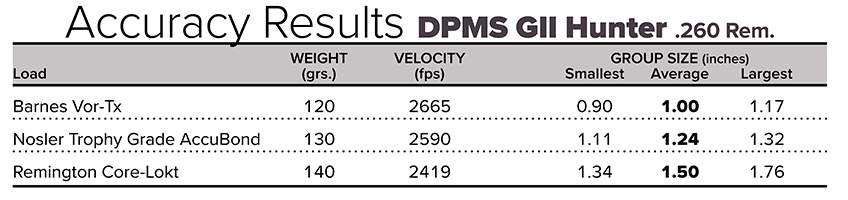
*Determined with five, five-shot groups at 100 yards from a sandbagged rest.
Additionally, consider Hornady, the company that created the 6.5 Creedmoor in 2007. In the company’s Superformance line, Hornady loads the .260 Rem. and 6.5 Creedmoor with 129-grain SST bullets. Both have ballistic coefficients of .485. With a 24-inch test barrel, the 6.5 Creedmoor Superformance leaves the barrel at 2,950 fps and 2,493 ft.-lbs. At 300 yards, 2,393 fps and 1,641 ft.-lbs. with a drop of 6.8 inches (200-yard zero). In .260 Remington the numbers are nearly the same.
That’s not to say the .260 Rem. and the 6.5 Creedmoor are the same cartridges—they’re not. The 6.5 Creedmoor case is slightly shorter than the .260 case, and that can make a difference when it comes to longer-range shooting, especially for the handloader. According to ammo guru and frequent American Hunter contributor Philip Massaro, the shorter case on the 6.5 Creedmoor allows for the loading of longer bullets with higher ballistic coefficients, compared to the .260 Rem. “The 6.5 Creedmoor was engineered to use those long, sleek bullets from the outset, with the case shortened enough to allow the long bullets to be seated properly—with the shank on the case mouth—whereas with the .260 Remington the case mouth would sit on the ogive of the bullet [with the longer 6.5 bullets],” Massaro says.
When it comes to factory-loaded hunting ammunition, many of the .260 Rem. and 6.5 Creedmoor offerings are essentially the same. I suspect factory loaded match rounds will show significant differences. But what about for hunting? “Within sane hunting ranges—say inside 500 yards—the 6.5 Creedmoor and .260 Remington probably won’t show a hunter much of a difference,” Massaro noted. “But out past that distance, it is the bullet shape and corresponding ballistic coefficient that proves to be the difference and makes the 6.5 superior, especially for the long-range shooter who reloads.”
Yet, for those of us who hunt with factory ammunition, the .260 Rem. is a great cartridge out to Massaro’s 500 yards. Match up the round with the DPMS GII Hunter and you have an excellent deer, hog and pronghorn rifle that will get the job done accurately and effectively.
Technical Specifications
• Type: gas-operated, direct impingement
• Caliber: .260 Rem.
• Barrel: 20″; stainless steel; 1:10″ twist; Teflon coated; threaded ⅝x24 with thread protector
• Upper receiver: forged 7075 T6; anodized; Teflon coated; A3 type
• Lower receiver: forged 7075 T6; anodized; Teflon coated
• Trigger: two-stage match
• Handguard: DPMS carbon fiber free float tube
• Stock: Magpul MOE
• Pistol grip: Hogue
• Overall length: 39″
• Weight: 7.7 pounds
• MSRP: $1,699; dpmsinc.com