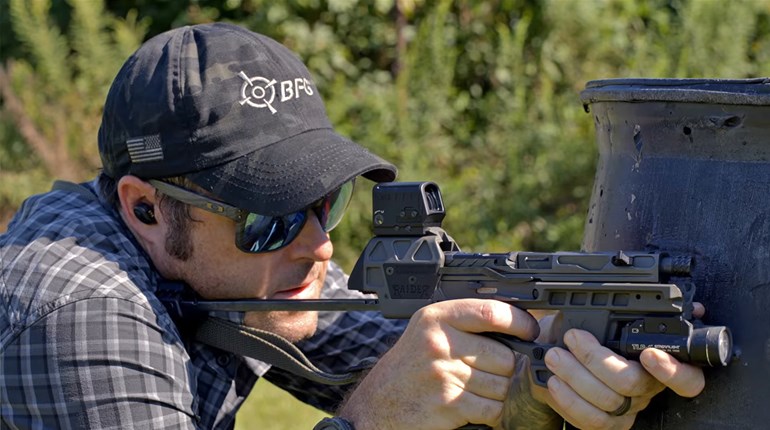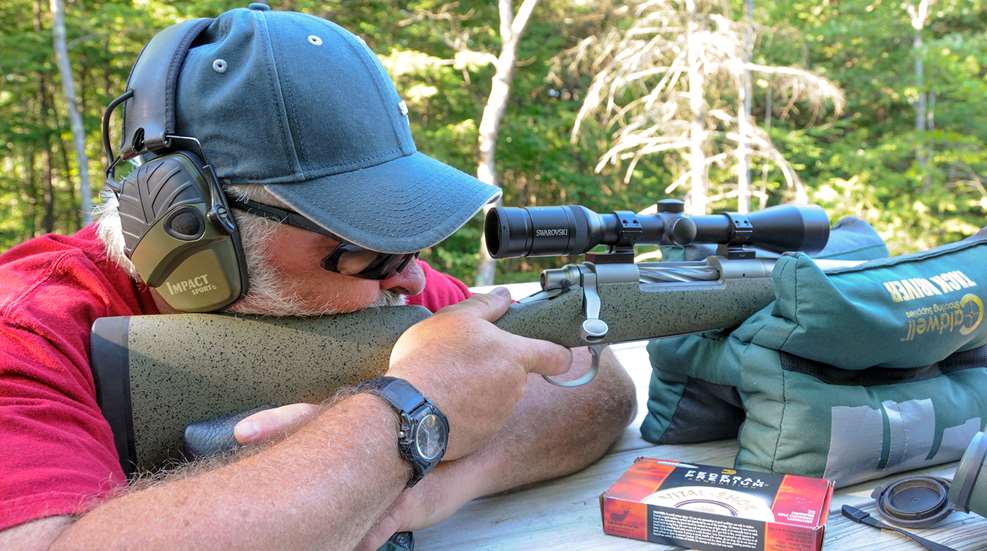
Back in the old days, when I was but a pup, I had a buddy who read everything Jack O’Connor wrote. Truth is, we all did. But he took it as gospel. Jack recommended that a hunting rifle should be zeroed to impact 3 inches high at 100 yards, so that’s what he did. Good advice at the time for a Western hunter. The trouble is, my buddy hunted in Vermont.
That fall he took a shot at a buck’s neck. He hit the deer, but didn’t recover it. He blamed it on the well-known bullet he used. It wasn’t the bullet. It’s more likely he hit the deer poorly due to his choice in zeroing the rifle.
How you “sight in” your rifle should match the terrain you will hunt. There are three common approaches, and each should be applied to the situation where you will hunt.

100-Yard Zero
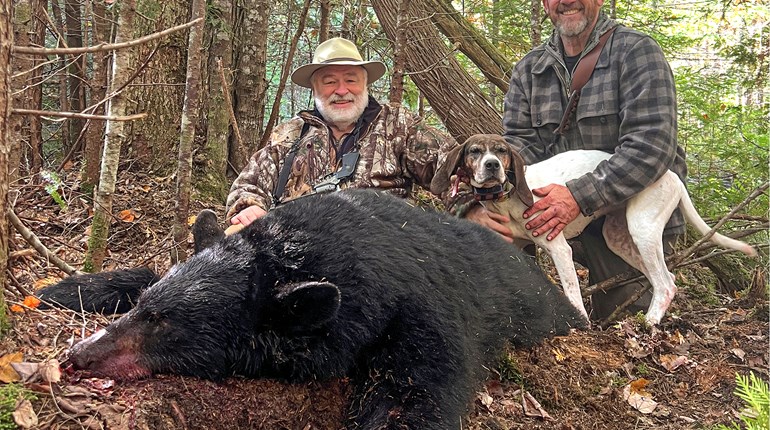
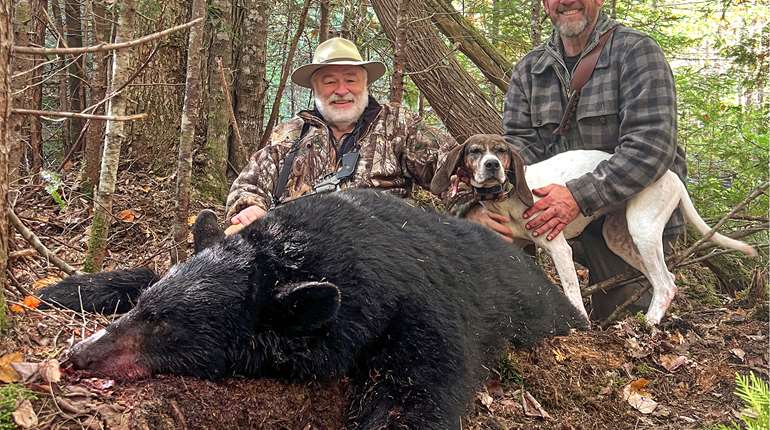
For all of our obsession these days with long-range shooting, most big game, particularly whitetails, is shot at short range and often in the thick woods. Last fall I hunted in Maine where the brush was incredibly thick and 100 yards would have been a very long shot. This is not restricted to the East, though. For example, I have hunted in rainforests in southeast Alaska that were so thick a dog had to back up to bark.
The concept of a “brush gun” is a myth. I did a pretty extensive scientific test years ago and concluded two things. First, the bullet shape has more to do with deflection than the cartridge and second, they all deflect when they hit brush. From .220 Swift to .45-70, they all veered off course after contact.
My grandfather explained the solution to me best back when I was in that pup stage. “If you can see the deer, there is a hole big enough for a bullet to fit through.” His simple logic of “don’t hit any brush” has served me well for more than half a century of deer hunting.
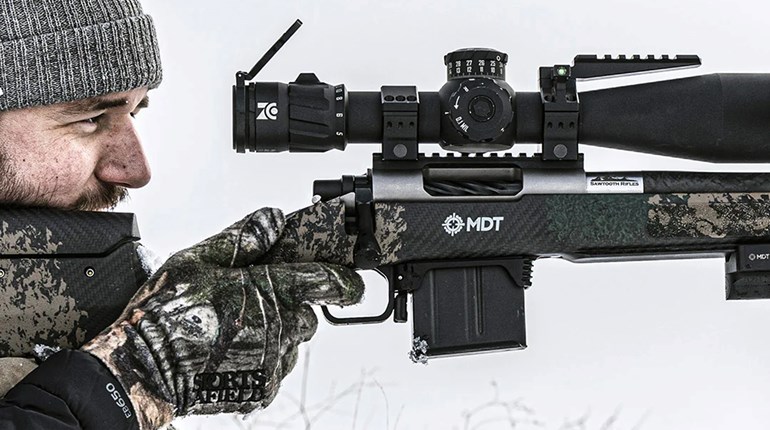
I recommend that the scope be mounted as low to the rifle bore as possible. Forget those ultra-high see-through mounts. You want the optical path, what you see through the scope, to be as close as possible to the bullet’s path.
Zero the rifle’s point of impact for 100 yards. That means if the scope’s optical center is 1.5 inches above the bore, the bullet’s path will be almost the same as the optical path out to 100 yards. It starts out 1.5 inches low, and follows the bore line closely out to 100 yards, where they intersect. With most modern rifle cartridges, the point of impact does not drop more than 1.5 inches below the point of aim until around 150 yards.
Even with traditional cartridges like the .30-30, .45-70 or a straight-wall cartridge the numbers change a little, but this approach works fine.
200-Yard Zero
This is a great all-around approach to zeroing a modern hunting rifle. It works for a wide variety of hunting. If you hunt mixed cover or if you are in the West, this approach is a good way to go.
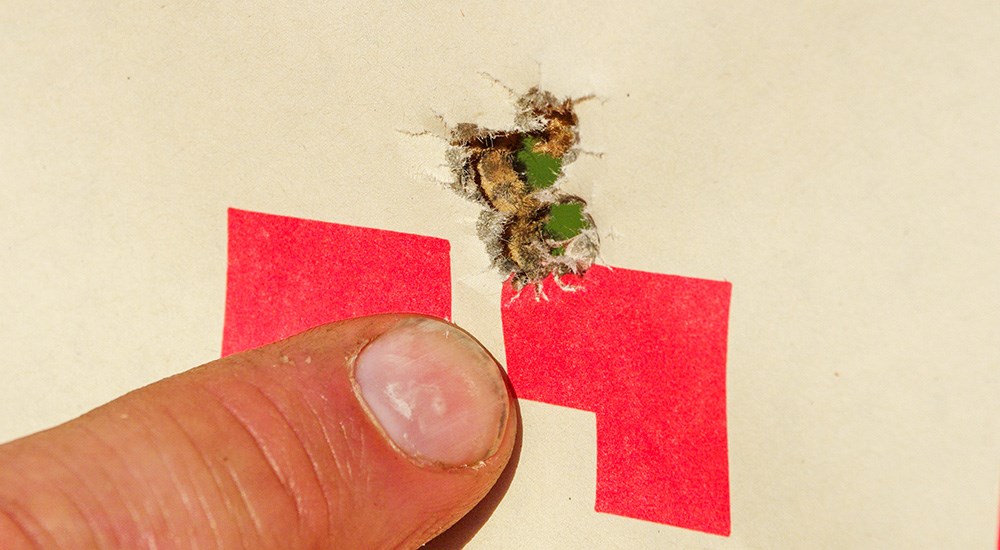
It works best with a modern, bottlenecked hunting cartridge. Mount the scope close to the bore then zero the point of impact for 200 yards. With most modern cartridges the point of impact will be around 1.5 to 2 inches high at 100 yards.
It’s best to actually shoot at 200 yards, but if you only have a 100-yard range you can run the ballistics in one of the many apps available and get the information. Then zero at 100 yards, to the location suggested above point of aim. Depending on the cartridge or bullet, this puts the point of impact 6 to 9 inches low at 300 yards. That means you can aim at big game and hit it from zero to 300 yards. You may want to hold a bit high at 300, but still have the crosshairs on hair.
Of course, it’s best to actually shoot targets at that range to confirm, but the ballistics apps are pretty good today. Remember though, they are only as good as the data you input. Know your ballistic coefficient (BC) and actual velocity—don’t guess.
Despite the current long-range fad, I continue to believe that for most hunters 300 yards is a reasonable limit for shooting at unwounded game. Sure, there are exceptions, but I am talking about general big-game hunting here. Long-range shooting is fun and challenging, but I prefer to do it on targets, not game.
Point-Blank Range
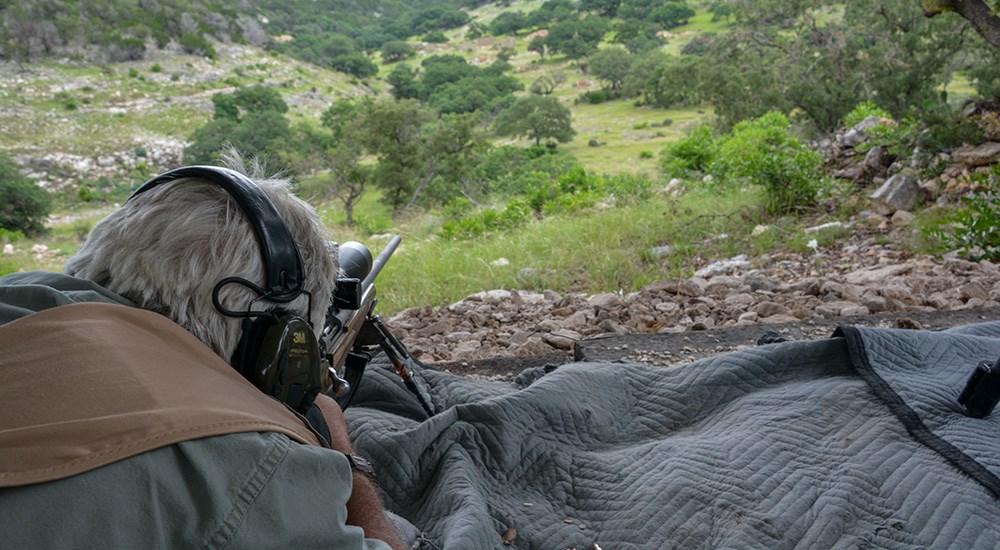
This is more or less the same approach that Jack used, although he explained it a bit differently. This is good for hunting in the wide-open country and will maximize your rifle’s capability. I know that our senior executive editor here, Jon Draper, is a big fan of this approach.
The concept is best visualized in shooting through a pipe, so that the bullet never rises above or drops below a given point. Most hunters choose to use a 6-inch-diameter circle.
You will zero so that the bullet is never more than 3 inches high. The distant point where the bullet drops past 3 inches below the point of aim is the PBR. This takes a bit of figuring and there is no set point to adjust your impact so that it works with all cartridges. It will vary with the cartridge, bullet and even the rifle and scope.
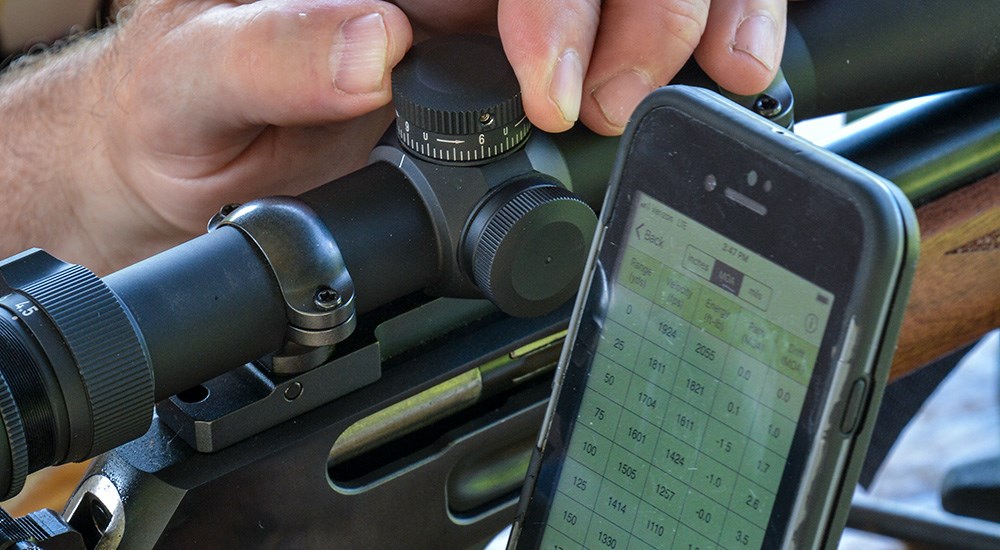
However, you can input the ballistics into a good app and it will figure it all out for you. For example, a .30-06 with a 180-grain bullet at 2700 fps and a BC of .484 will reach its pinnacle of 3 inches above the point of aim at 125 yards. It crosses the line of sight at 229 yards (where you should zero) and is 3 inches low at 270 yards. So, assuming you aim at the center of a 6-inch target, you will hit it from zero to 270 yards. Of course, this does not account for rifle accuracy, shooter ability or outside influences like wind.
As my friend learned, this is a poor choice for thick woods, just as a 100-yard zero is a mistake for long-range, open-country hunting. The key is to match your zero to the hunt.