Gas prices are up and the stock market’s down. Most of us are on a tight budget, but want to find some good hunting close to home that won’t push the fuel tab into three digits and keep us away from family and other obligations for days on end.
Impossible dream? Not if you take up suburban predator hunting close to home.
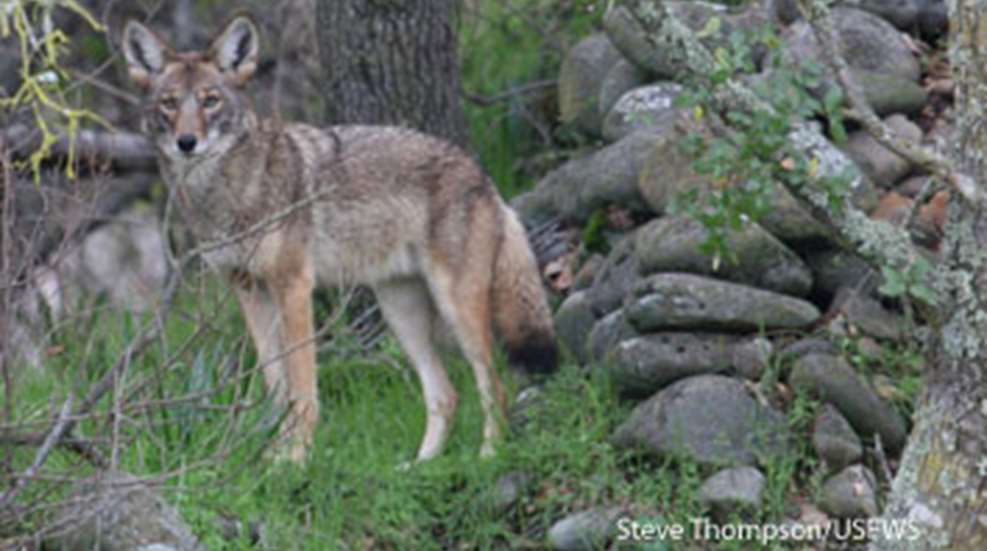
Here’s an example. Less than an hour’s drive from my home north of Tucson, Ariz., I can easily find several places to call coyotes all year around on public land. In addition, there is land open to hunting within the boundaries of several municipalities as long as certain rules are followed─no shooting too close to occupied dwellings, across roads or near freeways, for example. In some of these places rifles may not be legal, but shotguns often are, as are airguns. I am not talking about toy BB guns, but instead one of today’s accurate, high-powered, high-quality air rifles with enough pop to cleanly kill coyotes three-quarters of a football field away.
Many of the areas I hunt near home are not a pristine wilderness. Most of the barks and howls I hear come from neighborhood dogs, not coyotes. I can usually hear and see commuters heading to work on the main highway. And within an hour of daylight there is sure to be a jogger, dog walker, mountain biker or ATV rider whizzing along the main dirt access road. In five years, I’ve shot several coyotes here, though nobody knows what I am up to. And like most coyote seasons throughout the country, I can hunt all year around.
Is it really that good? Check this out. The New York State Department of Conservation conducted a study on coyote densities in both rural and suburban environments. Guess what they found? Rural areas had an average population density of .3 to 1.2 coyotes per square mile, but suburban areas showed an average population density of 3 to 6 coyotes per square mile. Where do you think the chances of a successful hunt are better?
In the ‘burbs your goal should be to remain under the radar at all times. Even if you are obeying the law and well within your rights to be hunting, confrontations with others is bothersome and something you don’t need. That’s one reason I never hunt my near-town places on weekends or holidays, and I make sure I am out of there before others may decide to use the land. The last thing you want to do is call in somebody’s off-leash German Shepard, which one time I did. Plus, I don’t want other hunters to figure out what I am up to and decide to move in on me.
The other thing is that, because many of the suburban areas you might be hunting are relatively small, it is critical that you hunt them like a predator drone. You need to slip in, do your business, and slip out with no─not minimal─trace or activity that will alert the critters.
Make sure you know the law and obey it. Also, remember that you’ll have little success calling if there is a ruckus going on. With kids playing, hikers hiking, dogs barking and vehicles running up and down dirt roads, it’s over. That’s why calling right as it is light enough to see and at night, after 10 p.m. where legal, are your best times to get some action. And, in following with my belief that “less is more” when hunting tight suburban areas, I like to slip in, set up, call and wait no more than 15 to 20 minutes before getting out. If a coyote or bobcat is close by and doesn’t come in that time, better to slide out and not overdo it.
These areas are also ideal places to load different sounds into your electronic caller. Are there folks nearby raising chickens? Try a chicken distress sound. Puppy and kitten distress sounds are dynamite in suburban areas too, as are small birds like woodpeckers and quiet prey sounds like mouse squeaks. Rabbit sounds are also good, but the closer to occupied dwellings I am, the softer I play those types of sounds. Do not be afraid to experiment.
Talking about experimenting, tight areas are good places to try using attractant scent products. Coyotes and other predators commonly circle around and approach calling sets downwind and an attractant scent like Wildlife Research Center’s Paws & Claws and Coyote Juice just might get a suburban coyote or bobcat to show itself more readily.
Also, even when legal, if I am near homes, I may leave the 12-gauge or .223 at home and instead bring a .22 rimfire or airgun. Again, it is all about being a predator drone, not the lead float in the Macy’s Thanksgiving parade.