Hunting dogs are a bit like hunting rifles—they’re all good for something, but none are perfect for everything. Those of us who want it all might be barking up the wrong tree, but we keep searching for the .30-06 of dogs, a breed that comes closest to handling all our hunting chores: find, point, flush, trail, chase and fetch. And clean their own kennels ... maybe hunt antlers in spring … guard the castle and look handsome doing it. That’s a good dog.
But it ain’t gonna happen. Nevertheless, we can sort out those breeds that come closest to our ideal.
Let’s start by identifying what we mostly hunt with dogs: upland birds and waterfowl. Scent-hounds for trailing coons, bears and cats are a specialty. So are hog dogs for baying and tackling pigs. Even rarer are sight-hounds for coursing game and terriers for digging out rats and other burrowing rodents. Big-game hunting with dogs is almost universally forbidden. So let’s identify the best, all-around waterfowl/bird dog, the breed that can most consistently win the feathered decathlon. Here’s a best-dog tournament featuring my top choices in each category, followed by my overall winner.
POINTERS
• Pros: best at finding upland birds
• Cons: worst at retrieving; nearly useless for waterfowling
• English pointer: best nose; lithe, fast, covers much ground; some are adequate retrievers; can be hardheaded
• English setter: longer-haired pointer; gorgeous aristocrat; lousy retriever, especially in water
• Brittany: blockier version of setters; close-working, affectionate; best retriever of the three, especially from water
Winner: Brittany
FLUSHERS
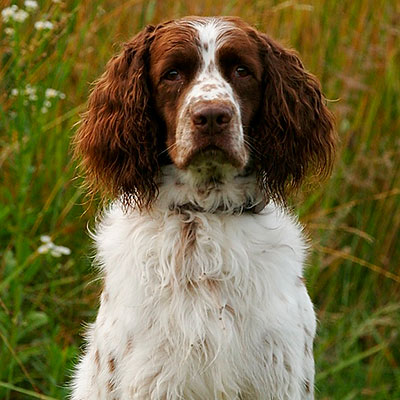 • Pros: best for pushing upland birds from tight cover; excellent, persistent retrievers on land and water
• Cons: not extra-hardy for cold-weather waterfowling
• English springer spaniel (pictured): spunk personified, the ultimate ball of energy in pheasant tangles, persistent, fun, good water retriever
• Boykin spaniel: all the springer is and potentially more; smaller than springer
• English cocker spaniel: smallest of the three, too small for ducks and geese; not as hyperactive as others
Winner: English springer spaniel
RETRIEVERS
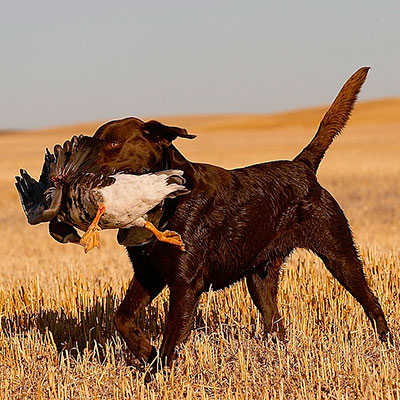 • Pros: best for waterfowl, but good upland flushers, too
• Cons: can be very rambunctious, huge
• Labrador (pictured): eager to please, quick to learn, persistent afield; tireless retriever and flusher; can be trained to point; lovable, great family pet; heavy shedder
• Golden retriever: gorgeous, great retriever; loveable, great family pet; heavy shedder
• Chesapeake Bay retriever: strong, big heart; best pure water retriever; strong-willed, can be moody
Winner: Labrador retriever
VERSATILE
 • Pros: do many tasks well including pointing, retrieving, scent-trailing and tackling
• Cons: usually not the best at any one task
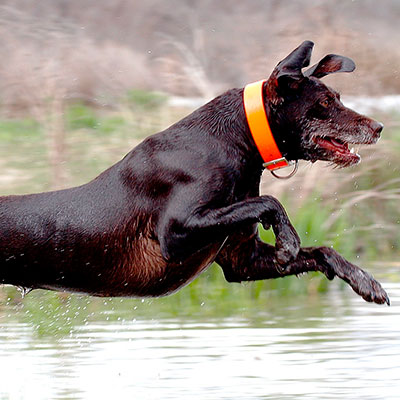
• Pudelpointer (pictured): medium to large frame, long-legged and strong; works close; points, retrieves well from water and land; scent-trails cold and hot; extremely versatile
• German shorthair: smart, lively, eager to please; closest to pointers in style; can be rambunctious and hard-headed
• German wirehair/Drahthaar: big and strong; cover big ground but don’t range excessively; staunch pointers; retrieve well from land and water; can be taught to cold-trail and blood-trail
Winner: Pudelpointer
OVERALL WINNER: PUDELPOINTER
Many hunters have never even heard of this breed. But I’ve seen it and all the other breeds in action and I’m most impressed with this strange, chocolate-colored, do-it-all dog from Germany that’s big and strong, but not too heavy. Pudelpointers are faster than most Labs and just as indefatigable. A Pudelpointer is equally effective in uplands or wetlands. It nearly matches the Lab in water and comes close to the pointing breeds in the uplands. It hasn’t the class and style of a setter or pointer, hasn’t the flash of a springer, hasn’t the power of a big Lab but comes close to all. It’s intelligent, easily trained, affectionate and loyal. The right German wirehair could bump off the best Pudelpointer, but so could the right shorthair or Lab. It’s a close call, but if versatility is your need, the Pudelpointer is your champion.