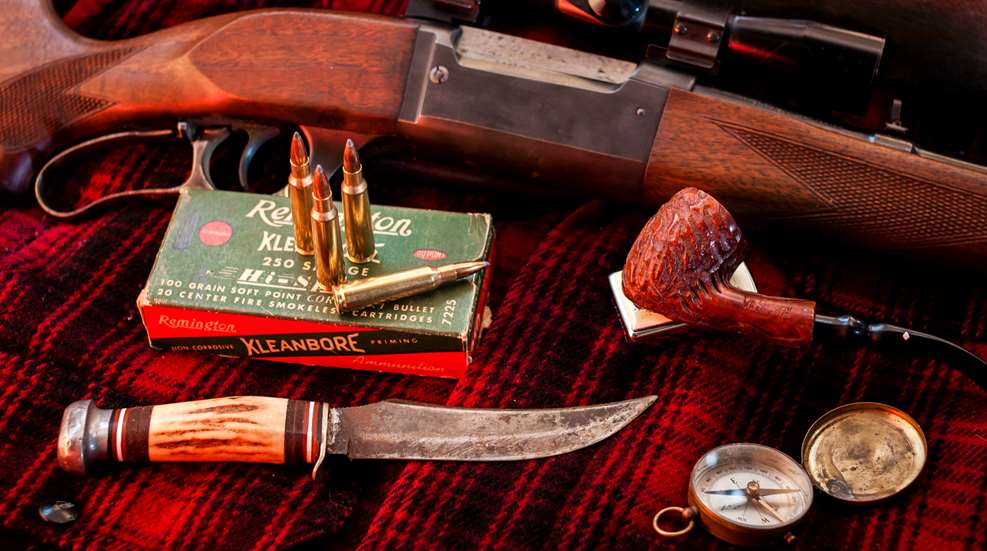
In the campfire discussions about lever-action rifles, the Winchesters and Marlins may rank among the most popular, but despite being out of production for nearly three decades, the Savage 99 always seems to come up. On a tour of the Savage factory in Massachusetts, the company guide asked my group if we had any questions, and I couldn’t help but make the obvious inquiry. “That question is asked several times a week, Phil, and the short answer is that making the 99 again just isn’t cost-effective.” But there’s something about that gun, and the fact that lever guns were fully capable of safely shooting spitzer bullets over a century ago, that keeps the Savage 99 alive. It was chambered for a number of great cartridges—my grandfather carried a 99E in .308 Winchester—but one of the most famous chamberings was the .250-3000 Savage.
When the .250-3000 Savage came onto the market in 1915, the Boxer-primed centerfire rifle cartridge wasn’t 50 years old, and the universal acceptance of smokeless powder was a relatively new thing. Charles Newton is credited with the design of the .250-3000 Savage, shortening the .30-06 Springfield case to fit in the rotary magazine of the Model 99, and ultimately using a light-for-caliber bullet to achieve a new velocity standard. Blackpowder and lead bullets could achieve somewhere around 2,000 fps before the bullets began skidding down the barrel, leaving a mess in the bore that required an exorbitant amount of cleaning. Jacketed bullets certainly aided in not only lead fouling, but in the ability to handle higher velocities, and when coupled with smokeless powder, well, the game had changed. The .30-06 Springfield could drive its 150-grain bullet to 2,700 fps, but Savage wanted more—in fact, they wanted 3,000 fps. Though Mr. Newton opined that the 100-grain bullet at 2,800 fps, Savage pushed him for that velocity figure, and an 87-grain bullet did the trick. The name even reflects the speed: with .250 being the bore diameter (roughly) and the 3000 being the velocity.
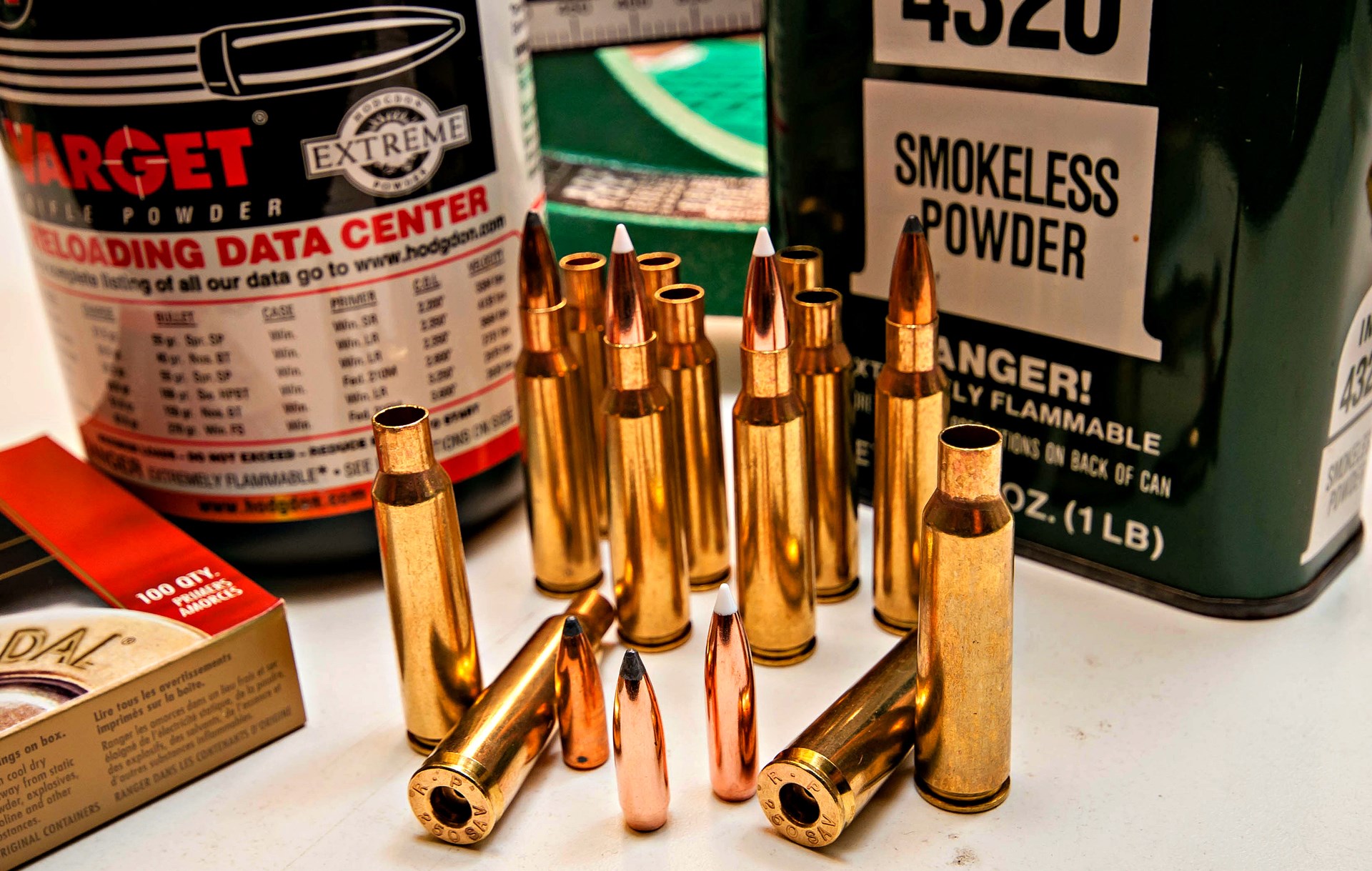
Looking at the cartridge, the .250 Savage (its other name) shares the 0.473-inch rimless base of the .30-06 Springfield and the 7x57 Mauser, using a 26 ½-degree shoulder for headspacing. The case itself measures 1.912 inches, with a neck length 0.274 inches. The maximum cartridge length comes in at 2.515 inches, close in length to both the .30-30 Winchester and .303 Savage, and which fits perfectly in the Model 99 magazine, as well as our common short-action rifles. SAAMI has set the pressure limit for this cartridge at just over 50,000 psi—probably in deference to the metallurgy of the early 20th century—but the cartridge generates enough velocity across the range of bullet weights to make the common hunter happy, without pounding the shooter’s shoulder to hamburger. In fact, the .250 Savage in a proper-fitting rifle still makes a great gun for a young or smaller shooter, as those 100-grain bullets that are so common in modern factory ammunition are hell on deer and similar species. The mild recoil of the .250-3000 Savage allows for precise shot placement, and that factor is paramount.
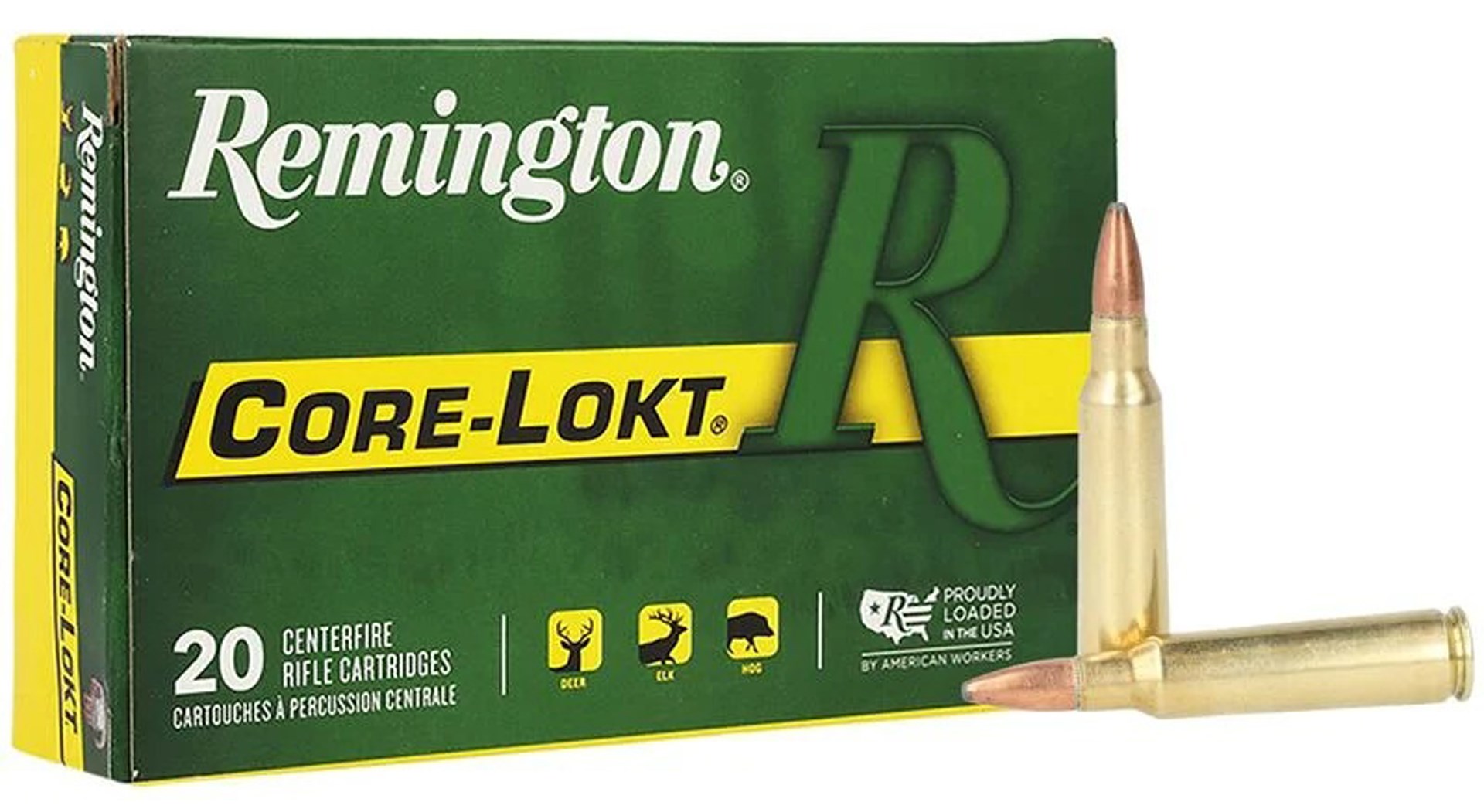
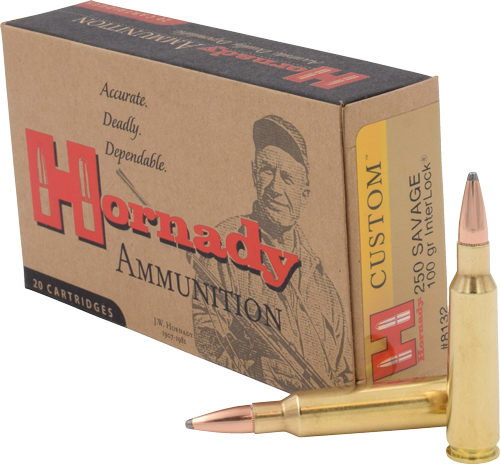
Regarding the availability of factory ammunition, as of this writing, your choices include 100-grain loads from Remington and Hornady, using the Core-Lokt and InterLock bullets, respectively. With muzzle velocities around 2,800 fps, you’ll see a 200-yard zero deliver 9 inches of drop at 300 yards, and 25.5 inches of drop at 400 yards, with that bullet retaining 950 ft.-lbs. at 300 yards and 760 ft.-lbs. at 400 yards. HSM (Hunting Shack Magnum) also offer a pair of .250-3000 loads, one with the 100-grain Sierra at 2,900 fps, and one with the 75-grain Hornady V-Max at 3,200 fps. If those don’t tickle your fancy, handloading ammunition is a great way to keep a .250-3000 fed, but you’ll need to know the twist rate of your barrel before picking a bullet. Most of the early rifles were supplied with a 1:14 twist, which can handle the 87- and 100-grain bullets just fine, but if you want to use the heavier stuff—the 115- and 120-grain bullets, specifically—you’ll want a more modern 1:10-twist barrel. Look to medium- to slow- burning powders like IMR 3031, Hodgdon’s Varget and IMR 4064 with a quality large rifle primer for your handloads.
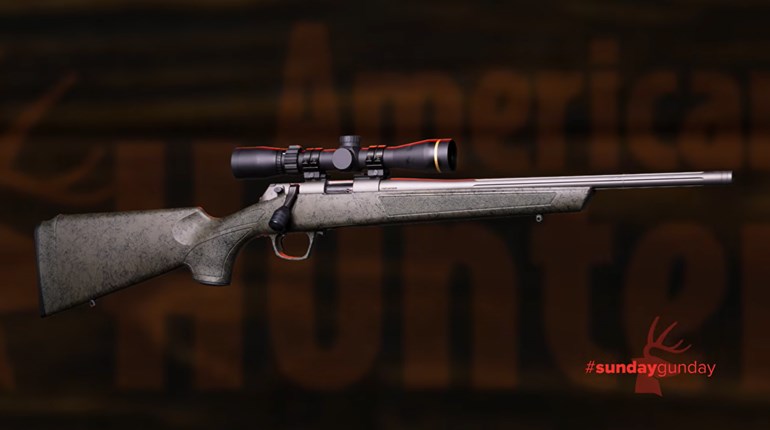
Rifle choices for the .250-3000 Savage are rather varied, being not just limited to the Savage Model 99. Both the Winchester Model 54 and Model 70 (in very limited numbers) were available in .250-3000, and the Remington 700 Classic was so-chambered as well. Ruger has produced the Model 77 and No. 1 single-shot for the little quarter-bore, in their conventional guise as well as the full-length stock RSI variant. If you were after the custom rifle experience, a huge number of choices chambered for the .250’s most famous offspring—the .22-250 Remington—are readily available, and you’d be a barrel-swap away from having your custom .250-3000 Savage.
In this day and age where many of our cartridges are getting a ‘facelift’, with revised twist rates and heavier, sleeker bullets, does a cartridge the likes of the .250-3000 Savage make sense? I say yes, emphatically. The speedy little gent released in the Woodrow Wilson administration still has the goods to serve as a deer/hog/antelope gun in a wide variety of scenarios, giving a ballistic performance level better then the honest capabilities of the average shooter. Does it have the get-up-and-go of the .257 Weatherby Magnum or the .25-06 Remington? No, it doesn’t, but at the distance that the average shot is taken on whitetail deer, it doesn’t need that level of velocity. Those classic cup-and-core bullets I mentioned—the 100-grain Core-Lokt and InterLock—will have no problem handling the impact velocities of the .250-3000, without excess meat destruction and without the report and recoil that can cause a flinch. Does the .250 Savage have the goods to make a major resurgence in today’s market? I say no, sadly. Looking forward I’d confidently say that new cartridges built around lighter bullets will not see the light of day, but that doesn’t mean that you should shy away from one of those gunshop or pawnshop finds chambered for it. I’d even wager that you’ll find yourself making quick friends with this classic cartridge …