“I’m going to shoot,” I whispered to DJ. “What?” he whispered in return. I knew he wouldn’t hear me but I couldn’t speak louder. The elk was too close to risk it. Just 200 yards separated us. But I wanted to give my guide some warning so he wouldn’t be surprised as he spotted for me.
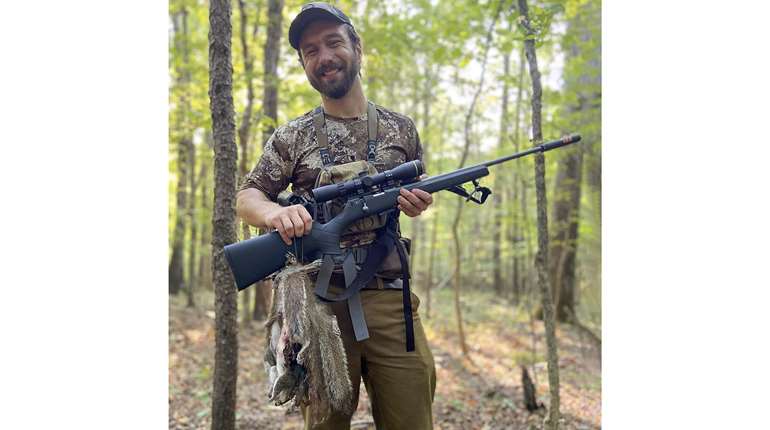
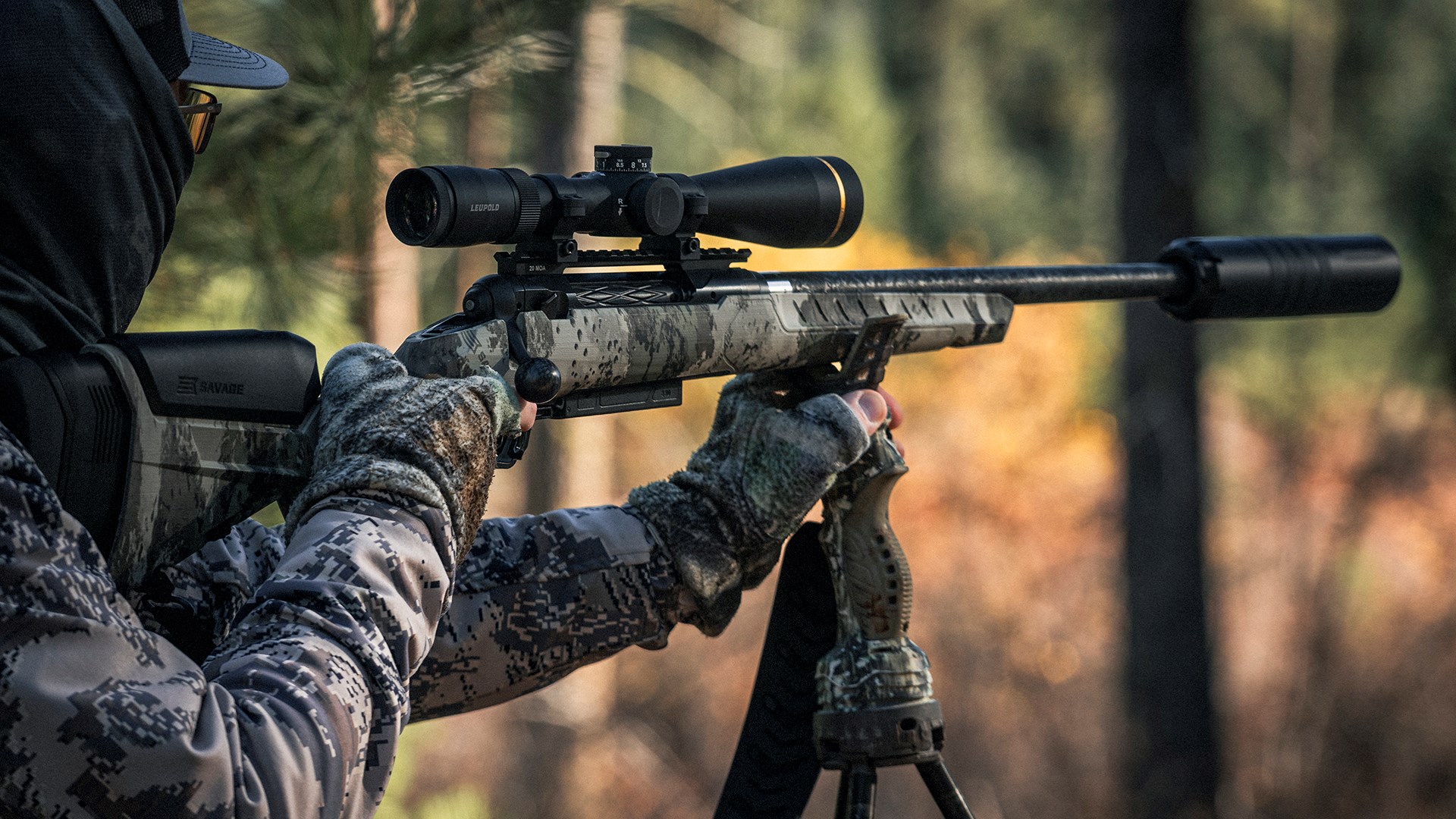
I was set up in perhaps the best seated shooting position I have ever enjoyed. No gun wobble. My “chicken wing” firmly resting on my knee. No neck ache. No back ache. I could sit like this all day. This could be a nice shot. Of course the gun I caressed, a Savage 110 Ultralite Pro in 7 PRC, would help any hunter with any shot. I watched the bull in the Leupold, and I focused and breathed. I knew I could kill it. What I didn’t know was DJ was filming the whole thing.
I love elk hunting. It’s my favorite game in North America. I couldn’t imagine doing it with anything besides a bolt-action rifle. The two just seem to go hand in hand. In the latter years of the 20th century, as the whole continent began to take a shine to Western hunting, the bolt action also seemed to become the rifle de rigueur of Western hunting, and I jumped on the bandwagon.
Enter the Savage Model 110. Introduced in 1958, it is the longest continually produced bolt-action rifle in America (savagearms.com). It’s a Mauser-type gun, with a bolt that includes dual-opposed locking lugs and a staggered box magazine. From day one the rifle has been made for short and long actions, for righties and lefties. But what makes the 110 unique is its breech system, the way its barrel is fitted to its receiver. There is no reinforced shoulder. Instead, less than 2 inches of the barrel breech is threaded, and a contoured lock nut is screwed onto this. The breech face of the barrel is counterbored to make room for the bolt head, which is recessed to accommodate the case head. As the barrel and lock nut go together, a recoil lug is positioned over the barrel shank, between the receiver and lock nut. Once the barrel is chambered and finished it’s turned into the receiver. With the bolt in place, a headspace gauge is inserted and the barrel is turned into the receiver until snug then the lock nut is tightened. That’s it—no poorly cut threads to throw off barrel alignment, just simplicity and economy. Most importantly, the system produces an exceptionally accurate rifle.
Fast forward to 2025, and the new Savage Model 110 Ultralite Pro I carried on an elk hunt in McCall, Idaho. One look makes you think Savage went to the speed shop. This hopped-up 110 is a far cry from the original built in 1958.
The latest Savage 110 receiver is skeletonized to shave weight, and it and the fluted bolt are Blackout Cerakoted. Atop the receiver, a one-piece 20 MOA rail is ready for an optic with rings—no searching for scope bases. A single-stack AICS-pattern detachable magazine holds three rounds in 7 PRC. Carbon fiber-wrapped barrels measure 18-24 inches, and they’re threaded and fitted with a Savage Omniport muzzle brake. The heart of the fire-control system is the famous AccuTrigger, introduced in 2003. It is user-adjustable from 1.5-4 pounds’ pull to deliver tunable, predictable breaks. Overall weight is 6.93 pounds. Many models are available for lefties.
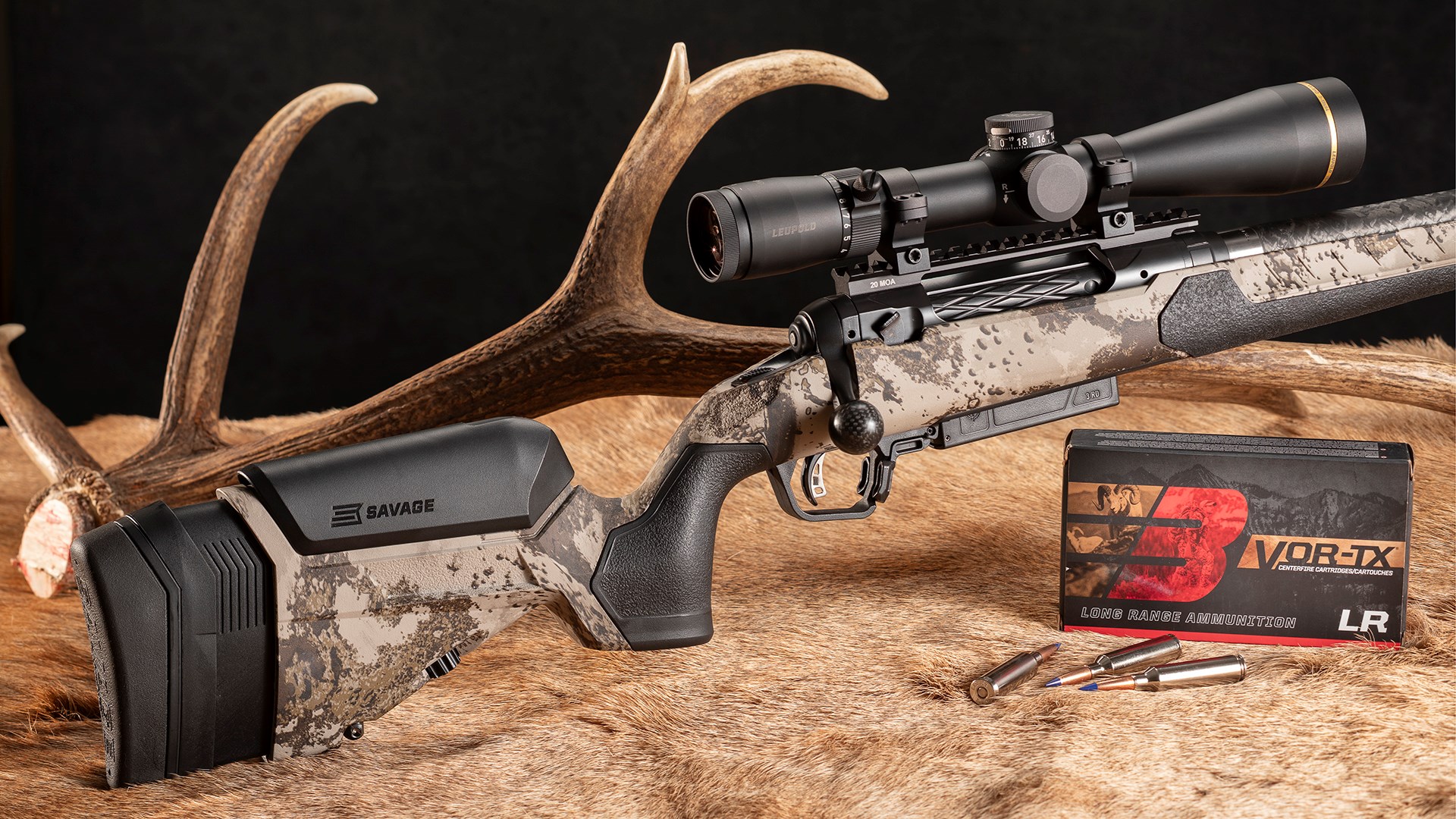
Perhaps the standout feature is the new AccuFit V2 stock. First introduced in 2018, the Savage AccuFit stock allowed much personalization based on a hunter’s body type. The V2 version takes everything a step further. Interchangeable grips help you find the perfect fit to fill your strong hand, M-LOK panels along the fore-end accommodate shooting sticks and more accessories and a LimbSaver recoil pad tames the push. But its most unique feature—one sure to sell a few rifles—is the single button along the heel of the rifle that adjusts length of pull and comb height without another part or tool. Did you sight-in wearing a T-shirt and now the weather in elk country requires warm clothing, thus changing your length of pull? Push that button to adjust length of pull from 12.75-13.75 inches. Does your scope wear a large objective bell, necessitating a high mount? Turn that button to adjust comb height to find the perfect eye relief behind the scope.
This is the gun I carried with me to Idaho last October when I joined an elk camp run by Table Mountain Outfitters (tablemountainoutfitters.com). On Oct. 21, I climbed in the truck with my guide, Big Kelly Lee, and a videographer from Savage, Joe Widner, who hoped to film my success in the field.
I’ve killed several bulls in the West in Utah, New Mexico and Colorado, but I’d never hunted elk (or any big game) in Idaho. I was in for a surprise.
By and large, all elk country looks about the same and is hunted about the same way. One normally starts the day at some altitude and waits and watches for the elk to make their morning moves uphill, toward loafing and bedding areas above their nightly feed grounds. You sit tight, call maybe, and watch and wait. Even if you don’t have altitude, more often than not you can find a vantage from which to survey a lot of real estate. If the elk don’t walk through the neighborhood you’re covering, you can usually spot them at some distance then stalk them, such is the topography and vegetation of the West.
The 28,000-acre ranch we hunted offers no such opportunities. Near as I can tell after three days of hunting there it is covered—I mean covered!—in conifers. There are few vantage points that provide a view of a lot of ground. The place is big enough to host about four hunters per day. But mainly, the owners are interested in using it to raise cattle and timber, not elk.
Don’t get me wrong—the ranch is huntable. My guide, Big Kelly Lee, knew what to do. Each morning we drove uphill, more or less, and we exited the truck and walked and listened and watched and waited as Kelly cow chirped and mewed and occasionally bugled. It was kind of like turkey hunting. You know the critters are out there. But when you can’t see them your best bet is to call to them and entice them to come to you. If nothing else we hoped to hear a bugle to pinpoint a bull’s location so we could make a plan.
So Big Kelly did his thing with the calls. But we didn’t see much in the way of elk that first morning. That evening, we worked a bugle perhaps a quarter-mile from us. The bull was either at the top of a ridge before us, which lay across a power line cut, or it was over the top—I couldn’t be sure. I set up standing on sticks, backed up to a tree some yards in front of the guys, while Big Kelly chirped and Joe stood ready to film. As night fell a couple of cows came toward me then veered off as they sensed something before them. But that was it. The bull never materialized, and I am left to wonder just how close we ever drew to him.
Luck teased us the next morning. We were trundling down a two-track when Kelly stopped abruptly. He’d spied a bull in his peripheral vision not 50 yards from the road. We exited quickly and quietly and tiptoed over there, and Kelly thought he saw its rump, and he called as I set up on sticks but that bull didn’t come back.
By that evening a hunter in camp had tagged out, which freed another guide, DJ Evans, to join us because two guides are always better than one. Before the four of use climbed back in the truck at sundown, I took a selfie atop a beautiful vantage that offered a view of the entire ranch, or so it seemed to me. But I still had not seen a bull.
The next morning DJ and Big Kelly conferred; DJ was sure he knew of a spot where elk would transit—no one had checked it out this week. So we headed there. We exited the truck before dawn and hiked uphill, cut right and moved into position on a finger that offered a good view across a hollow to another finger that lay just a few hundred yards away. I set up with Big Kelly and Joe while DJ moved to our left—but before long DJ returned to urge us to move. He’d caught sight of elk movement from his vantage.
Now, as I “built my house” in a seated position and laid the Savage in the sticks, DJ whispered, “The bull will come out right there. He’ll come right over that hill.” I followed his finger, verified we were looking at the same spot, zapped a range with my Leupold RX-5000 TBR/W then dialed the CDS reticle on my scope for a 200-yard shot (leupold.com).
I was shooting a Barnes Vor-Tx load stuffed with a 160-grain Barnes LRX BT traveling 2950 fps (barnesbullets.com). I love this bullet—I’ve killed a lot of game with Barnes bullets. Zeroed at 200 yards, the LRX drops only 6 inches at 300, but I wouldn’t rely on that. Besides, I wasn’t sure I’d get a 300-yard shot on this ground. I zeroed the gun at a hundred and planned to dial in elevation on the CDS turret of my Leupold VX-5HD riflescope when a shot on game became imminent. Sometimes I still use a point-blank zero, but most often I zero at a hundred and dial up elevation.
The bull—the first one I’d seen in three days of hunting—appeared shortly. If it turned broadside there’d be plenty of shoulder for my bullet. But then I thought, “Why not a neck shot?” I wouldn’t take one broadside—there is simply too much meat on an elk’s neck for me to be sure I’m aiming at spine. If you hit only meat with such a shot you will never recover that bull. But head-on? That’s a narrow window; most of it is spine.
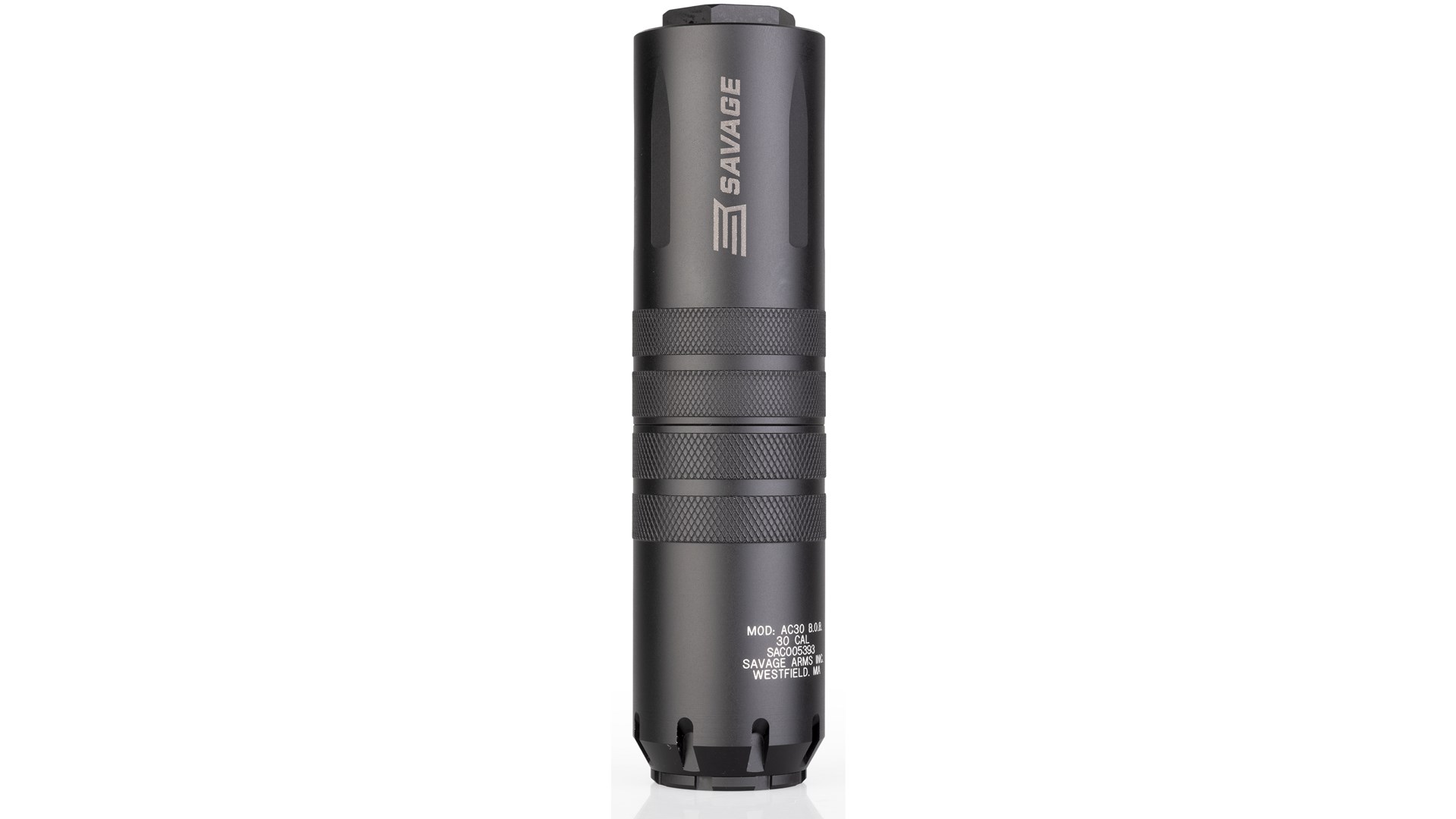 Savage has entered the suppressor market. Its AccuCan AC30 B.O.B. back-over-bore suppressor improves balance and adds internal volume without adding much length.
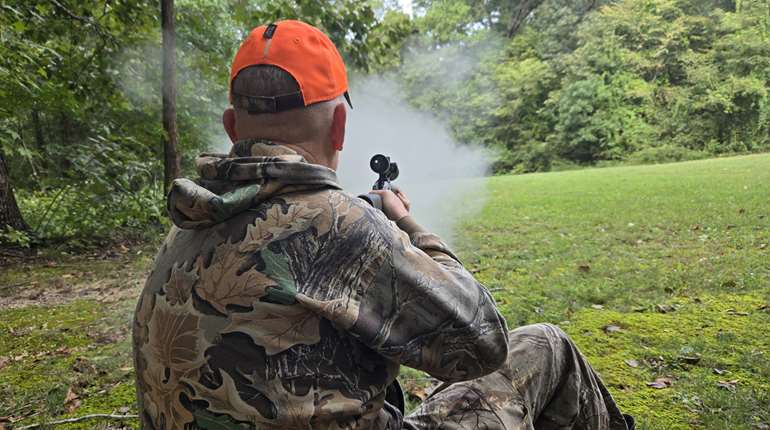
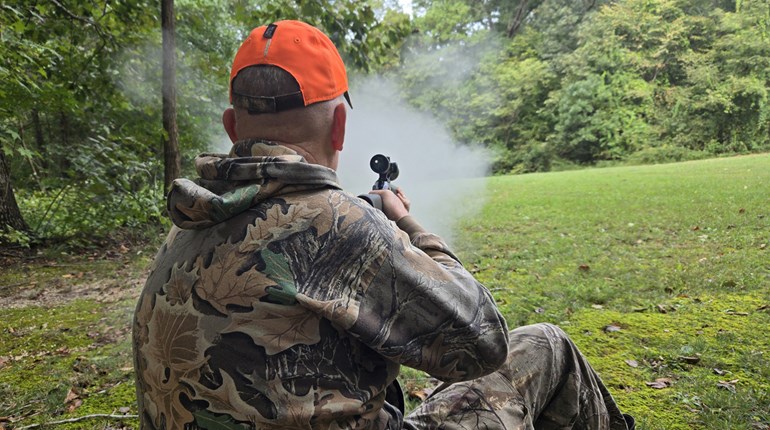
I focused, breathed and pressed the AccuTrigger. Zap! The Savage AccuCan AC30 B.O.B. suppressor soaked up the report; I heard little of it exit the muzzle. I watched the bull collapse as the bullet slammed his spine right below his chin. Dust from his hide and steam exiting his muzzle and his neck combined to create a small cloud signifying perfection as the big bull dropped in his tracks. I reloaded as Big Kelly exclaimed, “Hammer-slammed him, baby!”
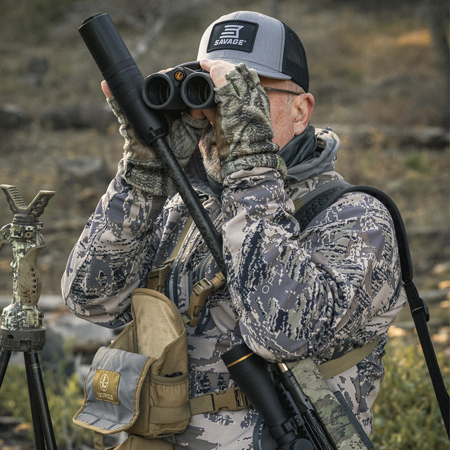
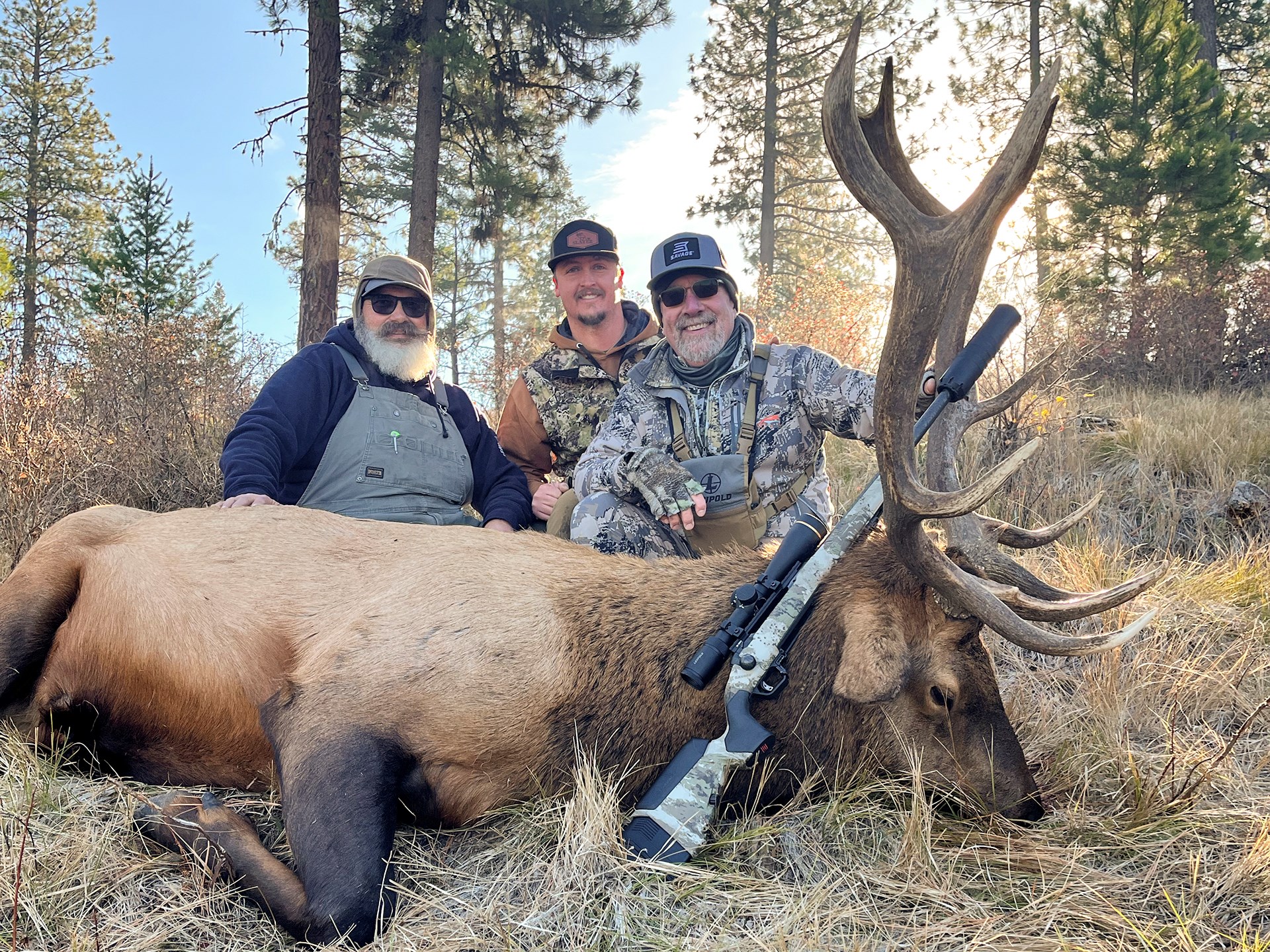 The author determined distance to target with his Leupold RX-5000 TBR/W rangefinder. Thereafter, it was all up to a press of the Savage AccuTrigger to send a perfectly placed Barnes LRX BT to the point of aim beneath the bull’s chin.
It was the best shot I’d made in years. I was thankful and proud as we returned to camp loaded with meat and a 5x5 rack. By then we’d all watched the cellphone footage DJ captured through his Leupold spotter. We all marveled how the bull’s legs just crumpled beneath him. DJ said, “Awhile back a friend of mine filmed a shot like this, and I realized none of my hunters ever has made such a shot. Now I have my own video of my own hunter doing it. Thank you, Scott. I can die a happy man.”