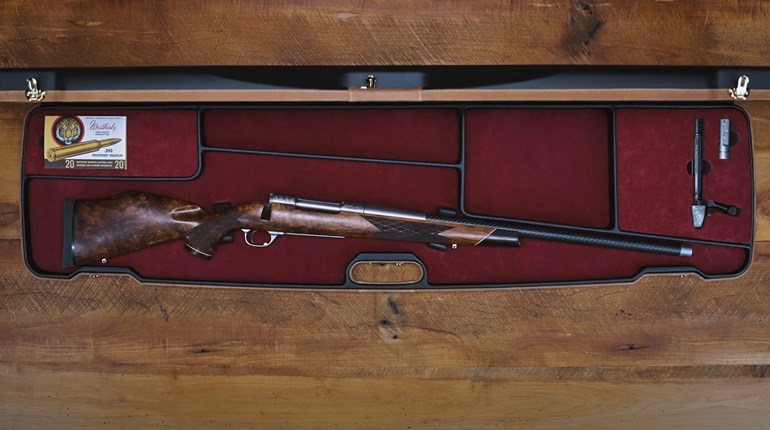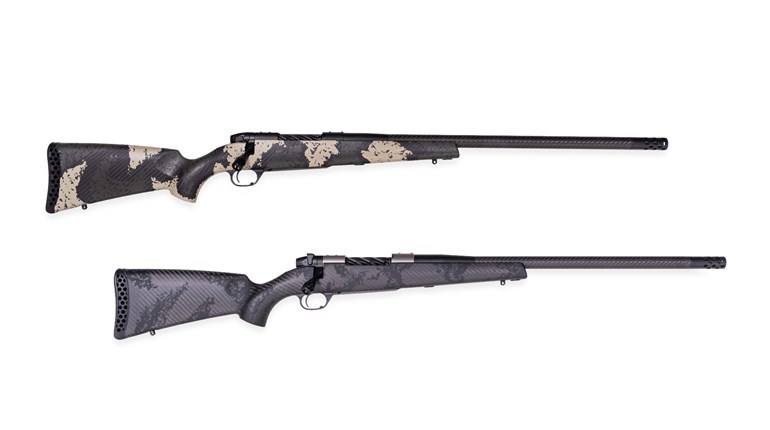
Founded in a family garage as the country was recovering from World War II, Weatherby is the epitome of the American success story. One idea and an unfaltering work ethic helped Roy Weatherby turn a hobby shop into an internationally recognized brand. As you might imagine, a lot happened in between. Here are 10 things you probably didn't know about Weatherby, Inc.
The facts below were put together with a little help from the kind folks at Weatherby, among other sources. If the list below piques your interest, I'd highly recommend checking out "Weatherby: The Man, The Gun, The Legend," which was authored by Grits and Tom Gresham back in 1992. Now, on with the list.
1. As Roy Weatherby himself told it, he first considered entering the firearms industry after a Utah deer hunt in 1942. After wounding—and losing—a buck, he started thinking about how he might be able to craft more efficient tools for the harvesting of game. A lone deer planted the seeds for what would become an internationally renowned company. Roy spent the next decade developing the high-powered Weatherby Magnum cartridges for which the company is known today. The rifles soon followed.
2. When Roy first started putting bullets on the market in 1946, he couldn't afford sufficient equipment. As such, he did much of the work by hand, using copper tubing and lead wire. A young man named Bub Martin pressed out all of Roy's bullets on the bullet press after school each day. He'd be rewarded later in life by being named head of the company's loading department.
3. Roy's very first storefront came at the expense of an apparently down-on-his-luck barber. A friend offered to rent Roy space in a building he owned after its existing tenant—the barber—bristled at the thought of rent doubling from $50 to $100 a month. Whether or not the man gave a good haircut, we may never know. He still has a footnote in Weatherby's history, though.
4. Long before the company developed the Mark V, Roy was happy to build a rifle to a customers specifications. Made-to-order rifles could be produced in any style action that interested parties desired—so long as they proved strong enough to safely support the cartridge selected. Have to keep the customer happy, after all.
5. Though "Mark V" is now synonymous with Weatherby, the name was largely born of circumstance. When faced with naming the fifth and final working model of the company's very first complete rifle, Roy Weatherby wasn't quite sure what he liked. A friend who worked in the outboard motors recommended using "Mark" instead of "Model," akin to how his own industry functioned. The rest is history.
6. The Mark V's roots, by the way, are steeped in NRA history, too. Roy and Co. debuted the very first—and still nameless—prototype of the rifle at the 1955 NRA Annual Meetings in Washington, D.C. It'd be another two years before the final product would come together, but the rifle left an impression on all those that handled it. That said, something tells me that the 1955 show wasn't quite as packed as the upcoming NRA Annual Meetings & Exhibits in Nashville, Tenn. will be.
7. Roy was a true "wildcatter," and it shows in one of his original (and scarcest) designs. The .220 Weatherby Rocket—which, unlike its brethren, is not a belted magnum—is an altered version of the .220 Swift. It has never been produced for sale to the general public.
8. Like any gun manufacturer, Weatherby's past is marked with firearms that never quite made it. Probably the least known entry in the company's history is the Weatherby Silhouette Pistol, of which only a handful were made. The manual is still available on the company's website, though—so if you spend a few thousand bucks to track one down, you can print out the accompanying documentation, too.
9. In the early years of the company, a panel van was among its assets—one that proudly hailed the company's name and featured appropriate artwork. It's pictured below.
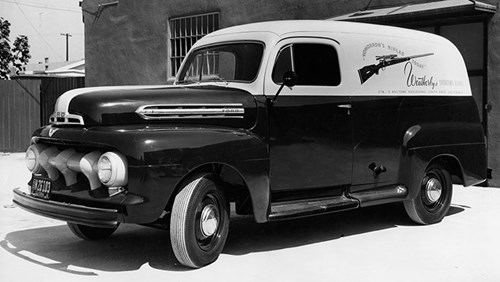
10. Roy Weatherby was a steadfast supporter of wildlife conservation and made it a mission to educate all who would listen on the benefits of ethical hunting. It was with that in mind that the company founded the Weatherby Foundation International in 1988. The Foundation’s mission statement is “to educate youth and the non-hunting public on the beneficial role of ethical sport hunting and its contribution to wildlife conservation." It is one of the few non-profit organizations to focus its efforts and financial support on education outside of the industry.
For more on Weatherby's history, be sure to pick up a copy of the Gresham's book here.