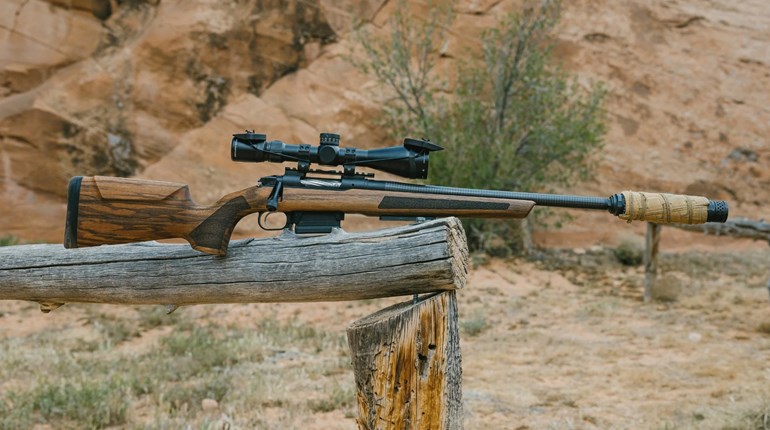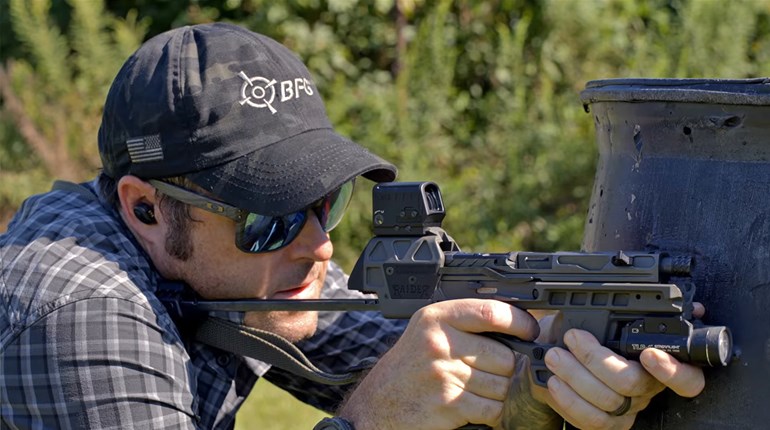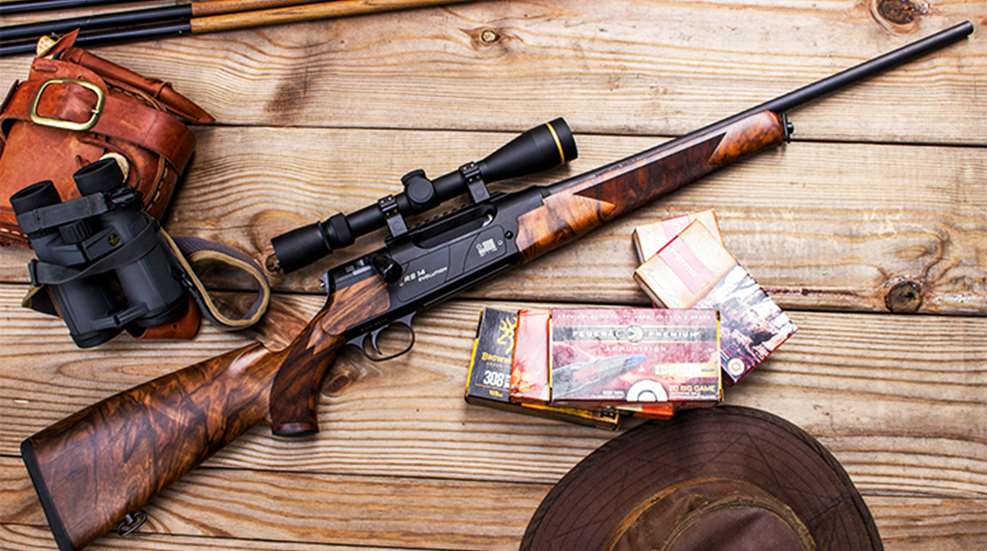
A dear friend and I were discussing the proper barrel length for an African dangerous game rifle, one especially designed for hunting the jesse thickets of Zimbabwe and similar jungle-like terrain. His idea was that a short barrel would be ideal, as the shot distances for the biggest beasts are almost always on the close side—inside of 100 paces—and that the short barrel wouldn’t get hung up on the brush.
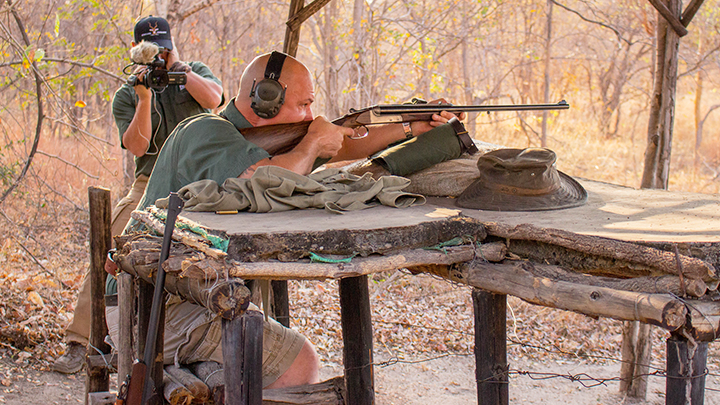
I countered with the idea that I preferred the balance of a rifle with what I considered to be a ‘proper’ length of barrel; one which will not only maximize the performance of the cartridge, but maintain the balance of the rifle. And I added, in the words of my buddy Bob Rose, a veteran woodcock hunter from Vermont, that you don’t swing a barrel in the thick stuff, you poke it forward, so length is irrelevant. The conversation—though sparked by the 20-inch barrel on my buddy’s .416 Rigby—got me thinking about the barrel lengths of all my rifles, from rimfires to safari guns, and how they played a role in their performances.
Growing up, I watched my Dad and maternal grandfather sight in their rifles just before each deer season—there was very little target shooting in those days, at least in my world—and there would be conversations about rifle configuration and conformation. In those days it was the general consensus that rifles with longer barrels were more accurate; this is still a point my father argues with me today; he firmly believes a lever-gun in ‘rifle’ configuration is more accurate than those in ‘carbine’ configuration. I firmly believe that his (fervent) views stemmed from the days of iron sights, where the longer sighting plane made for better accuracy.
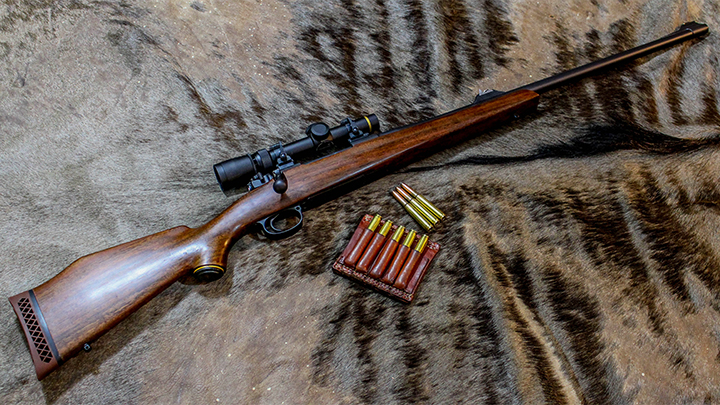
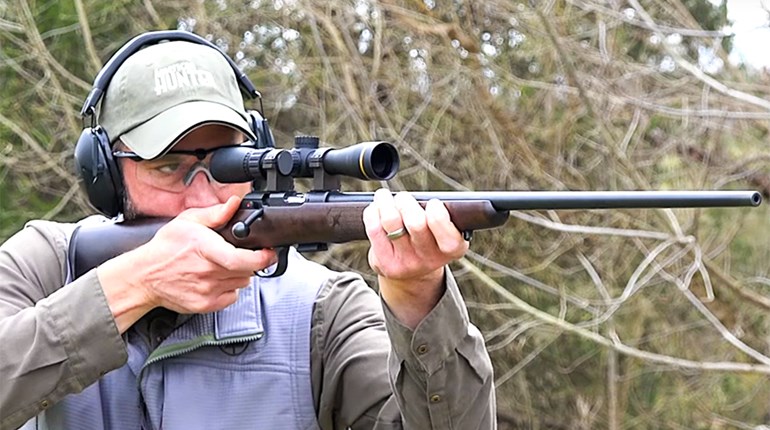
Modern sporting optics have all but replaced iron sights on the modern big-game rifles and have certainly proven that shorter barrels can be just as accurate as longer ones, and sometimes more accurate. But for an iron-sighted rifle like an 1886 Winchester, 94 Winchester, my Heym 89B double rifle and the like, I still prefer a barrel on the longer side. My Heym .470 double has 26-inch tubes—in order to give the rifle a proper balance for my frame—and I love the way it carries, the way it comes to shoulder, and the way it shoots.
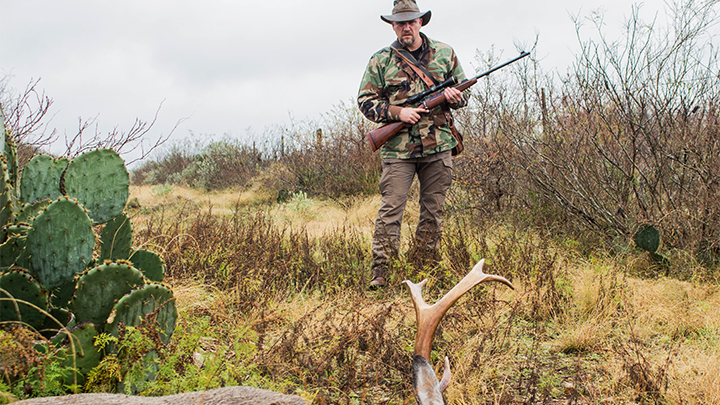
Firstly, and I’ll be speaking in generalities, I like the way a longer barrel settles down for the shot. Whether offhand, off shooting sticks, or from an improvised rest, a longer, heavier barrel seems to settle much faster than does a thinner, shorter barrel, though that obviously comes at a price, and that is weight. My favorite hunting rifles seem to have barrels ranging between 24 and 26 inches, with just a couple exceptions. I don’t mind a 20- or 22-inch barrel on a 7mm-08 Remington or .308 Winchester, as the balance isn’t drastically affected (probably due to the short action receiver) and the cartridge’s powder charge is burned up in a barrel of that length.
My .318 Westley Richards has a 25-inch barrel, my Heym Express .404 Jeffery has a 24-inch barrel—as does my Winchester Model 70 .300 H&H Magnum and .416 Remington Magnum—yet my Winchester Model 70 Classic Stainless .300 Winchester Magnum 26-inch barrel, and it has never been an issue. The latter rifle usually gives a bit higher velocity than does other 24-inch barreled rifles of the same caliber, and the longer tube has always seemed to optimize the performance of the .300 Winchester Magnum.
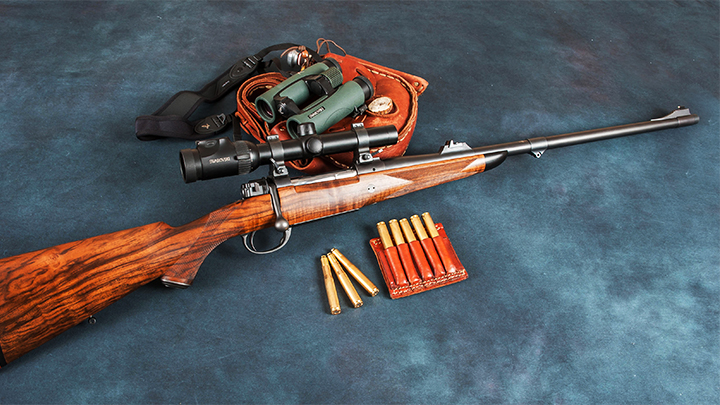
That point is highly noteworthy regarding barrel length. Trying to get a 7mm Remington Magnum or .300 Winchester Magnum to give its optimum performance from a 20- or 22-inch barrel is nearly impossible; there is simply too much powder to burn in that distance. For those type of cartridges, as well as the .30-06 family, I’ve had much better results from 24-inch barrels. I've had a couple of rifles chambered in .30-06 which worked alright with a 22-inch barrel, but a 24-inch pipe works much better in my experiences.
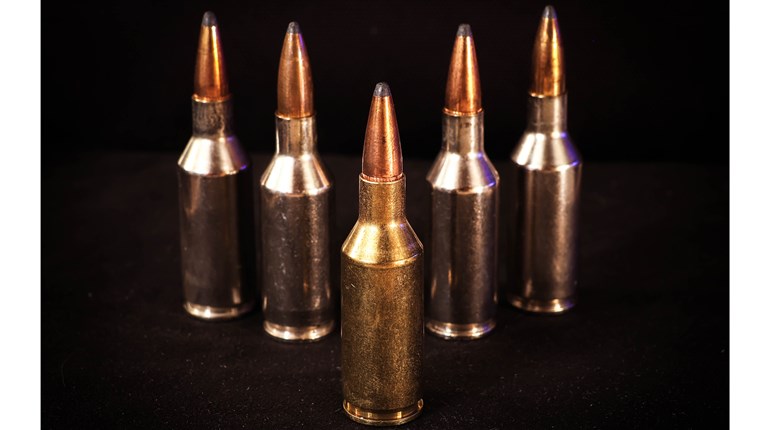
Velocity is directly affected by barrel length. It is generally accepted that each inch of barrel length changed will reduce or add about 25 fps of muzzle velocity, and I've found that to be true over the course of handloading ammunition for dozens of different rifles over the years. Whether or not that velocity addition or reduction matters to you will be dictated by your goals. If you’re preparing to build a 6.5-284 Norma or 6.5 PRC in an F-class rifle, where the majority of your time will be spent prone with a bipod or seated at the shooting bench, a longer barrel will be a benefit. You don’t have to carry the rifle in normal field conditions, and the additional weight from the barrel will help steady the gun. If you’re looking for a defensive gun, where anticipated shot distances are inside of 150 yards at the furthest, the shorter barrel and its reduced velocity probably won’t pose an issue.
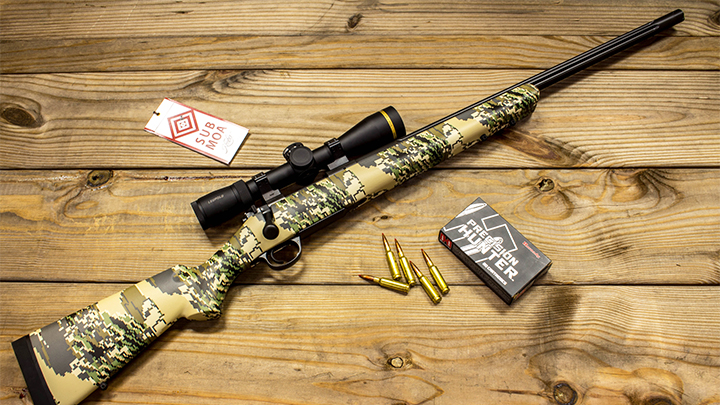
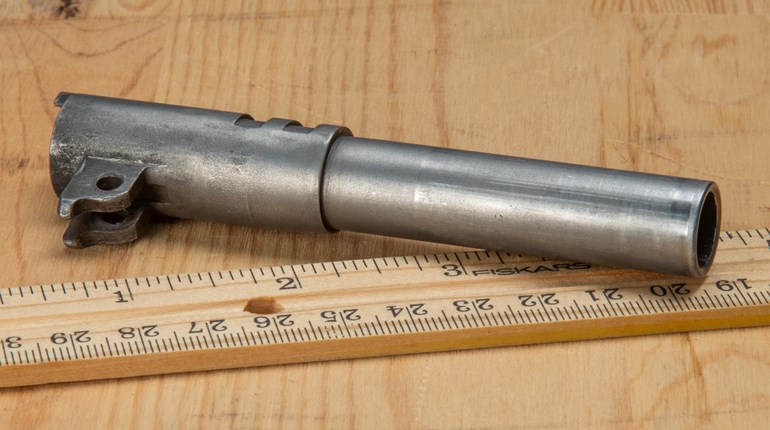
Barrel thickness can play a couple of roles: the shorter, heavier barrels can benefit from rigidity, which can enhance accuracy, and in heat dissipation. Longer, thinner barrels will be affected by heat and will tend to have their group size open up faster; in a hunting rifle, this might not be a major issue, unless we’re talking about a varmint rifle. A hot prairie dog town will certainly generate a respectable pile of spent brass, and a pencil-thin barrel will certainly have some accuracy issues, where a bull or semi-bull barrel will dissipate heat better.
A barrel’s harmonics—the manner in which the barrel responds to the vibrations generated from cartridge ignition and the bullet travelling down the bore—can be scientifically puzzling. For years, I’d handload ammunition for a certain rifle, getting wonderful accuracy, only to have the exact same load fall to pieces in the accuracy department when trying it in another rifle chambered for the same cartridge. Bottom line is that each barrel has its own set of unique harmonics, and while factory ammunition may work ‘well enough’ in a good number of well-tuned rifles, certain loads will be stellar in one gun, and terrible in another.
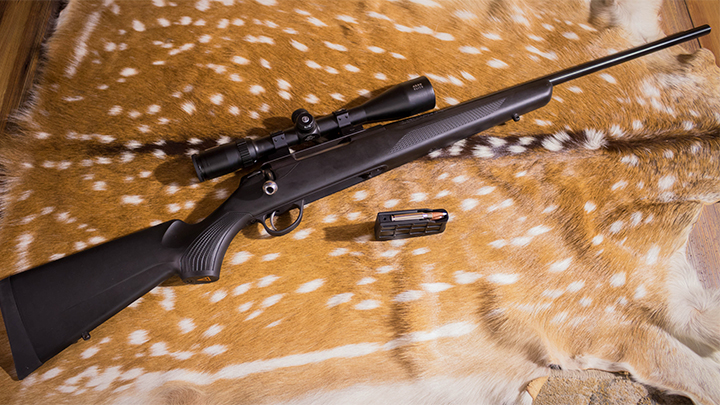
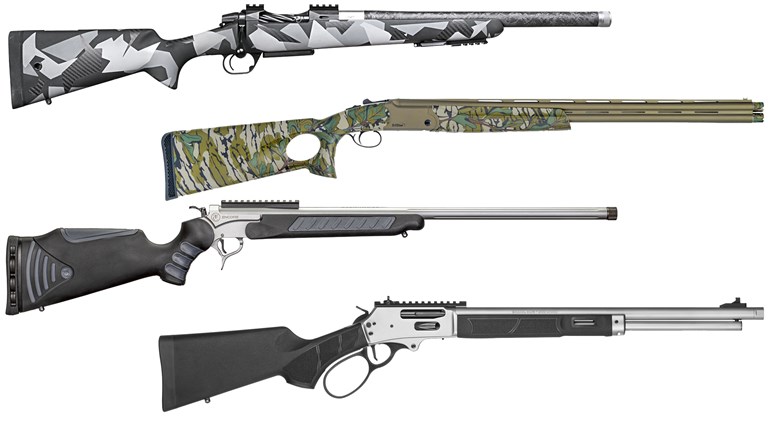
Looking at the industry standards—the correlation of cartridge to barrel length which seem to be so common among the rifle makers—you’ll see the results of what may sometimes be a century of ballistic experimentation. You can find some disparity if you look hard enough—18-inch carbines in .30-06 Springfield, and 24- and 26-inch barrels on .308 Winchester rifles—and hopefully you can now know what to expect from those barrels, at least in comparison to the ‘standard’ lengths. Look at the test data for a handload or box of factory ammunition, and pay attention to the length of the test barrel. Sometimes cartridges will possess an ‘advertised’ velocity based on a test barrel much longer than anything you’d ever carry, in order to inflate the muzzle velocity—this was a favorite trick a century ago, with many classic cartridges. Measure the length of your rifle’s barrel, and you’ll know what to expect from your own gun.
Want to read more from Philip Massaro? Check out the following articles:
• The Effects of Bullet Shape at Hunting Ranges
• Best Shooting Rests for Hunters
• 5 Reasons to Learn How to Reload Ammunition
• Why Every Hunter Should Own a Rifle in a Common Caliber
• An Ode to the .375 H&H Magnum
• An Ode to the Winchester Model 1886
• An Ode to the Winchester Model 70
• 6 Ways to Fine-Tune Your Hunting Rifle
• Review: Heym Model 26B Double Rifle .45-70
• 5 Reasons the .300 Win. Mag. Rules the Roost
• Bolt-Action Rifles: Push-Feed vs. Controlled-Round-Feed
• Scope Magnification: How Much is Too Much?
• A Hunter's Guide to Staying Sane During the Coronavirus Outbreak
• Is Walnut Dead? Synthetic vs. Wood Stocks
• Rifles for the Traveling Hunter
• Top 5 Lever-Action Rifle Cartridges
• African Game Meat: What Happens After the Shot?
• Top 5 Underrated Deer Cartridges
• Top 5 Double Rifle Cartridges
• Deer Hunting: Were the Good Old Days Really That Good?
• Essential Gear for the Traveling Hunter
• 4 Reasons to Hate the 6.5 Creedmoor
• 4 Ways to Fine-Tune Your Rifle During the Off Season
• Review: Savage Model 110 AccuFit System
• Top 8 Bullets for African Plains Game
• Review: Tikka T3X Lite
• Top Bear Rifles and Loads
• 3 Rifle Cartridges to Hunt the World
• Why My Cartridge is Better Than Yours
• Top 5 Handgun Hunting Cartridges
• An Ode to the Ruger Model 77
• Top 5 Hunting Cartridges of the 21st Century
• Top 5 Deer Bullets for 2018
• An Ode to the .30-30 Winchester
• 5 Reasons to Book a Spring Bear Hunt
• An Ode to the Ruger Mini Thirty
• Boattail vs. Flat-Base Bullets
• How to Build a Custom Rifle
• Choosing a Cartridge for North America's Big Game
• Top 5 American-Made Hunting Rifles
• How to Choose a Buffalo Rifle
• An Ode to the .223 Remington
• Top 5 Coyote Cartridges
• The Ultimate Long-Range Hunting Cartridge
• The Greatest Whitetail Cartridge Ever Designed
• An Ode to the Browning BAR
• Top 5 Bear Bullets
• Do You Really Need a Magnum Cartridge?
• Why the Ruger No. 1 is Not No. 2
• Top 10 Mythical Game Species
• Top 5 Monometal Soft-Point Bullets
• Top 5 Subsonic .22 Long Rifle Loads
• The Most American Rifle Cartridge
• Tips for the Traveling Hunter
• How to Choose a Gun Safe
• Best Gun Cases for the Traveling Hunter
• An Ode to the .30-06 Springfield
• Top 5 Boutique Bullet Companies
• Top 5 .22 Long Rifle Loads
• 5 Reasons Round-Nose Bullets Are Still Cool
• Top 5 Dangerous Game Loads
• Top 5 Turkey Loads
• 5 Rifle Cartridges That Need to Make a Comeback
• Top 5 Safari Calibers
• 5 New Year's Resolutions for Hunters
• What Your Favorite Rifle Cartridge Says About You
• America's Most Wanted Cartridges
• America's Strangest Game Laws
• What Your Favorite Rifle Cartridge Says About You, Part II
• Top 5 Overrated Rifle Cartridges
• Top 5 Underrated Rifle Cartridges
• 5 Reasons to Handload Your Ammunition
• 5 Cartridges You Might Not Know About
• Top 5 Wildcat Cartridges
• An Ode to the Ruger Mini-14
• Top 5 Hog Loads
• Why .30-30 Winchester Will Never Die