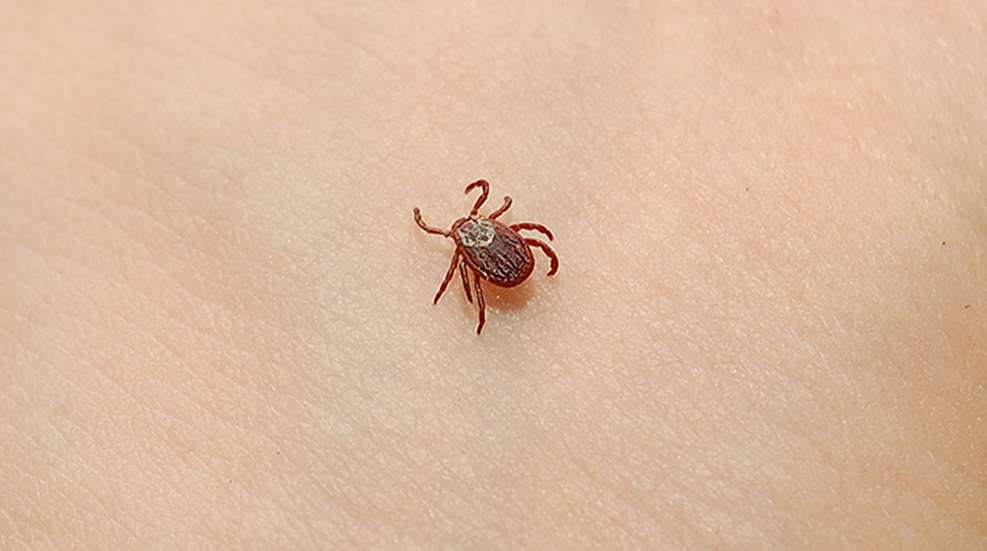
Finally reaching the spot to put up your treestand, you pause to take a breather. Contemplating which tree is best; you feel something crawling on your arm. Sure enough, there it is, your old nemesis the tick. Grabbing this one is no problem, but now you worry how many others you've picked up.
Hunters, hikers and anyone that spends time outdoors are going to be exposed to ticks. It’s just part of the deal when we go outside. The more informed you are about these woodland pests the better you can deal with them and spend more time in the woods.
Living with the bloodsuckers.
There are thousands of biting insects in the world, but ticks belong to a family of arachnids (they are not insects) and are external parasites that live by hematophagy. That means they suck the blood of their host. The main divisions in the tick family are Ixodidae, which are known as the “hard” ticks, and Argasidae, the soft ticks.
The hard ticks are distinguished by a tough outer covering or Scutum. This is what makes the smaller ticks in this family, before they become engorged with blood, difficult to smash. On soft ground these ticks can easily withstand being stepped on by your boot. Hard ticks are known to painlessly bite the host and may feed for a long period of time—another reason to diligently check for ticks after venturing into tick-prone areas. Be diligent in your search: A hunting buddy of mine was embarrassed to have his doctor find one in his belly button.
Hard ticks are likely the type we see most frequently. The wood tick or American dog tick should be very familiar to those of us in the Southeastern United States. This tick is dark reddish brown with a white crest like emblem just behind the head. The black legged or deer ticks are also numerous and many scientists believe this is most likely tick to carry Lyme disease. Deer ticks are extremely small in the larval stage, about the size of the period at the end of this sentence.
Soft ticks are different in that they have a different life cycle from hard ticks. They also tend to feed differently. Many soft ticks have a painful bite and do not stay attached to the host for long. Soft ticks common in North America are said to prey primarily on birds and rarely feed on humans.
Ticks may carry a wide array of diseases: Rocky Mountain spotted fever, Colorado Tick Fever, babesiosis and ehrlichiosis, just to name a few. Lyme disease has become the famous tick borne disease in recent years. This disease is often misdiagnosed or may go years without being discovered at all.
Ticks require two conditions to flourish: A climate high enough in humidity to keep them hydrated and a large host population—generally mammals. In other words, the honey hole that you like to hunt—the one with a bunch of deer—probably has a lot of ticks. There is really no way to avoid coming in contact with ticks, so all you can do is try to protect yourself.
Lock and load for these little parasites.
Your best protection from a tick bite and the subsequent diseases that could follow is keeping a tick from reaching your skin. This may not be possible 100 percent of the time, but these measures will certainly help.
1. Wear long pants and stuff the pant leg into your boots. Most ticks will be at ground level and this keeps the tick from crawling up your leg onto your skin. Lightweight gaiters will help even more.
2. Spray your boots and pants legs with an insecticide efficient against ticks. Many experts advise an insecticide containing permethrin, which has been found to be very effective on ticks. Be aware that permethrin is toxic to cats and fish.
3. Upon returning from the woods, perform a diligent search all over your body for ticks. Check everywhere. Remember, larval ticks can be incredibly small. Putting your clothes in a very hot dryer for fifteen minutes should kill any ticks on your clothing.
4. If you find an embedded tick, remove it immediately. Using a pair of fine-tipped tweezers grasp the tick by the head, not the body, and pull firmly straight up. Store the tick in zip lock baggie if you intend to visit the physician about a possible infection. Disinfect the wound area thoroughly.