During the rut I believe in an aggressive style of deer hunting. By that I don’t mean I impatiently climb down from stands or try to push mature bucks. When the rut has bucks moving it’s often best to wait all day in those pinch-points between bedding areas. But too many hunters think this means they must be passive. Instead I’ve found that deer hunters should be actively getting in tune with changes in deer activity and food sources. Hunters should be thinking, glassing, checking trail-cameras (if you do that) and seeing what the wind allows, not just waiting. And hunters should be looking for opportunities to use a decoy, to rattle and even stalk a buck.
Though I concede that patience is the virtue for deer hunters, I also believe in controlled aggression. The biggest dilemma deer hunters face during the rut is how aggressive to get with stand choices and tactics. Here are four times when I try to make something happen.
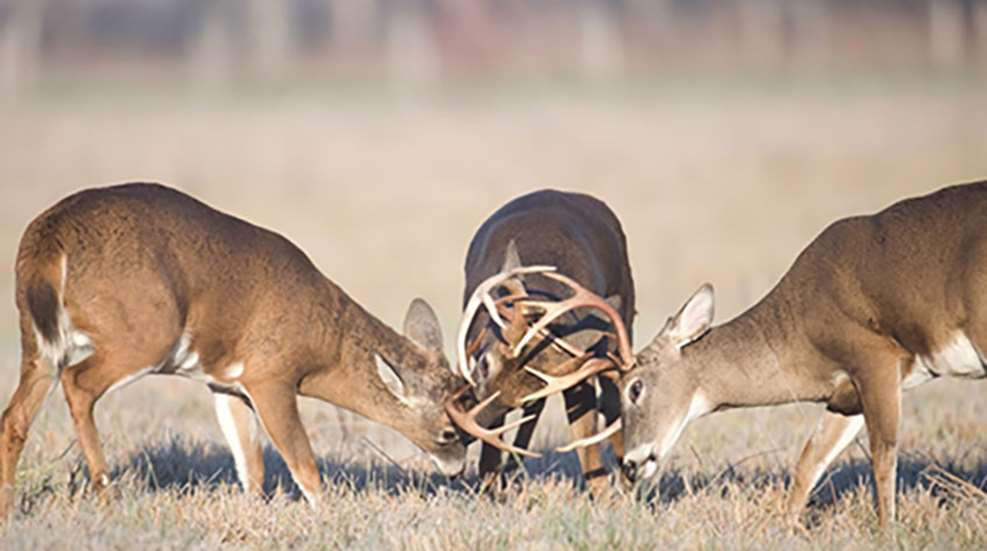
When the deer activity is slow, but the rut should be in full swing: Wherever you live, there is a right time to rattle. Too many hunters simply get bored and slam antlers together. They then get spotted in a tree or a buck circles downwind. The hunter might never even know he just taught a buck a lesson and burned his stand.
Hunters also can be fooled by research studies. For example, a three-year study on rattling a few years back got a lot of ink. Dr. Mickey Hellickson did the study on the 7,800-acre Welder Wildlife Foundation Refuge in South Texas. By using telephone-pole observation towers to watch as someone rattled, researchers determined that bucks responded in 65 percent of 171 rattling sessions. What got hunters’ attention was that the study determined that long, loud rattling sessions worked best during the pre-rut and peak-rut, whereas long, quieter rattling was the most productive in post-rut.
What a lot of people took away from this study is they should rattle aggressively all the time. But that study was done in Texas’ big country. When you’re hunting just one or two good bucks in small woodlots and so on, it’s best to begin as if you’re calling to one of those particular bucks. As your stand choices now should have you closer to bedding areas, begin by rattling lightly for about a minute. Wait five minutes. Rattle again for a minute, but increase the volume. Now wait a half hour before rattling again to give any cautious buck time to slip into the action.
Keaton Kelso, of K&K Outfitters in Kansas, agrees with this approach. He is one of the quality outfitters vetted by NRA Outdoors. He doesn’t want his hunters to rattle before mid-morning. He believes the best way to kill mature bucks is with good stand choices and a lot of patience, but he says there are times to rattle. He says, “Start when the deer activity slows in late morning by lightly knocking antlers together every half hour. There are two windows when this works best. The two weeks before the rut action explodes and a shorter window, maybe four or five days, in the post-rut when there are only a few estrous does left to be bred.”
Dr. Grant Woods, a deer biologist who creates dream properties for deer hunters, agrees. He says, “Bucks are very good at pinpointing the exact location of a call. Therefore they often will approach from downwind. This is why I don’t use loud rattle sequences very often. I want the bucks to hear it once and come searching.”
Meanwhile, Roy Wilson of Texas Best Outfitters (another NRA Outdoors affiliate) agrees with Hellickson’s conclusions. Where he hunts, he likes to rattle on those calm, cold mornings during the rut. He uses loud rattling sessions. “I do the whole scene, he says. “I break brush, stomp the ground and really go at it.”
When you see the buck you want with a doe in estrus: Occasionally you might actually spot a buck bedded with a doe in estrus. When you do there’s a good chance that buck will be in that area for a day or so. Now comes a decision: Do you let the buck go and hope to see him again in a few days or do you push your luck? Consider your options. Is the buck likely to leave the property? Do you have a realistic chance of seeing him again? Is there a way you can use the terrain to get close enough to get in range? The buck is distracted now and the doe likely has him circling, which can bring him in range as you stalk. In most cases you’re better off staying on stand, but there are times to take off your shoes and make a stalk—big deer aren’t vulnerable very often.
When a buck is cruising by out of range: Depending on the wind and the terrain, the best way to turn a buck that’s passing out of range is by grunting just loud enough for the buck to hear you. If the buck is too far or doesn’t respond, get louder. If you still can’t reach or turn that buck, grab your rattling antlers. Try tickling them together and get louder if you have to as you keep the antlers behind you or a tree. The buck might have somewhere he simply has to go, but even if he does he might slip in later in the morning.
When your vacation time is almost over: This is when you grab a climber and take a risk by getting right in a buck’s core area. Before now you stayed on the edges of your property and were very careful about your entry and exit routes. You still need to hunt smart and you can’t cheat the wind, but it’s time to aggressively get right in there and take your chances. If you stay passive, you might have a long winter of regrets. I prefer to go down swinging.