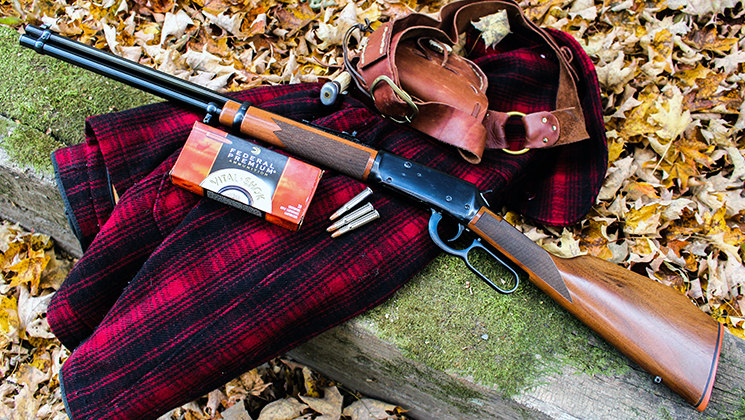
We all have our "firsts." A first rifle, first shotgun, first hunt, first big game animal. If you were lucky, as I certainly was, you grew up in a hunting family, and got to head afield as soon as you were of age. More often than not, it was with a borrowed rifle (if that’s a legal implement in your area) that didn’t recoil too harshly, so a new hunter/shooter could effectively make the kill with a properly placed bullet. My dad—Ol’ Grumpy Pants—killed his first buck with a Marlin Model 1893 in .30-30, borrowed from his best friend’s father, and used that rifle for four or five seasons before acquiring the well-used .308 Winchester that he has shot so well for forty years. When I came of age, GP presented me with a brand new Winchester Model 1894AE XTR, chambered in .30-30, as my first rifle. I still have it, and killed my first seven or eight deer with it. It was—and still is—a lightweight, handy carbine that will kill anything in the Northeast woods, provided I put that bullet where it belongs.
In this modern era of hunting rifles and cartridges, common sense would indicate that a cartridge with the performance level of the .30-30 would long ago have faded into obscurity. I mean, it’s certainly not a speed-demon, it doesn’t carry a huge payload, and its effective range is usually 200 yards, tops, especially considering the average barrel length and iron sights of most of the rifles it is chambered in. So then, why does the .30-30 still show up in the top ten of most ammunition companies’ sales lists? Why won’t it go away?
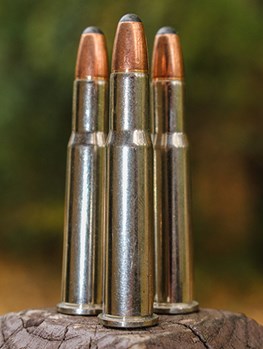 Because it works, plain and simple. It was a cartridge developed during the crossover period between black powder and smokeless powder, released in 1895 in the new fangled Model 1894 Winchester, and works well to this day with either. It performs just fine with cast lead bullets, and the recoil generated is low enough for a youngster to use to hunt with and develop good marksmanship skills. The .30-30, in most factory offerings, is loaded with 150 or 170-grain round nose or flat nose bullets, which have enough sectional density to properly penetrate at the .30-30 velocities. The 150-grain load runs at an average of just shy of 2,400 fps, and the 170-grain bullets leave the muzzle at an even 2,200 fps; perfect for using a standard cup-and-core bullet without risking premature breakup.
If your hunting ground is more along the lines of the wide open plain of Wyoming, or a beanfield that you measure in football fields, the .30-30 may not be a cartridge for you. But, if the woods of the Northeast—whether the oak and hickory woods of Pennsylvania or the hemlock and beech forests of the Adirondacks and Catskill mountains, or any reasonable comparison—better represents your hunting, there is no reason not to shoot .30-30 if you feel comfortable doing so. The shots that I have here in upstate New York rarely exceed 75 yards, and I’ve never taken one in the woods over 125 yards. If you can accurately place your shots at those ranges, the horsepower of the .30-30 is there when it comes to effectively killing whitetail deer, feral hogs and black bear; if you like the mountains, you’ll appreciate the lightweight lever gun at the end of the day. The decision to use a riflescope or not depends on you and your rifle. The Savage Model 99, the Marlin Model 336, and many of the break-action .30-30s can easily be scoped; the older Model 1894 Winchesters had ‘top-eject’, which precluded using a scope over the center of the bore.
Plus, the .30/30 has a certain ‘cool’ factor. As hunters, we are most definitely in touch with our heritage, and using a lever-gun that was the rifle-du-jour of our grandfathers’ and great-grandfathers’ era has a particular appeal to it. I usually reserve my doe-tags for lever-action work; it’s fun to get just a little bit closer and change things up a bit after using scoped bolt-action rifles for so many years. The .30-30 definitely had a huge effect on the popularity of the .308” caliber that we have so readily embraced, and has been responsible for an unquantifiable amount of meat.
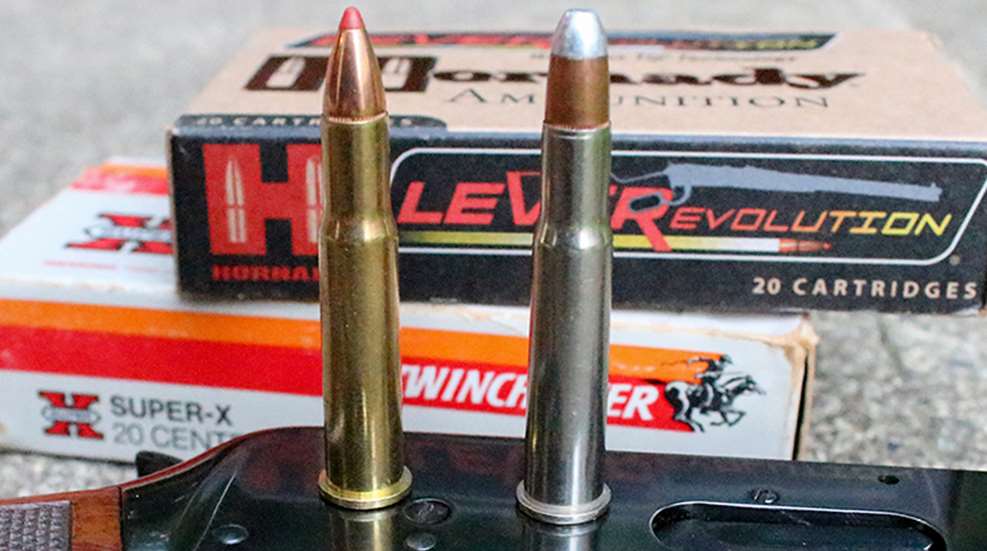
Additionally, the .30-30 has received some upgrades in the ammunition department. There are many premium bullets available for the .30-30 in factory loadings, including a 150-grain flat-nose Barnes TSX all-copper bullet compliant with the ‘lead-free’ zones, Federal Premium offers the 150-grain Trophy Copper bullet in their Vital-Shok line, for deeper penetration, and Hornady has the LeveRevolution line featuring the Flex-Tip spitzer that is perfectly safe to use in the tubular magazines that so many of the lever guns use. If you handload your ammunition, you can take things even further, using the 170-grain Nosler Partition flat-nose, or maybe the Falcon Bullet Company 165-grain Fal-Coated cast lead bullet. I’m currently tinkering with the 100-grain Cutting Edge Bullets all-copper hollowpoint, which has a flat meplat that will work safely in a tubular magazine, yet can be driven to over 2,600 fps in the venerable case.
Whether you appreciate the .30-30 for its history and legacy, or for the clean, classy lines of the rifles that house it, rest assured that it represents an American engineering success story, and I truly believe it will still be with us 50 years from now.