


.416 Rigby—The Gentleman’s Bolt Gun or the Gentleman of Bolt Guns?
There are a few cartridges over time that maintain a consistent foothold in the minds, hearts and hands of passionate hunting and shooting enthusiasts. Ranked at the top of that short list is the .416 Rigby. Let’s take a look at this delightful caliber and why it is still a main choice for hunters and PHs after more than 100 years.
Says Me: ‘Rocky Mountain Harry’ Lies Within Us All
I have always been intrigued by what possibly could lie beyond the next hill. I suppose that is a primary reason I am a hunter. Surely hunters everywhere share this sentiment. Surely Harry Yount did. That’s him above.


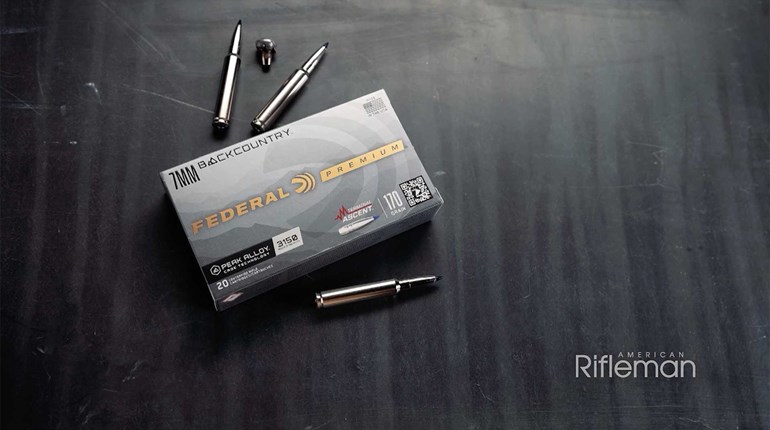
The Problem with Pressures: A +Peak Revolution?
The history of the projectile, and of the centerfire cartridge, is fascinating, and it seems as though we are ready to take the next step forward. Or are we? Let's take a look at how pressures have affected cartridges throughout history, and the evolution that seems to be currently starting.

250 Years of American Hunting
A celebration of a proud tradition. Follow us through the history of 250 years of American hunting.


An Ode to the Double Rifle
There are few who appreciate double rifles more deeply than our regular contributor, Phil Massaro. From the guns' storied history, to their heft and utility, the double rifle has fascinated Phil for a lifetime, and he has carried them in pursuit of game at home and abroad. Read on for his tribute to the classic design.


Cartridge Legacies: The .308 Winchester Family Tree
I suppose it is fair to say that if you want to find the true legacy of a cartridge, you could look to its offspring and the successes and/or failures of the family. Let’s look at the .308 Winchester’s family tree, at the instant successes, and those children which have lagged behind over the years.


An Ode to the .270 Winchester
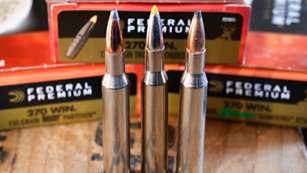
What is it about the .270 Winchester that remains so appealing to hunters? Sometimes the designers get things right the first time, and if you wanted to develop a cartridge to rival the venerated .30-06, the .270 comes about as close as is practically possible.
Behind the Bullet: .284 Winchester
Despite the lack of factory-loaded ammunition, a competent handloader can provide a lifetime’s worth of hunting ammunition without much trouble, and the ballistic formula provided by the .284 Winchester leaves very little to be desired.
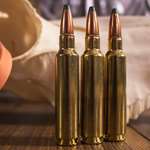
Head to Head: .243 Winchester vs. .240 Weatherby Magnum
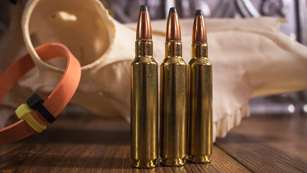
The .240 Weatherby Magnum is a speed demon, but how does it stack up against the original 6mm of the mid-20th century, the .243 Winchester? We take a closer look at the two to see if the younger offering can better the performance of the older.

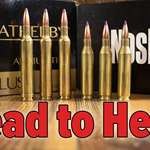
Behind the Bullet: 7mm Remington Ultra Magnum
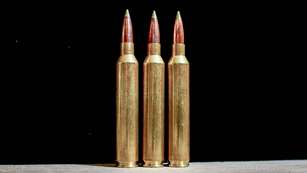
Launching a 160-grain bullet in excess of 3200 fps, the 7mm RUM is among the fastest commercially loaded 7mm cartridges available.
Interests
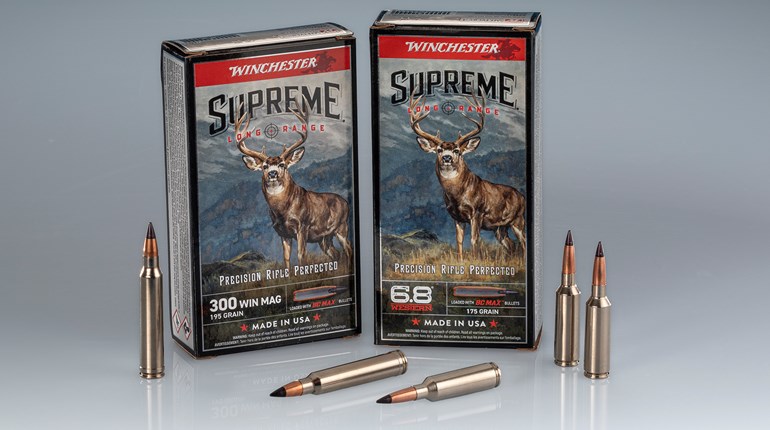
Hardware Review: Winchester Supreme Long Range | An Official Journal Of The NRA
- Garmin Brings The Long-Range Experts At Applied Ballistics In-House | An NRA Shooting Sports Journal
- New Apex Bag Rider 2.0 Gives Ruger Precision Rifle Shooters Steadier Elevation Control | An NRA Shooting Sports Journal
- Federal’s New Cosmic Clay Target Load Glows Under Black Light | An NRA Shooting Sports Journal


IN THE SPOTLIGHT


EXPLORE MORE NRA PUBLICATIONS












