It is a reality that we occasionally spook the bucks we are hunting. Figuring out what to do after they’ve split is one of the most important decisions of the season. You must decide whether to move on and try to find a different place to hunt the buck or to keep sitting in the same stand.
Assessing the Damage
There are two types of scared. When a buck is badly scared, he knows that the source of his shock is a human and he knows exactly where that human was positioned at the time of the scare. He now associates that location with danger. Often he will turn inside out and bust out of the area. Maybe he saw you in the stand and realized you were a human. Possibly, he picked up a heavy dose of your scent that hit him like a slap in the face. He knew you had to be very close. Or maybe you shot at him and nicked him. Either way, you nearly scared him out of his skin.
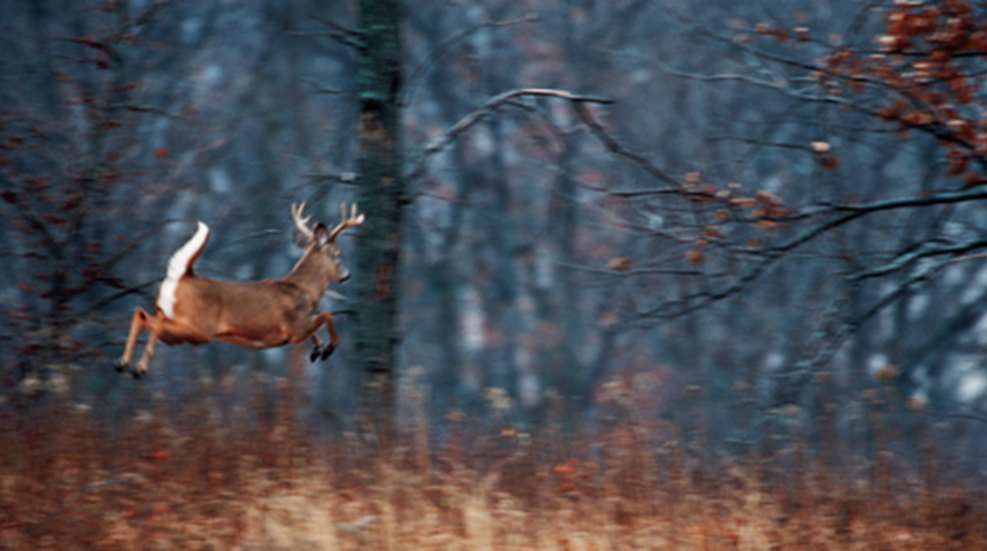
The second type of scared is a lot milder. This is not outright fear, but something that suggests caution. A mildly scared buck will bound off rather than blow out like a rocket. Maybe he heard you walking to your stand or saw you from across the field. Possibly, he smelled you but was not close enough to get a real heavy dose or maybe he saw you in the stand but was not able to figure out exactly what you were. He knows something is wrong, but in his mind, the danger isn’t imminent. He hasn’t tied true danger to a specific location.
Why It Matters
Bucks adjust their travels when they casually encounter humans, but only after they do so on a regular basis. It is not something that causes them undue stress. They are constantly adjusting their daily movements to avoid human activity. It is part of their daily lives. A single mildly threatening incident is no big deal. However, if the buck is badly scared—shocked, frightened—and pinpoints the source of the danger to a specific location, the buck will not soon forget what happened nor will he soon return to that location. Every time he is near that area, he will be cautious, probably for weeks to come. So figuring out what to do after spooking a buck starts with figuring out how badly he is spooked in the first place.
If They Are Mildly Spooked
Mildly scared bucks certainly become more cautious and harder to kill in that area. You have damaged your chances for success. That is the main reason that the first time you hunt a new stand is usually your best chance for success. However, you may not have completely dashed your hopes.
There are two levels of mildly spooked. The first one is when the buck encounters you, or your scent, where he is used to running into humans. If you alerted the buck in a way that he might consider normal for that area, you can expect little negative reaction. For example, let’s say he hit your scent where he is used to finding human scent, on a walking path or a woodland trail near a park, for example. Maybe you bumped him near a roadway where he often encounters people. Or he saw you in an area where the farmer often walks to check fence. It is not a big deal.
If that is the case, keep hunting the stand as you normally would, in your regular rotation, resting it as often as you might if you had not spooked a buck.
The second type of mild scare occurs in a place and in a fashion where human activity is not a regular occurrence. In this case, the buck will not be so forgiving. Let’s say you jump him from his bed as you are sneaking in to your stand. As he bounds off, you think, “He didn’t look too spooked.”
Maybe he didn’t look overly spooked, but deer don’t like surprises in their bedrooms. He will remember it. If they are not used to seeing a person doing what you just did, they will see it as a moderately dangerous invasion. It may be a couple of days before the buck comes back, and when he does, he will likely be very cautious. This is not what I would call a bad scare because the buck won’t pin your presence to a specific tree. You were simply walking through a place where he didn’t expect to encounter a human.
Now it makes sense to wait a few days longer than you normally would before going back to that stand. The hope is that the buck will cautiously pass through the area a few times without perceiving any danger and forget the incident. If you go in too soon, you could reinforce the threat and he may stop using that area.
If They Are Badly Scared
When a buck attributes your presence to a particular tree and shows great alarm at the discovery, you may as well stop hunting it for several weeks. In other words, you need to move on. He probably won’t totally leave the area, so moving to a completely different part of the buck’s range may still produce the shot you have been working all season to create.
There is one situation where you can ignore a spooked buck. If you bump a buck during the rut that you have never seen before, he may well be simply moving through the area. In that case, don’t abandon the stand. There is no sense wasting a good stand to keep from further alarming a buck that may never return anyway. Go back to hunting the stand as soon as the wind is right.
Every situation is different—you don’t want to needlessly abandon a great stand nor cling too long to a stand that the buck will now avoid. I nicked a buck last season that disappeared off the face of the earth. I never got him on any trail cameras and never saw him again. He knows that spot equals danger. On the flip side, I have seen bucks come back to the same field 15 minutes after a farmer bumped them. They know how to rate the dangers they encounter and they react accordingly. You need to learn to do the same thing.