Walnut Rifle Stocks

by
posted on May 14, 2014
** When you buy products through the links on our site, we may earn a commission that supports NRA's mission to protect, preserve and defend the Second Amendment. **
qa_ah2015_fs.jpg (43)

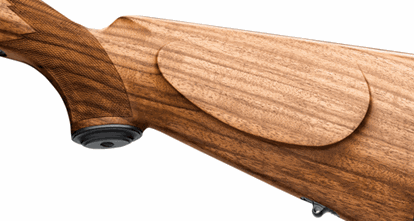
undefinedQ: Is there any real difference between rifle stocks made of American walnut and those made of French walnut, besides cost?

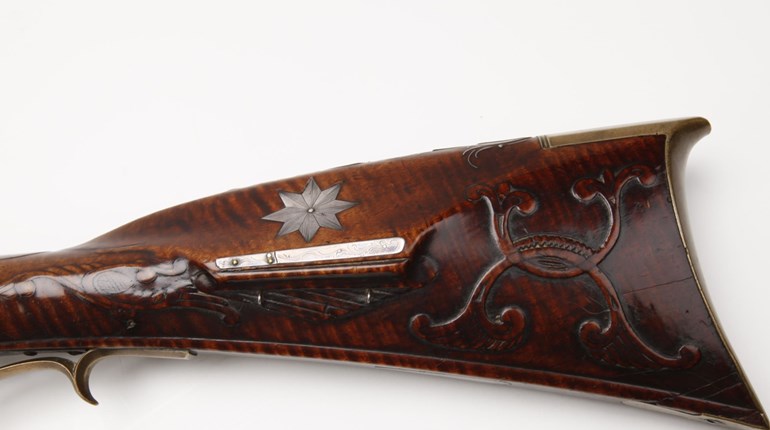
A: Worldwide, there are some 50 species of walnut (genus Juglans). In addition, many other species are mistakenly called walnut. In terms of walnut best suited for gunstocks, most is taken from three species: Juglans regia (Circassian, English or French walnut; also many other types), Juglans nigra (American, Eastern and Oregon black walnut) and Juglans hindsii (California black, claro and Hinds walnut). Also suitable for high-grade stocks, but very rare, is Bastogne walnut, a hybrid of Juglans regia and Juglans hindsii.

Most favorite of these is Juglans regia (Circassian, English or French), which in Latin means “royal walnut.” This species originated in Asia, but has been transplanted widely trough Europe and the Americas, resulting in many sub classifications that exhibit slight differences in color and figure resulting from variations in growing conditions. All woods of this species, however, have a fine, dense grain, excellent hardness and workability, high strength and shock resistance, good stability, and appealing grain and figure.

Juglans nigra (American, Eastern and Oregon black walnut) is the name for varieties of true black walnut. Juglans hindsii (California black, claro and Hinds walnut), collectively known as claro walnut, is very similar in properties to the Juglans regia varieties, though it is both slightly weaker and not as shock resistant as the Cirassian or Bastogne varieties. Black and claro walnut are also known for their distinctive grain and figure.

Latest

Hunter At Daybreak
Hunter At Daybreak

5 Things I Wish Someone Had Told Me Before My First Elk Hunt

I grew up hunting whitetails in the Midwest, and while I thought I was in “elk shape” on my first western hunt, I quickly learned that chasing elk at high elevation requires an entirely different level of fitness. You’ll likely hike for hours, oftentimes at high elevation, and many of trails you’ll follow are filled with deadfall and uneven rocks. If you’re fortunate enough to fill your tag, the real work starts. 

Ruger Halts Production of Several Models

On Oct. 13 Ruger issued a memo to distributors informing them that after an exhaustive internal review of its product portfolio—that weighed demand, manufacturing expense and complexity—production of four revolvers has been halted. Pending orders were cancelled. 

Head to Head: The 6.5 PRC vs. the 7mm PRC

Hornady's Precision Rifle Cartridge series has been a hit among hunters and target shooters alike, and within the lineup, the 6.5 PRC and the 7mm PRC have proven to be extremely popular. Let’s take a closer look into what makes this pair tick, and which might make the best choice for you.

Arizona Asks Public to Look Out for New World Screwworm

On Sept. 17 the United States Department of Agriculture (USDA)—working with the New Mexico Livestock Board and New Mexico Department of Agriculture—announced that a horse was identified with a New World screwworm (NWS) infested wound in Grant County, N.M, which borders southern Arizona.

Smart Optics 101

Smart optics are changing the way hunters and shooters approach distance, accuracy and confidence in the field. Rangefinding riflescopes, dial-up turrets and integrated ballistic systems are no longer gimmicks. They work, but only if you take the time to understand them and use them to their full potential.

Says Me: The Egalitarian Elk Hunt

Editor in Chief Scott Olmsted's ode to the great American elk hunt. 

Interests


Get the best of American Hunter delivered to your inbox.