Traveling to a new treasure hunting destination for Discovery Channel isn’t the only reason I get on a plane. I also do a lot of traveling due to my hunting and firearm writing.
I’ve heard too many horror stories of scopes being knocked off zero when cased rifles are presumably tossed around by careless baggage handlers. But I don’t always want to take my scope off my rifles and bring them on the plane as part of my carry-on. When you do this much traveling, or have to remove and mount a variety of scopes to review, it’s nice to have a scope mounting system that is consistent and easy to change.
But how do you avoid the hassle of a standard base and rings set up? What system is easy to remount, has the same zero, or close to it?
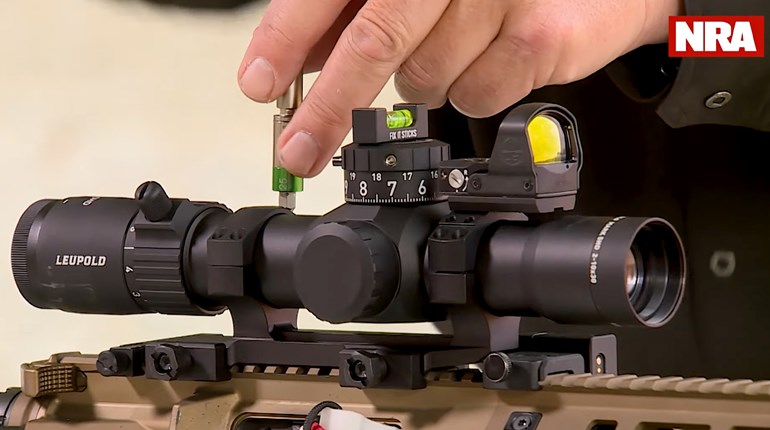
The answer is a reliable rail integration system. While the Weaver rail system was a good start, it wasn’t until the military came up with the US military standard (MIL-STD) 1913 rail system, most often referred to as the one-piece Picatinny rail system.
Picatinny is NOT Weaver
Originally, Weaver came out with their rail system, but they weren’t consistent with their spacing of slot centers. They have a slot width of 0.180 inches. Picatinnny, on the other hand, has a locking slot width of 0.206 inches, and a spacing of slot centers at 0.394 inches, with a slot depth of 0.118. So, you may have compatibility issues putting scope rings designed for a Picatinny rail on a Weaver rail, but you’ll never have a compatibility issue between any true Picatinnny rail.
Repeat Alignment
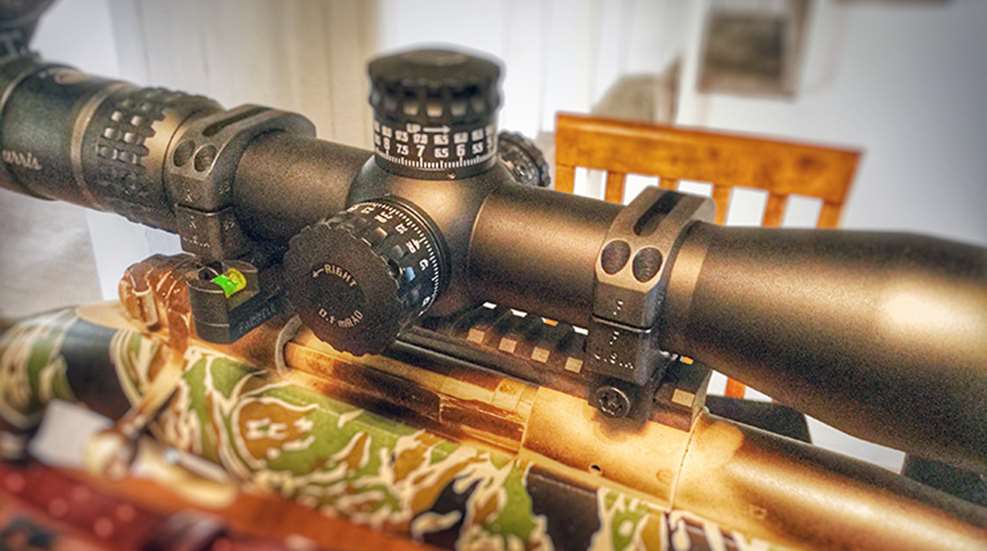
According to Jerry Dill at Farrell Industries Inc., makers of precision bases and rings, "The Picatinny rail allows more versatility for eye relief and mounting options than other systems. It is a standardized system allowing the ability to move scope and other accessories from one firearm to another effortlessly. It is also a stable platform that provides a rigid and flat mounting surface."
"The continuous rail helps maintain ring alignment not only in the horizontal plane but the vertical plane as well. At times it can be problematic to install 2 piece systems, having to check it with alignment bars and lap rings to ensure you are not bowing or stressing your scope tube."
"I find that the biggest issue is usually found with the older rifles," Dill says. "The vintage style receivers that have a step in the receiver were ground and polished by hand until all casting marks were removed. Also most castings are made with a plus or minus tolerance. I don’t think that the mounting of optics was the prime objective in the good old days. Most came with open sights mounted on the barrel. By that standard what would it matter if .010 thousandths extra was ground off the receiver."
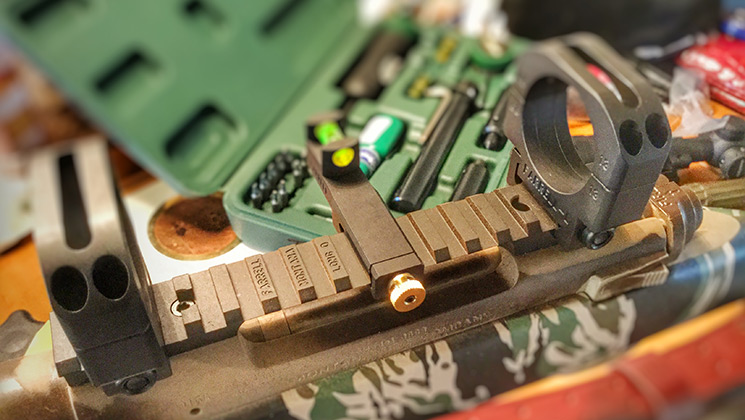
Today such precision matters. If the rear mounting area is even .005 inches lower than the front it will create negative MOA. You could also bow the mount pulling it down, causing the rear ring to tilt back. This will put stress on the scope tube. This can be cured by using a one-piece Picatinny rail with proper bedding techniques, before mounting the scope in the rings.
According to Dill, "With a two piece you have to watch not just the step offset, but also that the rear ring may be on a different plane than the front ring. The two piece causes each base to mate to whatever slope is on the receiver on two separate surfaces—that is difficult to control. Lapping is for small issues. It’s not intended to deal with .005 and .010 thousandths of an inch. Also the one piece Picatinny gives you the versatility to remove the scope with rings still on the scope and install on a different rifle in under 60 seconds by loosening 2 bolts or throwing a lever—what’s not to like about that?"
 About the Author
Cork Graham has been covering guns and hunting since 1983, when he asked for an LOA from his NROTC squadron at UC Berkeley, and headed to SEA to cover wars as an 18-year-old photojournalist. He’s presently the team leader on Discovery Channel’s "Treasure Quest." For more on his articles and books, visit his official site.