The great American experiment created huge social changes over the European model. Perhaps the greatest is that it allowed anybody to build wealth. In the Europe our ancestors left, you had to be born into money, or steal it. In America anybody could create wealth.
Luckily, some of the geniuses who steered this great country recognized that we would not all become wealthy. (They no doubt looked into the future and saw hunting writers.) So the concept of public land was created. That meant that anybody could go hunting without poaching on the king’s land.
Public land means different things in different places. In some places like the West there are huge tracts of public land where you can hunt all day and never see another hunter. However, in much of the country, public hunting can be a lot different. Still, there is almost always a decent place to hunt—even where I live in the crowded Northeast.
For example, within walking distance of my home I have a state-owned area that’s just 39 acres, a town property that’s 80 acres and the national forest that is thousands of acres. With a short drive I can access other areas ranging from a few hundred to thousands of acres.
It’s a clichéd rite of passage with hunting writers to do articles about hunting public land, and union rules dictate that there are a couple of “must-have” topics. The first is that to successfully hunt public land you need to work harder than the other guy. That often means walking deeper into the woods. I hunt one section of national forest where it’s nearly 20 straight-line miles between roads. So if you like to walk, you can find empty woods, unless someone else walks from the other end.

In years past, I figured to just shoot the buck, then worry about how to get him out. That was before my support posse got old, died or moved away. Against my will, I also got older and simply can’t drag a buck all day anymore. I have aged out of the “walk farther than the other guy” strategy.
The other union requirement is to instruct the reader to find the harshest, nastiest, thickest place on the property. In hard-hunted areas that’s where a smart buck is usually found during daylight hours. The trouble is, he is in there for a reason. It’s thick and nasty and you can’t sneak up without notice.
Knowing these hiding spots, combined with the knowledge that most bucks will screw up sooner or later, is perhaps the best public land strategy. That 80-acre piece is a good example. It has some good hiding places and a lot of hunters. Last year, one of my neighbors was waiting when a good buck left safety and followed a doe to his destiny. What was the hunter’s secret?
He was there.
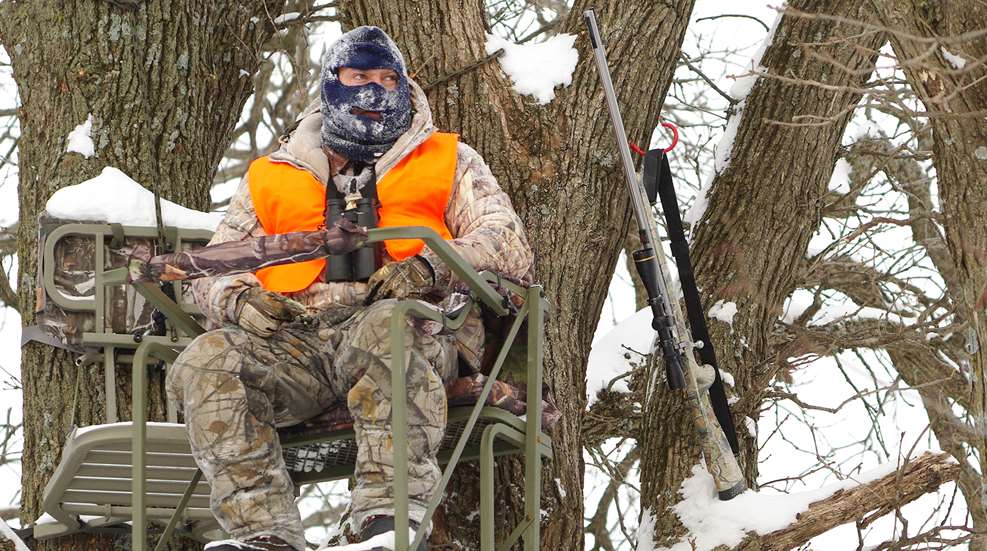
He knew about the trail, but so did other hunters. He got there first, put in his time and trusted his stand. He was there every day despite rain, snow, sleet, cold or whatever else Mother Nature could throw out to keep hunters home.
If I could pick one secret for success on public land it would be persistence.
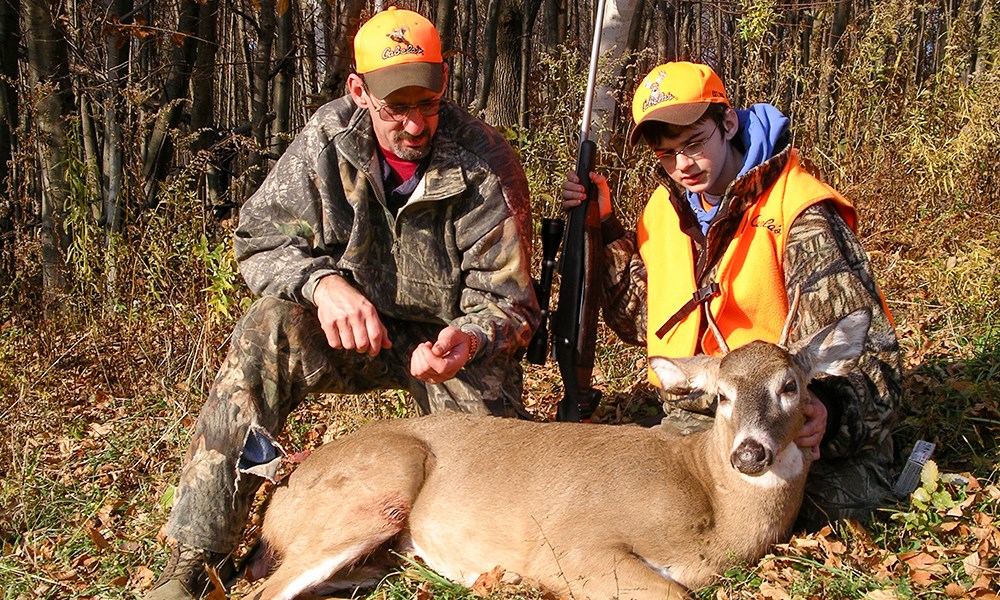 Often in the East, any legal deer is the goal. Young hunter Tyler Mason, above, shot his first buck on public land during the Vermont youth season in 2005.
The thing about public land is that there are a lot of hunters other than just you. You can cuss all you want, but they have as much right to be there as you do. The smart hunter uses that to his advantage. You can do a lot of scouting with OnX or Garmin, but nothing substitutes for footprints. Between hunting seasons, walk the property until you know it better than your back yard. Note any sign, even if it’s old, on an electronic map. A pattern will likely emerge to show you the best ambush points.
You know that opening day is going to be the hardest hit of the season and that a lot of guys will be in the woods. The increased activity with scouting and small-game hunting prior will have already tipped off the bucks, and the older ones are probably already going nocturnal. But most will still be feeding and sticking with the does.
For opening day, I will look at where they are feeding and where they are bedding and get in between. Most hunters look for a lot of sign, tracks, droppings, etc. That usually is in feeding areas, and the vast majority of public-land hunters will hunt these places. They may see does and small bucks, so it keeps their interest. However, it’s better to be on the path out of there when it becomes light. If you find the trail a good buck is using to get to his bed, odds are you won’t see a lot of sign, but you don’t need to. Get as close to the bedding area as you can in hopes he won’t slip by you in the dark and wait there, hidden and downwind. Even if it doubles your walk in, do not walk where the buck will pass and do not let your scent blow to him during your hike.
Once the season is a few days old, things may change. Most bucks other than yearlings will probably move into a place that is nasty and hard to approach unnoticed. It may be the same bedding area you are hunting near or it may be someplace different. A buck may also have another one or two like it close by, and if disturbed he may sneak to one of them or he will circle back into this one after the danger passes.
It’s public land, so sooner or later somebody is going to get itchy feet and start walking around and stumble into where he is hiding. If you have identified his escape route and are waiting there, you may take him home with you that day.