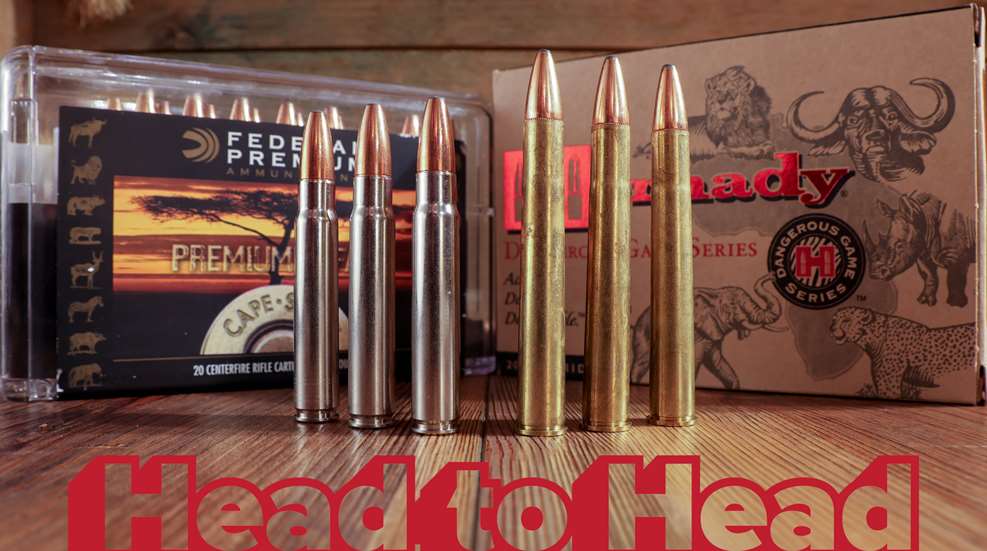
When it comes to those bore diameters designed for the larger, and sometimes dangerous game, we Americans are familiar with the .338- and .358-calibers, as in the .338 Winchester Magnum and .35 Whelen, and the .375-bore in the guise of the .375 H&H Magnum has been with us for as long as there has been a Winchester Model 70. But we have, sadly, often overlooked the 9.3mm bore diameter; it has been serving hunters well for over 120 years with no sign of weakness. In fact, the 9.3mms have seemingly gained popularity over the last couple of decades. Among the two most popular in the diameter are the 9.3x62mm, and the 9.3x74R; the former is a rimless case designed for use in bolt-action repeating rifles, and the latter a rimmed cartridge, functioning best in single-shot and double rifles. Both are of German origin, both use the 9.3mm projectiles (or should we say 0.366 inch?) and both have the capability to handle nearly any hunting situation. Hunters who’ve spent time with either, or both, seem to become quick fans, and that includes the author. But which of these two classics makes the better choice? Let’s take a closer look to compare and contrast.
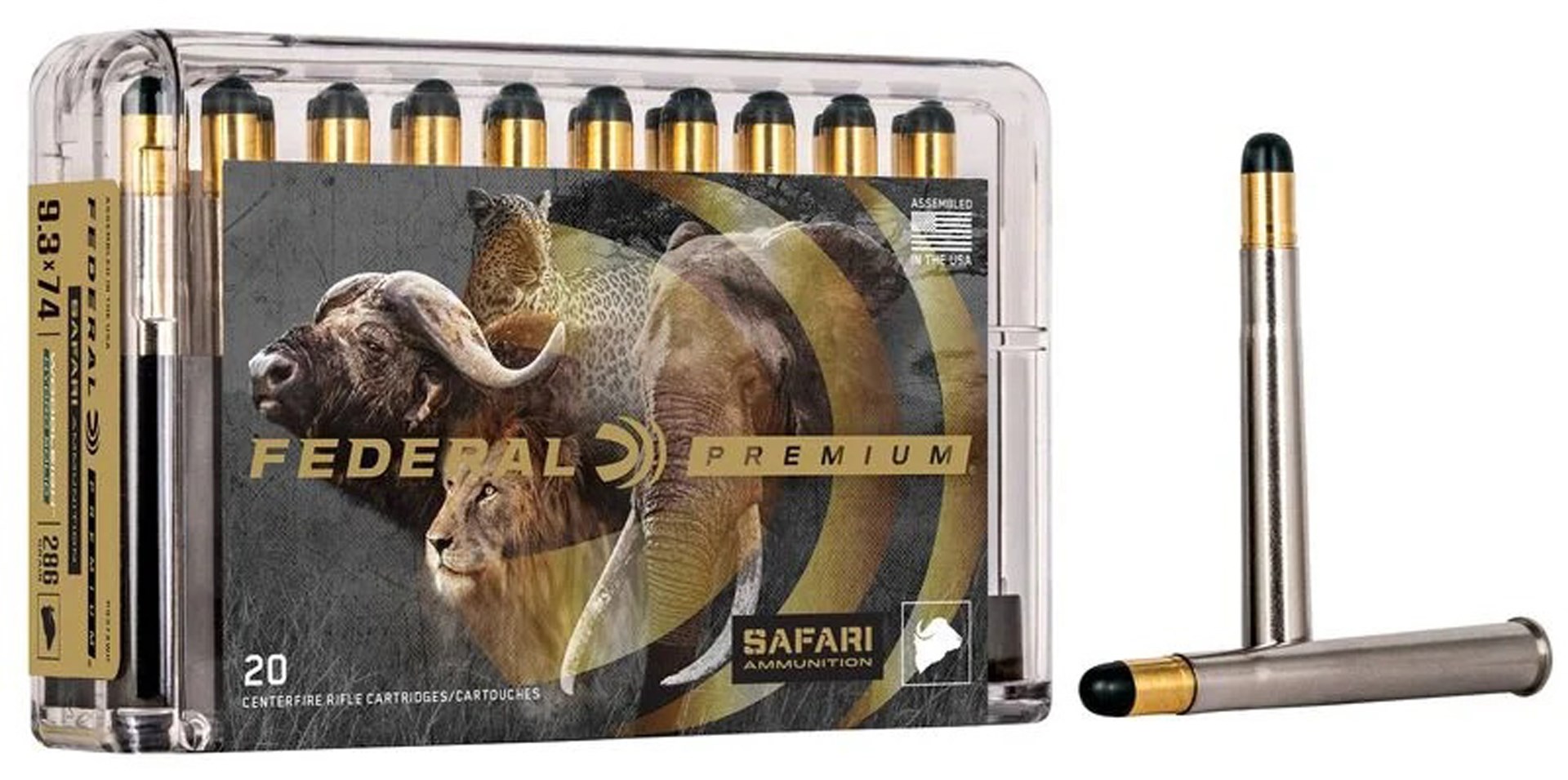
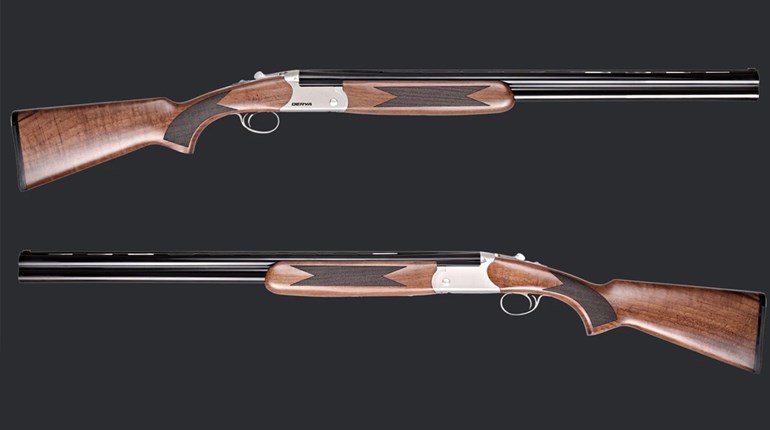
The 9.3x74R is the older of the two, making its appearance at the turn of the 20th century, being a derivative of the earlier 9.3x72R black powder cartridge. The R in the cartridge name simply stands for rimmed, the 9.3 is the bullet diameter in millimeters, and the 74 is the case length, again in millimeters. The 9.3x74R has a rim diameter of 0.526 inches and is a bottlenecked cartridge, offering a very slight shoulder of just 5 degrees 29 minutes, but a long neck measuring 0.62 inches for plenty of neck tension. The cartridge—at least in its modern iteration—delivers a 286-grain bullet at 2,360 fps, for over 3,500 ft.-lbs. of energy at the muzzle. While this formula might seem moderate in comparison to some of the heavier bores, the 9.3x74R is very easy on the shoulder, especially in a well-balanced double rifle. And while there are many double rifles chambered for the venerable cartridge, Ruger has chambered its excellent No. 1 single-shot rifle for the long, rimmed cartridge. Typical of the turn-of-the-century era, the case is large, in an effort to keep pressures low when using Cordite in the tropical climates of Africa and India. The 9.3x74R was especially popular in the German colonies, such as modern-day Tanzania (formerly German East Africa), and Namibia (formerly German Southwest Africa). Keen rifle shoppers will find a good number of older drillings available, including a military-issued J.P. Sauer & Sohn model, issued to Luftwaffe pilots as a survival tool.
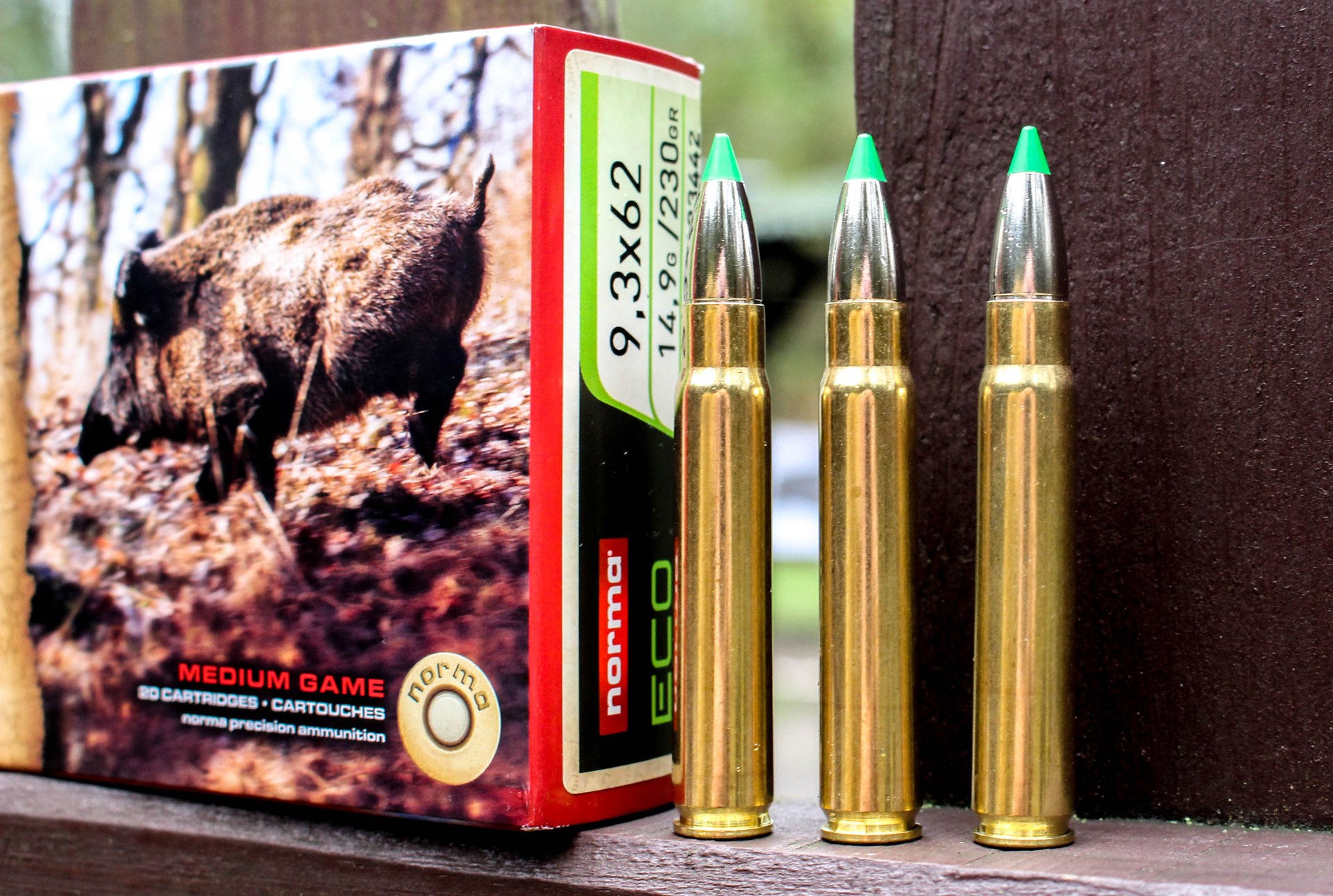
The 9.3x62mm Mauser was the brainchild of revered German gunsmith Otto Bock, coming onto the scene around 1905, specifically designed to work in the Mauser 98 rifles which had by then become so popular. Ironically, the 9.3x62mm’s case strongly resembles the .30-’03 Springfield (the predecessor of the .30-’06), sharing the .473-inch base diameter and 17 ½-degree shoulder, but I don’t believe either case had an influence on the other. The case measures 62mm (2.441 inches) with a cartridge overall length of 3.291 inches, giving us a neck length of 0.306 inches – slightly less than often-desired one caliber in length. Nonetheless, the 9.3x62 has no issues – that I am aware of – with neck tension. In fact, both the factory loads and handloaded ammunition I have used for this cartridge have given both excellent accuracy and consistent velocity figures. Modern ammunition generates 2,400 fps with the 286-grain bullets, though you’ll find factory ammunition with 232- and 250-grain projectiles as well. Having used this cartridge around the world for both dangerous and non-dangerous game, I’ve found it to be very easy on the shoulder in comparison to other cartridges, including the .375 Holland & Holland Magnum. There have been many factory rifles chambered for the 9.3x62mm, and I have guns from Heym, as well as bespoke rifles, including an amazing Todd Ramirez custom gun I took on a leopard hunt, also using it here in the States for whitetail deer.
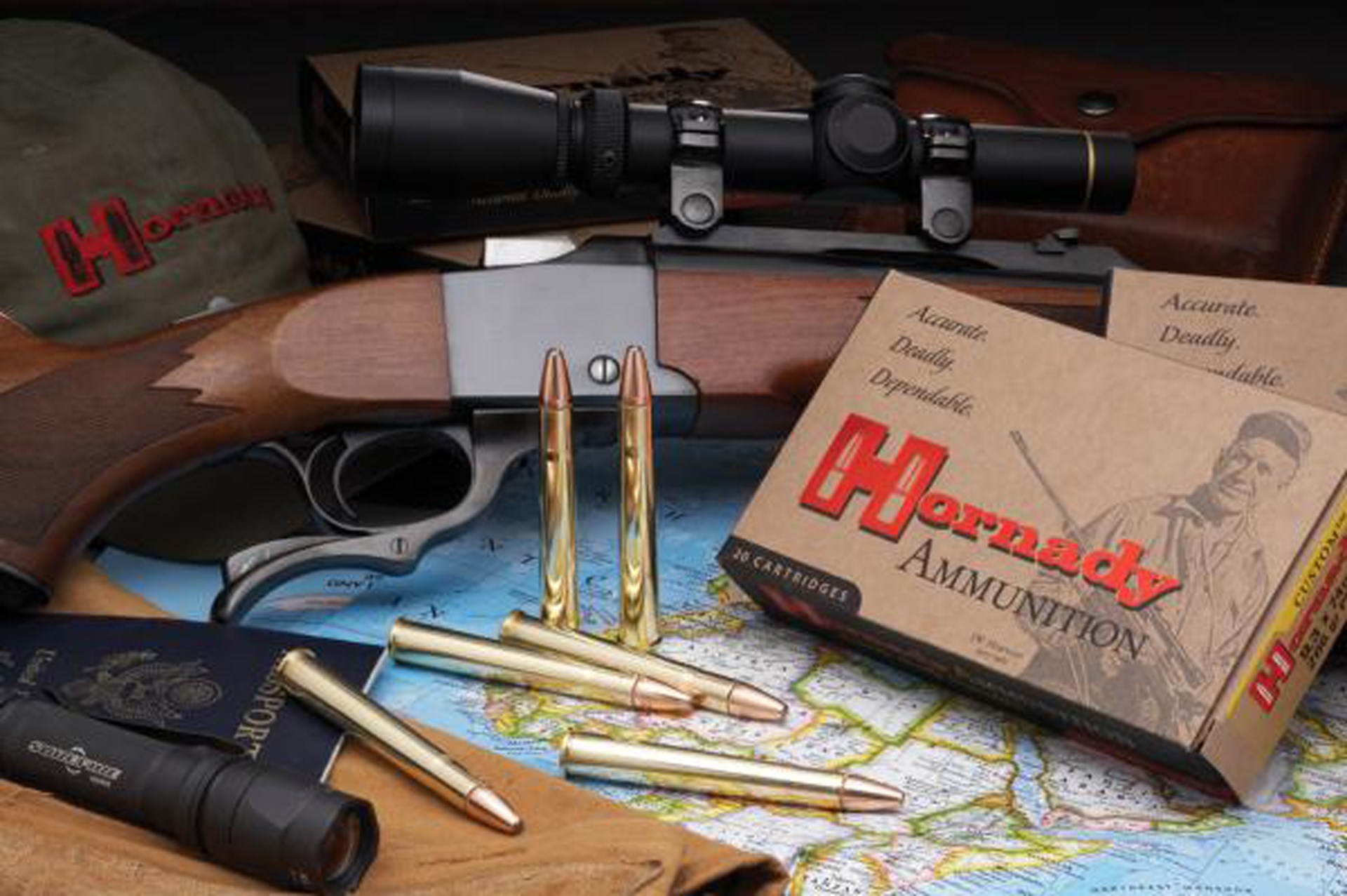
So, with muzzle velocities clocking in with 40 fps of one another, which of these excellent cartridges comes out on top? Firstly, I feel it’s important to that the choices of factory ammunition are much more plentiful for the 9.3x62mm Mauser, and that will definitely be a factor in choosing. You’ll find factory ammo for the 9.3x62mm from Hornady, Federal, Nosler, Lapua, Norma and Buffalo Bore. That said, there are some excellent choices for the 9.3x74R, including Federal Premium’s 286-grain Woodleigh Hydro Solid load, and Hornady’s 286-grain softpoint load. Because the 9.3x74R is generally associated with a double rifle, where the gun is regulated to perform with one specific bullet weight at a particular velocity, you won’t see the wider range of available projectile weights for the older, rimmed cartridge.
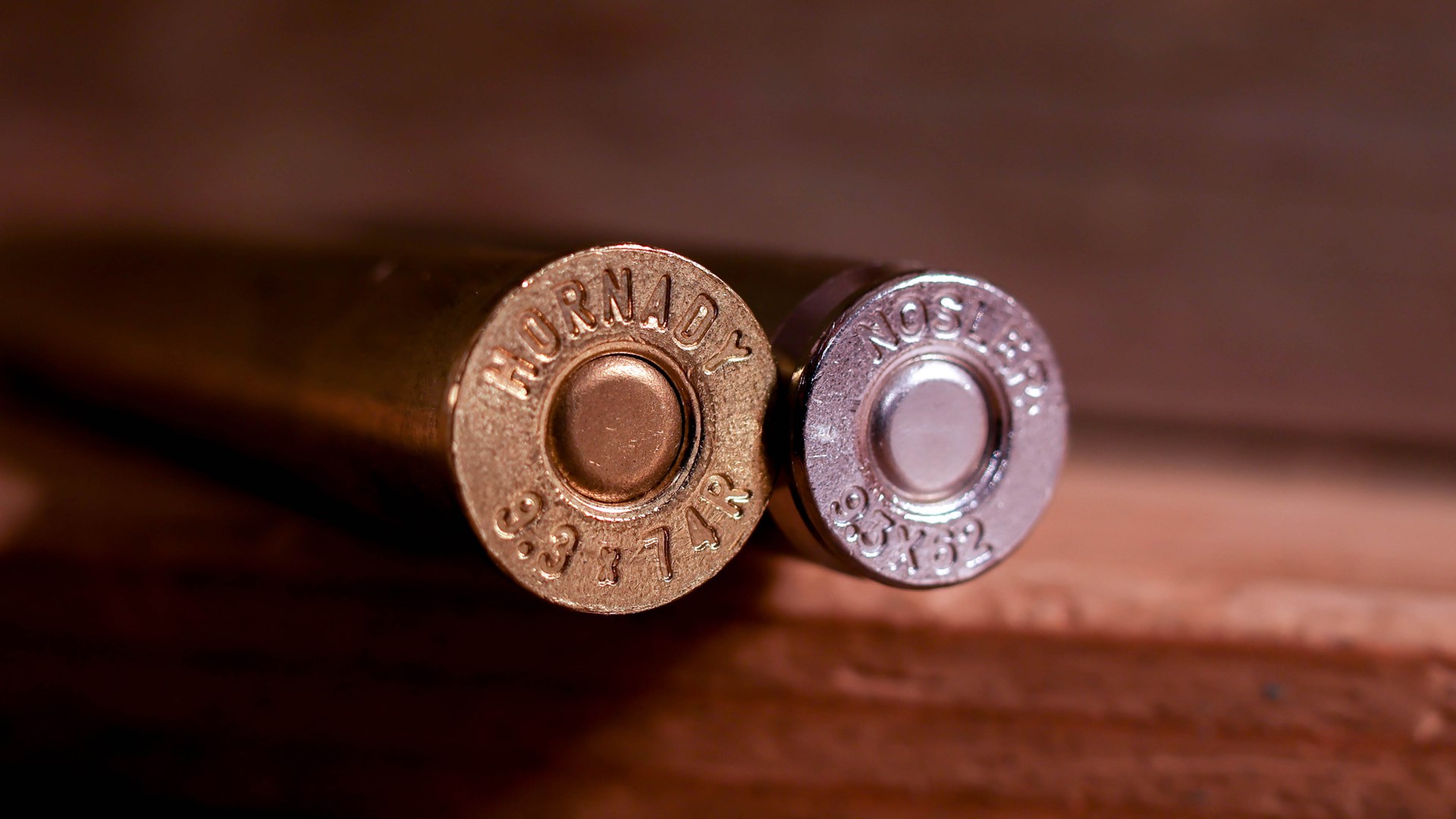
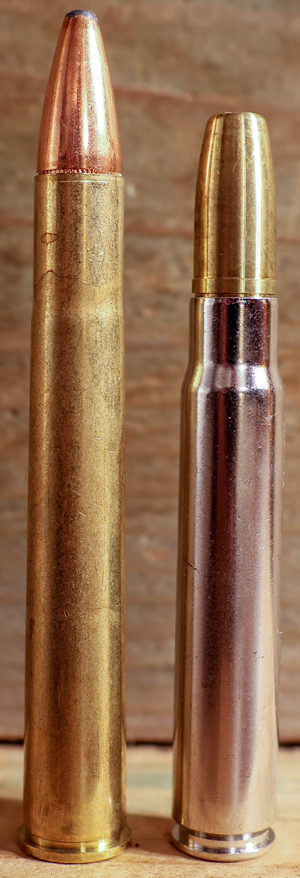
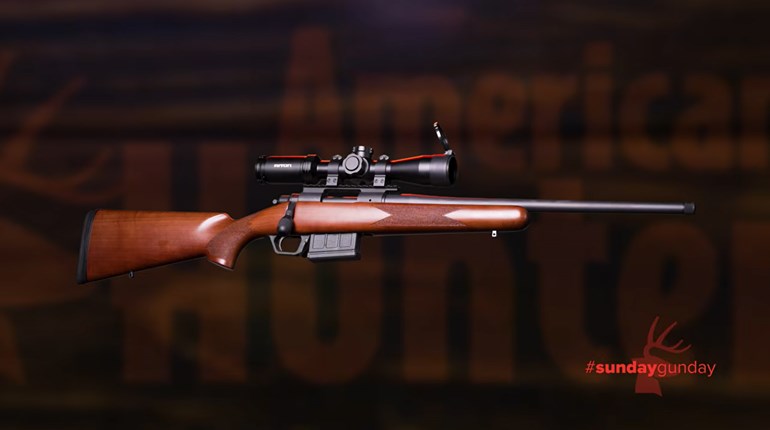
In my mind the decision will boil down to a couple points. Do you want a double rifle/single shot, where the rimmed cartridge poses no issue, or do you like the bolt-action repeater? Secondly, are you the type of hunter who regularly takes full advantage of the range of bullet weights within a specific caliber, or are you content with the ‘one and done’ approach, picking a single bullet weight for all your hunting? Because I feel the 9.3mm bore diameter is, much like our beloved .375-inch bore, relied upon for hunting a wide variety of game species, from duiker to elephant, I like the advantage of the bolt-action rifle, allowing for (generally speaking) better accuracy, more follow-up shots, and an easier means of mounting a scope. Therefore, I will pick the 9.3x62mm Mauser, with the understanding that there is absolutely nothing wrong with grabbing a 9.3x74R to take in the field.
John ‘Pondoro’ Taylor put it very well in his beloved book African Rifles and Cartridges: “Everybody found it [the 9.3x62mm] so generally satisfactory that there wasn't anything to start a discussion.” Both of these cartridges have been quietly accounting for all sorts of game, from small antelopes and problem crocodiles, to red stags, wild boar and bears, to lions, leopards, Cape buffalo and elephants for over 120 years, with no end in sight. The late Don Heath, known in safari circles as ‘Ganyana’, was a key player in forming the Zimbabwean game laws which allow the 9.3s mentioned above as a minimum for dangerous game hunting in that country; he felt that strongly about their capabilities. Perhaps it is high time that America gives the 9.3mm bore diameter its due.