Hour 18 was by far the worst, and we still had around 10 hours to go. But I made it to the gas station after a four-hour stint behind the wheel around midnight to refuel the trucks somewhere outside Columbus, Ohio. I chose to forgo the caffeine in favor of water and cold meds, and curled up in the back with a tired Tank for the final push home.
Finally back in Virginia shortly passed noon, this is what I’ve concluded:
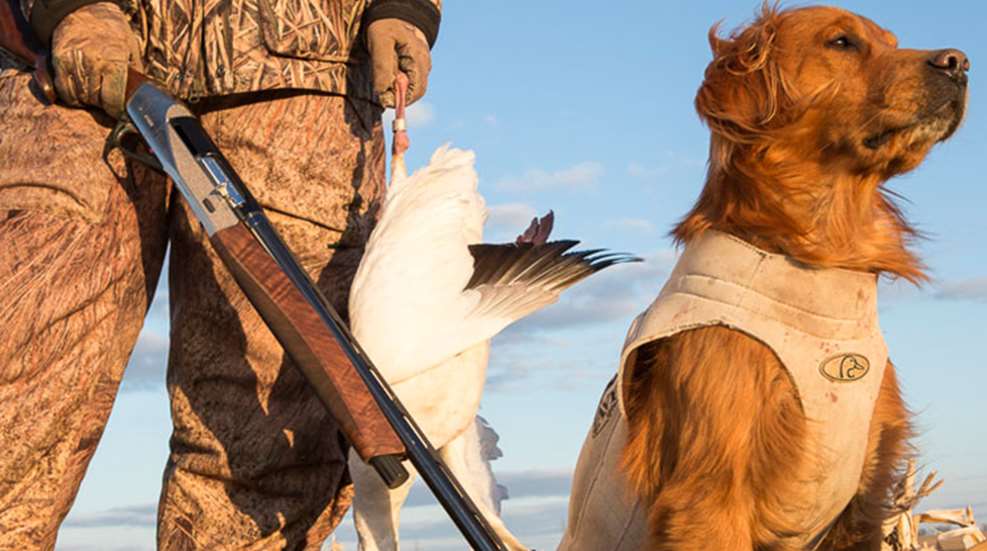
1. I love the Benelli Ethos. It’s incredibly light, at 6.5 lbs., and shoulders like it was married to my arm. You’d think recoil would be an issue for heavy hitting 3-inch goose loads in such a gun, but the Progressive Comfort recoil system made it feel like I was shooting clays. Which is good on a 5-day, shoot-till-you’re-empty type of hunt. It points where I do (though it seems I don’t always point in the right place), and functioned flawlessly from the first to last shell as I tore through an entire case. My one complaint, and even this is a stretch, is that it’s too darn pretty for to be a waterfowl hunter's workhorse. I’ll wait until the synthetic version comes around before I add it to my personal collection and put it through some real abuse. But, hey, I’m just nitpicking here. The gun looks great in my hands, I just don’t like to worry about dings while I’m hunting. And while it would have been nice to add an extended tube (I’m sure one will be made eventually), I can recall only two or three occasions in which a fifth or sixth shell would have been useful.
2. Snows are the toughest game in waterfowl. Television, social media and Internet videos have given people the wrong impression of snow goose hunting. If you are expecting to shoot triple digits every day, you’re going to be sorely disappointed. I was surprised how many people actually think like that. Yes, there is a possibility that you’ll have an amazing 100-plus-bird day (we did not), and I suppose that’s why the hardcore guys continue to chase them. But, more often than not, you’ll be lucky to see averages in the 30s. Which means a few good days, and a few slow days. There are just too many variables, too many eyes and too many birds that have been educated from Canada all the way to Mexico and back again. So set your expectations in the realm of reality and have fun at least seeing more birds than you ever have before.
3. South Dakota is a long way from Virginia. Considering we had to travel to Delaware to meet up with the rest of the crew, we traveled roughly 1,700 miles each way. With stops, we spent nearly 60 hours on the road. That’s just too much sittin’ time for this two-legged wanderer. I doubt I’ll be signing up for this one again. And while I say that now, by this time next year I’ll have forgotten all about it and be aching to get one last crack at waterfowl. I think Arkansas is calling my name.
4. One more thing: I received the band report from the bird we shot on Wednesday. Turns out “she” was banded on July 23, 2012, near her breeding grounds north of the Hudson Bay in Prairie Point, Nanavut, Canada. That's over 1,400 miles (as the goose flies) from where she was shot in Clark, SD. She was at least a year old at the time of banding, which means she’s was at least four when we took her. Assuming she flies as far south as Texas or Mexico in the winter, the simple math says she’s flown over 18,000 miles in her lifetime—and that’s a low-ball estimate. Looking at those numbers, I’d say I can make the 1,700-mile-trip at least one more time.