Tandemkross TKX22 Light Rifle Video
Over the last decade or so we've seen a strong push in the centerfire hunting rifle marketplace for manufacturers to provide models configured at the factory for more precise shot placement. This effort has resulted in the incorporation of materials, processes and features that were previously favored for competition-grade guns. Running on a parallel track to the precision rifles has been a concerted effort to shave weight off of hunting guns in order to make them more comfortable to carry in the field all day. This effort has resulted in a growing selection of scout, mountain and ultralight rifles that, once again, incorporate technologies originally developed for race guns.
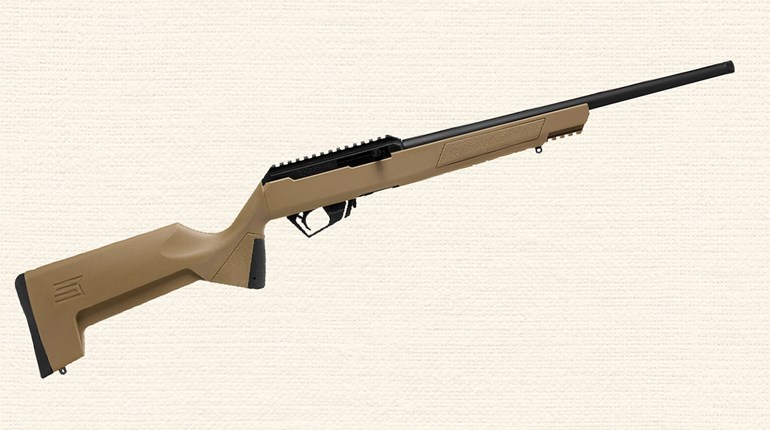
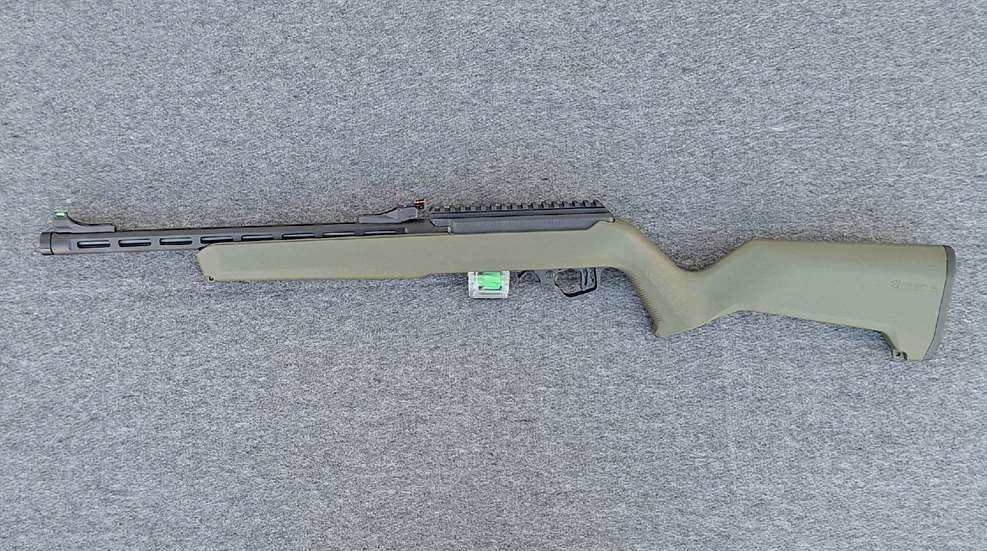
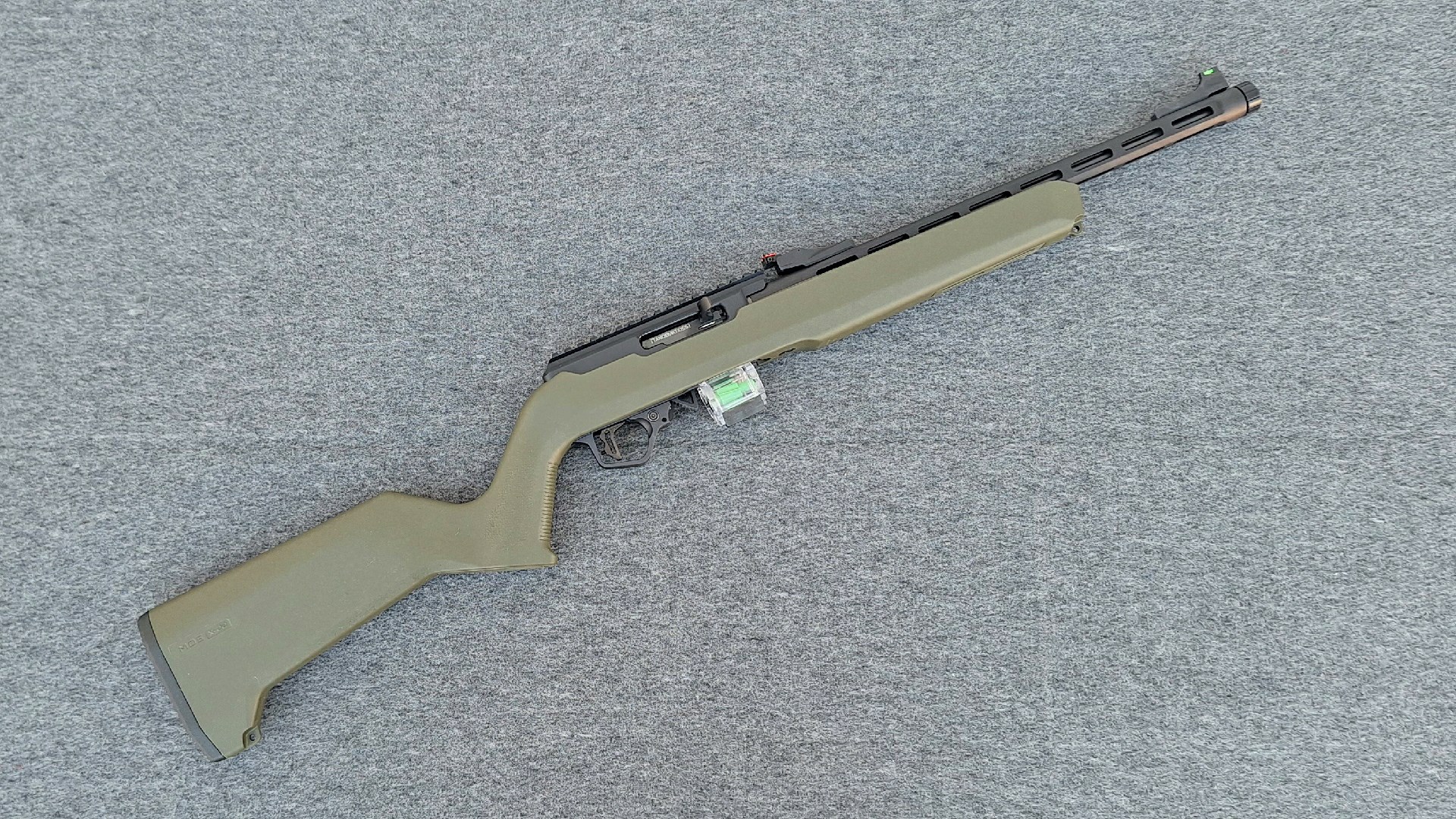 The Tandemkross TKX22 is this company’s first complete rifle.
But what about the models for small-game hunters and .22 LR rifle enthusiasts? Although there is an expansive selection of top-notch rimfires for formal target competitions, hunting and general purpose shooting, they have been, for the most part, overlooked by the centerfire 'tighten n' lighten' trends. At least, that's what I thought until I pulled this rifle out of the box.
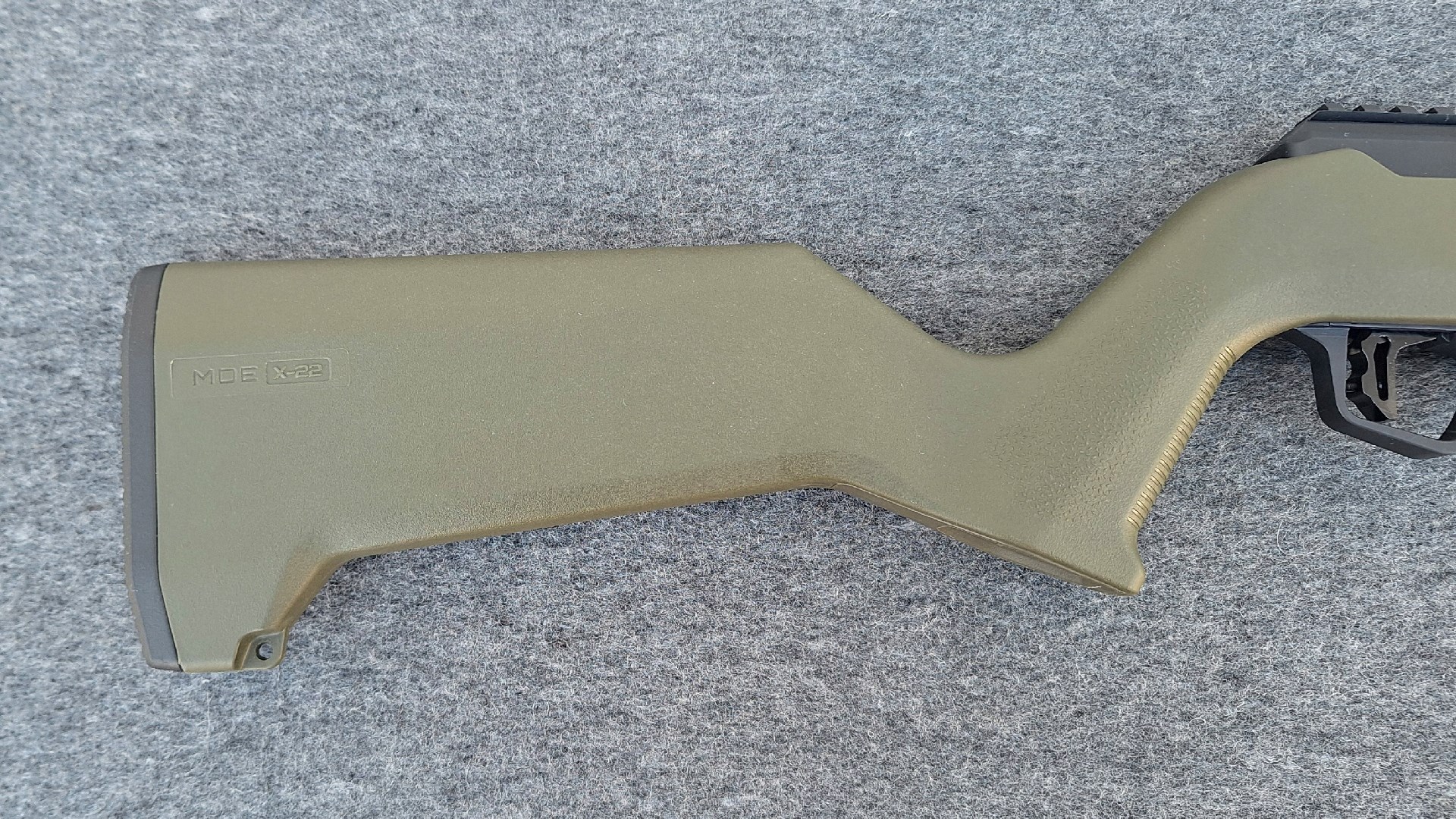 Magpul’s MOE X-22 polymer stock weighs in at just over a pound.
Tandemkross (TK) has just launched the company's first in-house, semi-automatic .22 LR long gun. Dubbed the TKX22 Light Rifle, it blends the best of this company's Ruger 10/22 compatible race gun components into an impressively lightweight sporting rimfire package. Several companies claim their guns are lightweights, but TK delivers on its promise.
As configured from the factory, the rifle sent for this evaluation weighed in at 3 pounds 5.3 ounces without the magazine. Inserting the 20-round magazine, along with 20+1 rounds of .22 LR ammunition with 40-grain bullets, brought the weight up to 3 pounds 10.4 ounces. Slap on a compact red-dot sight in the 2.5 to 4 ounce weight range and your rig will still be less than 4 pounds. I've handled air guns that are heavier.
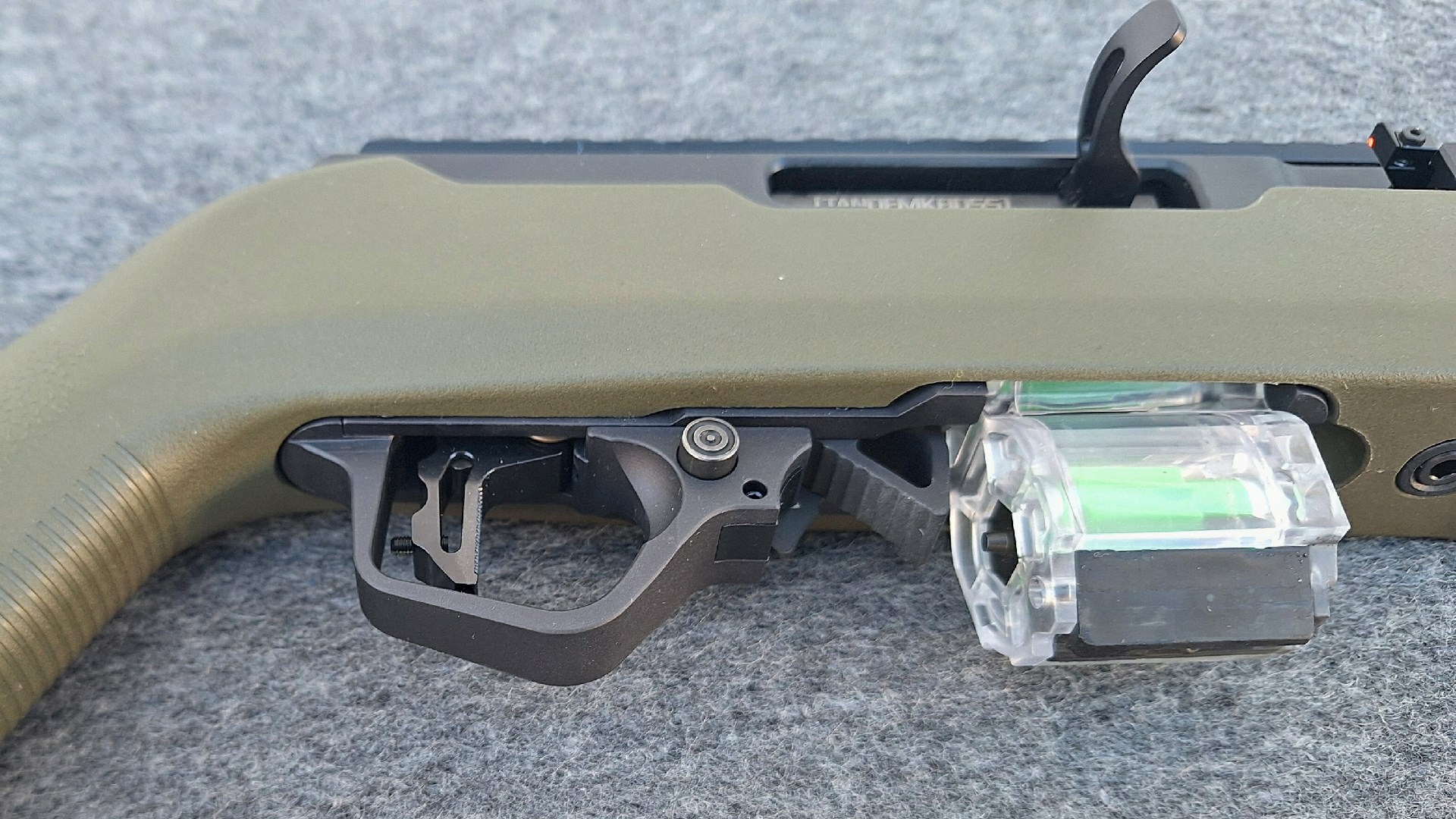 The Manticore Lite trigger group is loaded with race gun features.
This model is built around its namesake, the serial numbered, 10/22 compatible TKX22 receiver. Released in 2025, it is CNC-machined from a billet of 6061-T6 aluminum and treated with a matte-black hardcoat anodized finish. Configured for use with fixed barrels, the top sports an integral 0 MOA Picatinny optics rail, while at the rear of the unit you'll find an access port sized for cleaning rods to brush and swab the barrel's bore.
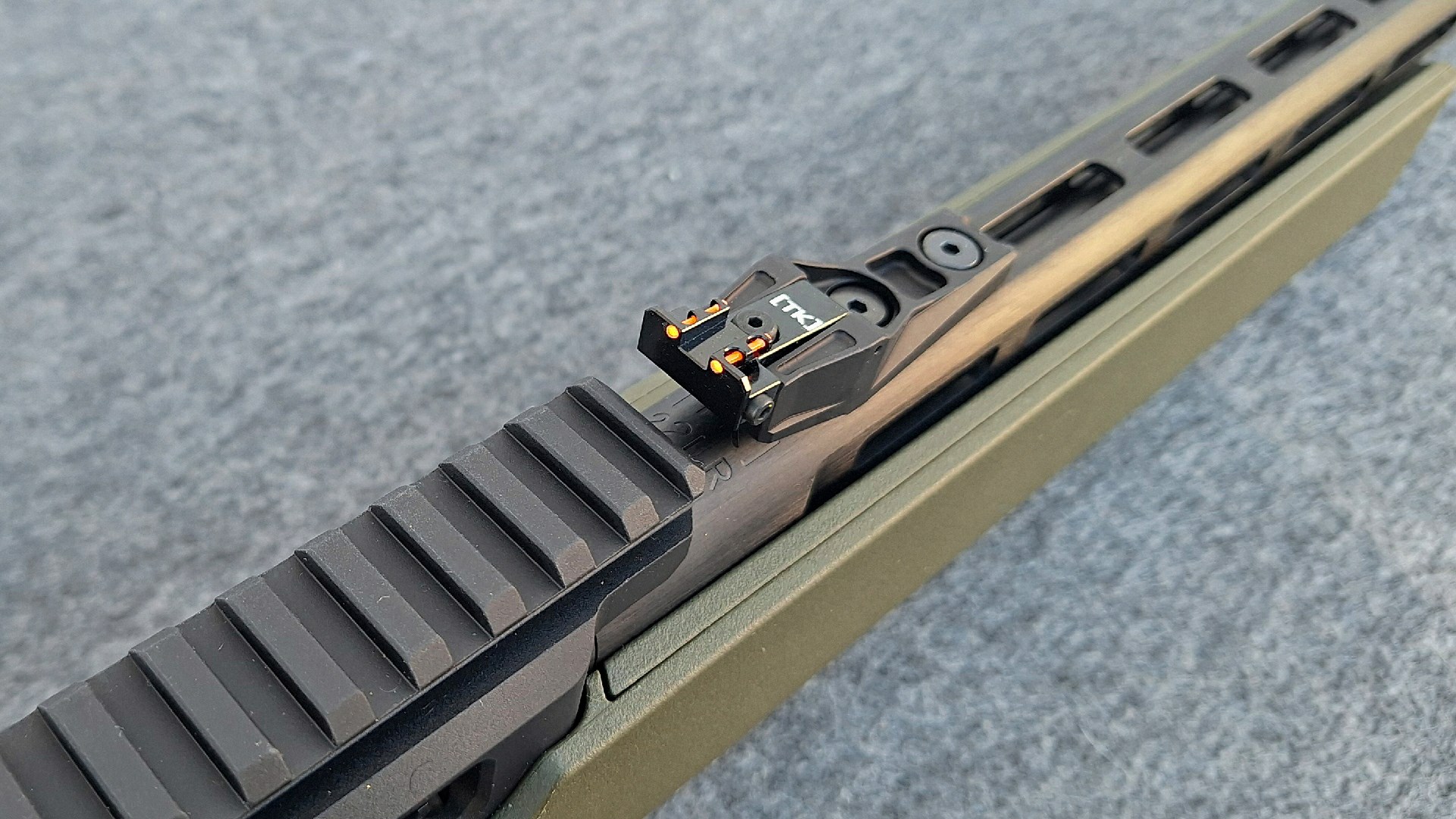 The Eagle Eye Fiber Optic Sight Set is mounted directly to the barrel.
The 16.5-inch Spitfire barrel is designed to be both lightweight and accurate. The slim stainless steel bore is set into a vented aluminum shroud. The muzzle is secured by a tensioning nut that keeps the thin barrel rigid so as to reduce vibrations. The shroud’s vents are sized to serve double duty as M-Lok accessory slots while the muzzle is threaded at ½x28 TPI for attaching popular muzzle devices. An aluminum thread protector is provided, along with a rubber O-ring that prevents it from shaking loose.
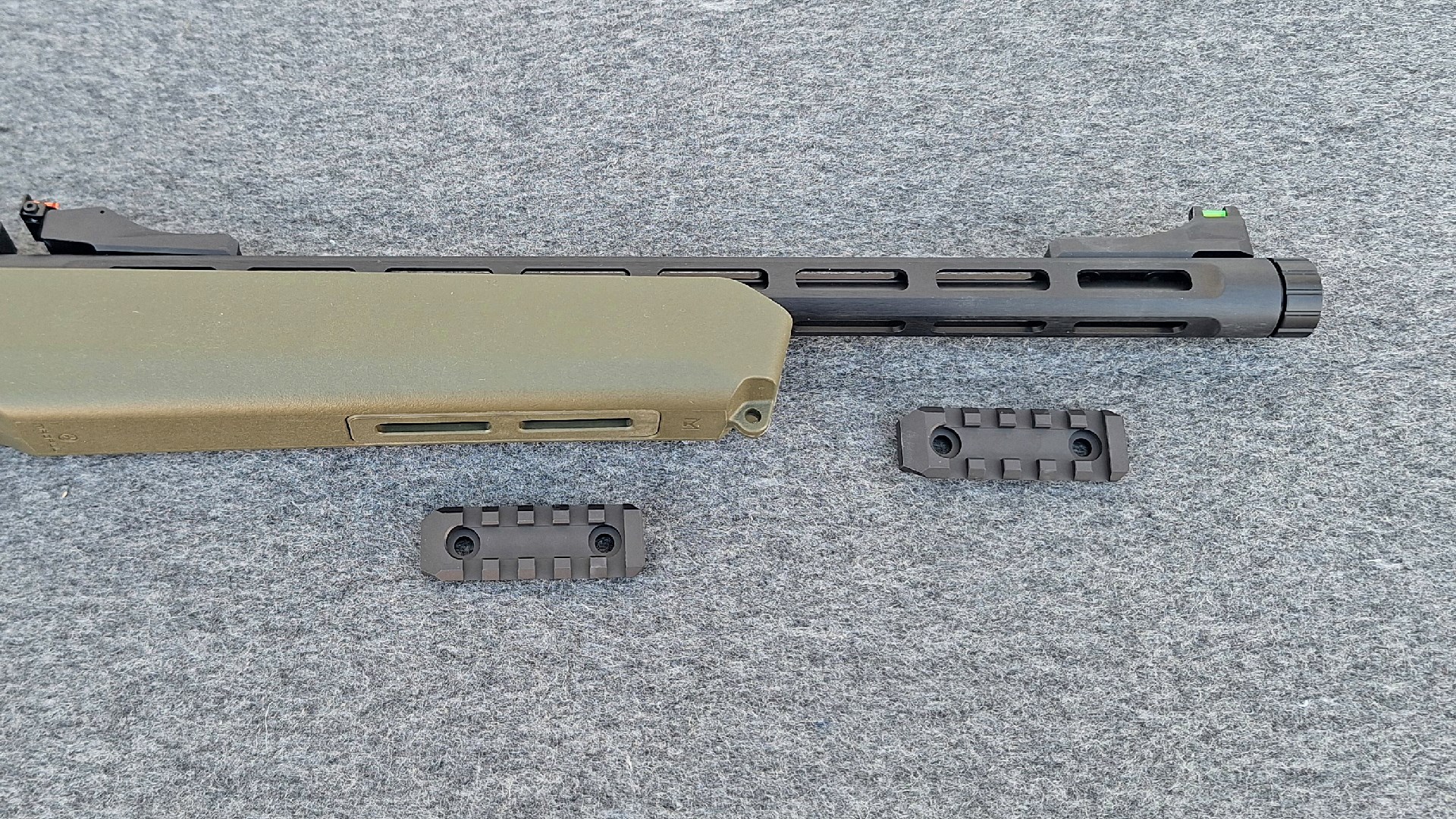 TK’s 5-slot Freedom picatinny rails can be mounted to the M-Lok slots in the stock or the barrel.
TK developed its own iron-sight system configured for its lightweight barrels. The Eagle Eye Fiber Optic Sight Set is mounted directly to the barrel via the aluminum shroud's M-Lok slots. This allows the sights to be easily exchanged, removed or adjusted, depending on the owner's preferences. The front sight is fitted with a single bright-green fiber optic. The fully adjustable rear sight has two bright orange fiber optics set to either side of the square notch. TK also offers 5-slot aluminum Freedom Picatinny Rails, for mounting lights and other accessories to the barrel, which are sold separately.
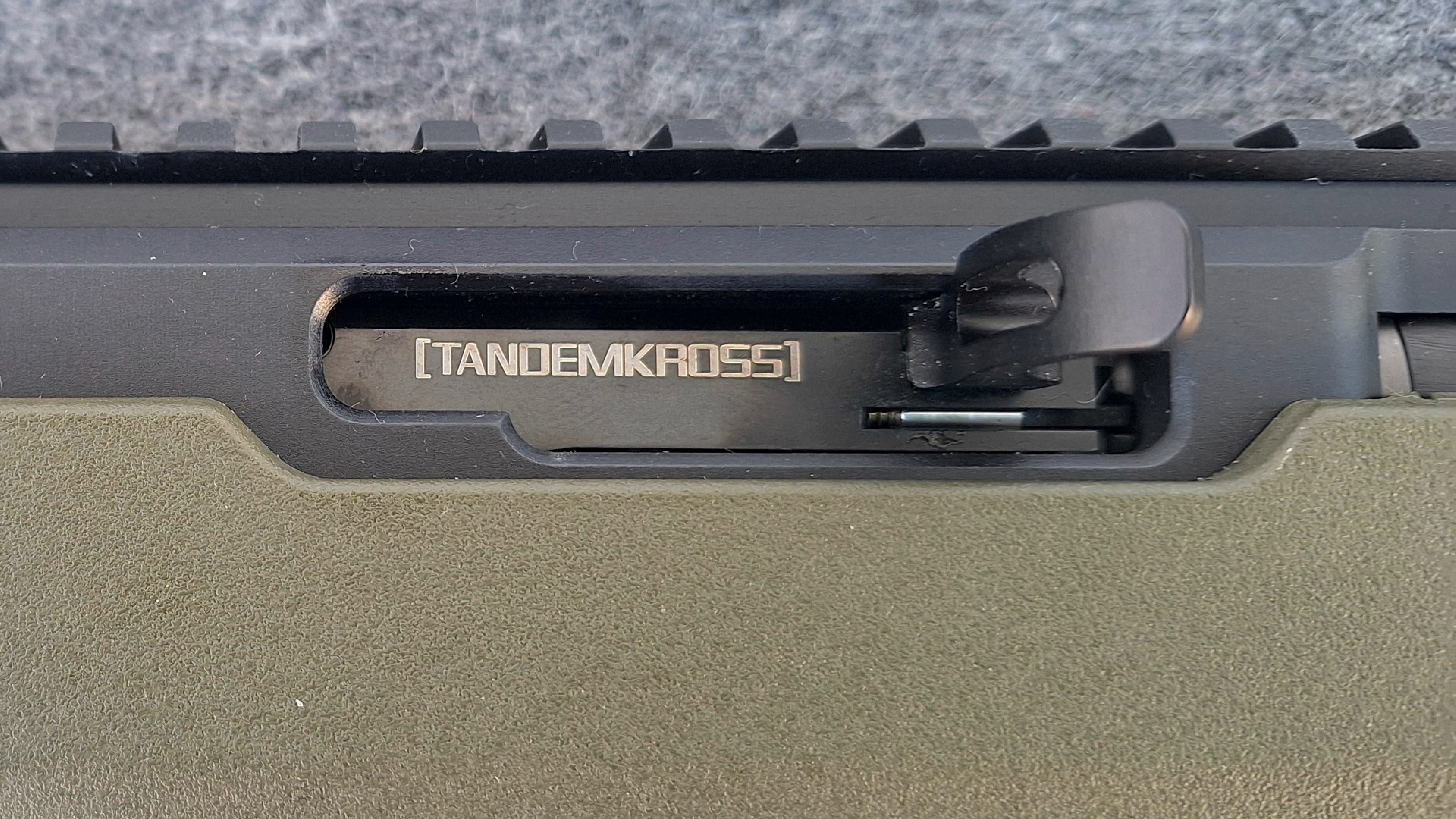
Inside the receiver is TK's hardened-steel KrossFire bolt assembly paired with a Spartan skeletonized charging handle. The KrossFire is a competition-grade bolt designed for speed and durability. It features a black PVD coating, an upgraded Eagle’s Talon extractor and a Fire Starter titanium firing pin. The Spartan's aluminum handle is deeply curved, oversized and hollowed out with an anodized finish.
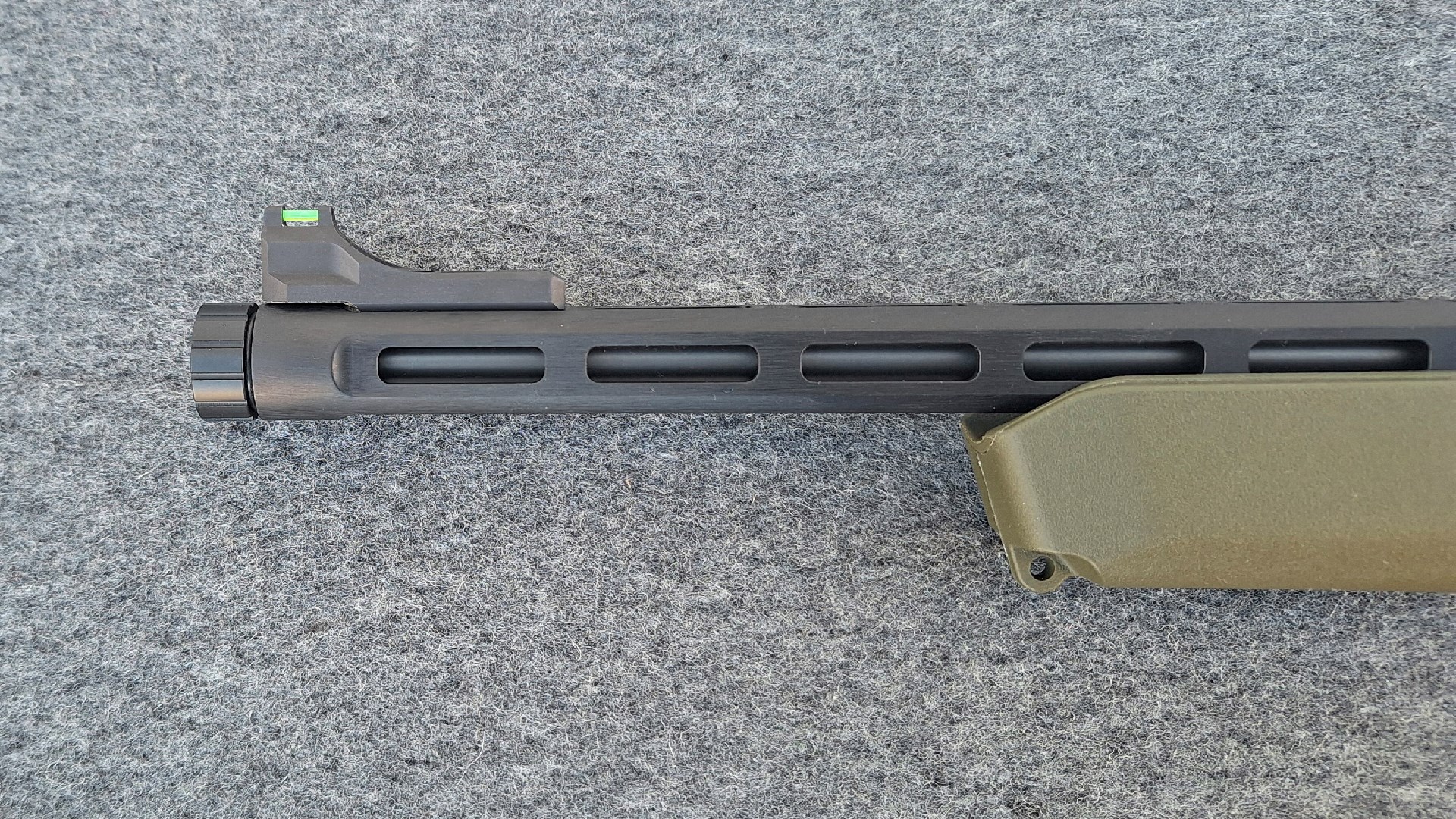 The muzzle is threaded for sound suppressors and compensators.
The Manticore LITE trigger group is housed inside of a machined, reduced weight aluminum housing block. This unit is populated with components that were developed as standalone 10/22 upgrades. The wedge-shaped skeletonized aluminum magazine release is ideal for a sporting gun like this one. It's just large enough to actuate easily with bare or gloved fingers.
The Ultimate Trigger Kit provides a checkered, vertical, flat-faced aluminum trigger with an over-travel screw. The single-stage trigger pull weight is adjustable from approximately 2 to 5 pounds. The trigger of this particular .22 LR exhibited a trigger arc of just 1/8 of an inch that broke cleanly with 2 pounds 15 ounces of trigger pull right out of the box. This trigger group's remaining external controls include a Guardian bolt catch and a 10/22 pattern cross-bolt safety button.
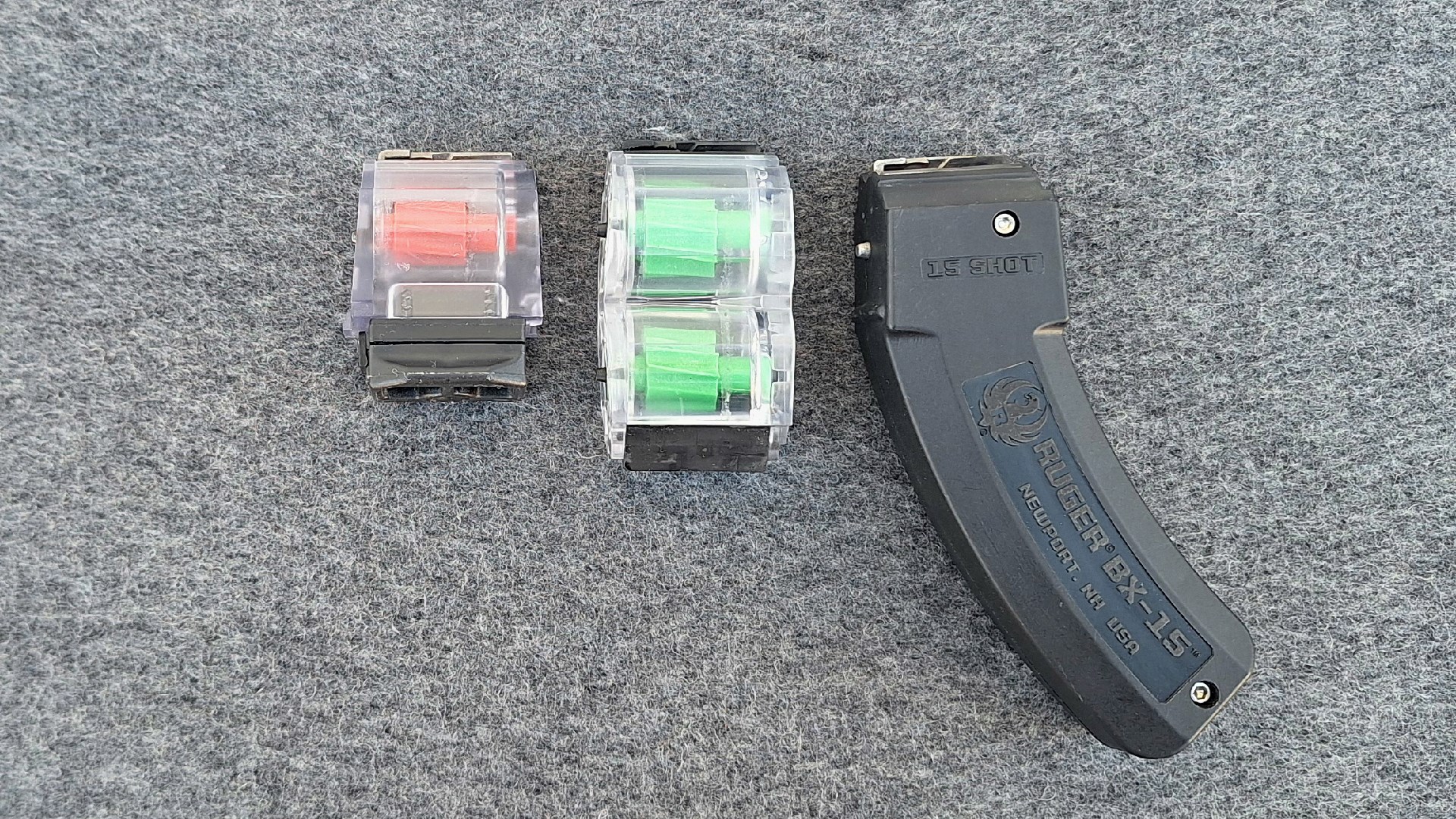 A Ruger BX-10 magazine (Left) compared to the TK Double Kross (Center) and the Ruger BX-15.
The action is set into a Magpul lightweight MOE X-22 polymer stock. In this case, it was the OD green version. Weighing in at just over a pound, the X-22 sports a more vertical, competition-style grip with the company's TSP grip texturing. Features include two MLOK accessory slots under the forend, a pair of integral sling swivel mounts, a fixed 13.5-inch length of pull and a grooved polymer butt-plate with an angled toe.
The TKX22 ships with one of TK's unique Double Kross 20-round magazines. Made with a translucent polymer body, it operates like two Ruger BX-10 rotary magazines fused to each other at the base. Each 10-round compartment operates independently which is ideal for a sporting gun. If one side becomes fouled or jammed, the other side is still usable. The Double Kross is also quite compact for its capacity. It protrudes about 1.5-inches below the magazine well while Ruger BX-15’s hang down 4.5 inches and the BX-25s are 5.5 inches.
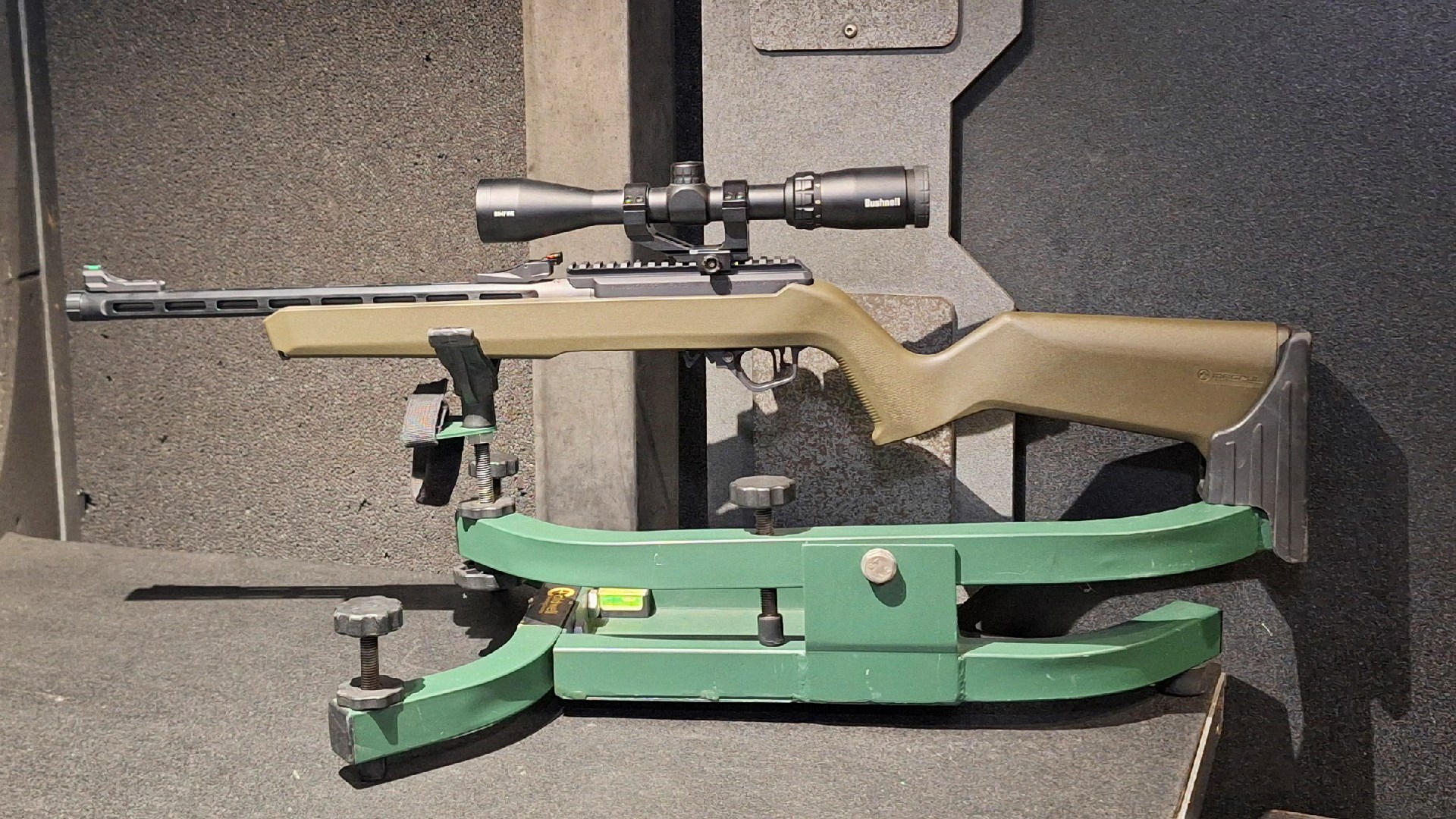 The rifle was evaluated using a Bushnell Rimfire 3-9x40mm rifle scope.
At the shooting range, the test magazines used for this evaluation included the 20-round TK Double Kross provided with the gun, a pair of translucent Ruger factory BX-10s, a Ruger BX-15 and a trio of 25-round 'banana' magazines from Black Dog Machine, Butler Creek and Tactical Innovations. All of these magazines locked tightly, fed properly and dropped free when released without any malfunctions throughout the course of testing.
There were also no malfunctions with any of the .22 LR ammunition tested, which ranged from bulk box plinking fodder up to the fairly pricey match-grade loads. This was notable because at least a couple of faulty primers or failures to feed are just par for the course with any semi-automatic .22 LR platform. A Garmin Xero C1 Pro chronograph was used to measure muzzle velocities for 10-shot strings.
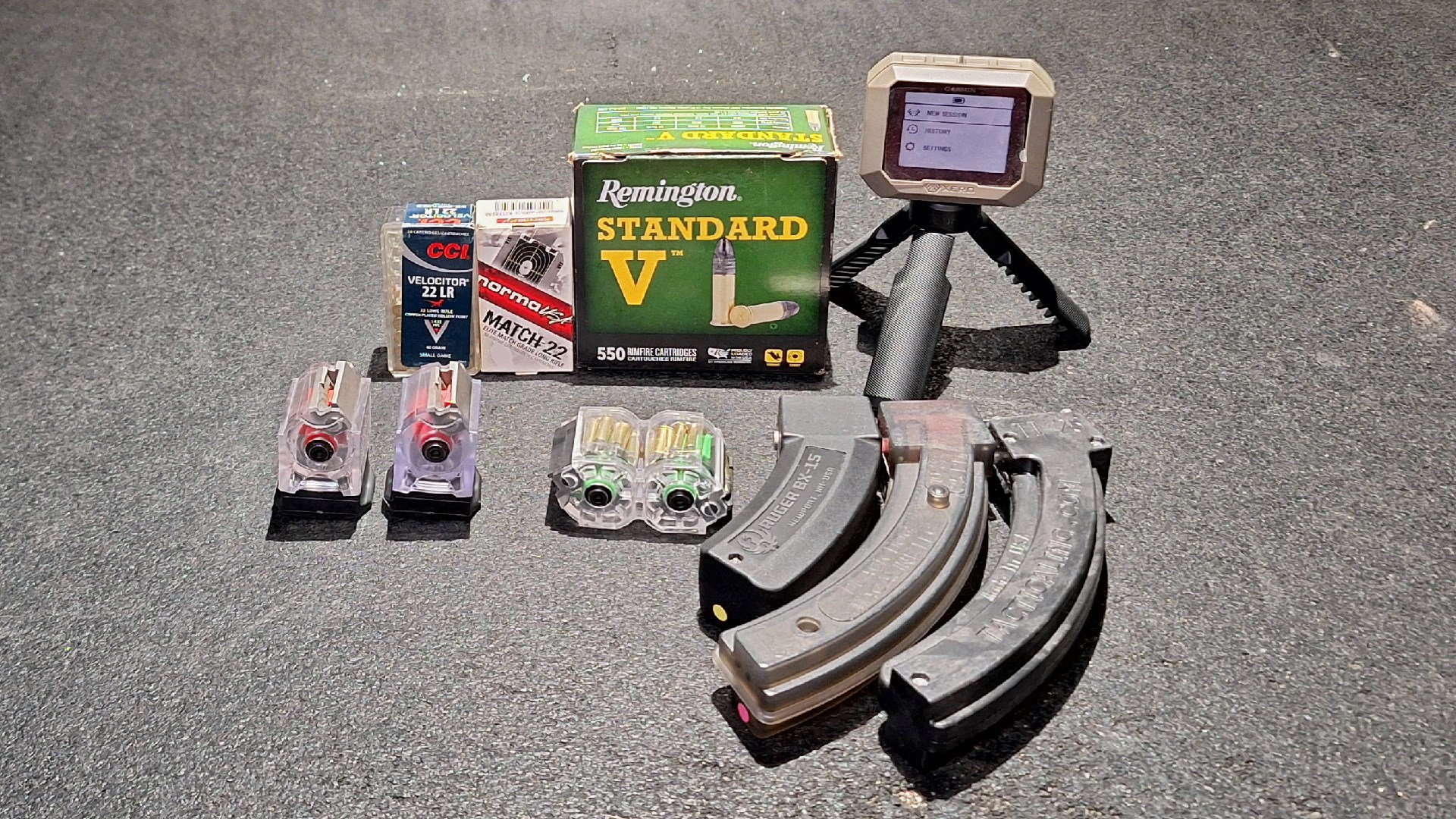 A Garmin Xero C1 Pro chronograph was on hand to measure bullet velocities.
Performance testing was conducted using a tried and true Bushnell Rimfire 3-9x40mm rifle scope featuring a DZ22 Dropzone 22 reticle (RR3940BS4; $100) mounted using an AR style Weaver One-Piece SPR scope mount (48377; $70). This scope and base combination were tall enough to clear the rear sight module while still being a just-right height for the rifle.
Bench rested 3-shot group testing was conducted at 50-yards. Because of the TKX22's race gun heritage, it was tempting to load it up with the best-of-the-best match grade loads and spend the morning punching out ragged hole groups in the targets. But this is meant to be a sporting option as well. So the three test loads included a general purpose standard velocity plinking and target load from Remington, the well-respected Velocitor small game load from CCI and one match-grade load from Norma USA. Here are the results:
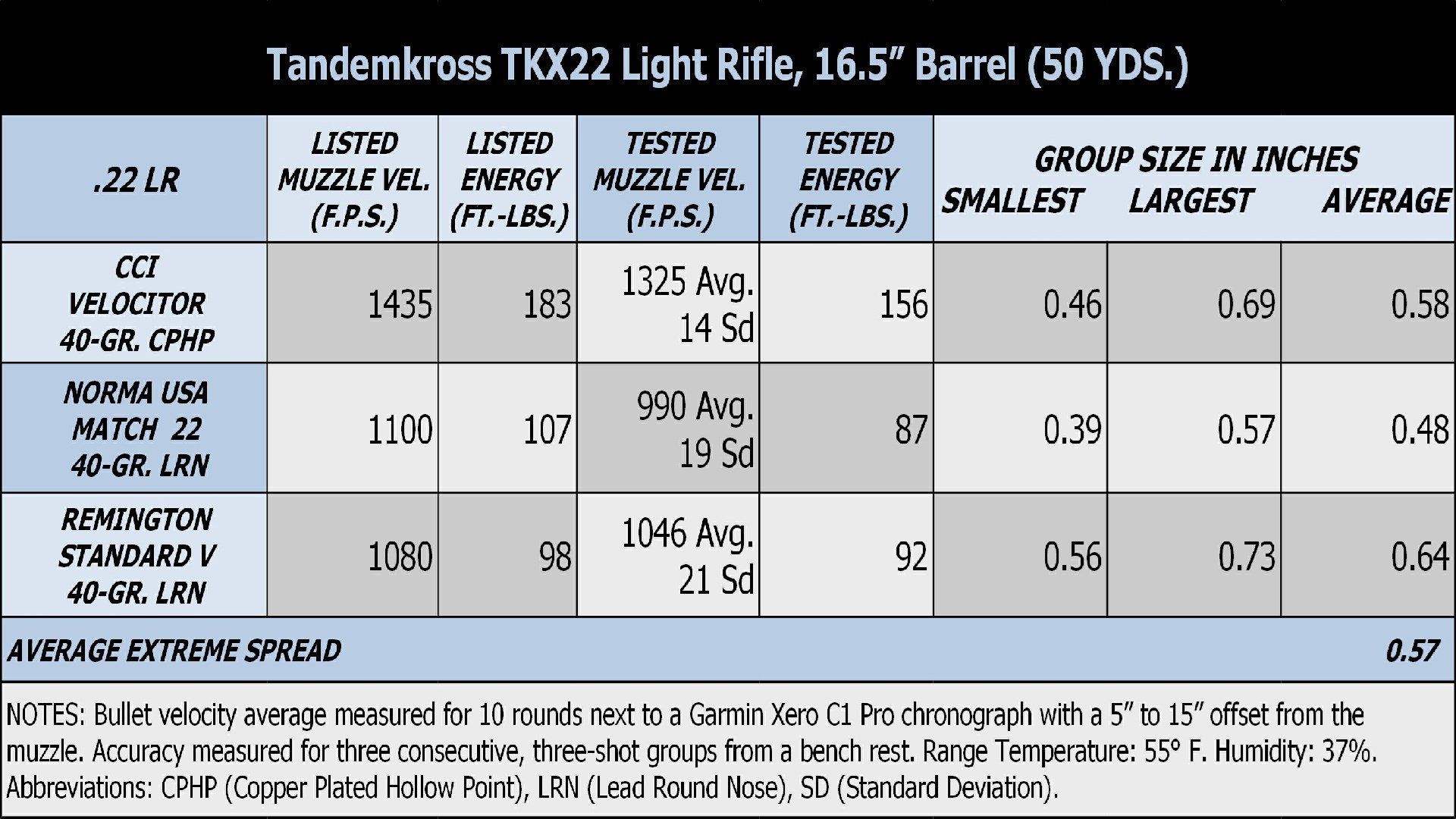
The targets told the story I had hoped to hear. It was not surprising to see the more expensive match load print the tightest group of 0.39 inches. However, the group averages across all three loads were much closer to each other than one might have expected. The largest group of the test, using bulk box ammo, was still just 0.70 inches. Based on these results, the TKX22 should be a sharp shooting carbine with a variety of .22 LR loads.
I've been a fan of the Ruger 10/22 platform for quite some time. That's why I've sought out opportunities to evaluate a variety of factory assembled and tricked out carbines over the years. Along the way, I have found several models that have proven to be accurate and reliable.
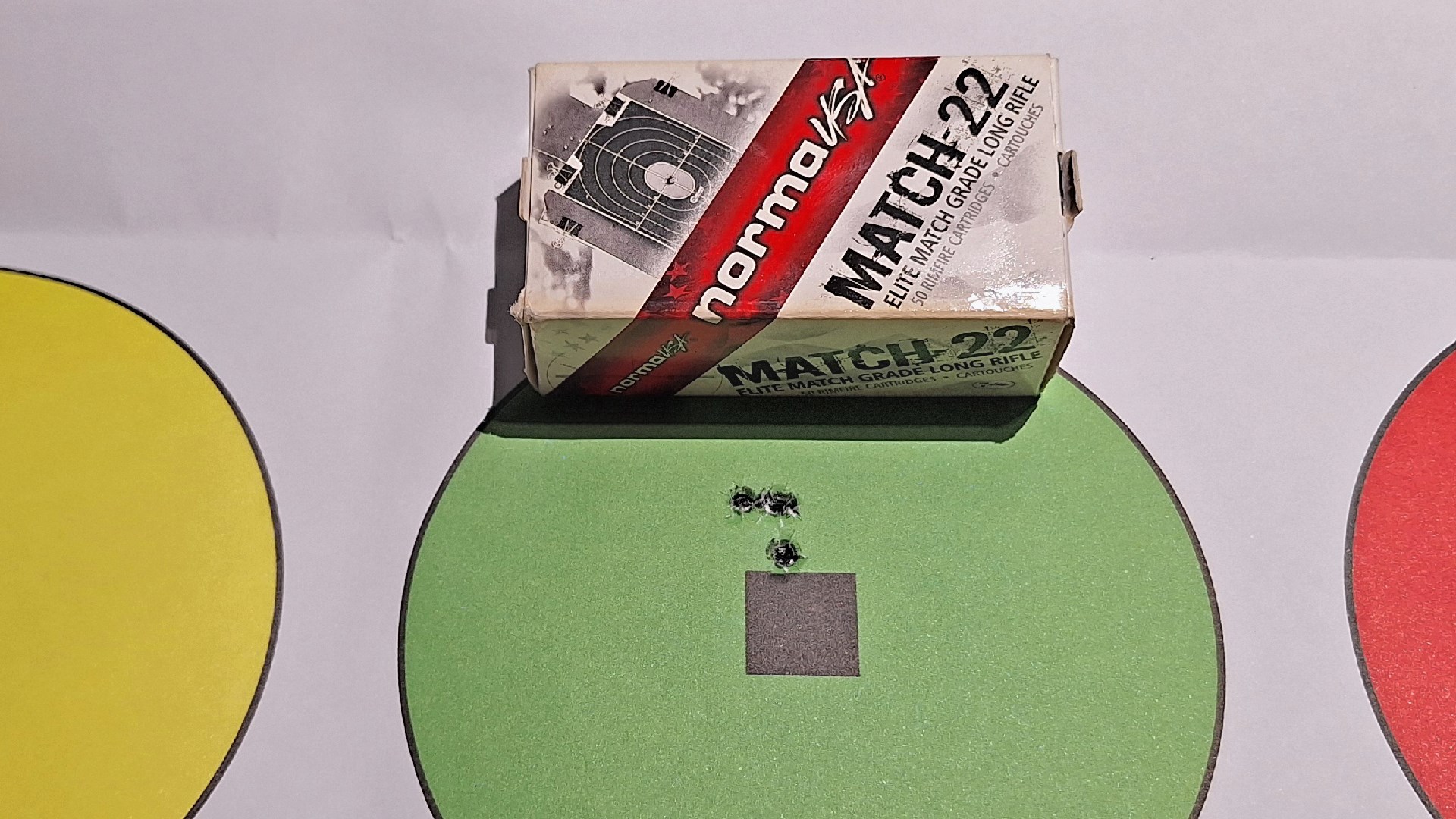 The best 3-shot group of 0.39 inches was fired using the Norma USA load.
With that in mind, the TKX22 has earned a top slot on my list of favorite 10/22 pattern semi-automatics. It neatly blends the best-of features into a multi-purpose sporting package. And it does so while weighing between one to two pounds less than many competing models. I'm particularly impressed with its performance using commonly available .22 LR loads. Yes, the TKX22 does ship with a race gun price tag. It's listed for $1,449.99. But based on these results, it can comfortably fill just about every .22 LR rimfire role. For more information, visit tandemkross.com.
Tandemkross TKX22 Light Rifle Specifications:
- Type: blow back operated; semi-automatic; rimfire rifle
- Caliber: .22 LR
- Magazine: 10/22 pattern rotary removable box; 20-round capacity
- Barrel: 16.5 inch black Spitfire Light, tensioned stainless steel, 1:16 RH Twist, black aluminum shroud, ½ x 28 TPI threaded muzzle
- Trigger: Manticore Lite; single stage; 2 to 5 pounds adjustable pull weight
- Sights: removable MLOK Eagle Eye fiber optic
- Safety: push button cross bolt
- Stock: OD green Magpul MOE X-22, 13.75 inch length-of-pull
- Metal Finish: hard-coat anodized aluminum
- Overall Length: 34.75" inches
- Weight: 3 pounds 5.3 ounces unloaded, no magazine
- Accessories: one magazine, lock, owner’s manual
- MSRP: $1,449.99