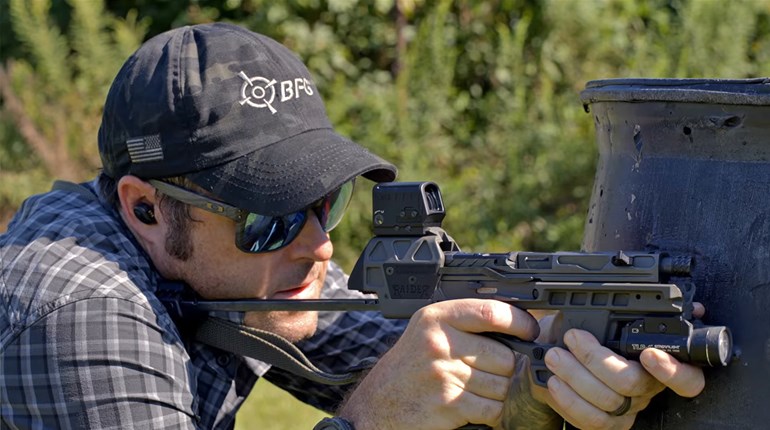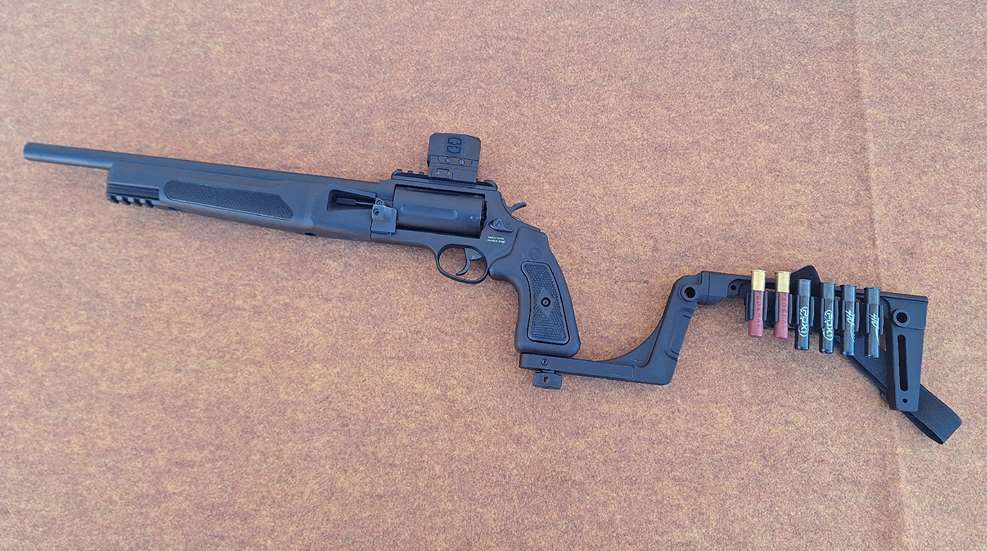
Over the years I've had the opportunity to work with a variety of stabilizing brace configurations for rifle-action pistols and found them to be effective in their intended roles. In fact, I've thought at times that braces made for long barreled, big-bore revolvers would be a handy option for injured, older or disabled handgun hunters. Especially when using the exceptionally large wheel guns like the Smith & Wesson X Frame, Magnum Research BFR or the 10 to 14 inch barrel Taurus Raging Hunter.
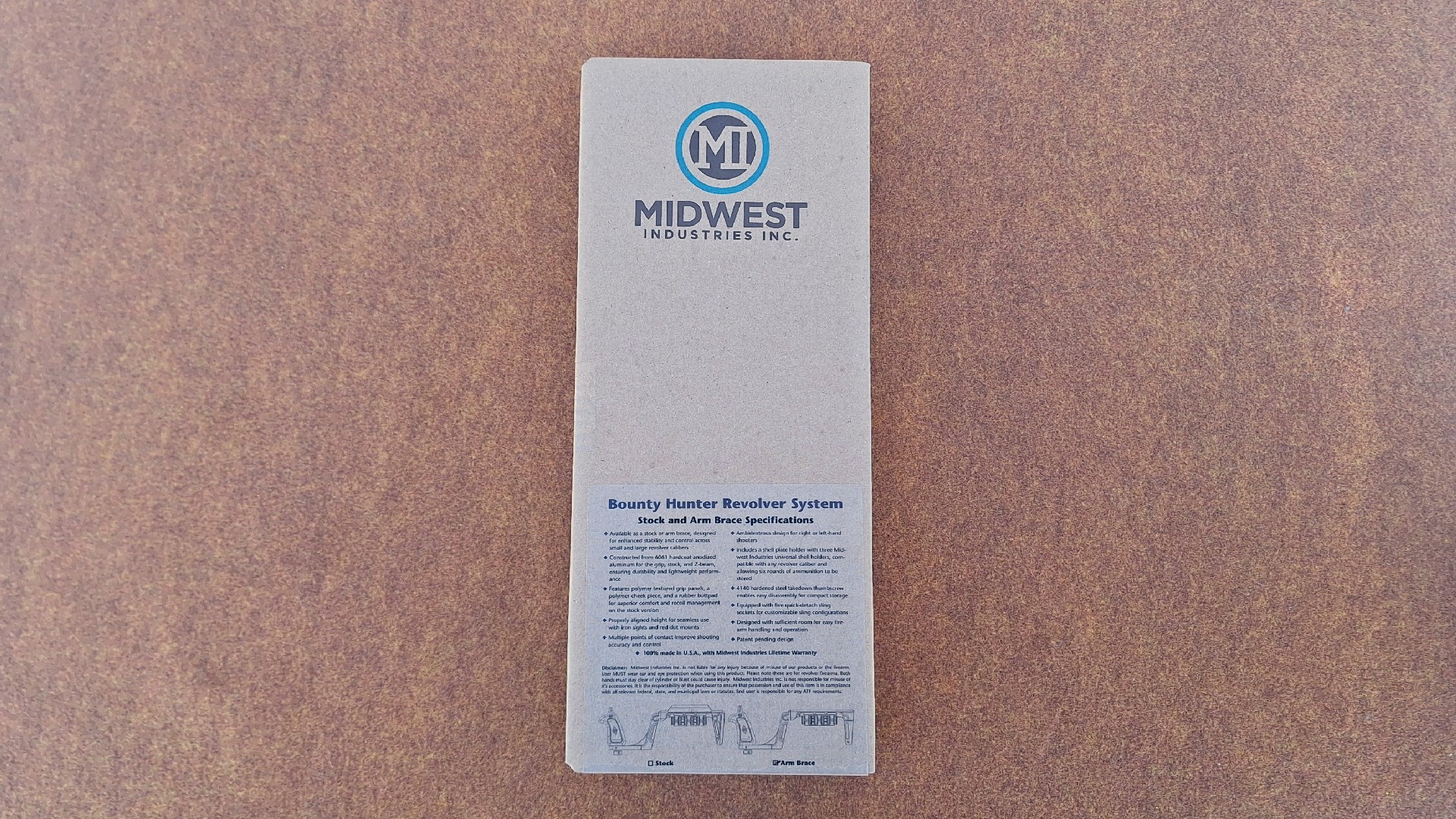 The Bounty Hunter System is available in over 30 configurations.
This year, Midwest Industries of Waukesha, Wisconsin, has stepped up to fill the revolver support gap with its new Bounty Hunter Revolver System. This series of stabilizing braces and SBR shoulder stocks are designed, manufactured and inspected right here in the United States in order to maintain a high level of quality. Having worked with this company's precision-engineered chassis systems and folding rifle stocks in the past, I was eager to see how they would tackle the challenges of producing a revolver brace. I was not disappointed!
Before Proceeding
The legal landscape surrounding the use of shoulder stocks and stabilizing braces with handguns has been shifting over the last few years. As of this writing, the "One Big Beautiful Bill" (P.L. 119-21), has been in effect since January 1, 2026. It reduced the price of a National Firearms Act (NFA) tax stamp from $200 to $0 for suppressors, short-barreled rifles (SBRs), short-barreled shotguns (SBSs) and "any other weapons" (AOWs). Nevertheless, the mandatory ATF registration process is still in effect. That means you still need to complete the stack of paperwork, fingerprinting and background checks necessary to register your handgun as an SBR before attaching a shoulder stock.
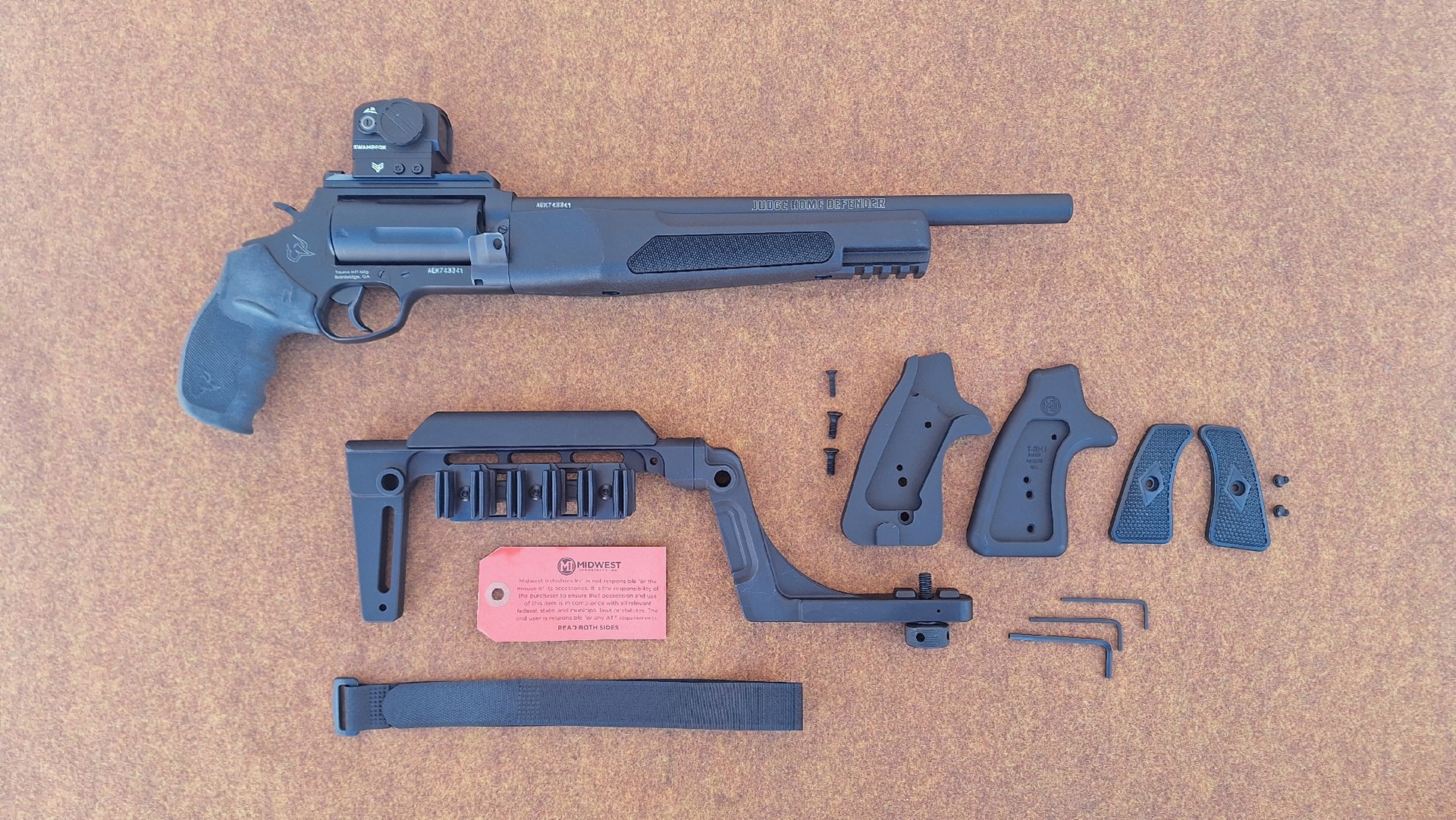 This pistol brace is sized for the Taurus Judge, including the Home Defender model shown here.
As for the stabilizing pistol braces, the ATF’s 2023 Pistol Brace Rule (Final Rule 2021R-08F) was considered vacated and unenforceable nationwide early in 2026 following a series of court challenges. This means that a braced pistol is not currently classified as a short-barreled rifle under the NFA. And so, no federal tax stamp is required to use them. However, some state-level legislation still relegates braces to SBR stock classification.
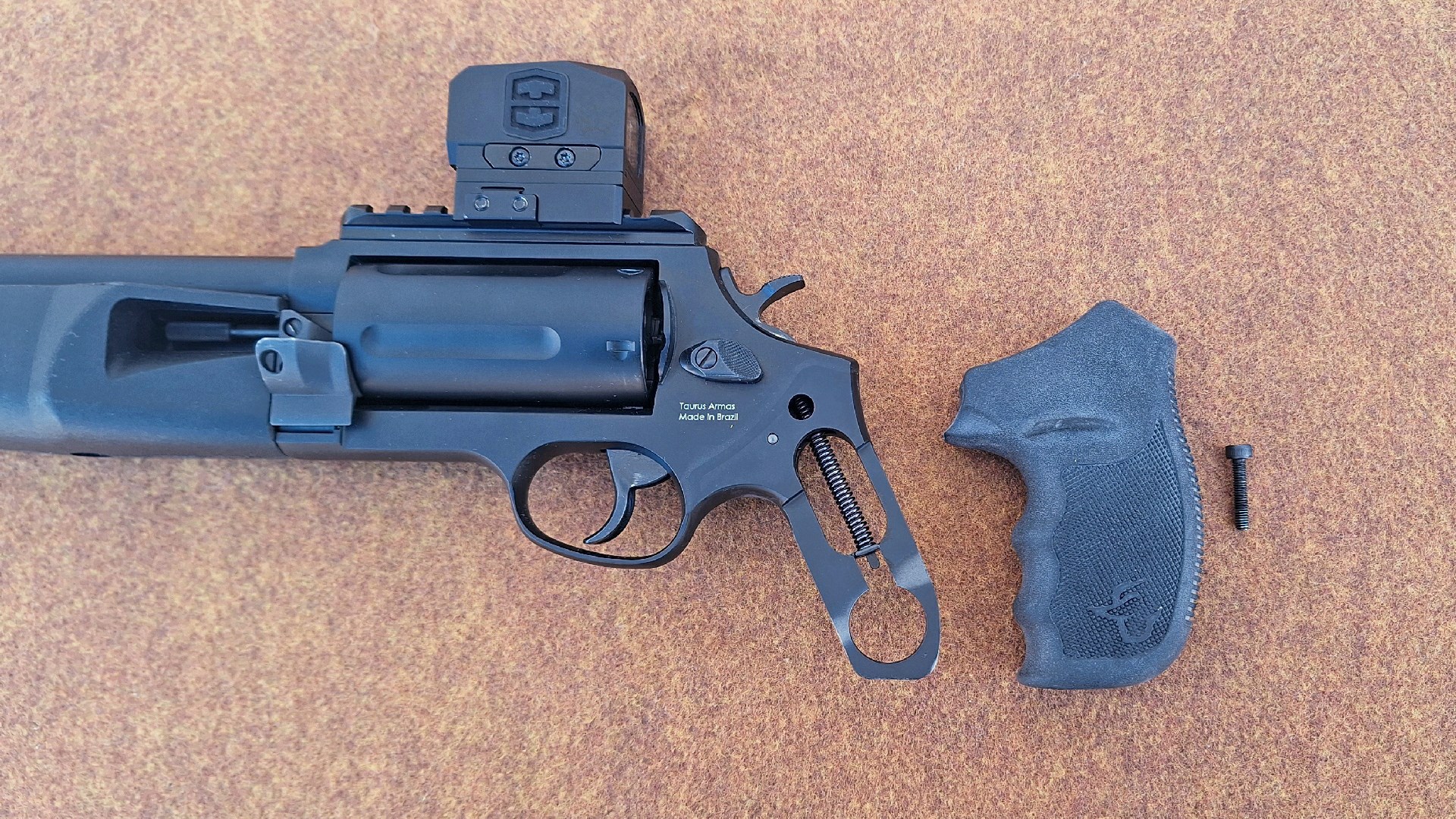 The Home Defender’s rubber grip is secured by a single screw.
And what will the regulations look like by the time you read this? Who can say for certain. In short, make sure you understand and are working within federal and regional regulations before you purchase any system that can be used to convert a handgun into a SBR or to mount a stabilizing brace.
Revolver Model Compatibility
Midwest Industries stepped into the Bounty Hunter series boldly with over 30 brace and SBR stock configurations sized for most of the popular hunting revolvers. Systems are available for Chiappa Rhinos, large and small frames, the Colt Anaconda and Python along with the Taurus Judge and Raging Hunter. Smith & Wesson fans will find models to fit the L, K and G frames, round butt and square butt N frames, and the beefy X frame.
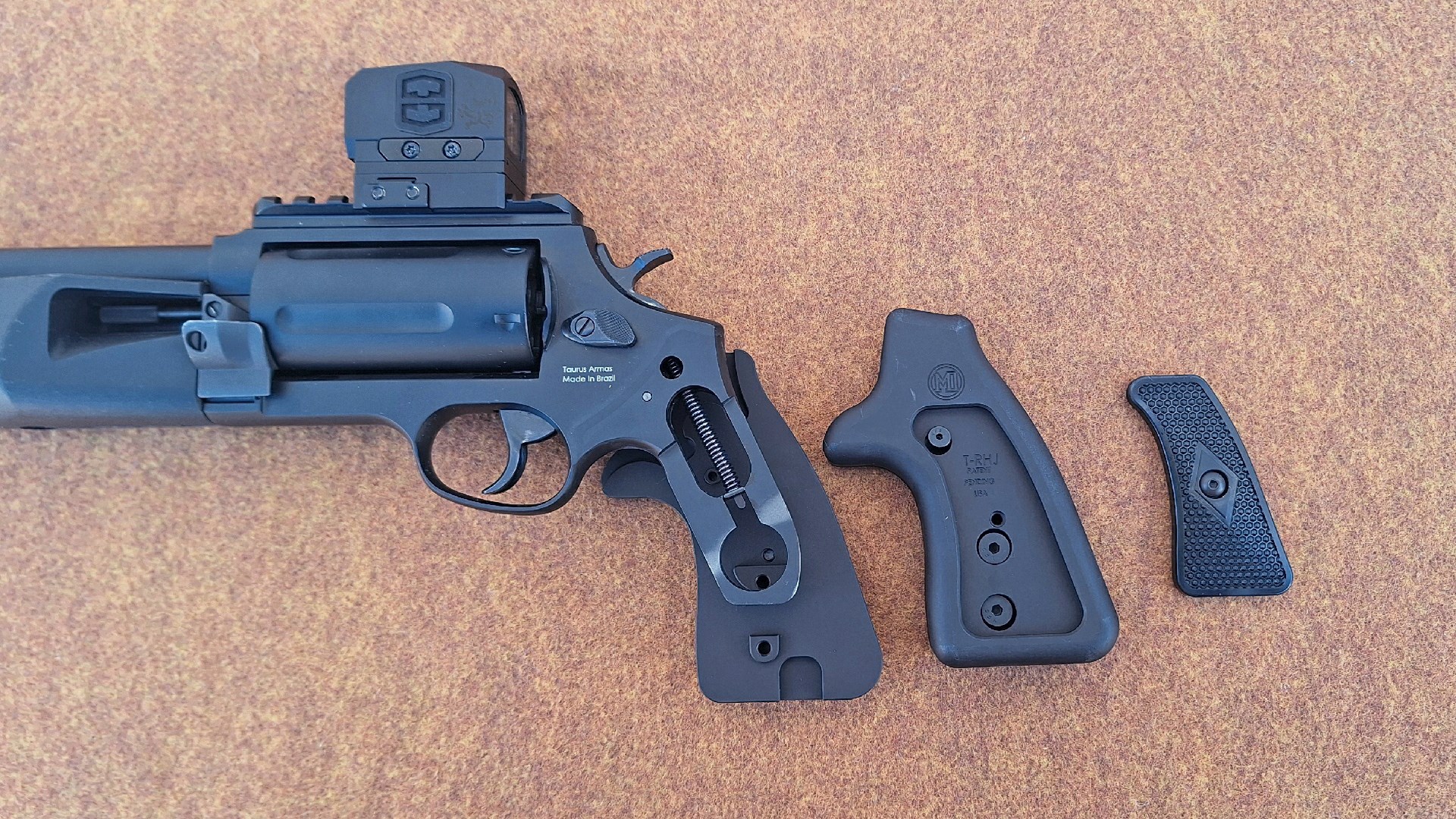 The Bounty Hunter’s clamshell aluminum grip is secured by three screws.
Ruger systems include the Blackhawk, Super Blackhawk, Super Redhawk and GP100. And last, but certainly not least, Magnum Research BFRs outfitted with a plowshare grip frame. I've got my fingers crossed for a BFR Bisley grip frame model sometime in the future. For this write-up, I opted to take a closer look at the pistol braces. In this case, the Taurus Judge, Taurus Raging Hunter and the Smith & Wesson N frame models were requested.
In the Box
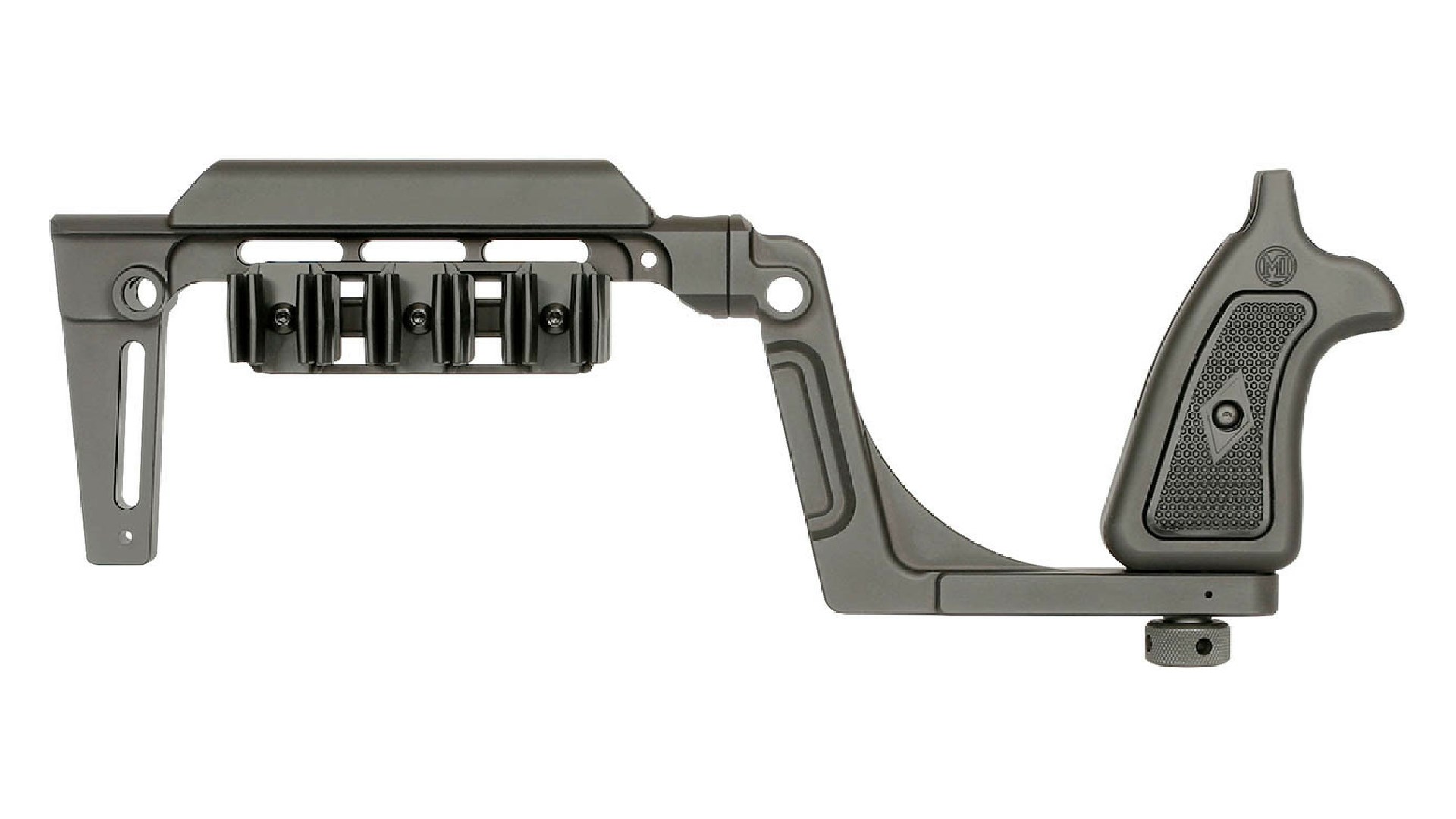
The Midwest team could have used a variety of materials and processes to construct their Bounty Hunter braces. But they chose to stick with what they already do quite well. These brace assemblies consist primarily of hard coat anodized 6061 aluminum, including the grips, Z beam and brace extension. Steel screws and polymer parts are added, where needed.
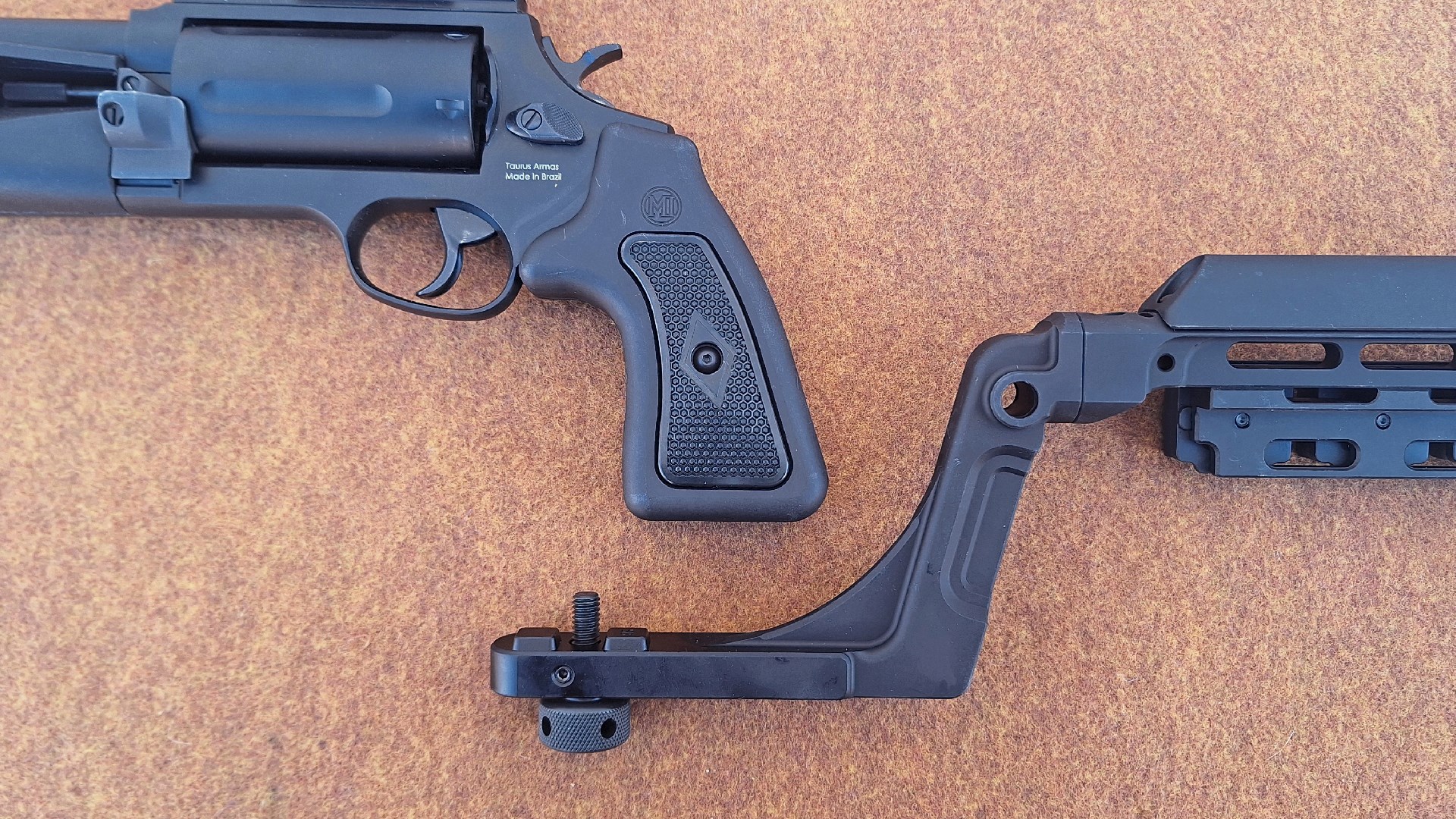 The brace’s Z beam sports a large knurled thumb screw.
The two halves of the aluminum grip are secured with three screws that are installed through the right side. A pair of textured, removable black polymer grip inserts are provided for added purchase. Although the exterior shaping of the grips is simple they still feel comfortable to hold. But when compared to many modern revolver grips, they are relatively square and perfectly smooth along the front and back straps. Although this grip will be usable with or without a brace attached, it feels a bit on the slick side for un-braced use.
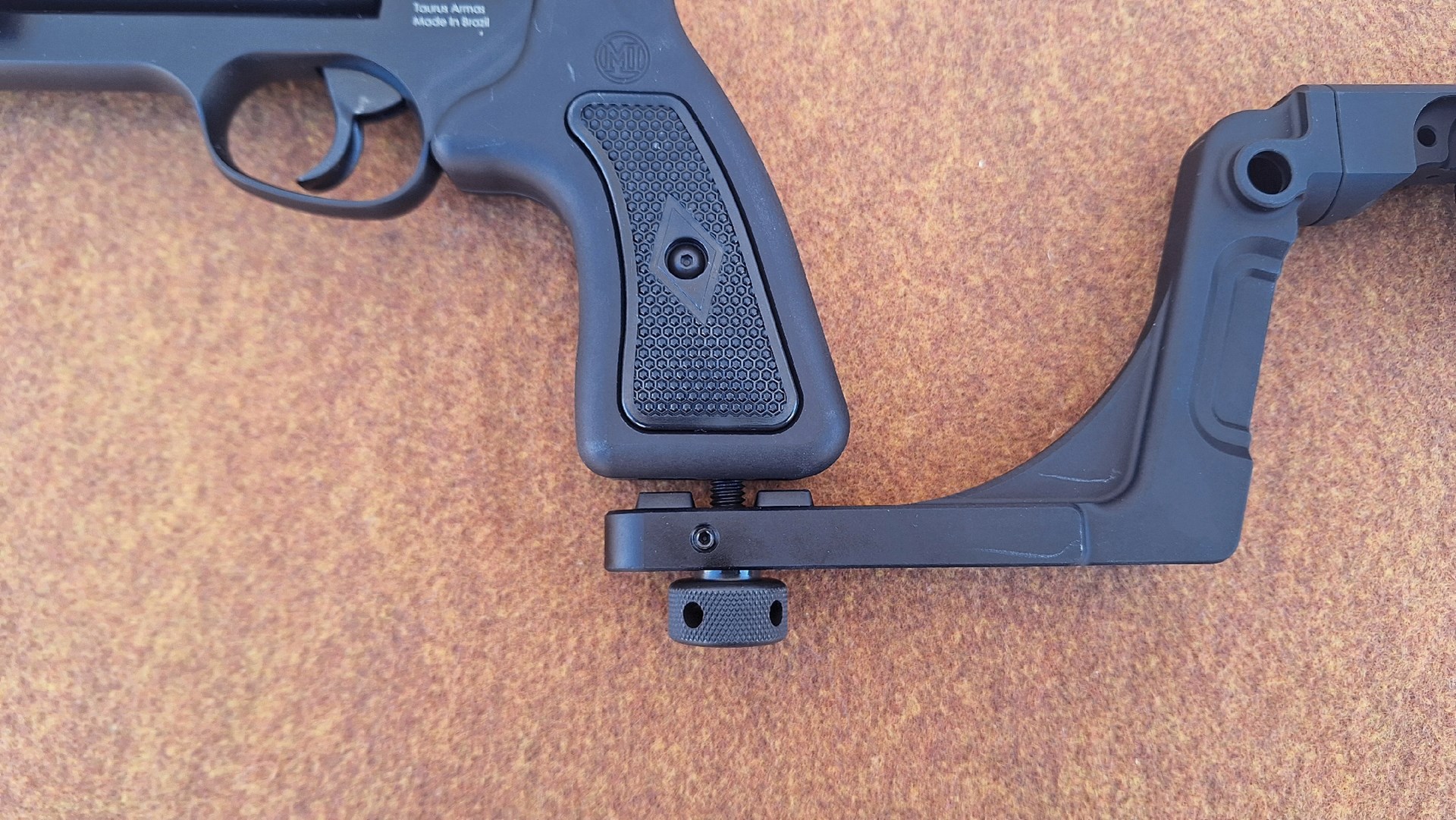 Two large square stud stabilize the Z beam when installed on the aluminum grip.
At the base of the left grip panel is a threaded port, along with a pair of square ports that align with the large knurled thumb screw and lugs of the brace's Z-beam. This lug and screw design locks into the aluminum grip to form a rock-solid connection which is clearly designed to withstand intense levels of felt recoil. The Z-beam also features a total of three QD sling ports.
The brace extension is topped with a removable polymer riser. I took it off for some photos and left it on for others. The center of the extension has three long vents which reduce weight and serve as forward, central and rear slots for the provided hook and loop forearm strap. The brace is fitted with a removable and reversible aluminum shell plate holder that supports a total of three 2-round universal cartridge plates. These polymer plates can be rotated or removed to suit the user's spare ammunition preferences.
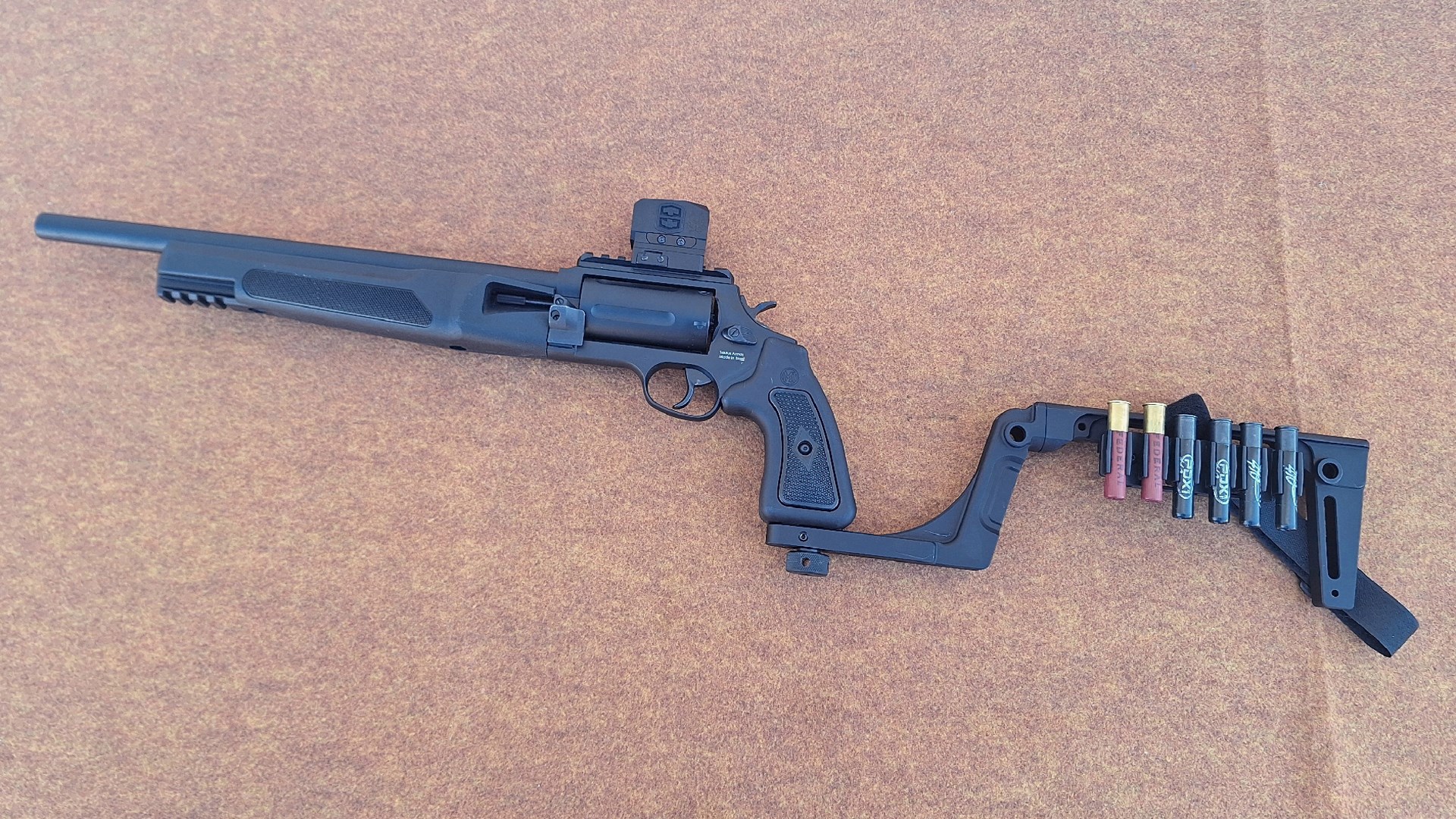 The shell holder will accommodate a variety of revolver ammunition and .410-bore shotshells for guns like the Taurus Judge.
The integral fin-like extension at the rear of the brace assembly is vented to reduce weight. It also sports a total of three QD sling ports, just like the Z-beam. And just in case there is any question as to what this device might be, the fin's flat is clearly engraved with the words 'Not A Stock.' The systems I worked with weighed in at 28.1 ounces before they were installed on a revolver.
Installation and Transportation
Mounting the Bounty Hunter is just about as simple as swapping out a single-action or double-action revolver grip. After verifying that the revolver is completely unloaded, remove the existing grip. Fit the Bounty Hunter grip over the revolver's frame, install the three support screws and then replace the polymer grip panel. Use the brace's thumb screw to attach the brace and Bob's your uncle!
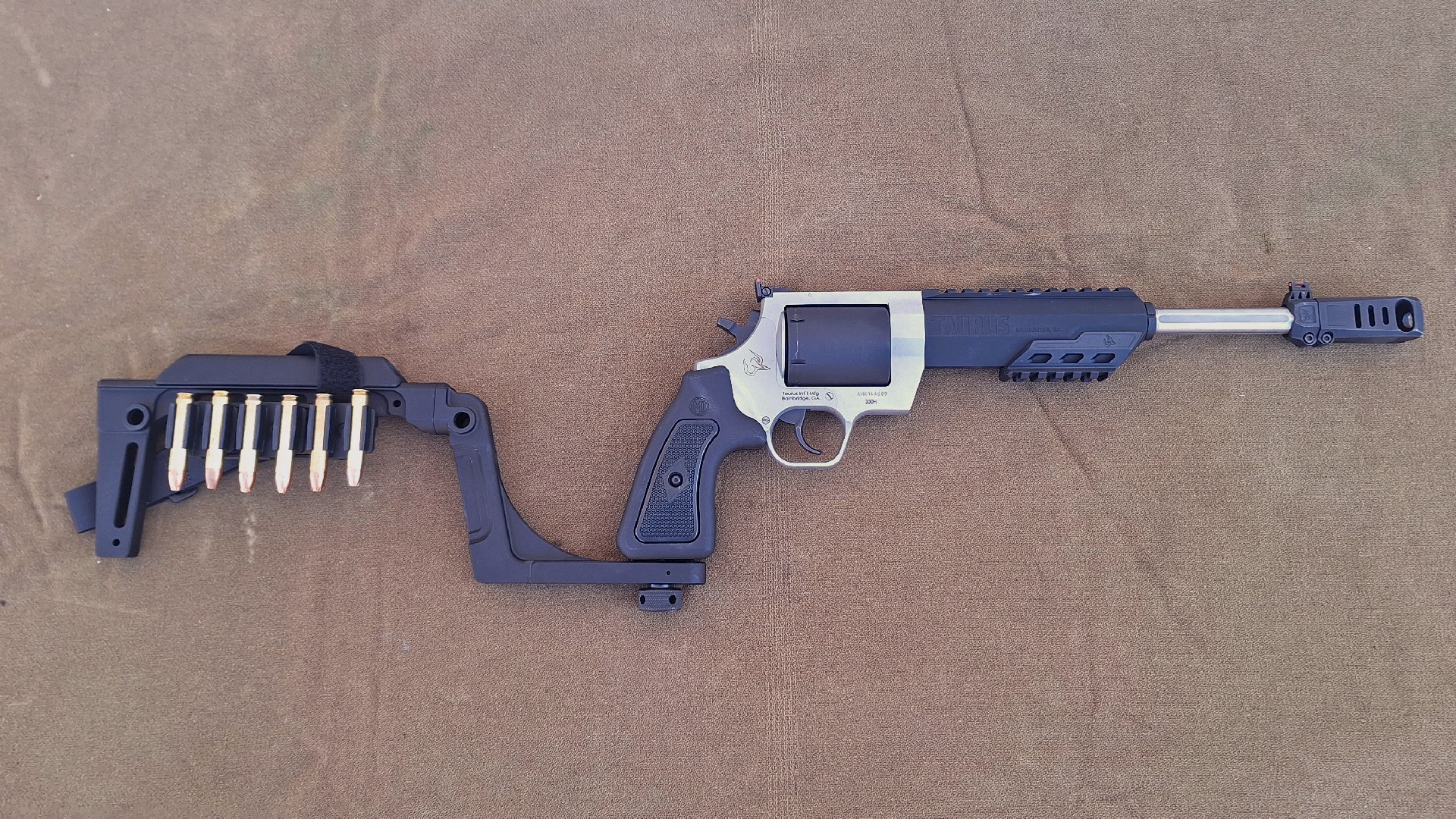 The massive 10-inch barrel Taurus Raging hunter is an ideal candidate for a stabilizing brace like this one.
As for transporting a gun with the Bounty Hunter installed, you have three options. First, leave the brace extended and locked in place. Next, loosen the thumb screw completely to separate the brace from grip so as to transport the revolver and brace in two pieces.
The last one can be a bit tricky, which is to loosen and pivot the brace under the revolver. With the screw loose enough, the brace cleared the trigger guard of a trusty old Smith & Wesson N Frame 629 .44 Magnum, so that the brace and the gun were not in contact with each other. However, the Z beams of the braces for the Taurus Judge and Raging Hunter would hit up against the trigger guard. For these two revolvers, it was the better option to separate the brace from the grip to avoid any unwanted dings or scratches.
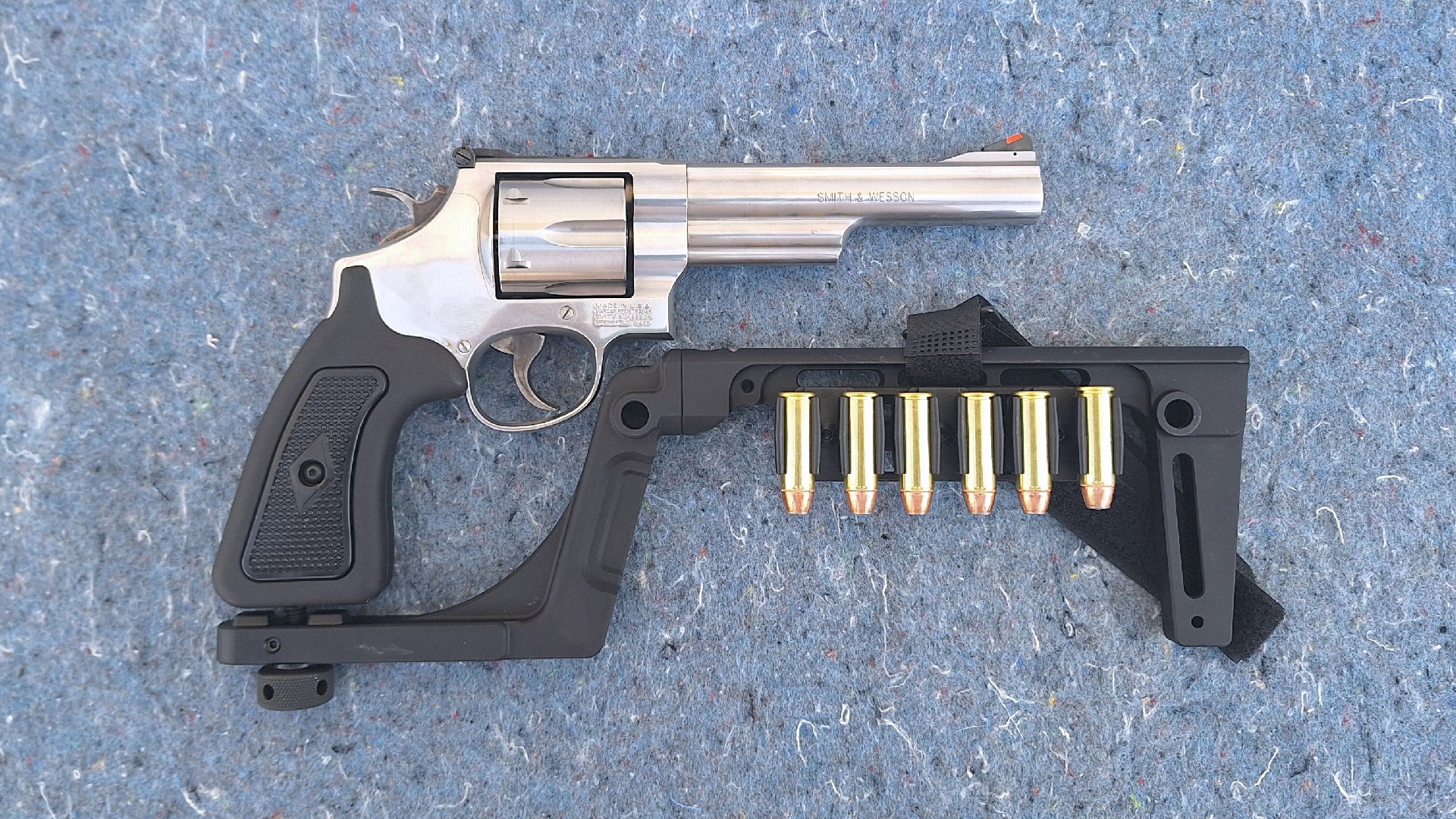 This Smith & Wesson Model 629 can be stored with the brace loosened and folded as shown here.
Wrapping Up
All too often, support gear makers are either overly focused on keeping costs down or they just don't take the product seriously. The result is a product that feels flimsy, looks shoddy or simply does not fill its role properly. This is not the case with the Midwest Industry Bounty Hunter System series of braces.
The aluminum grips and brace assemblies are well made and sturdily constructed. Everything you need to install and use the brace is provided. And the shell plate holder is a nice added feature. For those of you who might be wondering, the shell plates comfortably accommodated .410-bore shot shells, 350 Legend and .45-70, along with more typical revolver cartridges. Don't be surprised if you see a brace or two show up in future revolver range evaluations. These systems are currently available for a suggested retail price of $314.95. For more information, visit midwestindustriesinc.com.