I have long relied on Winchester ammunition and components for my hunting duties, dating back almost 40 years to when I had the 170-grain Silvertip .30-30 Winchester ammo—with the hardened aluminum cap to slow expansion—reserved for bear hunts in the Catskill Mountains. Their use of premium projectiles, including much of the Nosler lineup, has worked out very well for me, and they continue to innovate in the ammunition department.
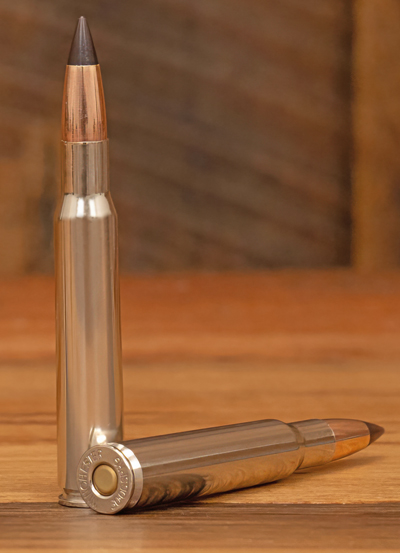
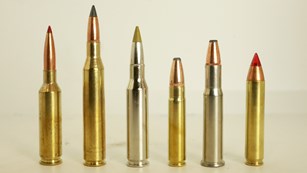
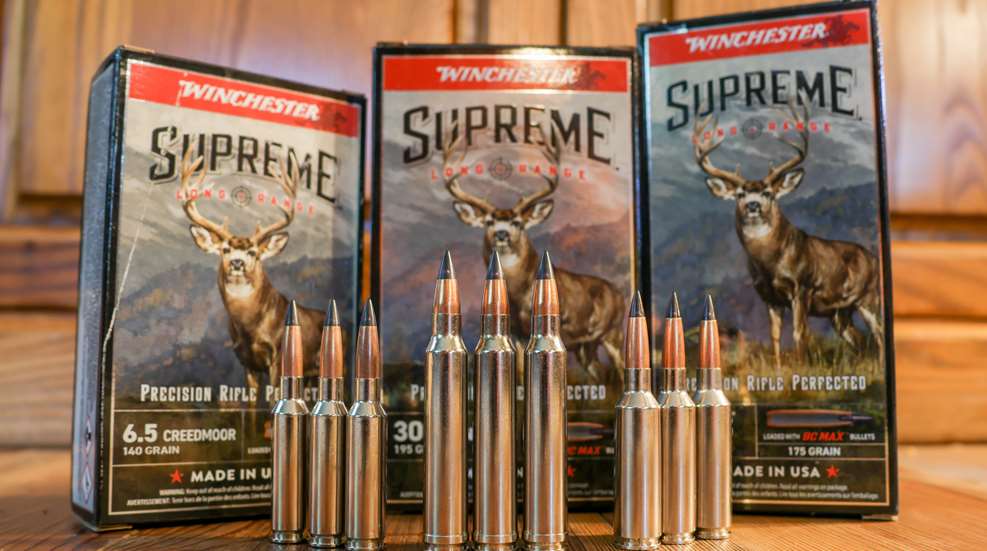
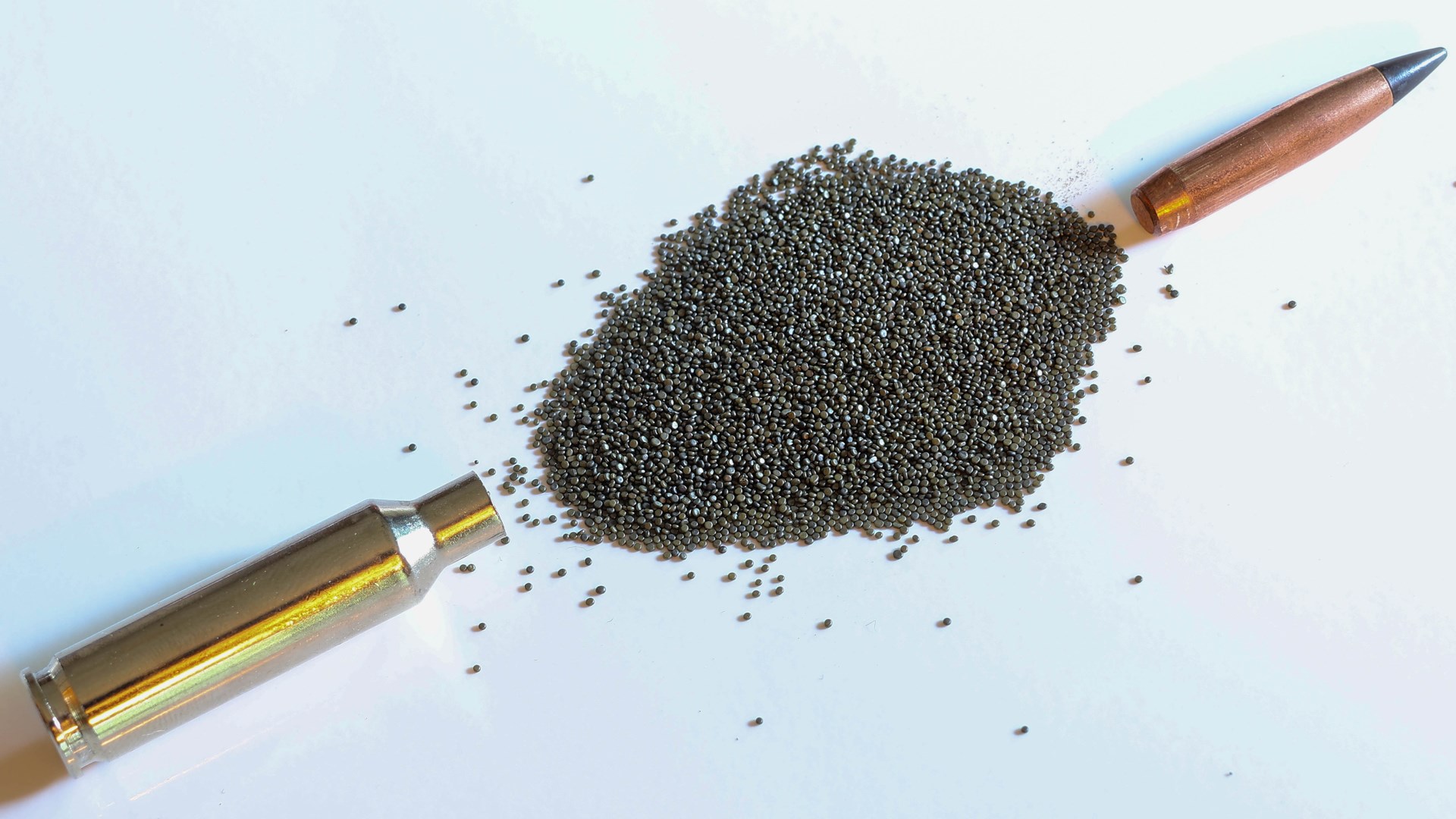
Their latest ammunition line is the Supreme Long Range centerfire rifle ammo, and that line is built around its BC Max projectile. Using a thick, drawn copper jacket, steep boattail at the rear and a relatively oversized polymer tip, the BC Max bullet is built for resisting wind deflection and retaining energy downrange. In addition to an attractive profile, Winchester has opted to choose bullet weights on the heavier side of the spectrum. At the time of this writing there are six cartridges in the lineup: the .300 Winchester Magnum, .300 Winchester Short Magnum and .30-06 Springfield all get the 195-grain BC Max; the 6.5 Creedmoor and 6.5 PRC both get the 140-grain bullet; and the 6.8 Western sees a 175-grain bullet. And while the BC Max bullet is not a bonded-core bullet, but instead a simple cup-and-core design, the additional bullet weight and correlative Sectional Density allow for more retained weight after the terminal phase. Looking at the expectations placed upon the BC Max—designed and marketed as a long-range hunting bullet, it’ll need to give reliable expansion at low impact velocities at long distance, yet have enough length to hold together and penetrate reliably at woods distances—the heavy-for-caliber concept makes perfect sense. The oversized polymer tip helps guarantee expansion across a wide velocity range, as it will act as a wedge, forcing the bullet nose open upon impact. That tip will also help keep the Ballistic Coefficient value more consistent over the flight of the projectile.
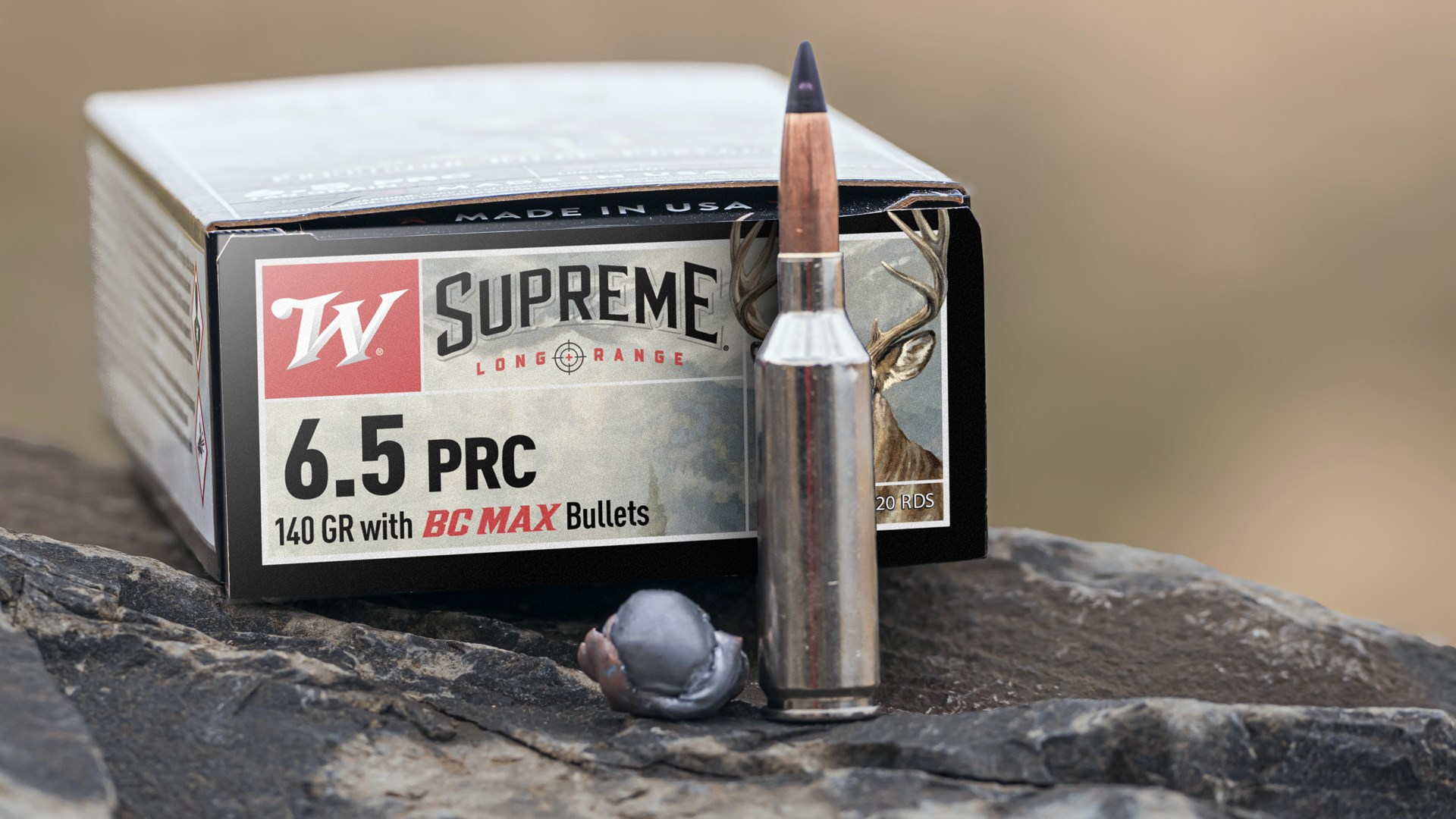
Winchester has opted to load this ammo line in nickel-plated cases, a smart decision in my opinion. The backcountry/long-range hunts this ammo is designed for often sees a hunter loading and unloading the rifle multiple times daily, and handling ammunition loaded in brass cases can quickly tarnish the cartridges. Winchester has indicated that this ammunition line is loaded with match-grade primers, though I can neither confirm nor deny that visually.
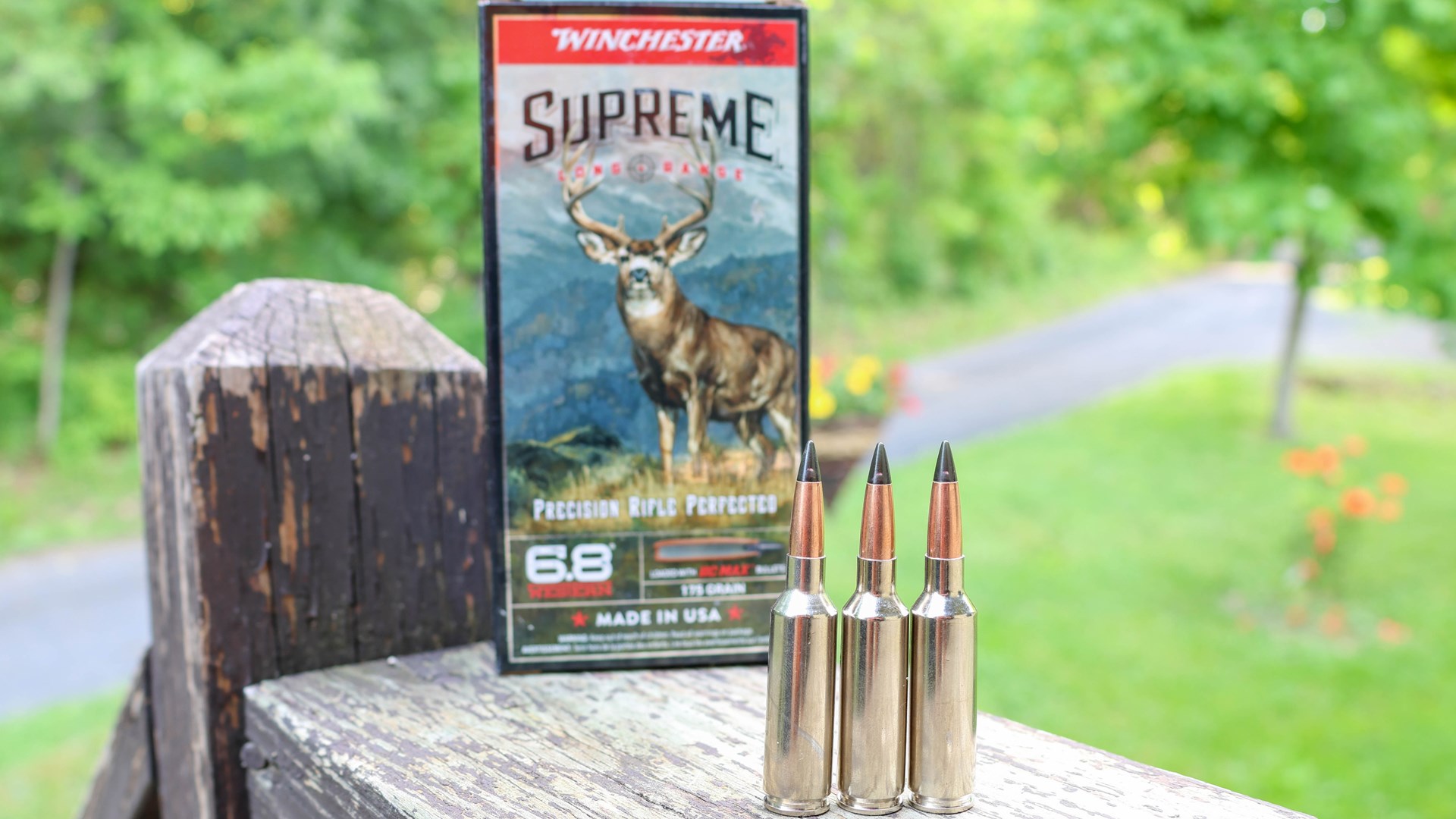
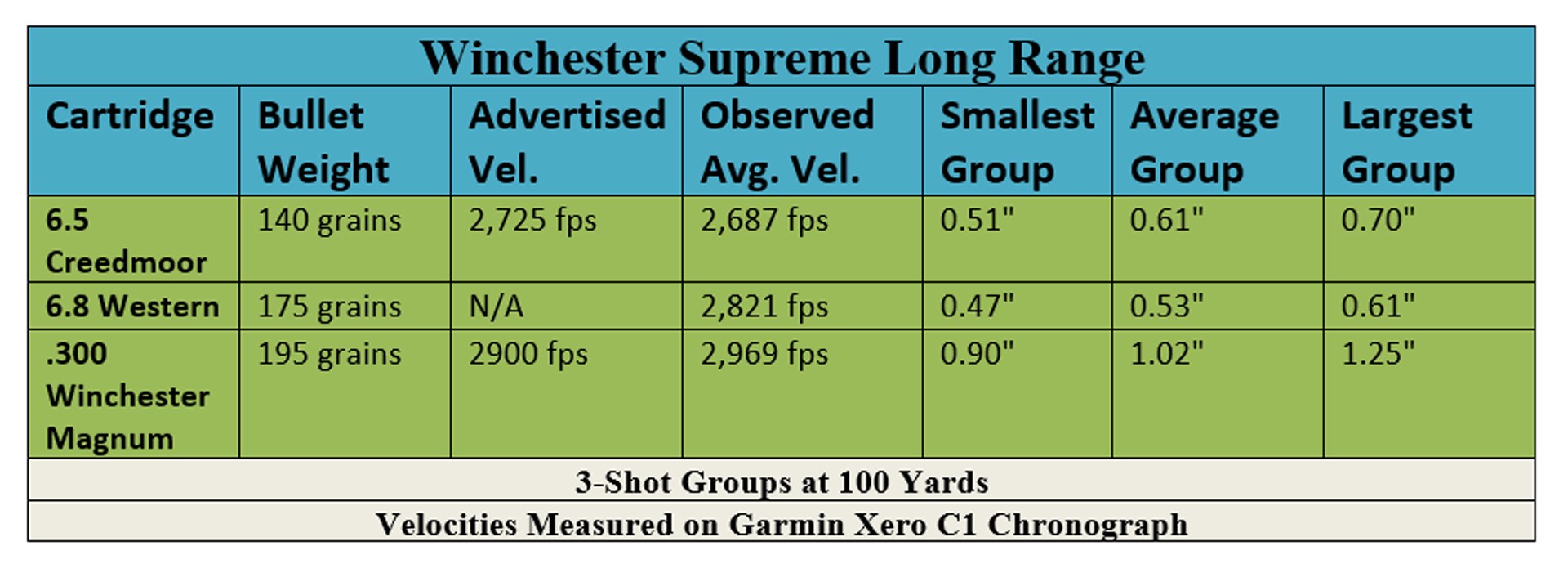
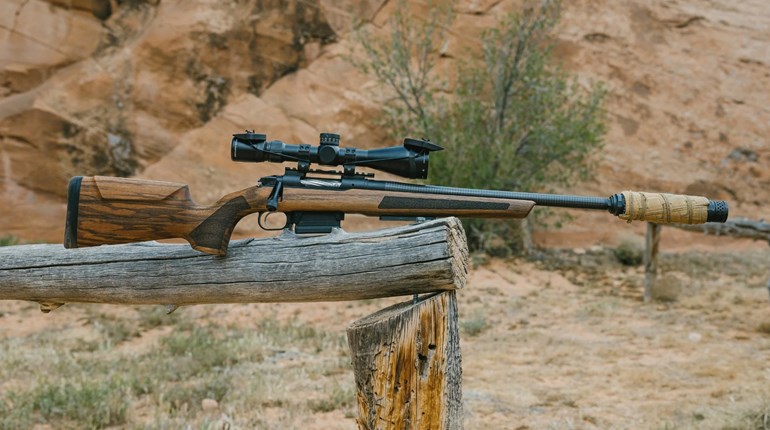
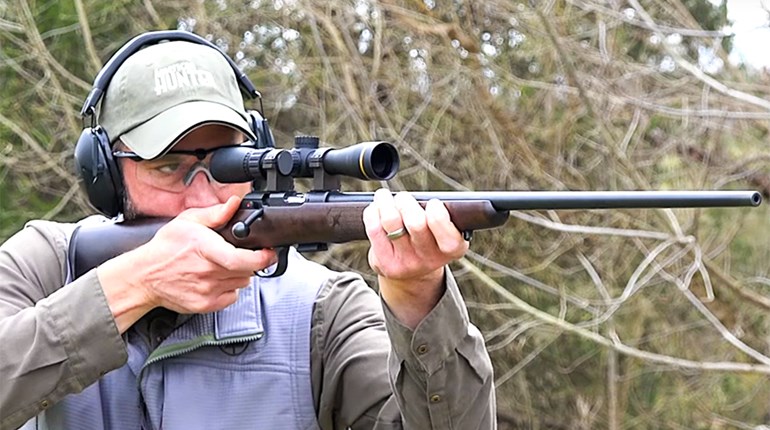
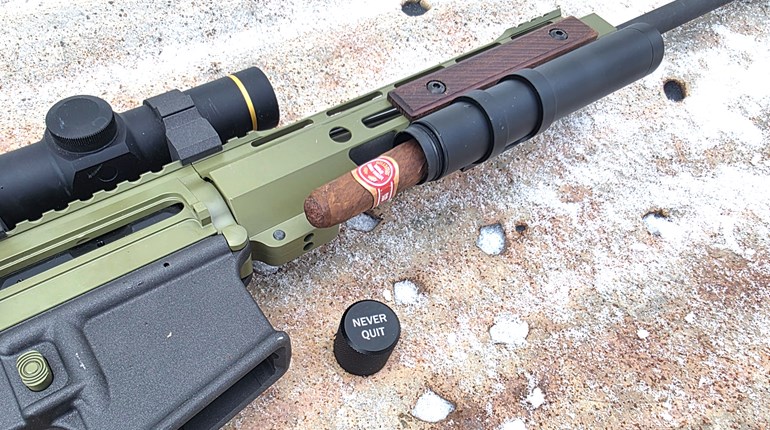
For testing, I received ammunition for the .300 Winchester Magnum, 6.8 Western and 6.5 Creedmoor. For the test rifles, I grabbed: my Winchester Model 70 Classic Stainless in .300 Winnie, stocked and finished by Bansner & Co., and topped with a Leupold VX-5HD 2-10x scope; my Browning X-Bolt in 6.8 Western and topped with a Leupold VX-6HD 3-18x scope; and a Legendary Arms Works 6.5 Creedmoor, with a Leupold 6-24x scope. All these guns have had significant range and field time, and have been reliable for years. And so, on a warm spring day (temps at 85 degrees) I headed to the good old 100-yard backyard range, set up the Garmin Xero C1, and settled into the bench.
Firstly, all three loads fed, fired and extracted without issue, with the nickel-plated cases offering a smooth feel while cycling the bolt. There were no sticky extractions, though I did notice a slight cratering of the firing pin indent on the primers of the 6.5 Creedmoor cases, which can be indicative of approaching excess pressure, but it sure didn’t feel that way upon extraction. The test rifle used for the 6.5 Creedmoor ammo has a 20-inch barrel, so the Garmin chronograph indicated that my rifle was generating 2,687 fps instead of the advertised 2,725 fps. However, the three-shot groups averaged 0.61 inches, with two groups coming in under ½-inch. The velocities had a spread of 26 fps, and that consistency was reflected on the target board. Moving to the .300 Winchester Magnum, that rifle’s 26-inch barrel showed an average muzzle velocity slightly higher than the advertised value, clocking in at an average of 2,969 fps instead of the 2,900 fps Winchester advertises. The velocity spread was just 34 fps, and the three-shot groups came in with an average spread just under 1 MOA, with the spent cases showing no pressure signs whatsoever.
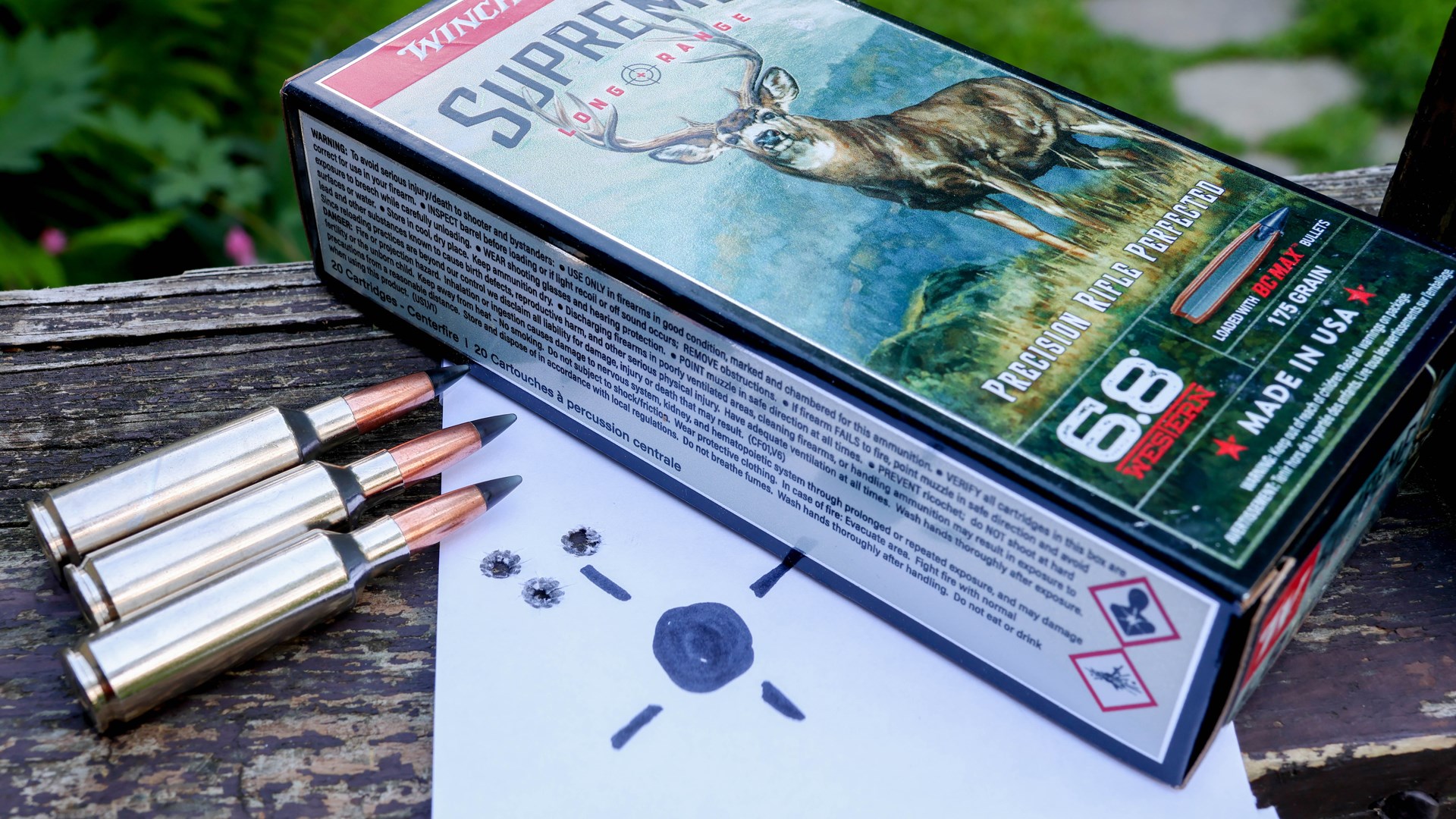
Winchester currently offers no ballistic data for their 6.8 Western load in the Supreme Long Range line, other than that it uses the 175-grain BC Max projectile. My Browning X-Bolt has proven to be a very accurate rifle, and this ammunition was no exception. Groups averaged just over the ½-MOA mark, and with a muzzle velocity average of 2,821 fps and an extreme spread of just 22 fps. I’ve liked the 6.8 Western since I met it on a mule deer/elk hunt in the fall of 2020, and I hope good ammunition like this Supreme Long Range stuff helps to keep this cartridge alive.
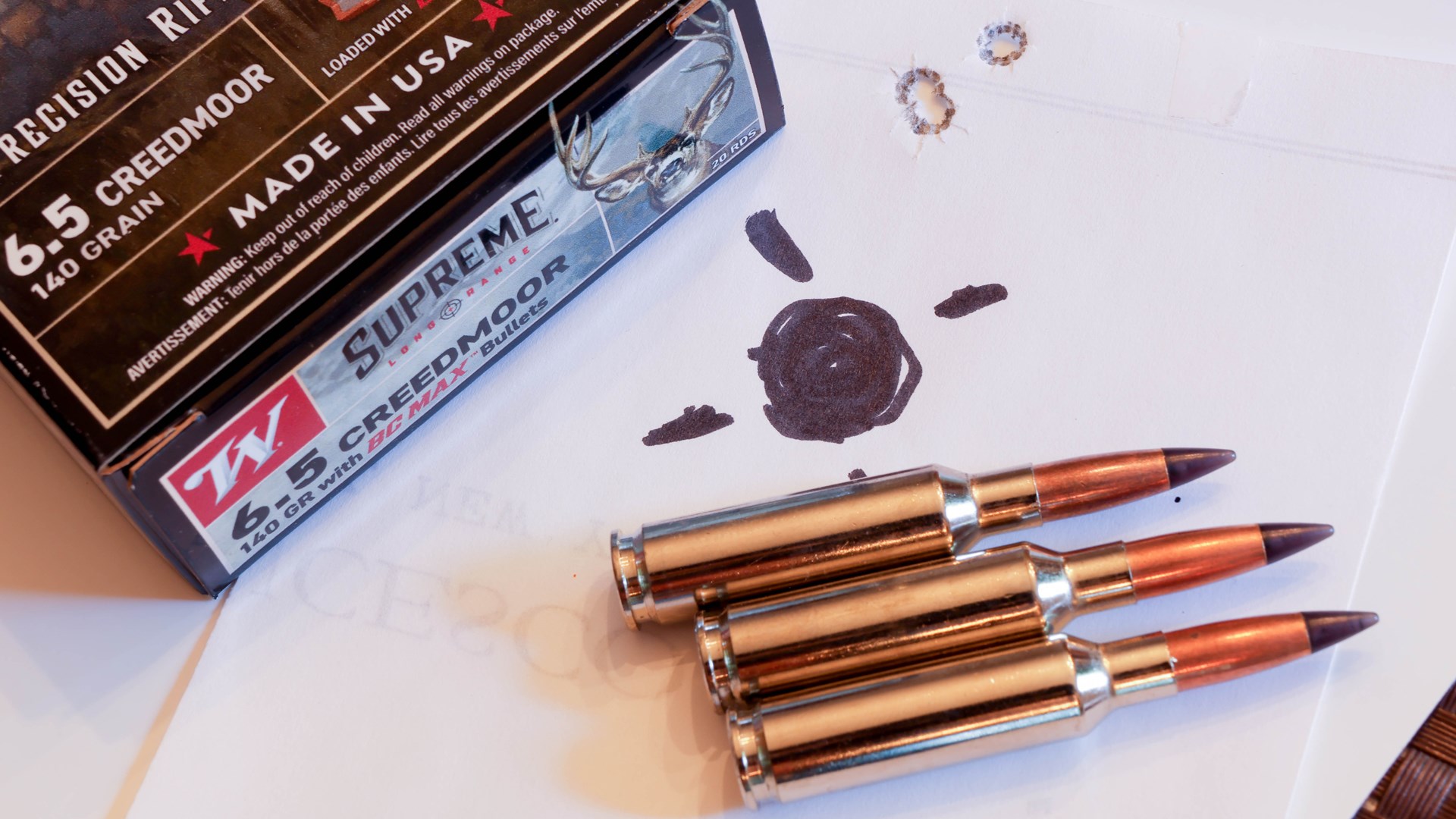
The BC Max bullet doesn’t see its drawn copper jacket bonded to the lead core, so the bullet weights chosen by Winchester will definitely play a role in the terminal ballistics of these projectiles. Hunters of dangerous game will—generally speaking—seek a bullet with a Sectional Density of .300 or better, and this hearkens back to the days of simple cup-and-core bullets. For thin-skinned game—and I'm thinking deer, elk, black bear and other common species—I like a bullet with an S.D. value of over .280 to give me enough length to ensure that the bullet will penetrate into the vital organs. If the bullet is too light, and therefore too short, the possibility of poor penetration exists. The 6.5mm 140-grain bullet has surely proven its worth, and that bullet has an S.D. of 0.287. Looking at the 195-grain .30-caliber bullet, you’ll find an S.D. value of 0.294, and while so many of us have relied upon 165- and 180-grain bullets in the .308 Winchester, .30-06 Springfield and the various .30-caliber magnums, a 195-grain slug should prove just fine, even at close ranges. And lastly, that 175-grain .227-inch bullet that the 6.8 Western hurls so well comes with an S.D. of 0.326, and in my hunting experiences penetrates wonderfully, so the new Winchester Supreme Long Range ammo line should prove to be a real winner in the field.
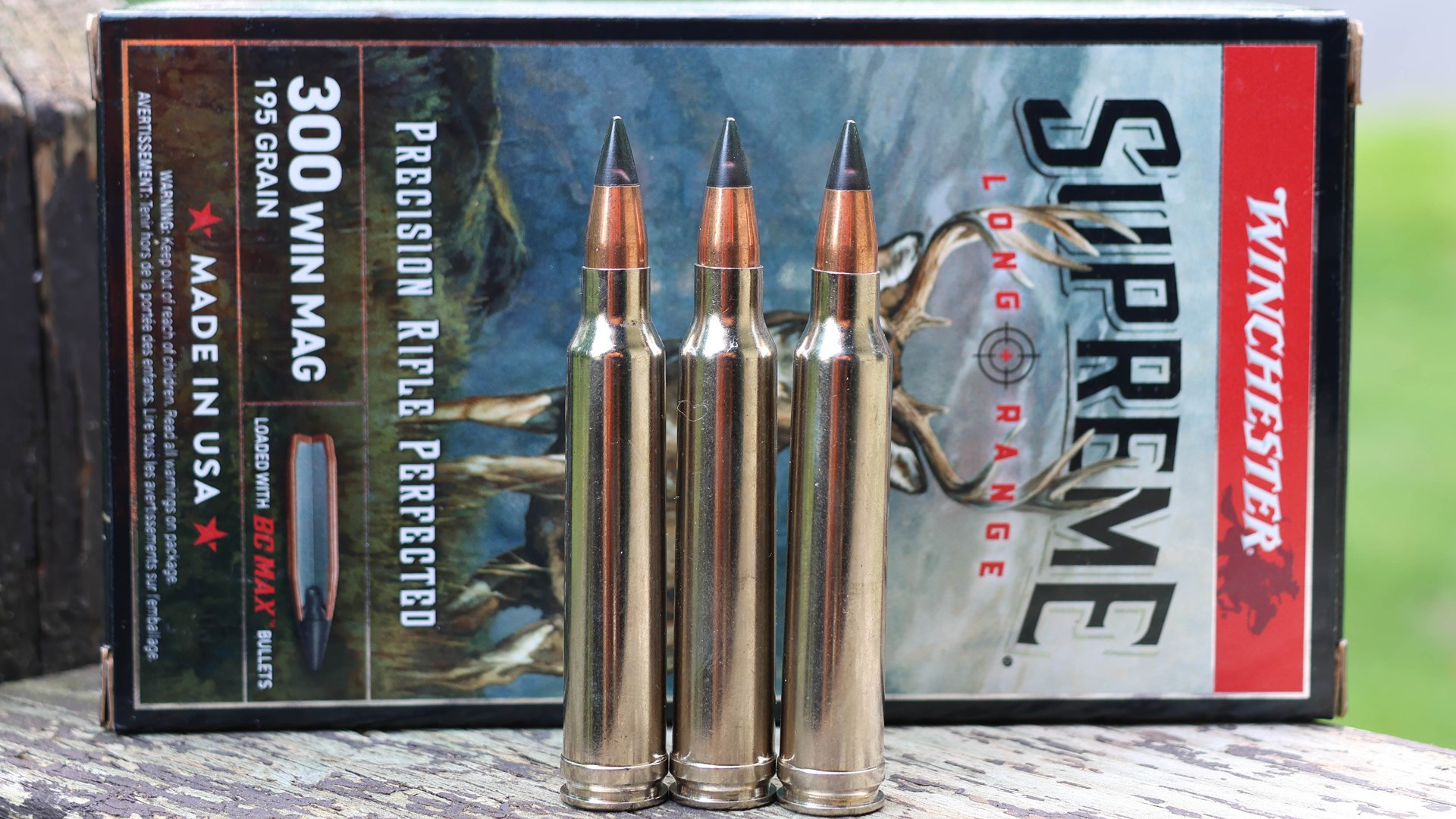
Nickel-plated cases that resist corrosion from frequent handling, an oversized polymer tip to help initiate expansion, even at the lower impact velocities that are the result of long-range shots, a profile which helps resist the effects of wind deflection and atmospheric drag, and impressive accuracy; all these points add up to a great design from Winchester which should help put a smile on the faces of many hunters.