Photo Courtesy USFWS
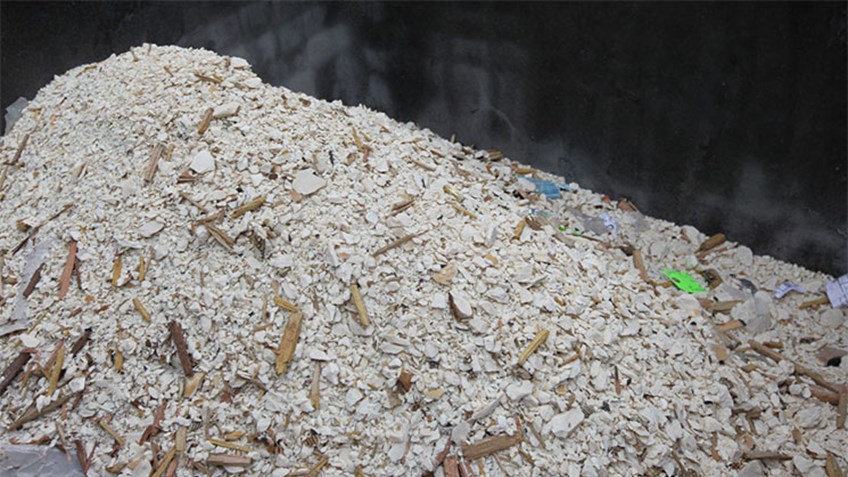
As NRA-ILA informed American hunters earlier this summer, on July 29 the U.S. Fish and Wildlife Service (FWS) proposed a regulation that would restrict the import, export and interstate sale of African elephant ivory, with the stated goal of creating a near complete ban on ivory sales. While the proposed regulation would increase restrictions on ivory imports and exports, the most significant impact to NRA membership would be the restrictions on the interstate sale of legally-owned, domestic ivory. Under the rule, ivory can only be sold across state lines if it qualifies as an antique under the Endangered Species Act (ESA), or if a manufactured item has a small, or de minimis, amount of ivory attached.
To qualify for an ESA antique exemption, the ivory must be no less than 100 years old. Even for items at least 100 years old, the burden of proof would be on the seller to provide documentation that the ivory is old enough—a nearly impossible burden to carry, as this documentation rarely, if ever, exists. Moreover, FWS will not issue guidance as to what documentation would be sufficient until after the final rule is put into effect.
FWS is also proposing a de minimis exemption for certain manufactured items that contain less than 200 grams (.44 pounds) of ivory. Under the de minimis criteria, the ivory cannot be the “primary source of value of the item” and the item cannot be “made wholly or primarily of ivory.” FWS has failed to state how it would implement this criteria or how it would determine the total weight of the attached ivory without harming the overall integrity of the piece. Further, using additional ivory to repair a de minimis item would be prohibited.
Moreover, the proposed rule would arbitrarily limit the number of African elephant sport-hunted trophy imports to two per hunter, per year. The rule also would require all sport-hunted elephant trophies from Botswana, Namibia, South Africa and Zimbabwe to be imported via a FWS-issued threatened species permit; a threatened species permit requires a determination by FWS that the killing of the trophy animal would enhance the survival of the species. Although FWS has considered sport-hunting as an enhancement practice in the past, discretion to issue a permit rests with FWS, creating uncertainty from this and future administrations.
NRA-ILA Actions
A 60-day comment period has been provided, and NRA-ILA will submit extensive formal comments opposing provisions of the rule that affect NRA membership. NRA-ILA also encourages NRA membership to file individual comments.
NRA-ILA has requested an extension of an additional 30 days for public comments, which would allow all of those impacted to fully analyze the proposed rule.
In addition, NRA-ILA is actively promoting the African Elephant Conservation and Legal Ivory Possession Act of 2015, introduced by Representative Don Young (R-AK) and Senators Steve Daines (R-MT) and Lamar Alexander (R-TN). This legislation would effectively freeze ivory regulations as they were before FWS started introducing new ivory restrictions (2/24/14). These bills would allow time for stakeholders to work with FWS to develop a comprehensive strategy to stop the international trafficking of ivory and elephant poaching while at the same time protect law-abiding ivory owners.
Furthermore, through NRA-ILA’s effort, the fiscal year 2016 House Interior Appropriations Bill contains a provision that would freeze in place ivory regulations as they were on February 1, 2014. NRA-ILA is working with members from both the U.S. House and U.S. Senate to include the appropriations provision in the final fiscal year 2016 Interior Appropriations Bill.