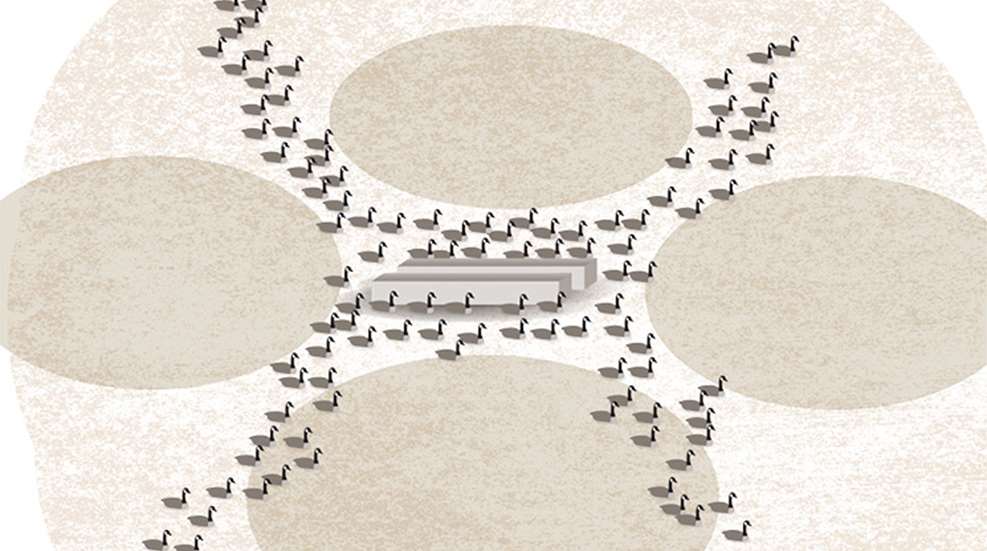
No hunter relies on good wind quite like the waterfowler. And I’m not talking about the right wind—I’m talking about wind, period. Sure, the wrong wind can take your whitetail honey hole off the board for a day or two, same as it might foul up your favorite duck blind. But sufficiently scent-controlled deer hunters can still make magic happen in a no wind situation. The same can’t really be said for the waterfowl hunter, who’ll find himself up the wrong creek without a paddle if Mother Nature can’t be bothered to conjure up a breeze. Migratory game birds of all shapes and sizes have a nasty habit of using the wind to line up their descent. A lot of guys in that scenario just wait for another day. But if you’re dead set on getting afield—be it because of a crowded schedule or the sheer will to hunt—there are tactics you can utilize that should increase your odds of defying nature.
In the Field
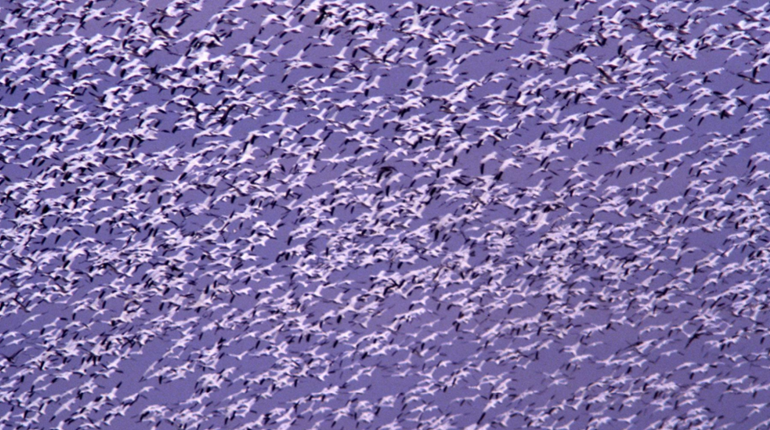
The most common solution, if you’re hunting a field for geese, anyway, is to deploy the “Big X.” It’s called that because it’s what your decoy spread should look like when all’s said and done. If you’re working with mobile blinds, like layouts or an A-Frame, line them up so they’re facing the direction that you think the birds will be coming from. If you haven’t done enough scouting, take your best guess. If you’re in an immobile blind or pit, you’ll just have to make due with what you’ve got. Once that’s settled, start working on the X. Consider your blind and the decoys immediately around it the crossing point of the X. Extend groups of decoys out in a straight line from each corner. Executed properly, the design gives incoming geese a landing hole in your decoys, no matter which direction they’re coming from—without having to circle your spread or fly over your hidey hole of choice. It’s not a perfect solution, but if there’s no wind, you’re not going to find one. The Big X will keep you in the game, and that’s all you can ask for.
On the Water
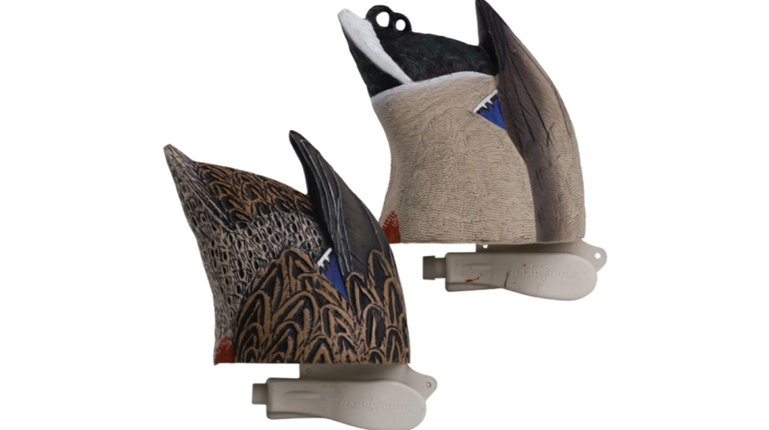
If you’re more of a water hunter, the game’s a little different. In this case, set up your decoy spread however you’re most comfortable—again, be prepared for birds to come from all directions. The challenge here is generating enough movement to convince a duck that you’re legit. In this case, motion decoys are your friend. The Rippler from Mojo Outdoors, as its name suggests, will make ripples and waves throughout your spread. Setting up a jerk rig wouldn’t hurt, either. They’re readily available from most retailers—though it’s also not difficult for the more frugally minded hunter to turn it into a DIY project. The point is, you need to create your own movement and ripples on the water. I’ve known folks to keep a pile of rocks on hand, and throw them into the decoys as necessary. So long as you’re making things move, you’re bettering your odds. It’s not a bad idea to keep your spread light in this case, either—the more dekes you’ve got, the more motion you’ll have to generate to make it look real.