By Gail Sperlich, Parkston, S.D.
“You sure put me in the right place,” said Carl, glowing with satisfaction.
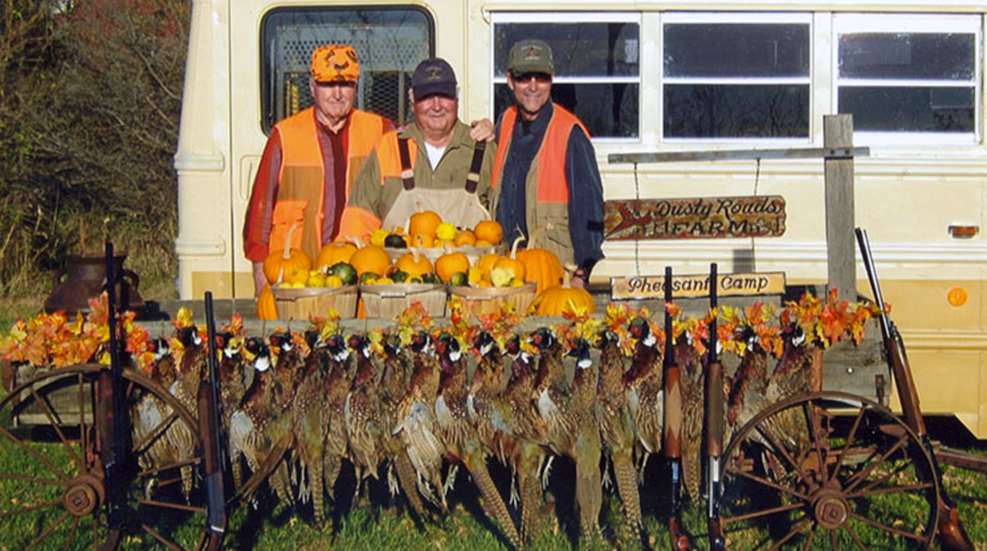
It was the last drive of the last day of the annual pheasant hunt in South Dakota for Carl and his hunter-orange-clad companions. Two cackling roosters exploded without warning from the fall foliage. The longtime hunter methodically raised his well-worn shotgun, fired, and one of the roosters came tumbling back to earth. It was a scene that never gets old for any avid sportsman.
Carl, born in rural Oklahoma, left the farm for a successful business career that took him around the world. After retiring, Carl was part of the fall migration that happens every year in South Dakota. This orange and brown migration is called pheasant season. Carl’s brother from Florida, son from Arizona and friends from Iowa rendezvous on the same farm year after year. The excuse, or shall we say “reason,” for the migration is the pursuit of the brilliant-colored ringneck pheasant. It is a time to get together with family and friends, which includes the farmer. It’s a time to swap stories that tend to get richer and more elaborate each year. It’s a time to experience the brilliant fall colors, smells and weather during the Dakota harvest season. The air is crisp and hauntingly clear. The sky is awesome blue. The call of the wild stirs the soul, and the hunters migrate to scratch their itch.
I don’t remember the first time Carl came to hunt at the farm. It was as if he had always been there. The gleam in his eyes, the bounce in his step and the anticipation of another day in the field was always evident even as the years slowed him down. One problem seemed to follow Carl each year, though. That problem was trouble with pesky barbed-wire fences. Being a working farm, there were several areas he and his companions hunted that were bordered by barbed wire. Carl, being over-zealous to retrieve downed birds, would tangle with those fences and ultimately lose those battles. Every year there was a fresh rip or two in his hunting togs that would require the purchase of new ones. Maybe he did it on purpose? At times even his flesh got into the fence fray; gouges and scratches required attention.
A lot of pheasant hunting is push-and-post, where part of the group pushes through the targeted cover while others wait at escape routes. The posting positions prevent wily ringnecks from leaving early. The plan is to get the whole party in range before the fireworks start. Although it is expected, it is always a surprise when the bright-colored, gaudy roosters erupt with their distinct cackles and head for the exit. Over the last several years, Carl’s age relegated him to a posting assignment. The post positions require patience and the ability to take good shots at crossing birds.
Carl enjoyed the outdoors. Carl enjoyed the fellowship, and Carl enjoyed the pursuit. Alas, Carl will not make the Dakota migration this year as three weeks after last year’s last pheasant hunt, a massive brain aneurism ended his journey on earth. That last pheasant on the last day of last year’s hunt was Carl’s last. Needless to say, the season opener will not be the same this year. There will still be stories told, there will still be shots missed, and there will still be memories made. But Carl will be there in spirit only. He will be missed. I know this because I am the farmer that played host to Carl and his crew as they scratched their itch year after year.
This points to the need to enjoy and make the most of every hunt, because you never know when it is the last. Perhaps more importantly, it points to the need to introduce new people, non-hunters, young and old, to the experience of the Dakota migration, the call of the wild, and give them an itch to scratch. Carl, you will be missed but not forgotten.
Do you have an exciting, unusual or humorous hunting experience to share?
Send your story (800 words or less) to [email protected] or to American Hunter, Dept. MH, 11250 Waples Mill Road, Fairfax, VA. 22030-9400. Please include your NRA ID number. Good quality photos are welcome. Make sure you have permission to use the material. Authors will not be paid, and manuscripts and photos will not be returned. All material becomes the property of NRA.