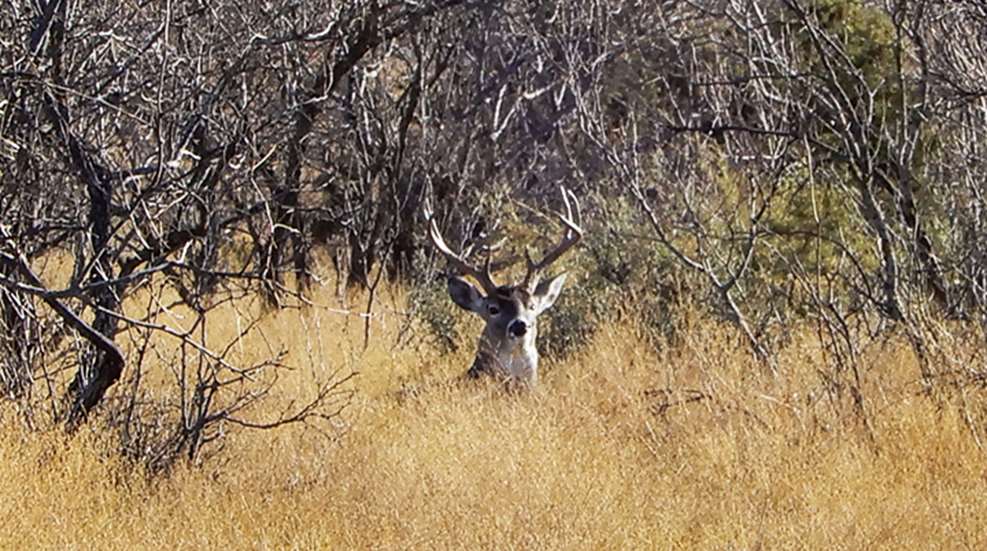
Whitetails are creatures of the edge. That simple phrase has been drilled into you since you showed a youthful whitetail interest. But all edges are not created equal. Croplands and food plots provide defined edges easily scouted for ambush opportunities. Step outside this manicured setting and edges become less discernible behind a cloak of cover.
Montana outfitter Rich Schneider partners with Rick Weiland at J&J Guide Service. They outfit deer, pronghorn and elk hunters with two bustling outposts. When not guiding, Schneider adds to a long history of hunting whitetails across the Midwest, West and Canada. He’s seen firsthand how whitetails use hidden edges across whitetail country.
Antiquity Trail
Humans tend to make the best edges in whitetail country, but some tend to be forgotten. Utility rights-of-way, seldom-traveled trails, forgotten fields in timber and other human-carved areas with an overgrown makeup are sure to catch the eye of an edge-traveling whitetail.
“I love to hunt old logging roads that are cut through heavy cover or come out of bedding areas,” says Schneider. “These old overgrown roads make travel easy for deer and also give them fantastic places to lay down scrape lines and rubs.”
Two-track roads may lead to old homesteads, adds Schneider. When he scouts abandoned farmsteads, he also looks for hand-planted windbreaks of trees that deer follow and use for bedding cover.
Jumped Ship
Riparian ribbons are standard edges to scout. Over hundreds of years many rivers and creeks have jumped their banks due to flooding, leaving behind dry riverbeds and oxbows. Whitetails track along these shadowy edges throughout their homelands. If Schneider stumbles across an old riverbed, he looks for terrain that funnels or prods deer into specific traps along these soft edges that harbor brushy concealment.
“The key for me is to find a pinch point that restricts the deer movement to a known place that deer are forced to pass through. Deep bank drop-offs, the steeper the better, can channel all deer traveling along the waterway to a place you can ambush them,” Schneider says.
Unkept Garden
When worlds collide it can be disruptive, but when vegetation worlds collide it gives whitetails another edge to follow. Seek out areas such as grasslands adjoining woodlands, swamps paralleling riparian zones and thickets coursing down coulees, to list a few examples.
“An example of an edge I have successfully used that can be overlooked are tag alder swamp edges. The dead giveaway of buck use will be the orange, easy-to-spot, rubs left behind by traveling bucks,” describes Schneider. “These edges are usually located along a small stream and typically parallel the waterway. Locate a main creek crossing, such as a beaver dam, and get a stand set up downwind.”
Schneider’s Western experience reveals whitetails also follow swaths of sagebrush to travel between food and cover. Sagebrush that sits in a depression receives top billing as whitetails duck below the horizon to follow the edge unseen.
Utilizing a hunting app, like HuntStand, gives you a satellite view of your hunting area. By adding the unique TerraPulse Tree Cover layer, you get a NASA boost to view canopy cover and vegetation for additional help in finding subtle, overlooked edges on your whitetail property.