Trail camera technology has greatly advanced in the last 30 years. So has my fixation with running them.
I currently have 134 trail cameras set in three states spanning more than 800 miles. Every trail camera is set on video mode because a clip with sound reveals more than a still image or series of still images ever will.
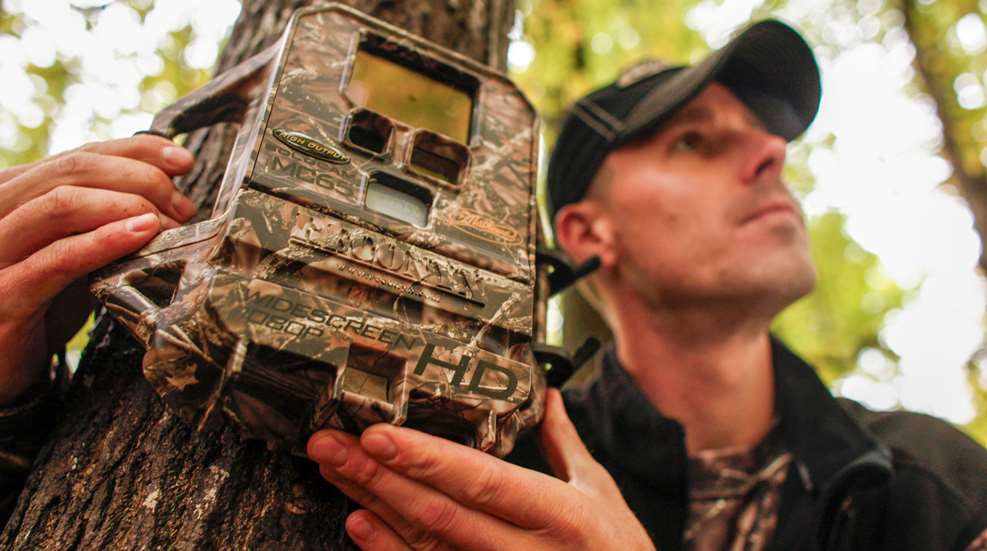
In areas with adequate cellular coverage, I like to run Moultrie Mobile cameras. If a thumbnail looks intriguing, I’ll download the 15- to 20-second video. One thumbnail last summer showed a big velvet buck staring into the camera. It looked exceptional so I requested the video. Not only did the big buck cruise the trail right by the camera, but so did seven other bucks, four of which carried record-book racks.
I like Moultrie Mobile cameras because there’s no card to check. They can be set up and perfectly positioned with a Mount/Aim feature. As foliage grows, the Smart Zones feature can be reset from anywhere, whereby decreasing false triggers.
In areas with non-cell coverage, I run Stealth Cam DS4K trail cameras (stealthcam.com). I use 64 GB SD cards, set each camera on the highest definition video mode available and program them to run for two minutes; three minutes on extensive trails. I check them once a month and scrub through thousands of clips each time.
The entire trail camera process is time consuming but as a former high school biology teacher turned full-time outdoor writer 25 years ago, nothing has taught me more about deer and elk behavior. Scouting and observing game is always an education, but we can only be in one place at a time. Imagine being in over 100 places at once, every day, all year.
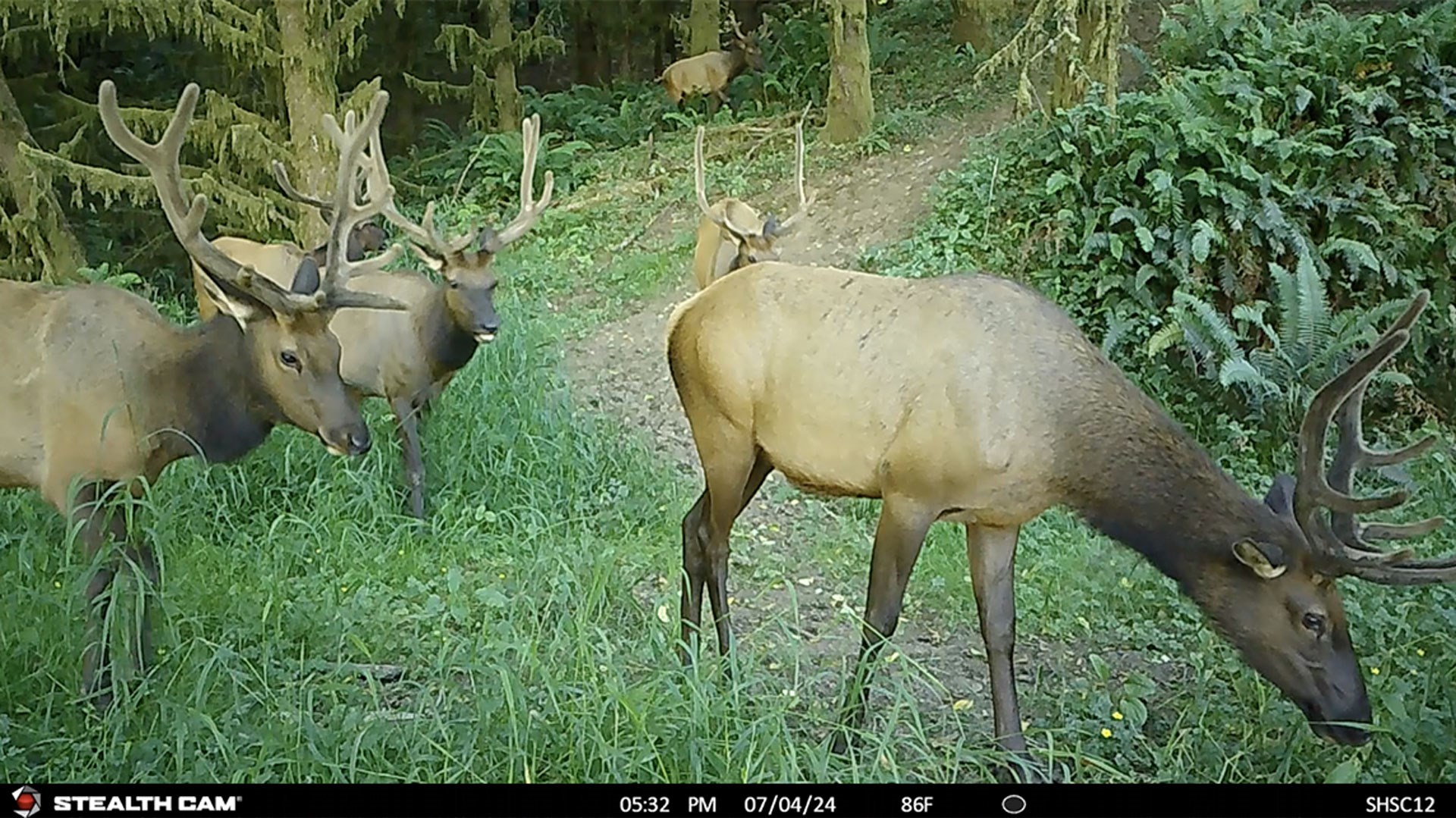
If you’re a deer and elk hunter, now is the time to get serious about running trail cameras, when bucks and bulls are in velvet. Velvet covered antlers are some of the fastest growing tissues on the planet. Antlers are a status symbol, used for fighting competitors and as a defense against predators. During the velvet stage antlers are fragile and animals don’t want to damage them. This means they tend to avoid thick brush, instead opting to travel on open trails. These places are prime for setting trail cameras.
One of the biggest challenges this time of year is keeping trails clear of tall grass and brush so cameras aren’t constantly tripped. Every summer I pull a card only to find over 1,500 video clips of blowing grass before the batteries died.
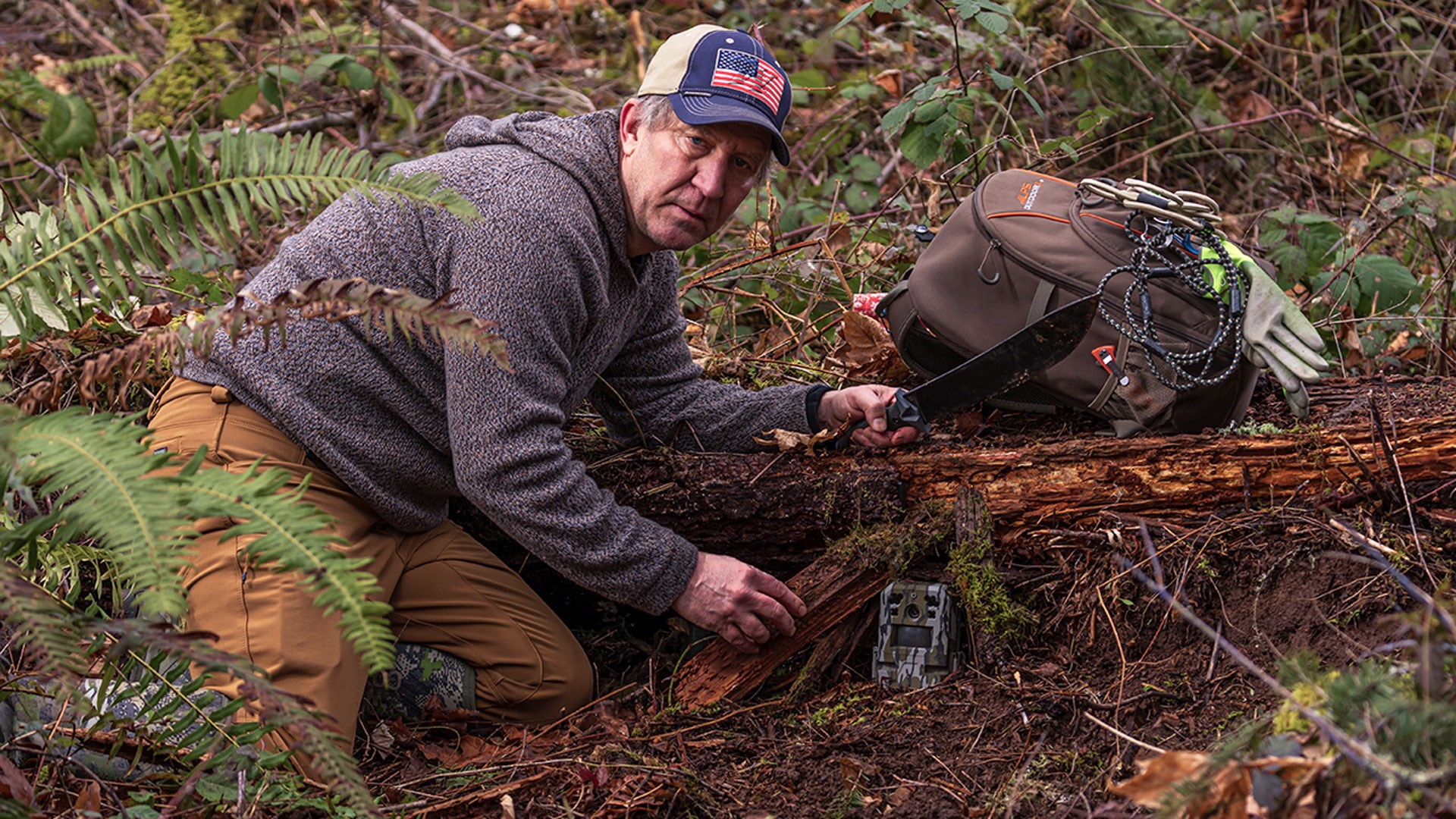
When initially setting trail cameras, a machete will allow you to open and trim trails. Better yet is a string trimmer, if feasible. A folding saw and sheers help. Every time you check cameras, take tools and maintain the trails.
Keeping trails open is time well spent. Trails can even be created by chopping and cutting and kept open by trimming each time you’re on them. Find, maintain, even build trails and they’ll be used by deer and elk for decades.
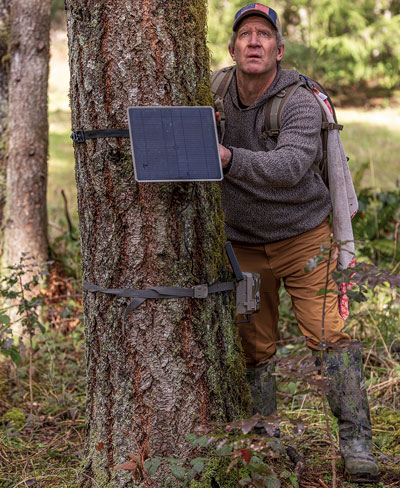
With cellular trail cameras, solar panels help keep them powered all summer.
This means you don’t have to regularly venture into the woods and risk spooking game. When setting trail cameras with solar panels, trim overhanging limbs and adjust for the sun’s changing path as fall approaches. Some of my solar sets have gone unchecked for over a year and produce shots nearly every day. Sometimes resetting the Smart Zones isn’t enough to block movement, so I have to go in and trim brush, grass and weeds.
I set a lot of cameras in non-traditional positions. I’ll bury them in the ground, smack in the middle of trails where deer and elk cross logs and big rocks. I’ll hang them 2 to 3 feet off the ground to capture eye level shots and sounds. I’ll strap them to rocks mere inches from a flowing creek and hang them on partially fallen trees that hover over trails.
If strapping cameras to slim trees or willows, chop out the tops so they don’t blow in the wind and trigger the camera. Good sets can take an hour or more to create, but the footage they capture is next level, and this equates to greater learning.
Now, more than any other time of the year, bucks and bulls are easy to pattern. This is the time to identify specific animals and try to keep track of them. Find the trails they travel, learn when they move in certain areas and keep expanding the reach of cameras to learn more. Locating bedding and feeding areas is one thing, but finding trails that connect the two can be key to filling tags. Many of the elk I catch this time of year travel 7 to 9 miles every night to feed.
Once the velvet comes off, buck and bull movement can become concentrated. Wise bucks quickly turn nocturnal. Some go off on their own. Some hang with one or two their age. Others stick with young bucks and always let them move ahead, often on different trails. Increasing cameras in these areas will help you find and learn about the movement of specific animals, even how to hunt them.
Summer trail cameras also reveal fawn and calf recruitment, along with predator pressure. Two summers ago, seven fawns were born in one of my hunt areas. In less than two weeks all were killed by coyotes. Bears and mountain lions can take their toll on calf elk.
In our quest to continually gain information, trail cameras are our eyes in the woods, seeing things we never will because we can’t be everywhere at once. When all the information is compiled, you can confidently develop a plan that may result in taking the animal of your dreams, year after year.
* For signed copies of Scott Haugen’s best-selling book, Trophy Blacktails: The Science Of The Hunt, check out scotthaugen.com. Follow Scott on Instagram & Facebook.