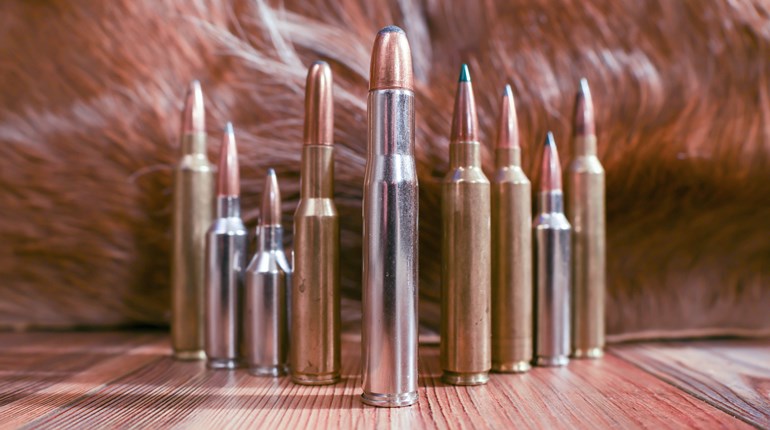
In a world of hyper-velocity cartridges, where shooting into the next zip code has almost become the norm, it can be refreshing to spend some time with one of the classic rimmed cartridges which our grandfathers used for varmints, predators and small-game species. In fact, the relatively mild report and virtual lack of recoil can be a wonderful diversion. The speedy .220 Swift was released in 1935 and the .222 Remington was released in 1950, the year my father was born, but among those earliest designs were the .22 Hornet and the .218 Bee.
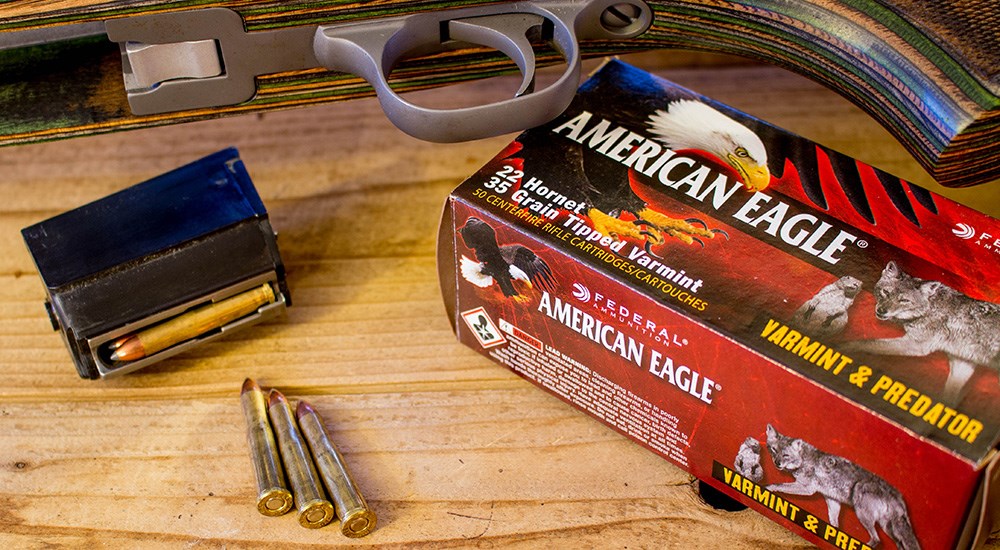
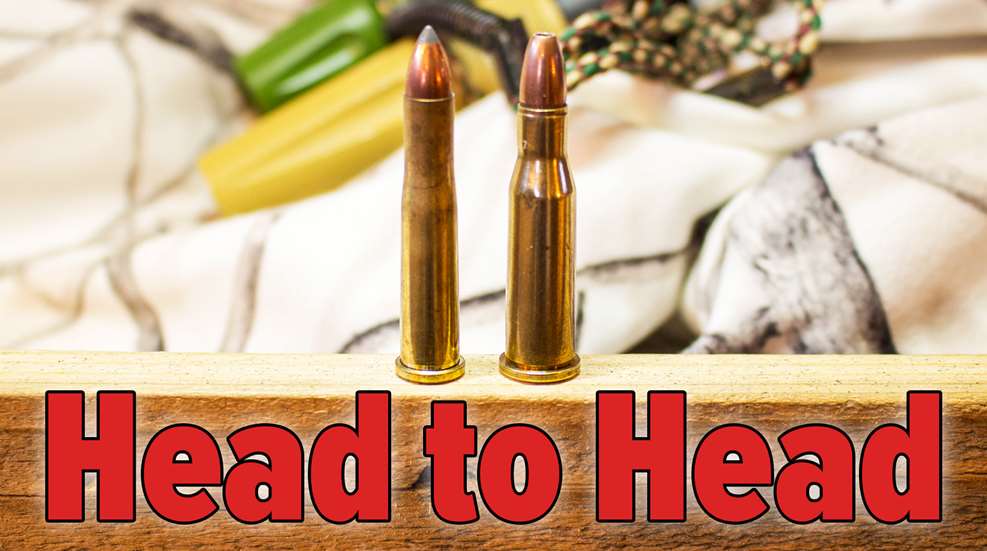
I like rimmed cartridges, especially in lever guns and single shots, and the mild cartridges can be a pleasure to shoot. Just as it’s good fun to grab a good old .30-30 carbine instead of the .30-06 sometimes, time spent with a good rifle chambered for the Hornet or the Bee can be a great change of pace. In my grandfather’s era, the .22 Hornet was the go-to varmint cartridge, and the couple of seasons I spent behind the trigger of a .218 Bee were a whole lot of fun. Let’s compare and contrast the pair of old veterans, and see which comes out on top.
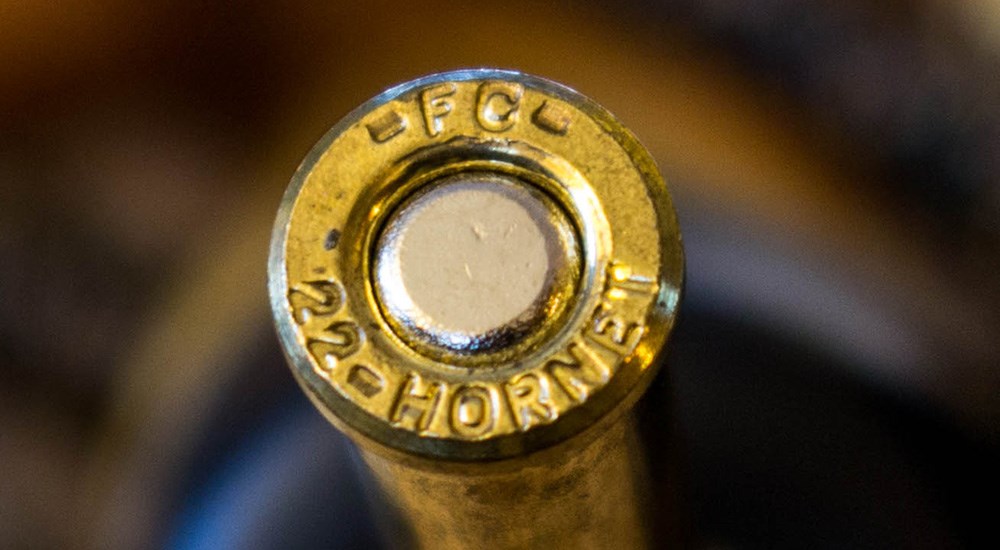
The .22 Hornet is the older of the pair, being released commercially in 1930. Those esteemed gentlemen at the Springfield Armory—including Col. Townsend Whelen and Capt. G.L. Wotkyns—were experimenting with the now obsolete .22 WCF cartridge, and arrived at what we know as the .22 Hornet. Though there had been another cartridge in the 1890s known as the Hornet, it was dimensionally different from the 1930 variant. It is a simple and diminutive cartridge, immediately evoking a bygone era. It has a rim diameter of 0.350 inches, a case length of 1.403 inches, and a slight 5-degree, 38-minute shoulder which culminates in neck measuring 0.386 inches, giving all the neck tension you’d want. The Hornet’s overall cartridge length is 1.723 inches.
Initial loads pushed a 45-grain jacketed bullet at a muzzle velocity of 2400 fps, and Winchester believed in the cartridge to the point where they offered it in the Model 54 bolt-action rifle and it was one of the original chamberings for the Model 70 in 1936. Modern powders have increased the muzzle velocity of the .22 Hornet, and many manufacturers have seen fit to use the lighter 30- and 35-grain bullets to boost velocities further. For furbearers and varmints inside of 200 to 250 yards, the .22 Hornet is a sound choice, as even the 45-grain "traditional" load—look to Hornady’s Custom line for the 45-grain Spire Point at 2665 fps—can be zeroed at 200 yards, striking 2.8 inches high at 100 yards. Lighter loads like Federal’s Varmint & Predator 35-grain Tipped Varmint load, at 3000 fps, can be zeroed at 200 yards, striking 3.1 inches high at 100, but will drop off quickly after 200 yards. Yet it remains a deadly little cartridge at woods distances.
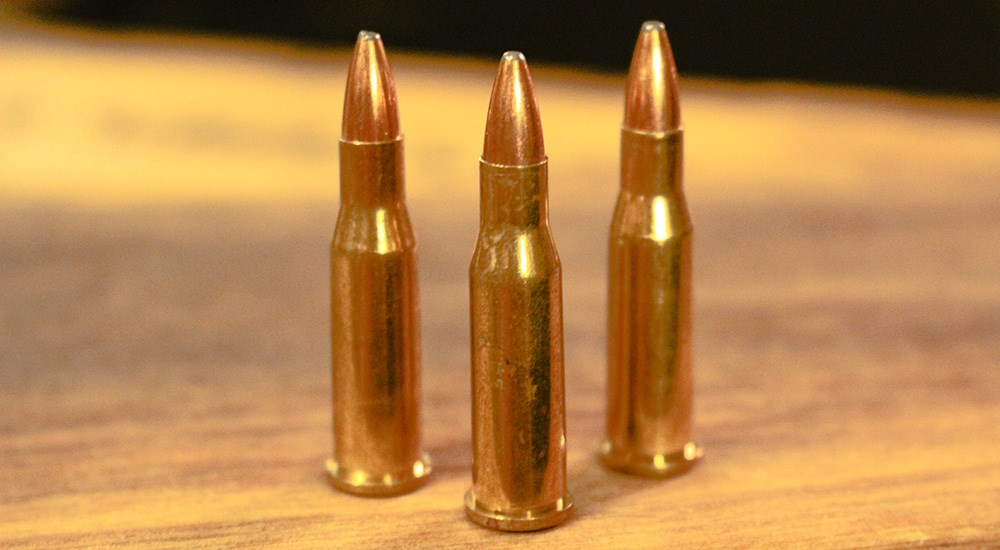
The .218 Bee came along in 1937, at the height of the Great Depression, released in Winchester Model 65 lever gun. Designed to compete with the .22 Hornet, Winchester necked down the .25-20 Winchester to hold .224-inch-diameter bullets (the .25-20 itself was a .32-20 necked down), and the Model 65 was offered in .218 Bee, .25-20 and .32-20. The Bee is slightly shorter, but definitely fatter, than the Hornet. Its base measures 0.408 inches, has a body with minimal taper and a steeper 15-degree shoulder. The overall case length measures 1.345 inches and the Bee has a neck length of 0.258 inches, more than one caliber, for sufficient neck tension. The Bee also comes in slightly shorter than the Hornet, at 1.680 inches.
Because of the lever-action tubular magazine, the Bee was loaded from its inception with round nosed bullets. With a 45-grain bullet, the Bee will give another 100 fps over the Hornet, with factory loads driving a 45-grain to 2750 fps. There were some accuracy complaints early on with the .218 Bee, but it’s pretty much accepted that the issue was with the lever-action rifle more than the cartridge.
There are a good number of rifles chambered in each, with Ruger having adopted both. The Ruger 77/22 is a great bolt-action repeater with their proprietary rotary magazine, and the Ruger No. 1 has been chambered in both cartridges at one time or another.
Which of the two makes the better choice? Well, the performance of the two is pretty similar, with the Bee having the slight velocity advantage, but the Hornet has the advantage of more factory loads and more availability. At the time of this writing, there are two advertised factory loads for the Bee (Hornady and Winchester), while the Hornet has a dozen or more. The Bee’s factory ammo uses 45- and 46-grain bullets, while the Hornet offers a range of bullet choices from 35 to 50 grains.
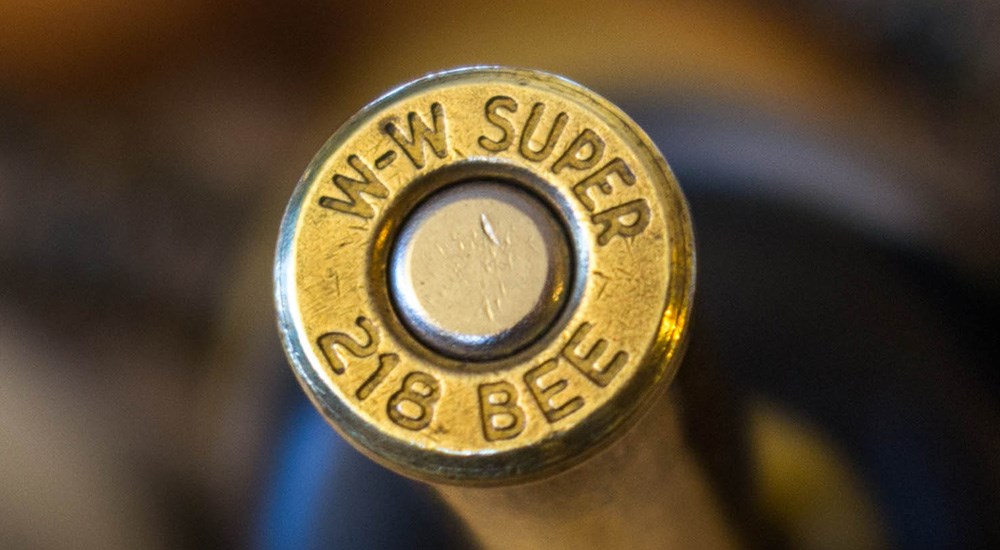
I personally feel that the Bee is a better cartridge, firstly because of the velocity increase over the Hornet, secondly because I've found that brass for the Bee tends to be more consistent than that of the Hornet, and thirdly for the roomier case which gives a bit more flexibility for the handloader. But unless you intend to handload, the Hornet makes more sense, simply for the availability and range of factory loads. I am an unabashed handloader, and when I spent time with that Ruger No. 1 in .218 Bee, components were readily available, so feeding the single-shot was no issue.
Both cartridges are easy on the ears and have very little recoil, yet are effective for any of the smaller species for which these are suited. It seems that the industry has chosen the .22 Hornet, and with the modern factory loads you can probably do anything that you could do with the .218 Bee. I’d hate to see either fade away completely, but in this competition I’ll have to give the nod to the older .22 Hornet.
Looking for previous installments of our "Head to Head" series? We've got you covered.
• .338-06 A-Square vs. .35 Whelen
• .308 Winchester vs. .300 Winchester Magnum
• 6.5 Creedmoor vs. 6.5 PRC
• .22 LR vs. .22 WMR
• .30-06 Springfield vs. .300 Winchester Magnum
• .300 Wby. Mag. vs. 8mm Rem. Mag.
• 7mm Remington Magnum vs. 27 Nosler
• .257 Roberts vs. .25-06 Remington
• .300 H&H Magnum vs. .300 Winchester Magnum
• .308 Winchester vs. .338 Federal
• .222 Remington vs. .223 Remington
• .270 WSM vs. 7mm Rem. Mag.
• .22-250 Remington vs. .204 Ruger
• .25-06 Remington vs. 6.5 Creedmoor
• .444 Marlin vs. .45-70 Government
• 7x57mm Mauser vs. .280 Remington
• .300 Win. Mag. vs. .300 Wby. Mag.
• .375 Ruger vs. .375 H&H Magnum
• 7mm-08 Remington vs. .280 Remington
• .280 Remington vs. .280 Ackley Improved
• 7mm vs. .30 Caliber
• 6.5 Weatherby RPM vs. 6.5 PRC
• .338 Win. Mag. vs. .340 Wby. Mag.
• .300 RSAUM vs. .300 WSM
• .500 Jeffrey vs. .505 Gibbs
• 7mm RUM vs. .300 RUM
• .308 Winchester vs. 7mm-08 Remington
• 6.5 Creedmoor vs. .260 Remington
• .303 British vs. 8x57 Mauser
• .30-06 Springfield vs. All Other .30s
• .17 HMR vs. .17 WSM
• .450 Nitro Express vs. .470 Nitro Express
• 350 Legend vs. .35 Remington
• .280 Ackley Improved vs. 7mm Rem. Mag.
• .404 Jeffery vs. .416 Rigby
• .243 Winchester vs. 6mm Creedmoor
• .300 PRC vs. .300 Win. Mag.
• .30-06 Springfield vs. .270 Winchester
• 6.5 Creedmoor vs. 7mm-08 Remington
• 8x57 Mauser vs. .318 Westley Richards
• .358 Winchester vs. .350 Remington Magnum
• .22-250 Remington vs. .220 Swift
• .270 Winchester vs. .270 WSM
• .26 Nosler vs. 6.5-300 Weatherby Magnum
• .458 Win. Mag. vs. .458 Lott
• 7mm Rem. Mag. vs. .300 Win. Mag.
• .243 Winchester vs. 6mm Remington
• 7x57mm Mauser vs. 7mm-08 Remington
• .25-06 Remington vs. .257 Weatherby Magnum
• .338 Winchester vs. .375 H&H Magnum
• .30-30 Winchester vs. .35 Remington
• .257 Roberts vs. .250-3000 Savage
• .270 Winchester vs. .280 Remington
• .35 Whelen vs. 9.3x62mm Mauser
• .416 Rigby vs. .416 Remington Magnum
• .308 Winchester vs. .30-06 Springfield
• .22 Nosler vs. .224 Valkyrie
• .300 Win. Mag. vs. .300 WSM
• .223 Remington vs. .22-250 Remington