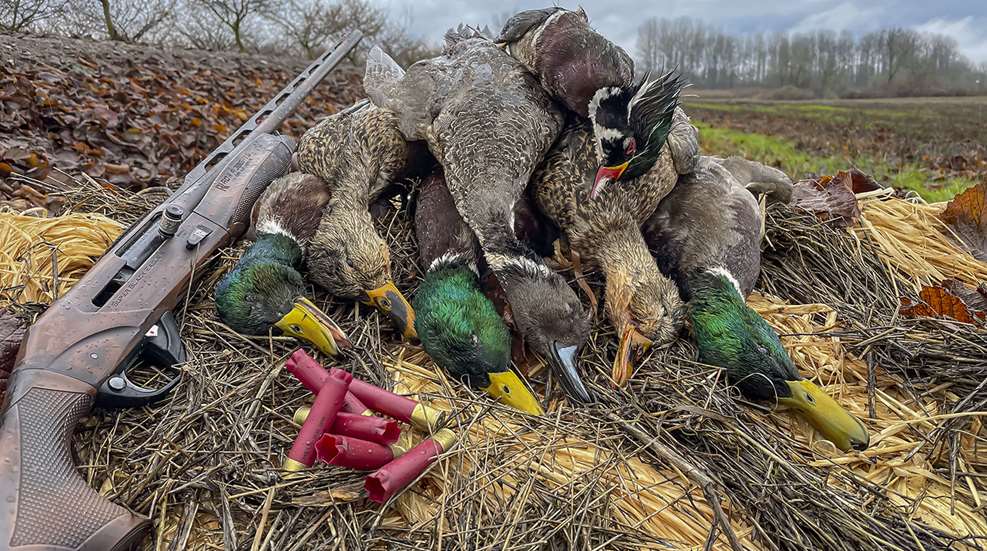
Two years ago, a buddy invited me on a duck hunt. “Sure, bring your .410, that’ll be fun,” he said. I didn’t know three other hunters were joining us. They all shot 12-gauges. I got stuck on the upwind end of the big blind. I didn’t fire a shot until the others had their limits; they were shooting well before birds reached me on the windy day. When done, they sat back and watched.
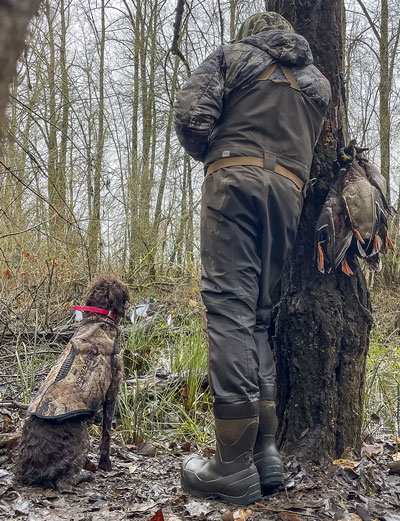
It took a while, but the younglings appreciated the experience when it was all said and done. “Dude, those birds worked in so tight for you, that was awesome!” remarked one kid when my dog brought back the final duck, a stud wigeon. “Had to let ’em get within .410 range, about 20 yards in this wind,” I winked.
Done right, duck hunting with a sub-gauge can take your skills to the next level. Done wrong, the outcome will be frustrating.
The worst sub-gauge experiences occur when there are multiple hunters and you’re the only one not shooting a big bore. It’s exacerbated when shooters are quick on the trigger, not letting birds finish.
But hunt solo, or with one or two buddies shooting the same loads as you, and you’ll come away with a gratifying adventure that’ll keep you wanting more. Last season two buddies and I grabbed .410s and headed to a small creek. It was flowing high due to a recent storm. Scouting revealed more than 300 mallards piling into it.
We tossed out eight floating decoys, one was on a jerk string to create ripples. We were done in 35 minutes. I picked all greenheads. Two days later we were back. We left with full straps.
Orchestrating successful sub-gauge hunts takes effort. I’m talking .410s and 28s, nothing bigger. Unless birds are close, you’re not going to consistently kill them. I can assure you no sub-gauge manufacturer created these shotguns to shoot as far or as powerfully as a 12-gauge. Sub-gauges are designed to perform within specific parameters.
Getting birds into consistent sub-gauge range is a three-part process, and scouting takes the lead. Don’t be content simply locating ducks, but find where they’re congregating in close quarters so they’re quickly dropping from the sky and into range. Creeks, river sloughs, and flooded ditch lines and fields are prime sub-gauge settings to target. These holes are small and landing zones tight, so birds are in range once they commit.
Second comes the setup. Few decoys are required when hunting tight spots. A half-dozen will often suffice, rarely more than a dozen are necessary. Having a swimmer helps—motorized or on a jerk cord—as the ripples establish confidence in approaching birds. When possible, I like staking six or eight silhouette decoys to floating logs to increase the small spread’s visibility.
Go easy on the blind. A big, blocky blind can instantly alert birds. A small panel blind, or a one-man blind, is perfect. Over 75 percent of the time I hide in tall grass or tuck tight to a tree, with no blind.
The third ingredient to consistent sub-gauge success is patience. You’ve scouted and learned the details of when birds are arriving, including what direction they’re approaching from and where in the hole they’re gathering. Though minuscule, you’ve strategically crafted the perfect decoy spread and blind setup. Now’s not the time to panic and sky bust. This moment separates sub-gauge aficionados.
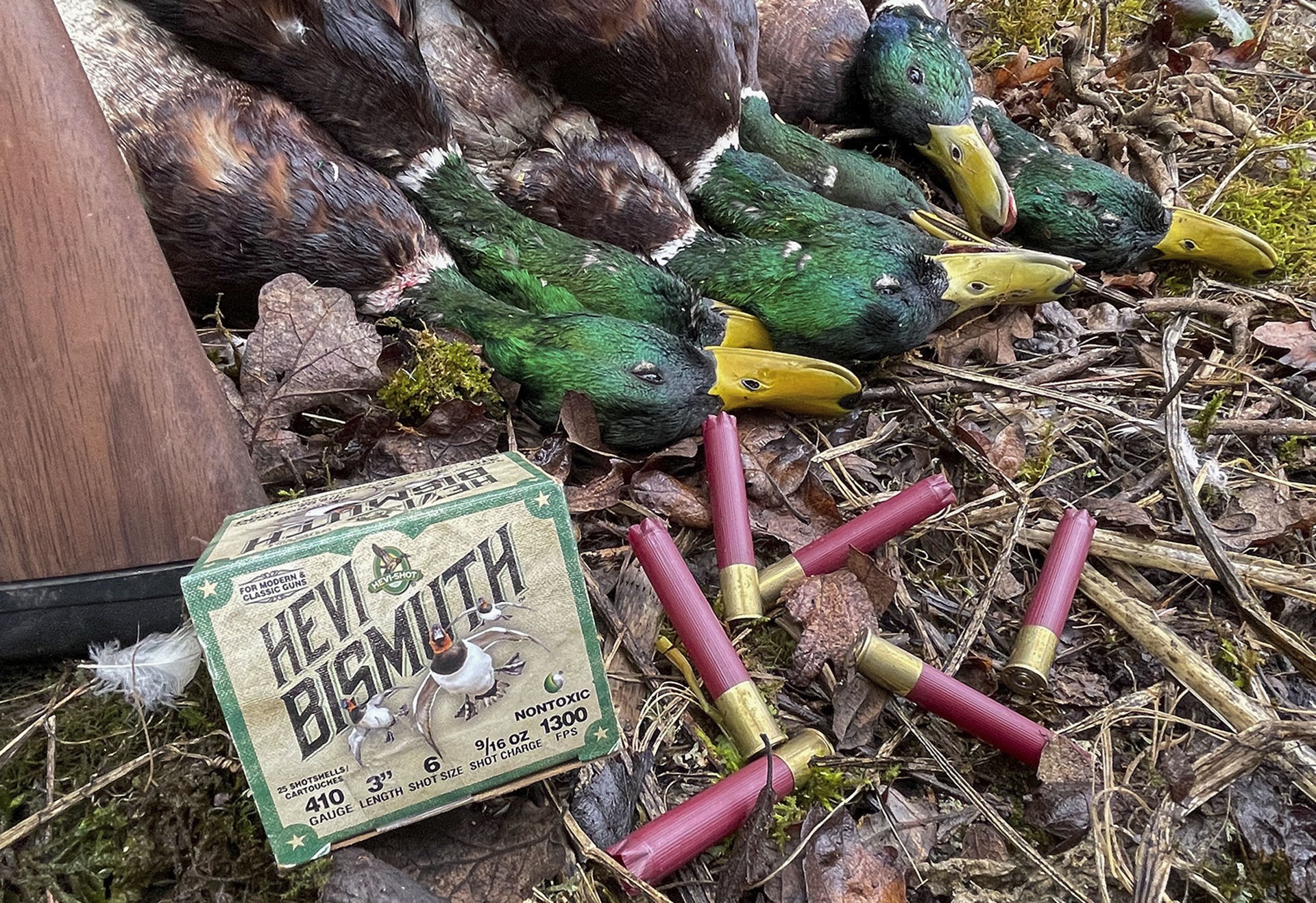
Set your effective range and stick to it. Know your loads and how they perform in the gun and choke you’re using. Start with paper patterning, first at 20 yards, then 30. It’s good to see what your load will do—or won’t do—at 40 yards, especially for swatting cleanup.
With the full choke and loads I shoot in my Browning .410 pump, 32 yards is the comfort zone. Fifteen to 22 yards is great for head shots. Yes, once ducks descend through the treetops and vertically drop into the compressed hole, headshots are achievable, especially on back-peddling mallards. Wood ducks and teal, not so much. Those warrant body punches.
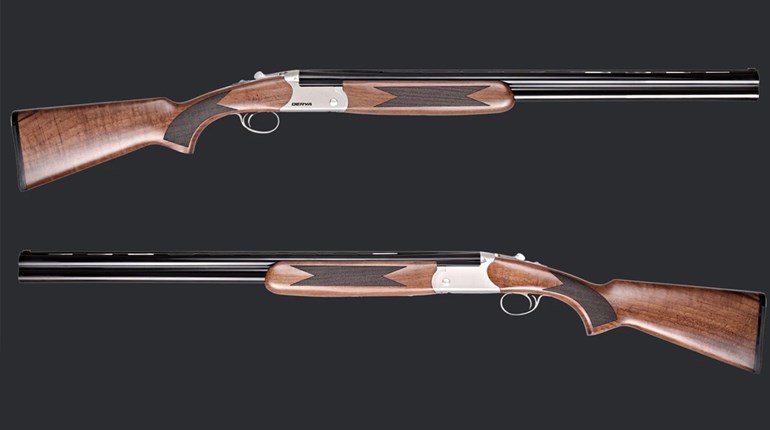
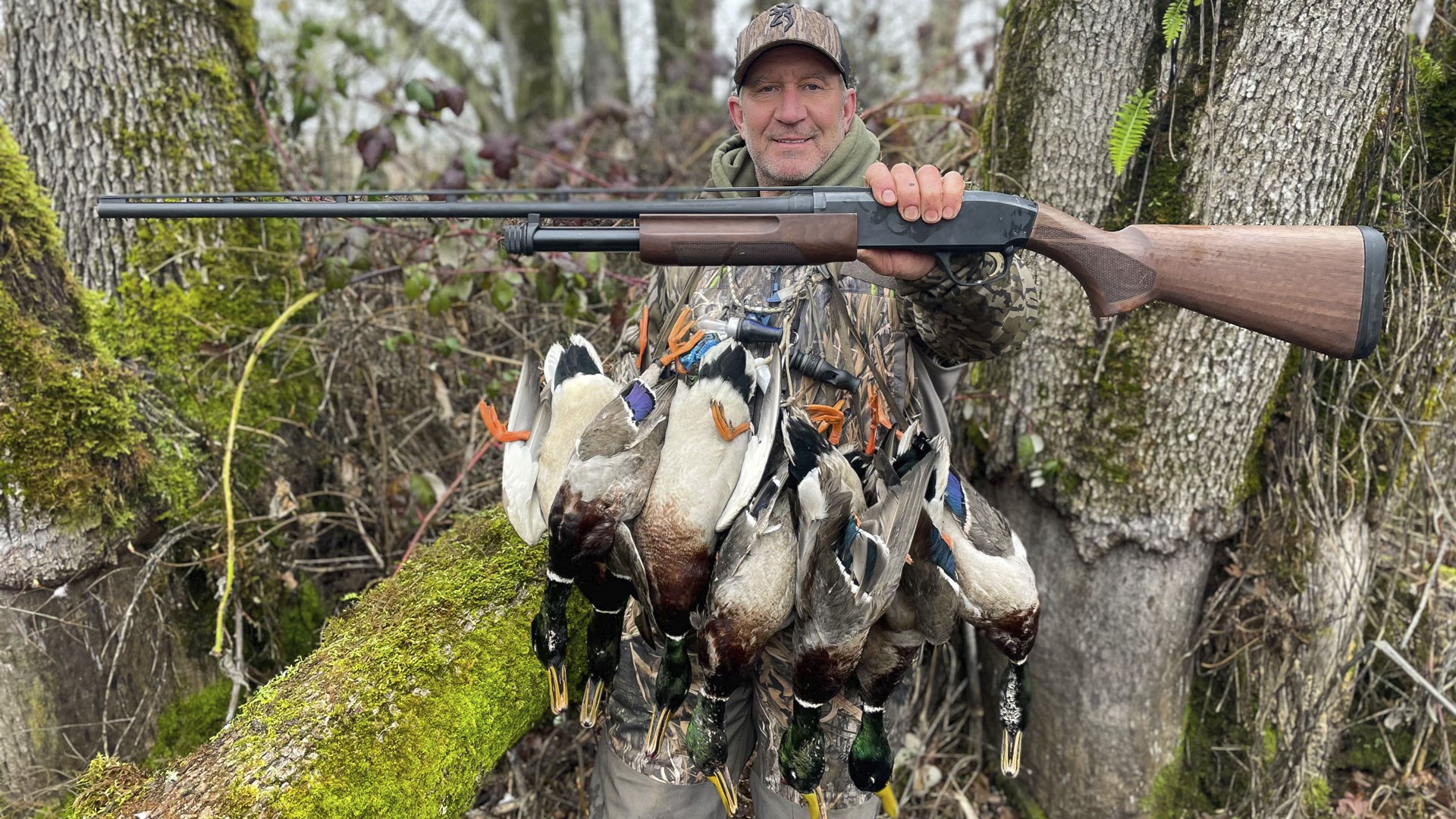 A simple blind, small decoy spread and a sub-gauge–like this 28–can create memorable duck hunting opportunities in the right situations.
The decision to shoot builds or crumbles the best intentions of hunting with a sub-gauge. Patiently letting ducks work, shooting when they’re close, means you’ve fooled them. The decoys did their job. So did your calling. It’s the ultimate duck-hunting achievement and the closer the encounter, the more triumphant your efforts.
Not only will hunting with a sub-gauge develop shooting skills, it’ll provide more opportunities. One stream a buddy and I hunt is a classic example. Five years ago, we’d hunt it two or three times a season. We’d go in with 12-gauges and blaze away. It took weeks for ducks to start using the spot again. Once we hunted it with .410s, that changed.
Now we’re hunting that same spot two or three times a week in the final month of the season. It’s a roost location so we wait for duck numbers to build. We go in early and shoot fast. We’re not picky. The goal is to shoot and get out before the majority of ducks begin to arrive. We’ll do the same thing two days later. A few days after that it might take a couple hours to fill our straps, but we’re hunting. If the action is slow, we sometimes call it quits, letting birds settle into the hole later in the morning. When newly arriving migrators find it, we’re back in action. The goal is to keep ducks using it in order to attract more ducks. The quietness of the sub-gauge goes a long way in not educating birds, thus providing more hunting opportunities.
Don’t push sub-gauges beyond their designed intentions. Instead, elevate your game to fit the guns. You’ll discover that the effort, concentration and commitment required to consistently kill ducks using a sub-gauge will not only make you a more proficient hunter, it will take your joy of this great sport to another level.
*For signed copies of Scott & Tiffany Haugen’s popular book, Cooking Game Birds, visit scotthaugen.com. Follow his adventures on Instagram & Facebook.