Growing up shooting and hunting in the West, shots at game were usually wide-open and often long. The need to shoot through brush was uncommon. I remember reading about eastern hunters using heavy, round-nosed bullets to hunt whitetails where the brush is thick, claiming that those “brush-busting” bullets didn’t deflect much, and they could shoot through the thick stuff and kill a deer. It sounded logical.
Years later, I read several articles claiming that there is no such thing as a brush-busting bullet; all projectiles will deflect, deform or fragment the instant they contact even the slightest leaf or twig. This also sounded logical, especially because at the time I was bowhunting and guiding bowhunters, and arrow deflection was a common problem. The tiniest twig could send a well-aimed arrow on a completely different course. Influenced by these articles and by watching arrows go awry, my mindset changed; I came to believe it was not possible to ethically shoot through brush at game with either firearm or bow.
This opinion was reinforced after seeing the results of a shot my brother took at a small bull elk. The distance was perhaps 200 yards. He was shooting a .30-06—an excellent choice for elk—loaded with high-quality 180-grain bullets. The bull was behind a screen of Gambel oak brush, and my brother held on its vitals and pressed the trigger. His bullet found brush before meat. It deflected and tumbled, badly misshapen, into the bull’s hindquarter. Another shot was required to finish the elk. Indeed, it seemed a bad idea to shoot through brush at game.
Hunting the Sandveld Forest
Late summer of 2021 found me stalking through the thick bush of western Mozambique. Visibility was short, ranging from 15 to 100 yards. Everywhere was brush: Sandveld forest intermixed with Mopane forest. I was hunting Cape buffalo, one of the most dangerous game animals on earth. And then my professional hunter (PH) told me to shoot a bull through a screen of brush.
I was uncomfortable with the shot for several reasons, but mostly because of the brush. I passed, which frustrated the PH, but he later commended me for it. It’s always better to pass a shot that feels questionable, especially when hunting dangerous game. But that encounter started me thinking; Would it be possible to shoot through brush to kill a buffalo? Considering the local flora it seemed a likely scenario, so I asked my PH about it. He said that so long as the brush is not super thick and not too far from the animal, my heavy 300-grain A-Frame slug would punch through and kill the buff. I was still skeptical, but beginning to reconsider my opinions. We hunted on.
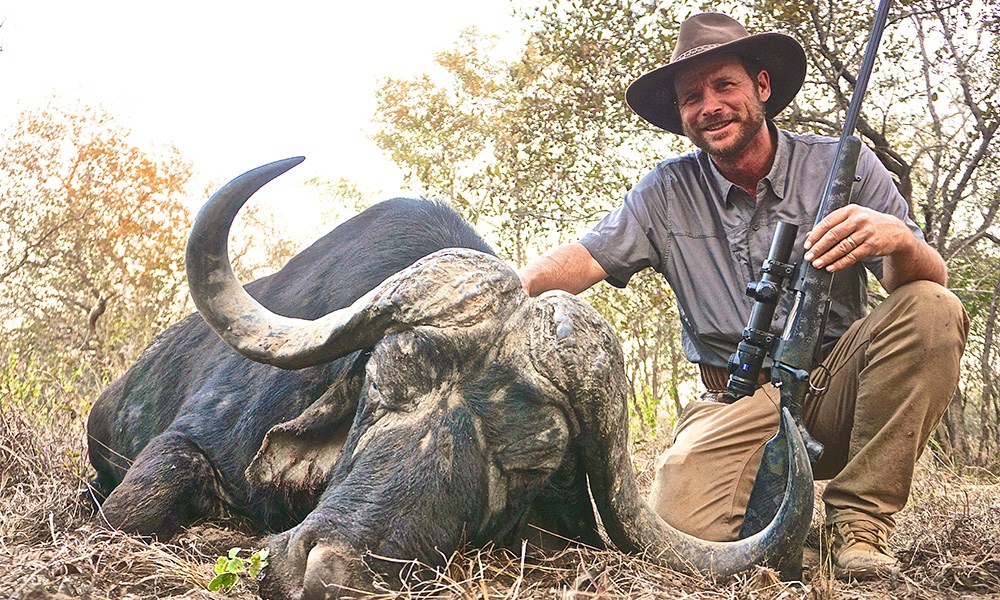
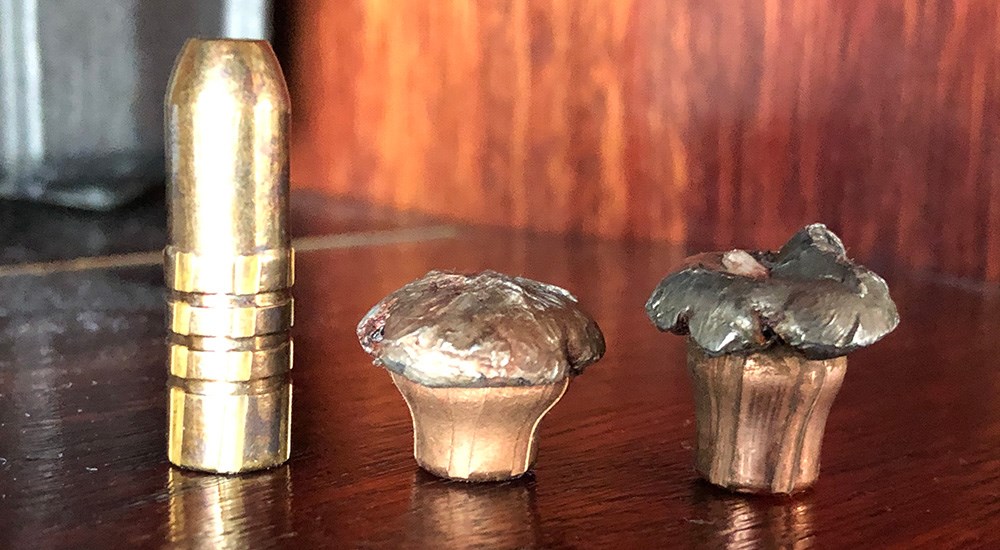
A long day of tracking was coming to a close, the sun hanging low in the west. Three massive buffalo bulls fed through the heavy brush before us, one of them particularly big and old. A shot finally presented at the monarch, and as anticipated there was a thin screen of brush in the way. But my PH said shoot now, so I did, placing my bullet as best I could on the point of the bull’s shoulder. Moments later the death bellow rang through the Sandveld forest. My shot placement had been ideal in spite of the brush, and when we recovered the bullet it was perfect—no sign of adverse effects from its trip through the thick stuff. I was delighted with the huge old buffalo and relieved that my first “brush-busting” shot had turned out well. I wasn’t eager to try another, but just days later the need arose once more.
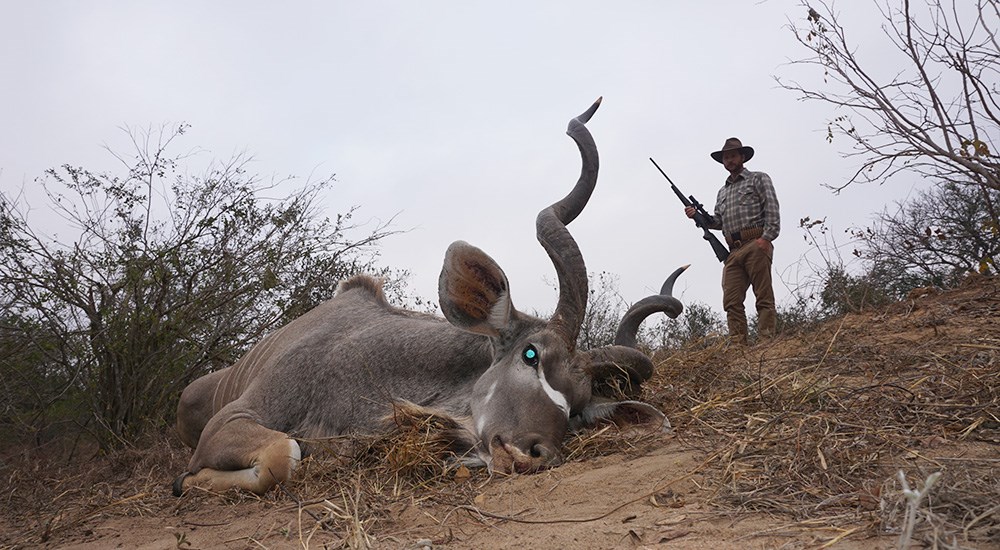
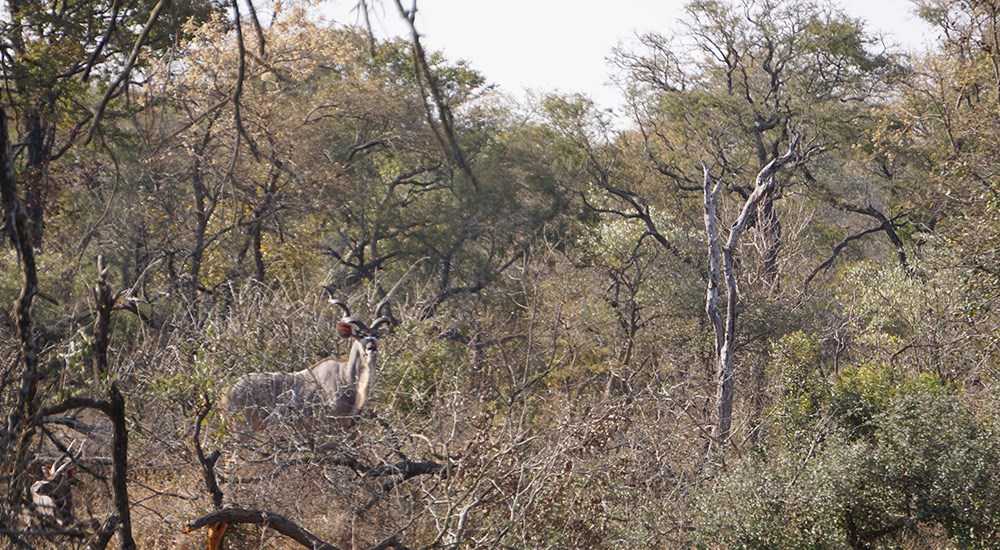
We’d been hunting hard for a good mature kudu bull. Vegetation was thick and the kudu elusive. Only a day of my hunt remained when my PH spotted an old bull feeding away from us through the bush. Shooting sticks in hand, we shadowed him through the forest, searching for a shot opportunity. Brush was thick under the canopy, the early morning light shining in streaks through the forest. Then there he was, feeding head down and quartered away about 100 yards distant. A screen of brush gave him an elusive, ghost-like appearance. The PH said it’s now or never, so I settled my crosshairs and pressed the trigger. Once again, the shot was spot on, and the kudu was down in just a few yards. My opinion on shooting through brush had been remodeled.
Brush-Busting Boundaries
Ironically, my opinions both for and against shooting through brush were and still are correct. If you’re shooting a fast, light bullet, you should never shoot through brush at all. But if your bullet is very large and traveling at moderate velocity, a shot through light brush may be okay. Let’s take a closer look.
• Bullet Speed and Weight: In most cases velocity is a good thing. Not so when you’re shooting through brush. The faster a bullet is traveling the more likely it is to unravel upon impact with brush. For example, a 130-grain projectile traveling 3000 fps will likely fragment, deform or tumble if it contacts even a tiny twig, whereas a 300-grain bullet going 2000 fps will probably hold together just fine and experience minimal deflection.
• Brush-to-Target Distance: When a bullet contacts an obstacle during flight it will deflect. How far off target it goes depends on how sturdy the obstacle was and how far the bullet travels between its encounter with the brush and impacting the target. For example, a bullet that cuts a twig six feet from its destination might deflect only a couple inches. A bullet that encounters a twig closer to the shooter might deflect many feet, entirely missing the animal. You should never shoot through brush unless it’s very close to the animal.
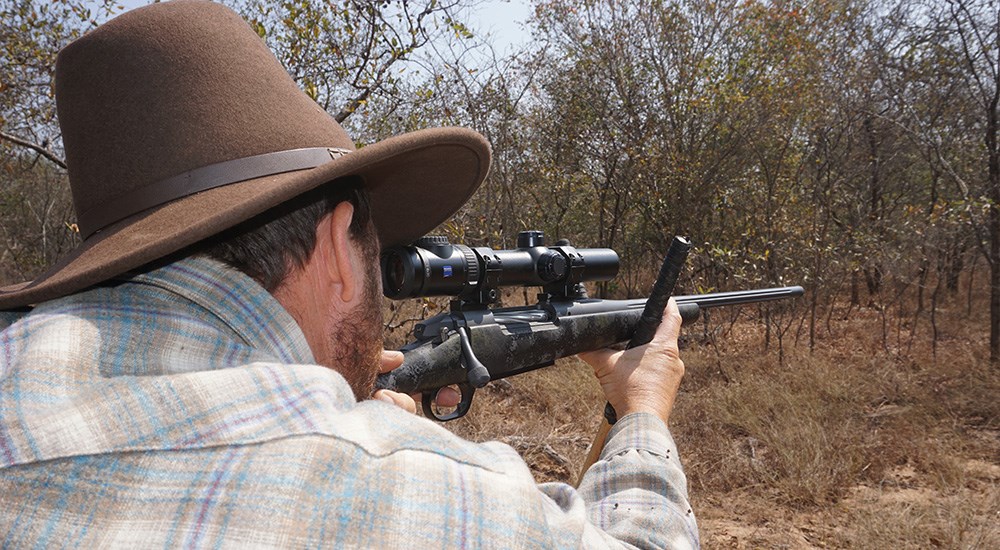
• Brush Density: This is blatantly obvious but still bears mention; if the brush is thick, don’t try a shot through it. There’s too much in the way and your shot will almost certainly go awry. However, if the brush, grass or whatever is in the way forms just a thin screen, your bullet—so long as it’s heavy and slow—will likely arrive on target and in condition to perform its terminal task.
• Bullet Construction: “Brush-busting” bullets need to be tough. Your typical deer bullet that’s designed to expand dramatically upon impact will not handle brush well. You need something rugged, like those built for heavy-boned dangerous game. Honestly, I don’t know if any one bullet shape is better than another, though as aforementioned, I have heard that round-nosed projectiles are better. Personally, I’m not in a position to pontificate. I’d simply recommend using big, heavy, tough bullets if you anticipate shooting through brush.
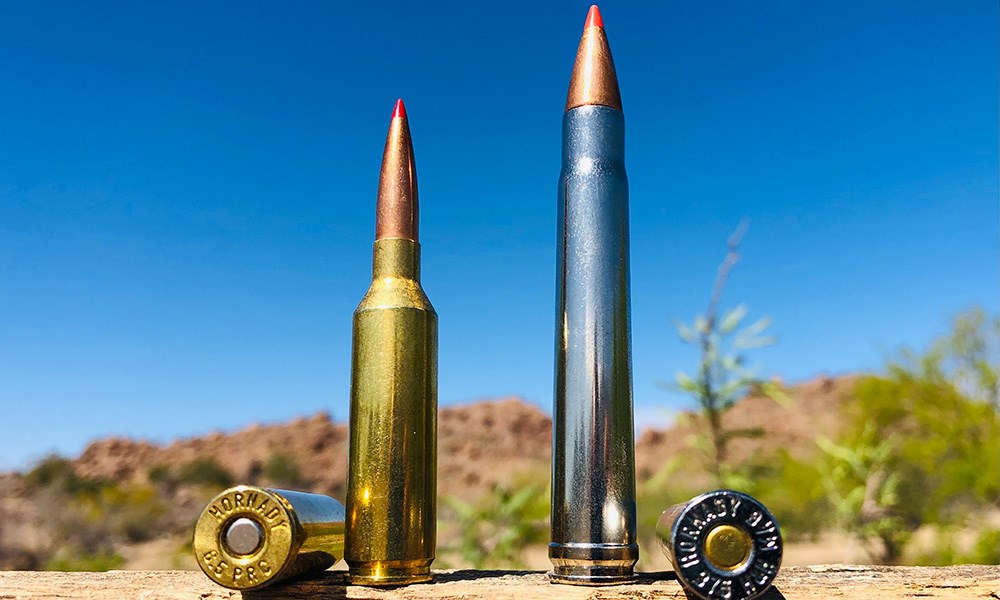
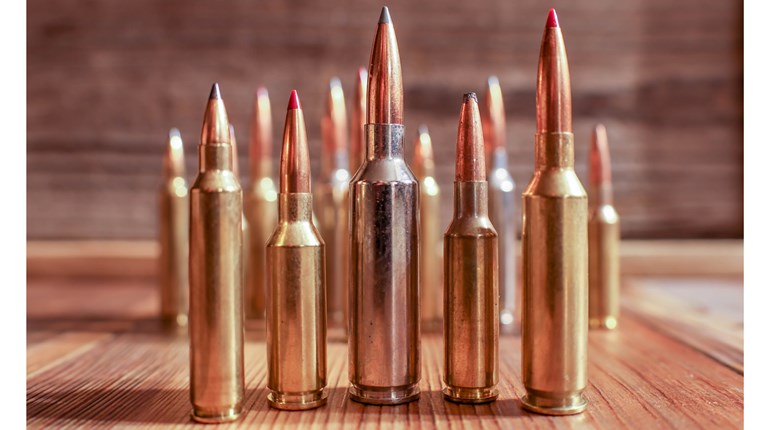
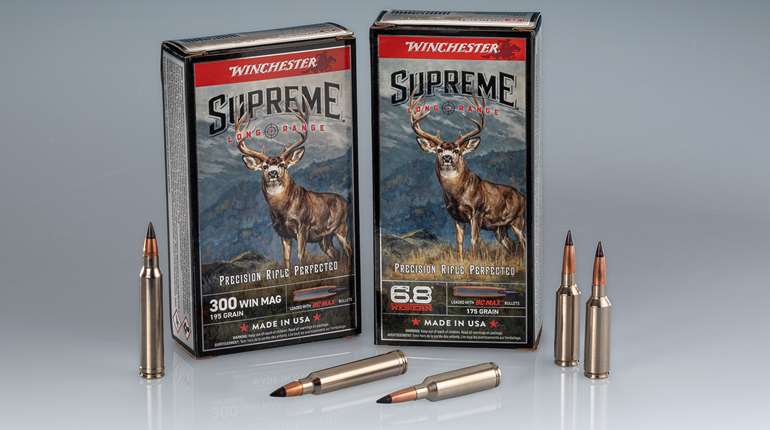
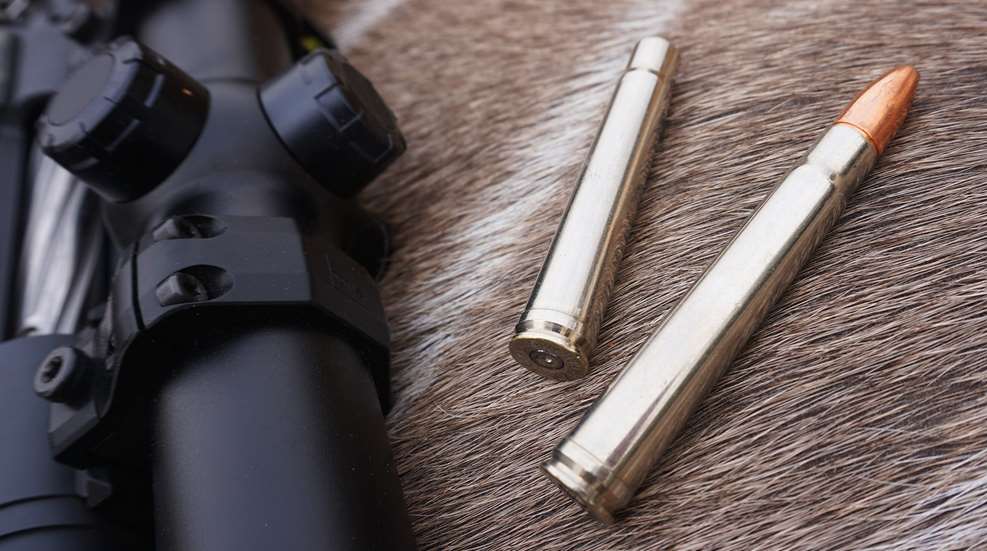
• Cartridges: Since we need a bullet that’s big, heavy and slow, we’ve eliminated most popular modern hunting cartridges like the 6.5 PRC (left in the photo above). That’s okay, because if you’re going to be shooting through brush, your shot distances are almost certainly going to be short. I used the .375 H&H Magnum in Africa (above, right), and in my opinion it’s an awesome cartridge for shooting through brush. I think the .45-70 Government would work well, too, as well as any similar cartridge that thrives when fed big, heavy, tough bullets. Sure, these are big rounds that can be painful to shoot—but that pain is a lot more agreeable than the pain you would feel watching a big buck escape because your bullet was not up to the task.
Conclusion
In my opinion, it is possible to ethically shoot through brush. However, good judgment must be exercised. Don’t ever take a brush-busting shot unless you’re confident it will result in a clean, ethical harvest.
Most Popular