by
Support NRA American Hunter
DONATE
** When you buy products through the links on our site, we may earn a commission that supports NRA's mission to protect, preserve and defend the Second Amendment. **
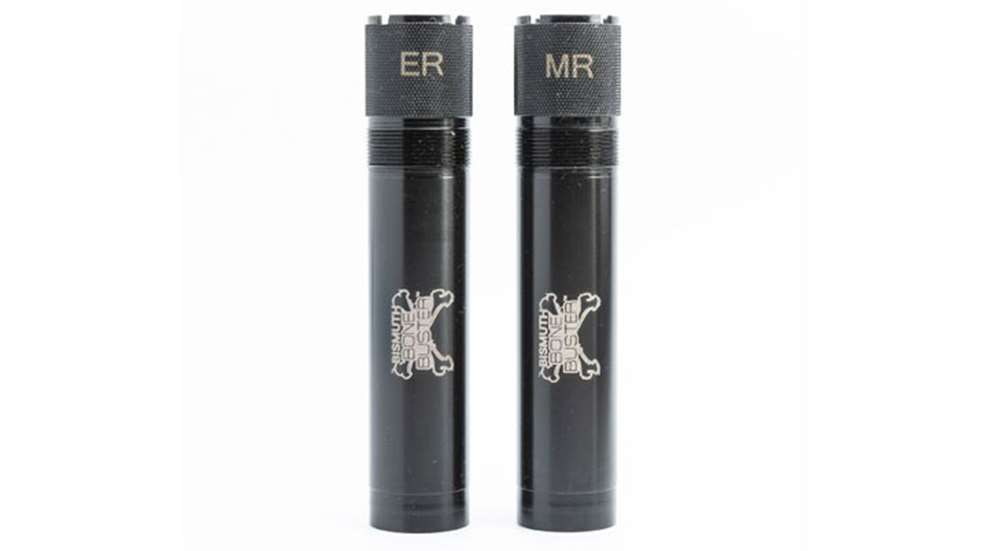
Carlson's new Bismuth Bone Buster Choke tubes are designed specifically for waterfowlers looking to unlock the full potential of Bismuth ammunition. A cheaper alternative to tungsten, bismuth has long been lauded for its downrange energy, and the tight patterns of which it is capable. Bone Buster tubes promise to enhance this latter quality using a longer parallel section and tighter constrictions, which better pattern bismuth loads than standard factory tubes. Manufactured in the USA from 1704 stainless steel, the choke tubes are coated with a non-reflective matte-black finish, a combination which should stand up easily to the rigors of the marshland. For more information on Carlson's Bismuth Bone Buster Choke Tubes, which come in 12- and 20-gauge, in Mid Range (best for 20-45 yards), and Extended Range (best for 40-60 yards) configurations, please visit choketubes.com. MSRP: $47.50
Tubes Styles Available:
Benelli Crio Plus
Beretta Benelli Mobil
Beretta Optima HP
Browning Invector DS
Browning Invector Plus
Remington
Retay
Winchester-Browning Invector-Mossberg 500
Tubes Styles Available:
Benelli Crio Plus
Beretta Benelli Mobil
Beretta Optima HP
Browning Invector DS
Browning Invector Plus
Remington
Retay
Winchester-Browning Invector-Mossberg 500