Our infatuation with short-action cartridges dates back over a century, what with the .250-3000 Savage and .35 Remington—just to name a couple—having celebrated their 100th birthday some time ago. The .308 Winchester went on to ‘standardize’ the short-action, being released in 1952, and the magazine length for that cartridge was the basis for a couple of early short-action magnum cartridges: the 6.5 Remington Magnum and the .350 Remington Magnum. Both were based on a severely shortened H&H belted case, and both had a rough start. The .350 Rem. Mag. is rare, but still draws breath, and the 6.5 Rem. Mag. is all but gone. But the concept of loading a magnum cartridge in that short, rigid receiver held its allure; the short, squat powder column is believed by many to help in the accuracy and consistency department.
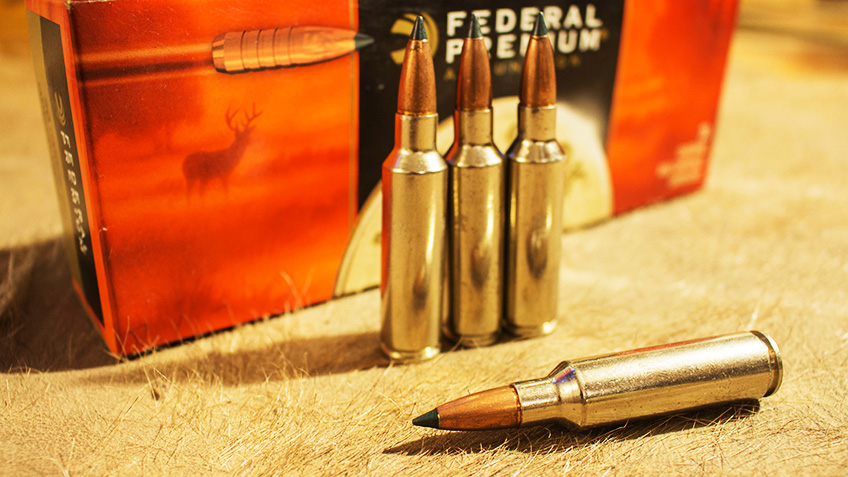
Of the second round of short-action magnums, Winchester had first to see the light of day. The 2001 release of the .300 Winchester Short Magnum (WSM) saw the first serious threat to the hallowed .300 Winchester Magnum since its release in 1963. Based (loosely) on the .404 Jeffery case, and shortened to 2.100 inches, the beltless .300 WSM gave velocities nearly on par with its older brother in a shorter, lighter and more rigid rifle. A slightly rebated rim—presumably to share the same bolt face as the H&H-based cartridges—and squat, voluminous body, with a steep 35-degree shoulder for good headspacing, the .300 WSM made quite a splash. Winchester certainly marketed it properly—though it was obviously in direct competition with both their .308 Winchester and the .300 Winchester Magnum—and it seemed like overnight everyone was carrying a three-hundred-short-mag. In truth, the .300 WSM runs a bit (though not significantly) slower than its bigger brother, and in some rifles, demonstrated serious feeding issues. But, the success of the release of the .300 WSM yielded the subsequent release of the .270, 7mm and .325 WSM cartridges.
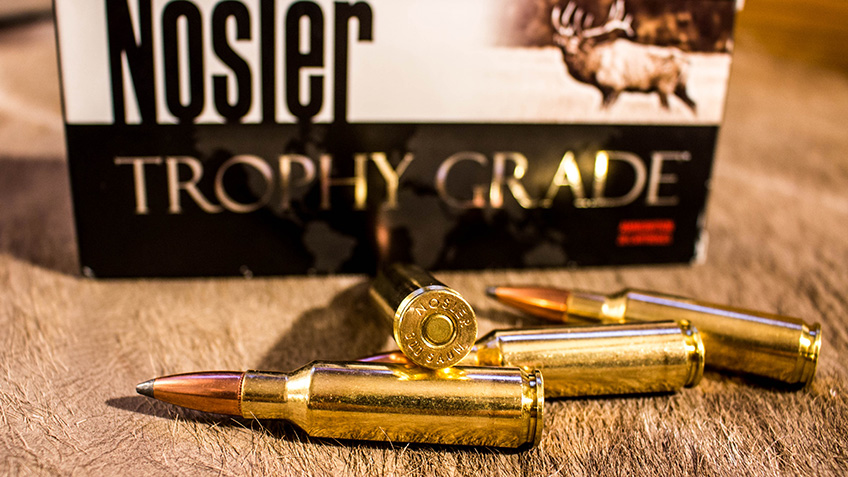
Hot on the heels of the .300 WSM, Remington countered with the .300 Remington Short Action Ultra Magnum—or RSAUM for short—based on a shortened version of their 1999 .300 Remington Ultra Magnum cartridge. The .300 RUM is based on a blown-out .404 Jeffery with a rebated rim, generating velocities among the highest available. Where the RUM case is a 2.85-inch, magnum-length affair, the .300 RSAUM is only 2.015 inches long, with a 30-degree shoulder. Being beltless (again both the WSM and RSAUM are based on the beltless .404 Jeffery case) the .300 RSAUM’s shoulder offers enough of an angle to offer positive headspacing, yet feeds rather well for a short, squat cartridge. It offers velocities on par with the WSM variant, with both pushing a 180-grain bullet at 2900 fps, compared to the 2960 fps which is standard for the belted .300 Winchester Magnum.
So, assuming that you’re in the market for a rifle chambered for one of these short-action magnums, which of the two designs makes more sense? Which is the more readily available and dependable? Well, there are a few points that must be considered.
First, the .300 WSM is, was and shall be the more popular of the two choices, and I believe that is a result of better marketing, and better marketing only. That said, among the WSM cartridge line, the .300 seems to be the only one maintaining a serious presence; even the .270 WSM is falling off considerably, and the 7mm and .325 WSMs are apparently down for the count. Among the .300s, when you look at the dimensions of the two cases, it seriously boils down to nothing more than a popularity contest. That said, I've seen many more rifles chambered for the WSM than I have for the RSAUM, though the latter has a small, yet fervent fan base.
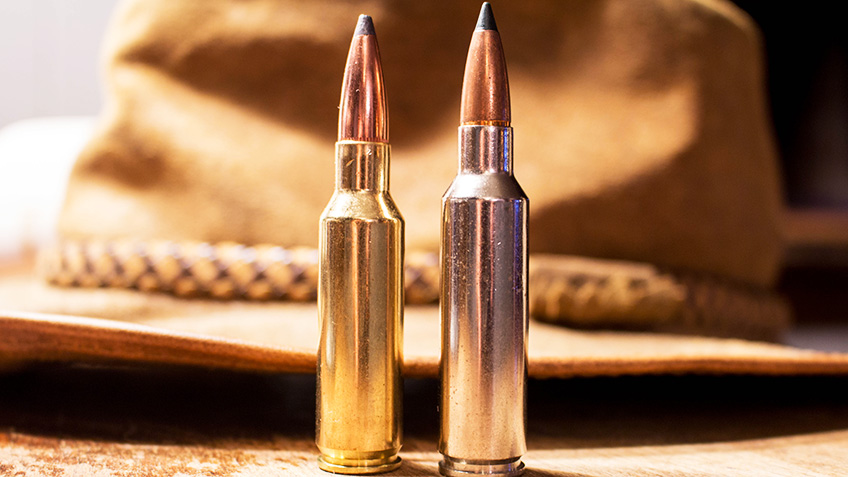
Second, I feel that the RSAUM design has, and always will, feed better than does the WSM design. In a properly tuned rifle—with a good magazine follower and well-polished feed ramp—the WSM will feed just fine. In anything other than a properly built rifle, the cartridge will hang up, jamming the bullet nose into the feed ramp, and creating all sorts of frustration. The shorter datum line (distance from the base of the cartridge case to the beginning of the shoulder) of the RSAUM case, coupled with the lesser shoulder angle when compared to the WSM design results in a cartridge that, in my experience, feeds more reliably than the WSM does.
Thirdly, the volume of the RSAUM case is lesser than that of the WSM; looking at the reloading data you’ll see a 50 to 60 fps advantage for the WSM case. The question is this: does that matter to you as a hunter or shooter? Both are faster than the .30-06 Springfield, and both give highly usable velocities, especially from a short, light rifle. The target community shows an accuracy advantage for the RSAUM design, though there are truly no flies on the WSM; both have been wonderfully accurate with bullets from 150 to 200 grains.
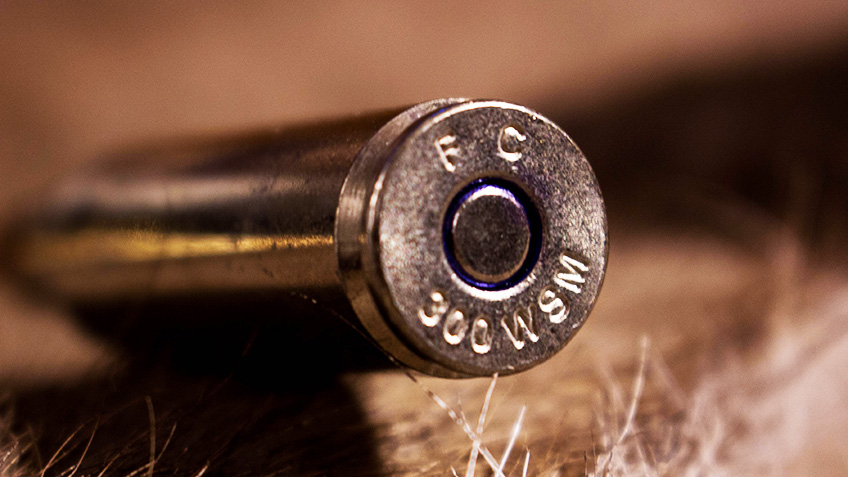
In the end, I (sadly) must admit that the popularity contest won by the .300 WSM has given that cartridge the advantage, especially if you are the hunter or shooter who only uses factory ammunition. Should you want the short magnum experience, and should you settle on the WSM design, make sure the rifle you choose feeds cleanly and reliably. The .300 WSM cartridge has certainly proven itself—it has plenty of killing power, and will truly take any game animal that a .30-caliber will take—but if your hunting rifle doesn’t feed right, you will end up frustrated. I firmly believe the .300 WSM is the only member of that family that will remain on the scene, but I will also say that because I could handload my own ammunition, I wouldn’t turn down a good rifle chambered in .300 RSAUM. Actually, I wish the RSAUM design were more popular, because the shorter case allows bullet with a longer ogive to be seated further out from the case mouth. The exterior and terminal ballistics of the two are virtually identical, but looking at the ammunition options, you’ll find there are many more choices for the WSM.
Looking for previous installments of our "Head to Head" series? We've got you covered.
• .500 Jeffrey vs. .505 Gibbs
• 7mm RUM vs. .300 RUM
• .308 Winchester vs. 7mm-08 Remington
• 6.5 Creedmoor vs. .260 Remington
• .303 British vs. 8x57 Mauser
• .30-06 Springfield vs. All Other .30s
• .17 HMR vs. .17 WSM
• .450 Nitro Express vs. .470 Nitro Express
• 350 Legend vs. .35 Remington
• .280 Ackley Improved vs. 7mm Rem. Mag.
• .404 Jeffery vs. .416 Rigby
• .243 Winchester vs. 6mm Creedmoor
• .300 PRC vs. .300 Win. Mag.
• .30-06 Springfield vs. .270 Winchester
• 6.5 Creedmoor vs. 7mm-08 Remington
• 8x57 Mauser vs. .318 Westley Richards
• .358 Winchester vs. .350 Remington Magnum
• .22-250 Remington vs. .220 Swift
• .270 Winchester vs. .270 WSM
• .26 Nosler vs. 6.5-300 Weatherby Magnum
• .458 Win. Mag. vs. .458 Lott
• 7mm Rem. Mag. vs. .300 Win. Mag.
• .243 Winchester vs. 6mm Remington
• 7x57mm Mauser vs. 7mm-08 Remington
• .25-06 Remington vs. .257 Weatherby Magnum
• .338 Winchester vs. .375 H&H Magnum
• .30-30 Winchester vs. .35 Remington
• .257 Roberts vs. .250-3000 Savage
• .270 Winchester vs. .280 Remington
• .35 Whelen vs. 9.3x62mm Mauser
• .416 Rigby vs. .416 Remington Magnum
• .308 Winchester vs. .30-06 Springfield
• .22 Nosler vs. .224 Valkyrie
• .300 Win. Mag. vs. .300 WSM
• .223 Remington vs. .22-250 Remington