Winter is finally drawing to a close, and spring brings with it new life, and most importantly, a new hunting season. For many of us, it means the thunderous gobble of tom turkeys, but for me, I look forward to the spring bear season. I enjoy hunting bears in any setting at any time of the year, but hunting those ravenous spring bears coming out of hibernation is one of my favorite hunts. The weather is usually mild, and it always feels great to grab a favorite rifle after the long winter. There are seasons for both black and brown/grizzly bears in the spring—though the black bear is much more popular and affordable—and depending on the terrain and type of hunting you intend to do, your choice of rifle, cartridge and bullet may change. While there are many correct answers to the question, I’d like to share some of my favorite setups for different bear hunting scenarios.
Baited Bears
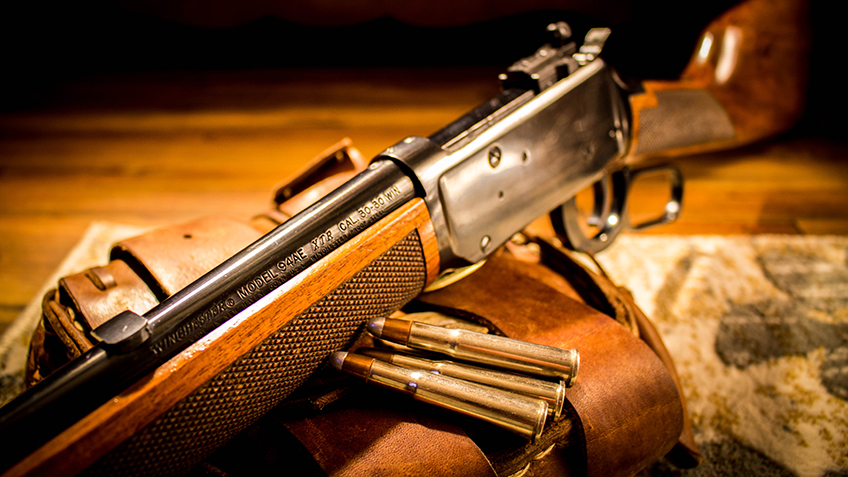
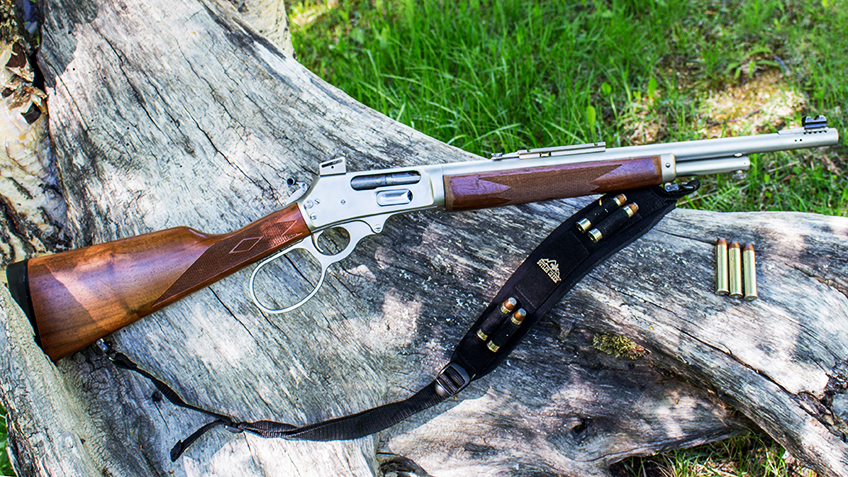
Hunting black bears over bait is a popular and effective technique, especially in the spring when you can take full advantage of the bear’s appetite; it allows the hunter to properly judge a bear and be selective. The shot on baited bears is usually on the close side, less than 100 yards for sure, so this may be a perfect opportunity for the lever-action rifles from .30-30 Winchester, to .35 Remington to .45-70 Government. The lighter cartridges—especially the .30-30—will handle black bears with no issue. My dad loves his Browning Centennial 1886 in .45-70; with a premium bullet that combination will handle even the biggest grizzlies.
Your deer rifle—provided it is of suitable caliber, say 6.5mm and up—can easily be used on a baited hunt, but I would advise against a riflescope too high in magnification. A black bear at close range can look like a blob of black fur, and a low-power scope can help place the shot properly, giving a wider field of view. Boattail bullets and screaming velocities are not necessary for these situations, though a premium bullet might not be a bad idea, due to the high impact velocities. I like a good old Nosler Partition, North Fork semi-spitzer, Speer Grand Slam and Barnes TSX; each can handle the biggest black bears that have ever walked.
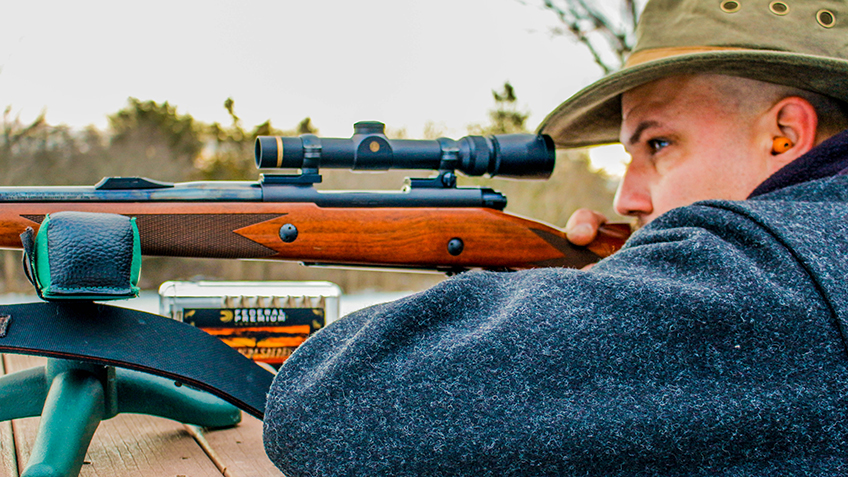
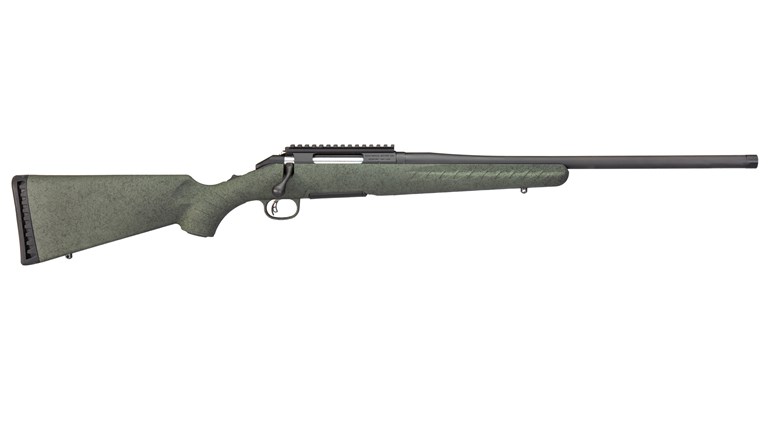
I’ve used my old Ruger 77 in .308 Winchester for baited bears with good success, and for other hunts have taken along a 6.5-284 Norma, .275 Rigby, .300 Winchester Magnum, and even a .375 H&H Magnum, and for each of them I prefer bullets on the heavier side of the spectrum, relying on sectional density (SD) rather than velocity. Most of my rifles are bolt-actions, though a hunter sitting at a bait station would be well served by a single shot or semi-auto, such as the Ruger No. 1 or Browning BAR, and there is absolutely nothing wrong with using the good old .30-06 Springfield, .270 Winchester or .280 Remington.
Spot-and-Stalk Bears
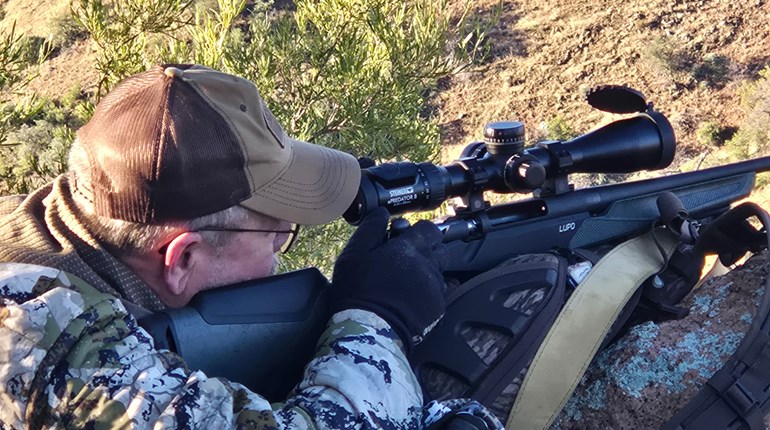
A spot-and-stalk bear hunt can be a great time, as the hungry bears forage for food. Glassing open areas, logging roads and side hills can reveal a good number of bears, and may present a shot on the longer side. For black bears, in country where there is no grizzly presence, the popular deer and elk cartridges will certainly work very well; a .308 Winchester or .30-06 Springfield loaded with a 165- or 180-grain spitzer bullet will handle black bears. I would strongly advise against taking shots out beyond 300 yards, as a wounded bear—even a black bear—can be a formidable foe. This is an instance where a 7mm Remington Magnum or .300 Winchester Magnum would be right at home, in a good bolt-action rifle.
Ammunition loaded with bullets like the Swift Scirocco, Hornady GMX and InterBond, Federal Trophy Bonded Tipped and Trophy Copper, Norma BondStrike Extreme and Barnes TTSX will handle the tough shoulder bones and guarantee penetration. As much of the spring weather can be intermittently inclement, this is a perfect situation for the synthetic-stocked rifles. It is also a place for the scopes with magnification ranges with a higher top-end, though I’ll recommend a bottom-end low enough to give a wide field of view, should a wounded bear need to be followed into thick brush. I have a Winchester Model 70 Classic Stainless in .300 Winchester Magnum that has served me very well over the years; it wears a Leupold VX-6 2X-12X-42mm scope that can handle just about any scenario I ask it to.
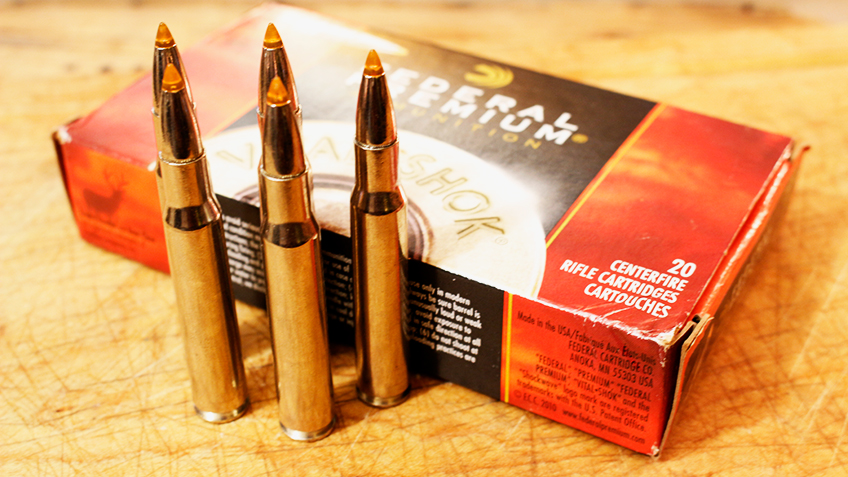
Change the species to the brown or grizzly bear, and you may want to consider a larger bore diameter. Yes, I’m aware that brown bears are taken each year with 7mm and .30s, but I—and many of the Alaskan guides—feel a larger cartridge is better suited to the big bears, providing the shooter is proficient with it. The .338 Winchester Magnum is among the popular choices for large bears—both my Alaskan guides carried a rifle so chambered—and I see the wisdom of using bullets of 250 grains. The .35 Whelen, .338-06 A-Square, 9.3x62mm Mauser and .375 H&H all make worthy brown bear cartridges, and there is nothing wrong with a lower .40 or .458 caliber cartridge.
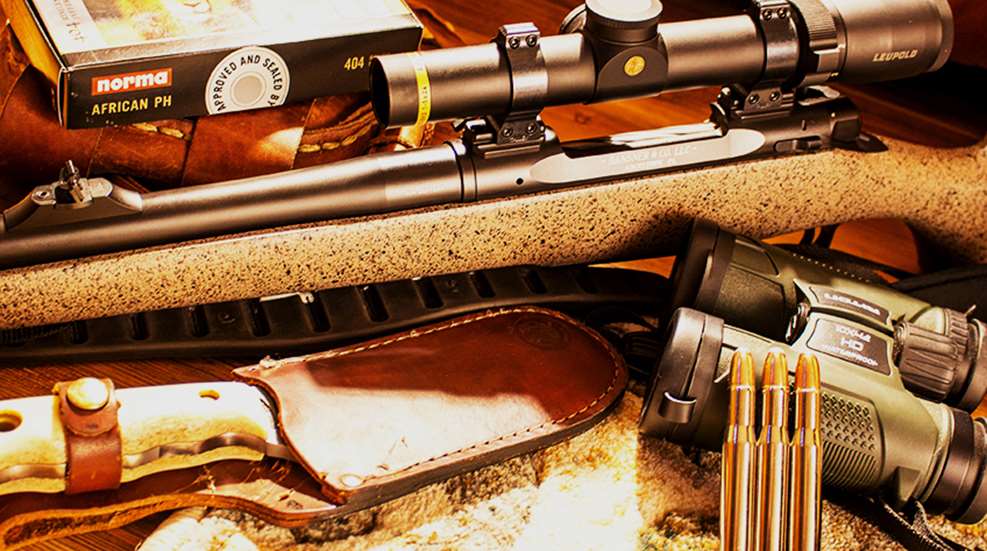
I took a .404 Jeffery—in a synthetic stocked Bansner & Co. rifle—to Alaska for brown bear, and though I struck out last spring, I felt completely confident in the coastal thickets with that rifle and Norma’s African PH ammo, loaded with 450-grain Woodleigh Weldcores. With a Cerakote finish on all the metal parts and a Leupold VX-5HD scope in Talley detachable rings, this rifle gives me all sorts of options. The .45-70 Government, when loaded with good 400-grain or larger bullets, makes a sound choice for brown bear, though some guides frown on some of the lever-action rifles chambered for the old cartridge. I’d recommend a strong action, like the aforementioned Model 1886.
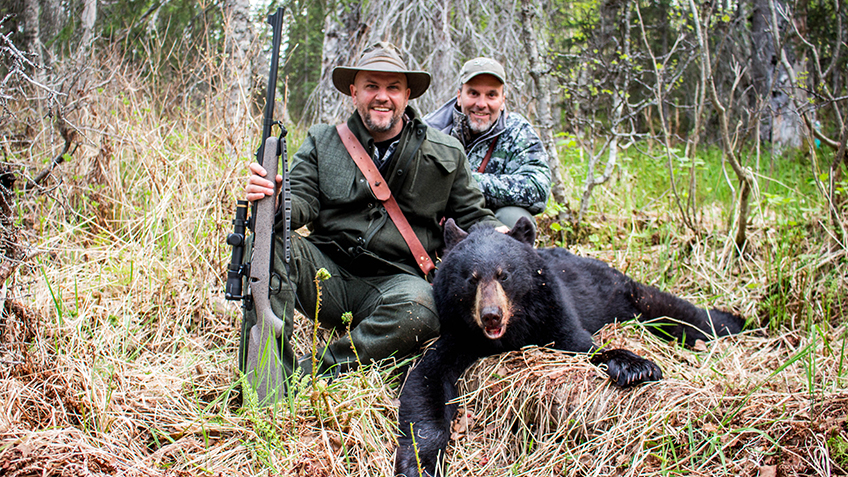
The .416 Rigby, .416 Remington Magnum, .458 Winchester Magnum and .458 Lott all make a solid choice for brown bears, especially the coastal giants, and are very comforting when the vegetation gets thick and distances are measured in feet. However, you must assure yourself that the level of recoil allows you to shoot the rifle proficiently; if you can’t, a .35 Whelen or .375 H&H makes a much better choice. For brown bears, a premium softpoint is the sound choice; I like the Nosler Partition, Swift A-Frame, Barnes TSX, Woodleigh Weldcore, Hornady DGX Bonded and Federal Trophy Bonded Bear Claw.
Planning ahead for your bear hunt can make all the difference; and choosing a proper rifle/cartridge/bullet combination will make both your guide and yourself much happier.