Photo Courtesy USFWS
The following Op-Ed was written by Ben Carter, Executive Director, Dallas Safari Club
President Nixon was the first to declare war on drugs. Drug abuse, he said, is public enemy No. 1. He vowed more federal resources to prevent new addicts and rehab existing ones. That was 1971. One study estimates the U.S. now spends $51 billion annually on its drug war. And, by all accounts, drug abuse has skyrocketed.
A memorable line from a movie sums it up perfectly: "This can't be a war. Wars end."
So now we've declared war on poachers. Like Nixon, President Obama has promised more federal resources to prevent the indiscriminate killing and black-market trafficking of elephants, rhinos and other wildlife.
 Like the war on drugs, the poaching war also is well intended.
But unless we move beyond silly political posturing and showmanship, it may be equally counterproductive.
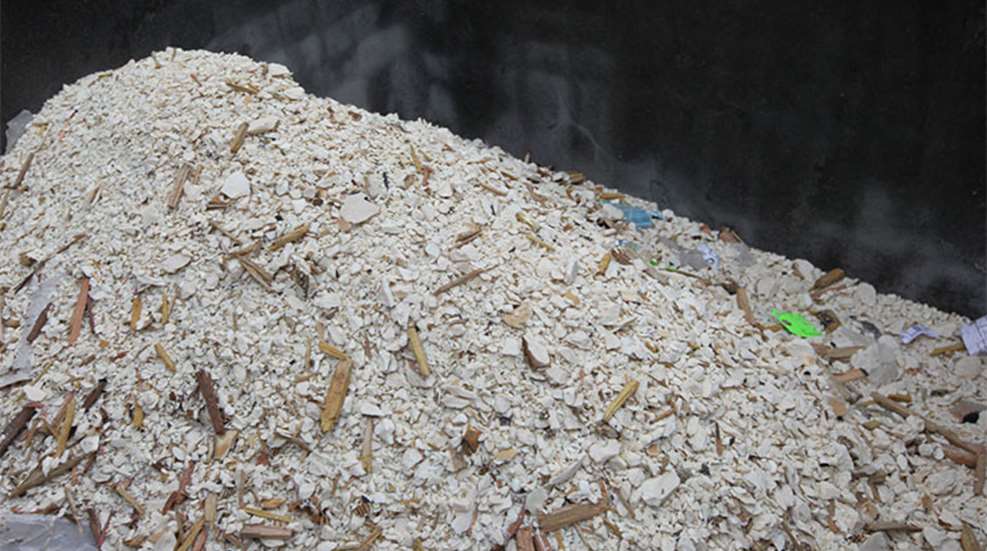
The flagship in this war, so far, is publicly destroying ivory. As I write this on June 19, 2015, U.S. Fish and Wildlife Service officials are proudly loading a full ton of raw elephant tusks, antique carvings and other seized ivory into a huge rock crusher parked in New York City's Times Square. Because of the high-profile location, there is heightened bureaucratic pomp, photo ops and speechifying. Soon someone will hit a switch and promptly convert $3 million worth of valuable animal products into coarse dust.
Ironically, the agency is accepting proposals for repurposing this dust into educational art projects or symbolic totems to help build public awareness of the plight of elephants.
How about pressing the crushed ivory into the shape of, say, an elephant tusk?
Destroying ivory, war generals claim, will "send a message."
But what that message is, and who's supposed to receive it, and how it might allegedly make a difference, isn't exactly clear. Will Asian consumers, by far the biggest market for ivory, see a Twitter post about Times Square and suddenly rethink the material values of a thousand-year-old culture? Will the cartel traffickers have an abrupt change of heart? Will African triggermen decide to blow off tonight's profits?
To me, the real message is loud and clear: Now more elephants must die to replenish the ivory stocks that we just destroyed for a publicity stunt.
Some law enforcement officials, particularly elected ones, also like to "send messages" by inviting the media and making a show out of setting fire to seized marijuana. We all know how effective that's been in the war on drugs.
But at least no drug bust ever ends with officers burning a pile of seized cash.
Instead, valuable assets are converted to more and better law enforcement, and that's a concept worth considering in the war on poachers. Saving an elephant tonight requires more and better game wardens. And new but expensive technologies such as drones are proving effective in wildlife protection. But the Dark Continent simply doesn't have a superpower bank account. More funding, instead of more unintelligible message sending, would have been meaningful.
Sport hunters walk this talk better than anyone else in Africa. Law enforcement efforts funded by hunters are among the best tools for sustaining wildlife populations against poachers. When managed hunting goes away, so do the animals. It's a fact that too many animal lovers can't seem to wrap their heads around.
Here's a more elementary notion. Basic supply-and-demand principles suggest poaching would slow if ivory stockpiles were used to flood, rather than deny, the Asian markets.
If that happened today, some experts believe, Africa could produce enough ivory to meet world demand forever. Imagine African nations, with cooperation from U.S. and Chinese governments, effectively managing, regulating, harvesting, profiting from—and thus ensuring the future of—renewable natural resources. Sounds a lot like conservation.
Listen, I'm not ready to advocate legalizing drugs or free trade in ivory. The root problems are more complex than that, and I doubt today that either of those fixes would bring ideal ends to their respective wars.
But I am extremely confident that destroying elephant tusks isn't part of the answer.
In fact, it's just pointless.
Wildlife poaching is a serious threat. Taking it seriously should begin with a reality check, followed by international collaboration, resources and way smarter tactics. Surely we can do better than stupid publicity stunts.
About Dallas Safari Club (DSC)
Formally introduced in 2015 as an official member of the IUCN, the United Nations' International Union for the Conservation of Nature, DSC is increasingly recognized as an international leader in conservation. DSC's mission is conserving wildlife and wilderness lands, educating youth and the general public, and promoting and protecting the rights and interests of hunters worldwide. Get involved at www.biggame.org.
Most Popular